Yes, you can put an air fryer basket in the dishwasher, provided your specific model's manual says it is safe. Most modern air fryers come with removable baskets and trays that carry a dishwasher-safe label. The high heat and harsh detergents inside a dishwasher can still wear down the nonstick coating over time, so hand washing is often the better choice for longevity.
This article covers which parts handle machine washing well, why the nonstick finish matters, and how to clean stubborn grease without ruining the surface. You will also find details on what happens when you ignore the manufacturer guidelines and how different basket materials react to dishwasher cycles.
Why the Nonstick Coating Changes Everything
Most air fryer baskets rely on a nonstick surface to keep food from sticking during high-speed cooking. This coating is usually made of PTFE or a ceramic blend. Dishwashers use water temperatures that regularly exceed 140 degrees Fahrenheit.
They also use highly alkaline detergents designed to strip baked-on food from heavy pots and pans. That combination attacks the chemical bonds in nonstick coatings.
Over repeated cycles, the surface begins to dull. You might notice food sticking where it previously slid right off. Eventually, the coating flakes.
Once the finish starts peeling, the basket loses its primary advantage. You end up scrubbing stuck-on chicken skin or melted cheese out of a bare metal grid, which defeats the purpose of buying an air fryer in the first place.
Manufacturers test their coatings against standard dishwasher cycles before stamping them as safe. If your Ninja countertop cooker has a dishwasher-safe symbol on the basket, the brand expects it to survive normal use. Surviving and thriving are two different things.
A basket washed by hand after every use will typically hold its nonstick properties much longer than one run through the machine daily.
The FDA regulates food-contact surfaces, including nonstick coatings used in kitchen appliances. According to FDA guidelines on food safety, intact nonstick coatings are safe for cooking, but degraded surfaces should be monitored. Flaking coating mixed into food is something you want to avoid entirely.
Which Removable Parts Handle Machine Washing
An air fryer consists of several pieces, and they do not all react the same way to water and heat. Knowing what goes where prevents expensive mistakes.
The Perforated Inner Basket
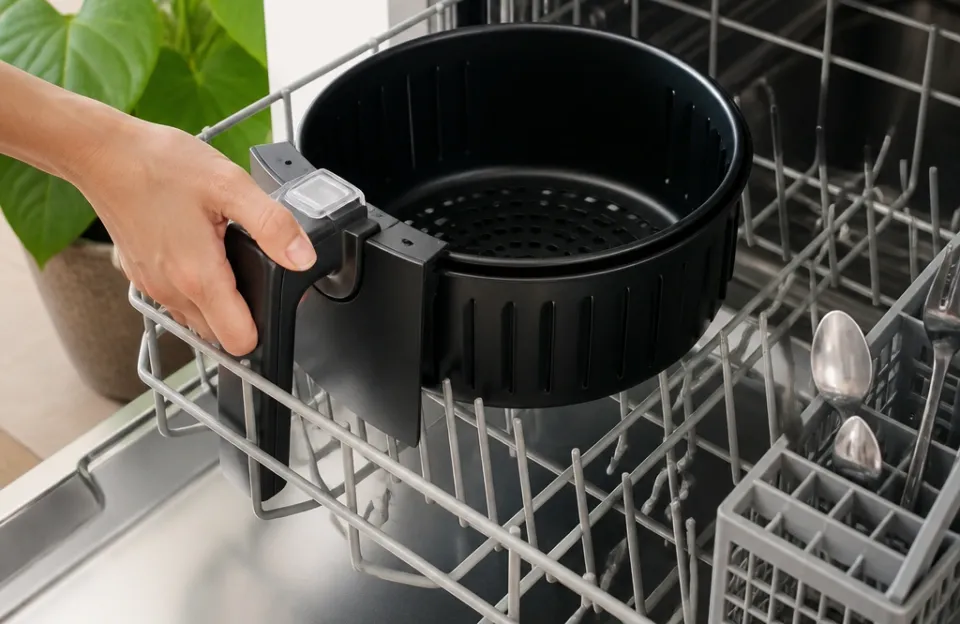
The inner basket is the part with holes or a wire grid where the food sits. This piece catches the most grease and crumbs. On models rated for dishwasher cleaning, this basket usually tolerates the top rack best.
The top rack stays further away from the exposed heating element at the bottom of the dishwasher, reducing direct thermal shock.
Placing the inner basket on the bottom rack exposes it to the highest water pressure and heat. Over time, this can warp thinner metal frames. Warping means the basket no longer sits flush inside the outer pan, which disrupts airflow.
Proper airflow is exactly what gives crispy results on meal prep nights.
The Solid Outer Pan or Drawer
The outer drawer catches the drippings that fall through the inner basket. Many solid drawers are dishwasher safe. Because they lack the delicate wire grid of the inner basket, they tend to hold up slightly better against aggressive water jets.
Grease pools heavily in the corners of this pan. If the dishwasher detergent fails to cut through thick fat deposits, you will still need to soak the drawer in warm, soapy water afterward.
Racks, Trays, and Crisper Plates
Larger oven-style air fryers use wire racks or flat baking trays instead of deep baskets. Stainless steel racks without any nonstick coating are generally fine in the dishwasher. Bare stainless steel resists the alkaline detergents well.
Trays coated with nonstick material face the exact same degradation risks as standard baskets. Some brands include a separate crisper plate that fits inside the drawer. These plates have small rubber or silicone feet to keep them elevated.
The intense heat of a drying cycle can melt or deform those feet if they aren't rated for high temperatures.
Materials That React Differently to the Dishwasher
Can you put an air fryer basket in the dishwasher? The answer shifts depending on what the basket is made of. Not all metals and coatings behave identically under hot water and strong soap.
| Material Type | Dishwasher Safe | Primary Risk | Recommended Cleaning Method |
|---|---|---|---|
| PTFE Nonstick Metal | Usually yes (top rack) | Coating degradation, flaking | Hand wash preferred |
| Ceramic Nonstick Metal | Sometimes | Chipping, loss of slickness | Gentle hand wash |
| Bare Stainless Steel | Yes | Water spots, minor discoloration | Dishwasher or hand wash |
| Aluminum (Uncoated) | No | Oxidation, dark staining, pitting | Hand wash only |
| Glass Baskets | Yes | Thermal shock cracking | Dishwasher (if rated) |
Bare aluminum reacts poorly to dishwasher detergent. The alkaline chemicals cause oxidation, turning the shiny metal a dull, dark gray. It can also pit the surface, leaving tiny rough spots where food sticks permanently.
If your basket feels unusually light and lacks any visible coating, check the manual before loading it into the machine.
Glass baskets, like those found in some modern 4-in-1 designs, handle dishwashers well because glass does not react with detergent. The risk with glass is thermal shock. Moving a cold glass basket directly into a scalding dishwasher cycle can cause fractures.
Let glass components reach room temperature before washing.
When the Manual Says No
Ignoring the manufacturer's instructions voids warranties and ruins equipment. If the user guide explicitly states "hand wash only," there is a reason. Some budget-friendly models use adhesives to attach handles or rim guards.
Dishwasher heat softens these glues, causing handles to detach mid-cycle.
Other models use thin-gauge metals to keep the appliance lightweight. High-pressure water jets in a dishwasher can bend thin wire grids. Once the grid bends, the basket jams when you try to slide it back into the main unit.
Replacing a basket often costs nearly as much as buying a new entry-level appliance.
If you lose the physical manual, most brands host PDF versions on their websites. Look up your exact model number. Do not assume that because your friend's Cuisinart countertop model is dishwasher safe, yours automatically is too.
Manufacturing runs change, and even slight design revisions alter what materials are used.
Hand Washing for Longer Basket Life
Washing the basket by hand takes roughly three minutes and preserves the nonstick finish far better than any machine cycle. The goal is to remove grease without using abrasive friction.
- Let the basket cool completely. Plunging a hot basket into cold water causes rapid contraction. This warps metal and cracks coatings.
- Fill the sink with warm water and a few drops of standard dish soap. Avoid heavy-duty degreasers or oven cleaners, as they strip nonstick layers instantly.
- Submerge the basket and let it soak for ten to fifteen minutes. This loosens rendered fat and stuck-on breading. Soaking does the heavy lifting so you don't have to scrub.
- Wipe the interior with a soft sponge or microfiber cloth. Never use the rough side of a dual-sided sponge.
- Rinse thoroughly with warm water to remove all soap residue. Leftover soap burns onto the surface during the next cooking session, creating a sticky film.
- Dry the basket completely with a towel before putting it back into the appliance. Storing a wet basket inside a closed drawer promotes rust on exposed screws and hinges.
Taking care of the basket means your food continues to release easily. Whether you are timing potato wedges perfectly or roasting vegetables, a smooth surface prevents tearing and sticking.
Removing Baked-On Grease Without Scrubbing
Sometimes soaking in plain soap isn't enough. Cooking fatty proteins leaves behind polymerized grease. This is oil that has been heated past its smoke point repeatedly until it turns into a hard, varnish-like layer.
Scraping it off with a metal spatula destroys the basket.
Baking soda works well here. Make a paste using three parts baking soda to one part water. Apply the paste directly to the greasy spots and leave it for twenty minutes.
Baking soda is mildly alkaline and slightly abrasive, but soft enough not to scratch PTFE or ceramic coatings. After it sits, wipe it away with a damp, soft cloth.
White vinegar tackles mineral deposits and light rust spots. If you notice white chalky buildup near the mesh joints, spray it with undiluted white vinegar. Let it fizz for five minutes, then rinse.
Never mix vinegar and baking soda together in the basket expecting a stronger reaction. They neutralize each other, leaving you with salty water that does nothing for grease.
For extreme buildup, fill the outer drawer with hot water and a tablespoon of dish soap. Place it back into the unplugged air fryer cavity just to contain the mess while it sits on your counter. Let it soak for an hour.
The trapped heat from the water helps break down fats faster than a cold soak. This method is especially useful after cooking items that splatter heavily, like fatty breakfast meats.
What Happens to the Heating Element Area
People asking if they can put an air fryer basket in the dishwasher sometimes confuse the removable basket with the entire appliance. The main housing unit contains the heating coil and the high-speed fan. This section must never go near standing water, let alone inside a dishwasher.
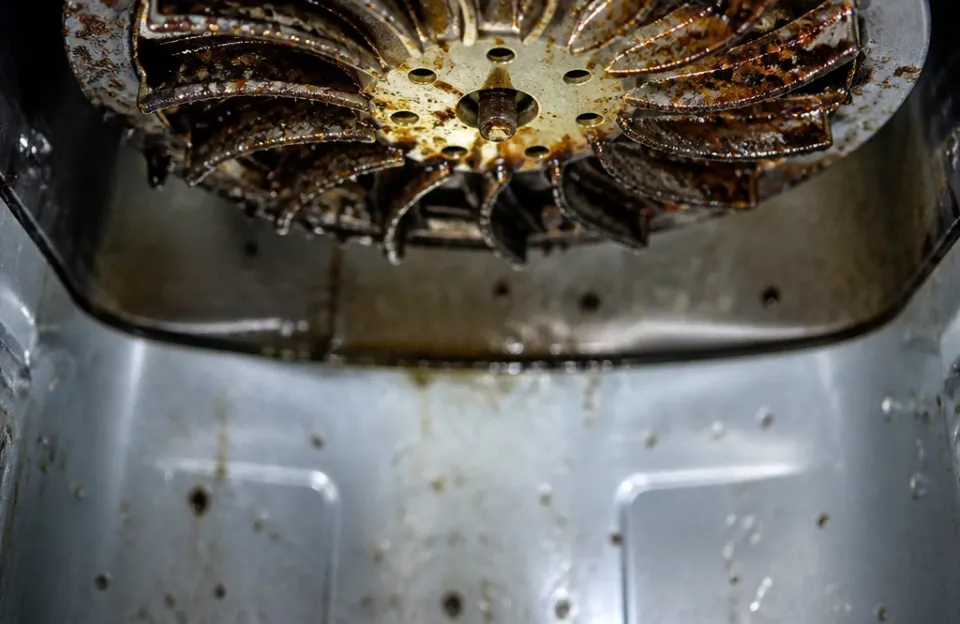
Grease vapor travels upward during cooking and coats the heating element. Over months, this carbonizes. If you notice smoke every time you turn the machine on, the element needs cleaning.
Unplug the unit and turn it upside down. Use a damp cloth or a soft-bristled brush to gently wipe the coil. Do not submerge the top half of the appliance.
Water reaching the electrical components creates a severe shock hazard and permanently shorts the motor.
Keeping the basket clean reduces the amount of grease vapor that reaches the element in the first place. Food particles left in the mesh burn during the next preheat cycle, sending smoke directly upward. A quick rinse immediately after cooking prevents this chain reaction.
Edge Cases and Brand Variations
Not all air fryers follow the same manufacturing rules. Multi-function devices that pressure cook, steam, and air fry often use thicker, heavier baskets designed to withstand higher pressures. These thicker metals generally tolerate dishwashers better than the thin baskets found in dedicated, single-function air fryers.
Basket shape also matters. Square baskets fit awkwardly in standard dishwasher racks. Forcing a square basket into a space meant for round plates bends the tines of the dishwasher rack and puts uneven pressure on the basket frame.
If your basket doesn't fit naturally without bending the dishwasher prongs, wash it by hand.
Replacement baskets present another edge case. If you buy a third-party replacement basket online, it may look identical to the original. Third-party manufacturers frequently use cheaper nonstick coatings to lower costs.
These aftermarket coatings rarely survive more than a few dishwasher cycles before peeling. Stick to original manufacturer replacements if you plan to use the dishwasher regularly.
Silicone liners have become popular for keeping baskets clean. If you use a silicone liner, the basket itself stays mostly free of food debris. You can toss the silicone liner in the dishwasher safely, as silicone handles high heat without degrading.
This drastically reduces how often the actual metal basket needs a deep clean. Just make sure the liner doesn't block the airflow holes around the edges, or your food won't crisp properly.
Frequently asked questions
Will the dishwasher ruin my air fryer basket?
Running a dishwasher-safe basket through occasional cycles will not ruin it immediately. Running it through daily cycles will degrade the nonstick coating significantly faster than hand washing. The harsh detergents and sustained high heat slowly break down the chemical bonds of the finish, leading to sticking and eventual flaking.
Can I put the whole air fryer in the dishwasher?
No. Only the removable parts, such as the inner basket, outer drawer, and crisper plate, can potentially go in the dishwasher. The main unit houses electrical wiring, a fan motor, and a heating element.
Exposing the base to water causes electrical shorts and permanent damage.
How do I know if my specific basket is dishwasher safe?
Check the user manual that came with your appliance. Look for a dishwasher-safe symbol stamped directly into the metal or printed on the bottom of the plastic handle. If neither exists, assume it requires hand washing.
Manufacturer websites also list care instructions under your specific model number.
Is it safe to use a basket if the coating is peeling?
You should stop using a basket once the nonstick coating visibly flakes into your food. While small amounts of ingested PTFE pass through the body without absorbing, cooking on a degraded surface causes food to stick aggressively and burn. Replace the basket or the entire unit when peeling becomes noticeable.
Should I wash the basket after every single use?
Yes. Leaving grease and food residue in the basket allows it to harden and polymerize. Hardened grease requires intense scrubbing to remove, which damages the coating.
A quick wash with warm soapy water immediately after cooking keeps the surface smooth and extends the lifespan of the appliance.
Does the top rack really make a difference?
The top rack positions the basket further away from the dishwasher's exposed heating element located at the bottom. This reduces the peak temperature the basket experiences during the drying cycle. Lower peak heat slows down the thermal degradation of the nonstick coating, preserving the finish for more uses.
Keeping Your Equipment Ready for the Next Meal
Knowing whether you can put an air fryer basket in the dishwasher comes down to checking your specific model and understanding the trade-offs. The machine offers convenience, but the sink offers longevity. Grease builds up fast when you cook regularly, and staying ahead of it prevents ruined finishes and smoky kitchens.
Treat the nonstick surface gently, skip the abrasive sponges, and your basket will keep releasing food cleanly long after you've perfected your favorite dipping sauces or figured out exactly how long to warm up leftover slices. Read the manual, use the top rack if you choose the machine, and default to a warm soak when in doubt.