Well water can look clear and still carry sediment, iron, manganese, bacteria, nitrate, arsenic, or other contaminants. Best Under Sink Water Filter for Well Water (Safe Picks) starts with one hard truth: an NSF/ANSI 42 filter improves taste, odor, and some particulate issues, but it does not make unknown well water safe.
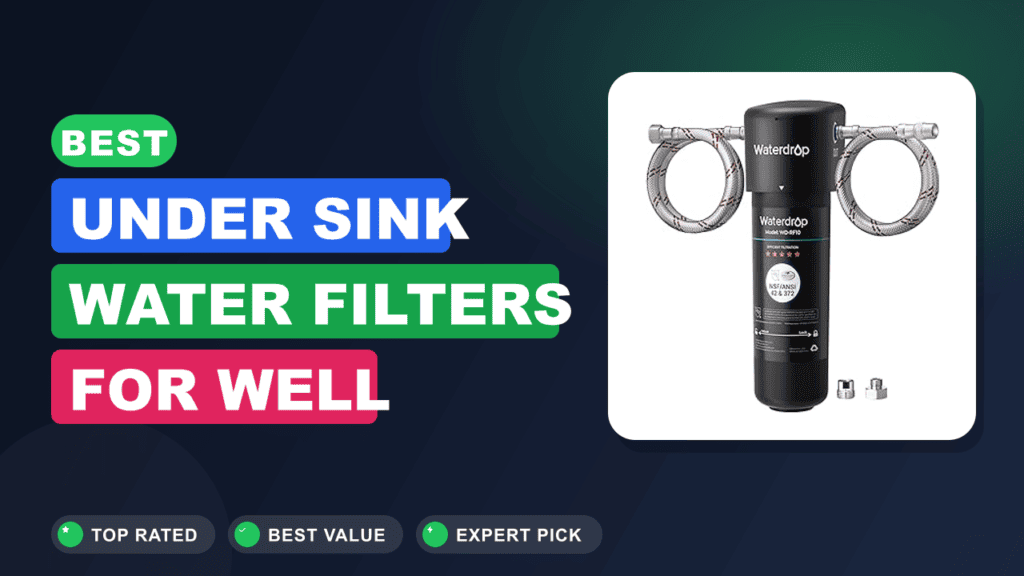
Waterdrop 10UA is the best overall pick here for a previously tested well that mainly needs sediment, chlorine taste, and odor reduction at one kitchen faucet. For untreated wells or a report showing bacteria, arsenic, nitrate, or high iron, start with a certified whole-house treatment plan instead. Here are the strongest under-sink options for the right job.

List of Top 5 Best Under Sink Water Filter for Well Water (safe Picks)
These picks were compared by their stated filter life, certification claims, direct-connect design, replacement needs, and repeated buyer feedback about installation and flow. Every option below has a real role, but none should replace a laboratory water test for a private well.
Below are the list of products:
1. Waterdrop 10UA Under Sink Water Filter
In our research, the Waterdrop 10UA had the clearest fit for homes with a recent well-water report and a modest treatment need at one sink. Its direct-connect layout keeps the main faucet and avoids the extra countertop faucet that comes with many reverse osmosis systems.
Why I picked it
Waterdrop 10UA earns the overall spot because its one-year stated filter life matches a realistic annual maintenance routine. Manufacturer specifications indicate NSF/ANSI 42 certification, which is a standard for aesthetic chlorine, taste, and odor claims. That scope matters.
NSF/ANSI 42 does not certify protection against every contaminant that can occur in private well water.
Key specs
- NSF/ANSI 42 certified according to the product listing.
- Stated filter replacement interval: 1 year.
- Direct-connect under-sink system.
- Uses the existing cold-water faucet.
- Designed as a single-stage drinking-water filter.
- Reported Amazon rating: 4.6/5.
Real-world experience
This is the pick for a kitchen where the cold water already tests acceptable for health-related contaminants but has a mild earthy smell, visible fine sediment, or an unpleasant taste. It also makes sense if you regularly brew drip coffee or use an espresso machine with a removable tank. Cleaner-tasting water can make routine coffee maker upkeep easier, but it will not solve mineral scale if hardness is the main issue.
- One-year filter interval reduces frequent cartridge changes.
- NSF/ANSI 42 certification supports taste and odor treatment claims.
- Direct-connect setup keeps your existing kitchen faucet.
- Compact format leaves more room for a trash bin or cleaning supplies.
- It is not a substitute for arsenic, nitrate, bacteria, or high-iron treatment.
- Heavy sediment can shorten cartridge life and lower flow.
- ✔ Your well test is already clear of health contaminants.
- ✔ You want filtered water from the regular kitchen faucet.
- ✔ You can replace a cartridge every 12 months.
- ✖ Your report shows nitrate, arsenic, coliform bacteria, or lead.
- ✖ Your water has visible orange iron staining or heavy grit.
2. Waterdrop TSA 8 Layer Under Sink
The Waterdrop TSA is the better value pick for buyers who want more than a basic taste filter but do not want the plumbing, drain line, and wastewater of reverse osmosis. Its listed eight-layer design makes it a more involved filtration option, though certification still defines what claims you can rely on.

Why I picked it
Waterdrop TSA makes sense for a household that notices sediment and taste changes but does not have a test result calling for contaminant-specific treatment. An eight-layer water filter is a system with several filter media stages in one cartridge. More layers do not automatically mean broader safety certification.
Key specs
- Listed as an eight-layer under-sink filtration system.
- NSF/ANSI 42 certified according to the listing.
- Direct-connect drinking-water filter format.
- Designed for installation beneath a kitchen sink.
- Uses the existing faucet rather than a dedicated dispenser.
- Reported Amazon rating: 4.5/5.
Real-world experience
This model has appeal for busy kitchens where filtered water goes into cooking pots, ice trays, pet bowls, and coffee reservoirs throughout the day. It can also suit people comparing different espresso machine setups, since a direct-connected filter removes the chore of filling a separate countertop pitcher. Buyer feedback still points to installation space as the practical concern.
Measure around your shutoff valve before ordering.
- Eight-layer construction gives a more substantial treatment design than a simple sediment screen.
- Direct connection keeps daily use simple for cooking and drinks.
- NSF/ANSI 42 certification supports aesthetic water claims.
- It avoids a reverse osmosis drain connection and wastewater line.
- Its NSF/ANSI 42 certification does not prove arsenic or nitrate reduction.
- More internal media does not solve severe iron, sulfur, or bacterial contamination.
- ✔ You want layered filtration at the main faucet.
- ✔ Your water test does not show a regulated contaminant problem.
- ✔ You have enough cabinet room around the water lines.
- ✖ You need a filter certified for your tested contaminant.
- ✖ Your sink cabinet is already crowded with a disposal or pullout bin.
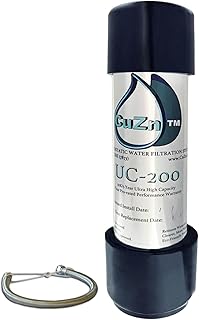
3. CuZn UC-200 Under Sink Water Filter
CuZn UC-200 is the standout choice for shoppers who care most about replacement frequency. The manufacturer lists a five-year filter life, a notably long interval for an under-sink cartridge. That can lower the maintenance burden, but only if your incoming water matches the system’s intended use.
Why I picked it
The UC-200 is the maintenance-first choice. NSF/ANSI 372 is a standard related to lead-free material requirements. It should not be confused with NSF/ANSI 53, which covers specific health-effect contaminant reduction claims.
That distinction is important for a well-water buyer.
Key specs
- Manufacturer-stated filter life: 5 years.
- NSF/ANSI 42 certified.
- NSF/ANSI 372 certified.
- Under-sink water filter design.
- Uses the existing cold-water supply.
- Reported Amazon rating: 4.6/5.
Real-world experience
Five years is appealing for a vacation home, rental property, or busy household that struggles to remember annual replacements. Still, visible sediment changes the equation. A prefilter may be needed before any long-life carbon filter on a sandy or turbid well.
If your coffee routine depends on precise water measurement, better brewing measurements can improve consistency, but a filter cartridge cannot correct water that is chemically unsuitable for brewing.
- Five-year stated filter life can reduce replacement chores.
- NSF/ANSI 42 certification supports taste and odor treatment claims.
- NSF/ANSI 372 covers lead-free material requirements.
- Long service interval may suit second homes and low-maintenance kitchens.
- A five-year claim may not apply when heavy sediment fouls the media early.
- It does not carry a stated NSF/ANSI 53, 58, or 401 claim in the provided product details.
- ✔ You want the longest stated cartridge life.
- ✔ Your well has already tested suitable for this filter type.
- ✔ You want fewer scheduled maintenance tasks.
- ✖ You have frequent sand, silt, or orange iron sediment.
- ✖ You need a filter for a confirmed health-related contaminant.
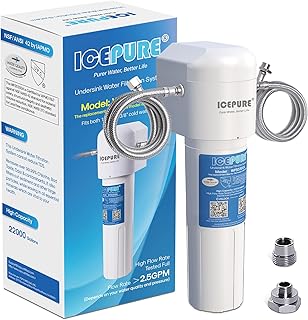
4. ICEPURE Under Sink Water Filter System
ICEPURE is the long-life direct-connect alternative for homes that want multi-year service from an under-counter unit. Its listing states a 3-year or 22,000-gallon filter life. Those numbers are useful planning tools, but real service life depends heavily on sediment load and household water use.
Why I picked it
ICEPURE stands out for buyers who prefer a stated gallon capacity alongside a time-based replacement claim. A 22,000-gallon rating gives you a more concrete benchmark than a calendar date alone. Still, a cartridge rated for 22,000 gallons may need replacement sooner if flow declines or if the filter is handling unusually dirty water.
Key specs
- Manufacturer-stated capacity: 22,000 gallons.
- Manufacturer-stated service life: 3 years.
- NSF/ANSI 42 certified according to the listing.
- Direct-connect under-sink filtration system.
- Uses the existing cold-water faucet.
- Reported Amazon rating: 4.5/5.
Real-world experience
This is a practical fit for a household with several daily water users and a well test that points to aesthetic concerns rather than a contaminant requiring specialized treatment. It also works well for a kitchen with reservoir-based espresso equipment, where filling the tank from the filtered faucet is easier than keeping filtered pitchers in the refrigerator. The weak point is monitoring.
Do not wait for a calendar date if water taste changes or flow slows.
- 22,000-gallon stated capacity gives a useful replacement benchmark.
- Three-year stated life reduces annual maintenance.
- Direct connection keeps filtered water available from the main faucet.
- NSF/ANSI 42 certification supports taste and odor claims.
- Capacity drops in practical terms when well water carries heavy sediment.
- Its listed certification does not make it a bacteria or nitrate treatment system.
- ✔ You prefer a stated gallon limit and a multi-year interval.
- ✔ Your household uses a lot of filtered drinking water.
- ✔ You have a clean, tested well with minor aesthetic issues.
- ✖ You need visible filter stages that you can inspect and service separately.
- ✖ You have an untreated well with recurring bacterial contamination.
5. Waterdrop 15UA Under Sink Water Filter
Waterdrop 15UA is a strong middle-ground option for homeowners who want a longer filter interval than the 10UA but do not need the five-year claim of the CuZn. The listing states 19,000 gallons or 2 years, giving it a clear household-use target.

Why I picked it
The Waterdrop 15UA fills the gap between annual and very long filter schedules. A 19,000-gallon stated capacity is meaningful for a family that uses filtered water for drinking, cooking, rinsing produce, and filling small appliances. It still needs a clean incoming supply.
Capacity claims describe normal conditions, not a guarantee against every well-water problem.
Key specs
- Manufacturer-stated capacity: 19,000 gallons.
- Manufacturer-stated filter life: 2 years.
- Under-sink water filtration system.
- Direct-connect format for an existing faucet.
- Single replacement-filter schedule.
- Reported Amazon rating: 4.5/5.
Real-world experience
This option fits a family kitchen where filter changes need to happen less often than once per year but still need a predictable calendar plan. Use the filtered water for cold drinking and cooking water only unless the manufacturer says otherwise. It can also help reduce off-flavors in meal prep, including water used to rinse grains or fill a pot before you portion ingredients accurately.
- Two-year stated filter interval suits families who dislike annual replacement tasks.
- 19,000-gallon stated capacity gives a concrete planning figure.
- Direct-connect design keeps the countertop clear.
- It bridges the gap between short-life and very long-life cartridges.
- It is not the best choice for a well with severe sediment or iron problems.
- The listing details do not establish contaminant-specific safety reduction claims.
- ✔ You want a two-year replacement schedule.
- ✔ Your household uses a steady amount of kitchen drinking water.
- ✔ Your well test shows no contaminant needing special media.
- ✖ You need a filter that addresses a laboratory-confirmed health contaminant.
- ✖ You want the longest stated filter life available in this roundup.
How I picked
I evaluated these filters on three practical benchmarks: certification scope, stated cartridge life, and how the design fits a real kitchen sink cabinet. I also compared the manufacturer details against recurring buyer feedback about connection fittings, water flow, leaks, and replacement routines. No product was treated as a safe answer for untested well water.
The most important distinction is between water that needs better taste and water that needs contaminant removal. NSF/ANSI 42 is a standard for aesthetic effects such as chlorine, taste, odor, and particulate reduction. NSF/ANSI 53 covers certain health-effect reduction claims, while NSF/ANSI 58 applies to reverse osmosis systems.
A private-well buyer should match the system certification to the water test result.
I did not test long-term durability beyond available manufacturer specifications and aggregate buyer feedback. I also did not treat a star rating as proof of filtration performance. A popular filter can still be the wrong choice if a well report shows coliform bacteria, nitrate, arsenic, sulfur, iron, manganese, or excessive hardness.
The United States Environmental Protection Agency recommends private well owners test their water regularly. A yearly basic check is a useful starting point, and additional testing is sensible after flooding, plumbing work, a nearby contamination event, changes in taste or odor, or a new infant in the home.
Buying guide: what actually matters for Best Under Sink Water Filter for Well Water (Safe Picks)
Start with a laboratory water test
A well-water test is the deciding document, not the filter label. At minimum, ask a qualified local lab about bacteria, nitrate, pH, total dissolved solids, hardness, iron, manganese, and any regional concerns such as arsenic. Your county health department or state environmental agency can often point you to a certified laboratory.
A basic under-sink carbon filter can improve kitchen water, but it is not a treatment plan for unknown contamination. If coliform bacteria are present, you may need disinfection or another professionally selected method. If arsenic or nitrate is present, choose a system certified for that exact contaminant.
Know what NSF/ANSI 42 means
NSF/ANSI 42 is a drinking-water treatment standard for aesthetic effects. It commonly applies to chlorine taste, odor, and some particulate claims. It does not mean a filter removes every heavy metal, pesticide, pathogen, or dissolved chemical.
Read the performance data sheet, not just the box. Search for the exact contaminant and the exact certification standard. The official NSF International site explains water-treatment certification categories and product verification.
Sediment can defeat an under-sink filter early
Sediment is suspended sand, silt, rust, or fine mineral material that can clog filter media. A clear cartridge housing or washable prefilter near the pressure tank can be more useful than an expensive kitchen filter when your well carries grit.
If your water leaves orange stains, black specks, or cloudy glasses, address the source before installing one of these models. Iron and manganese often need dedicated treatment. An under-sink filter is then best used as the final drinking-water stage.
Match the filter-life claim to your habits
A one-year filter is easier to remember and gives you a regular chance to inspect fittings and flush the system. Two-year, three-year, and five-year claims reduce maintenance, but they require you to notice slow flow, returning odor, or changes in taste.
Use a phone reminder. Replace the cartridge at the stated interval or earlier if flow drops sharply. Never keep a cartridge in service simply because the calendar date has not arrived.
Measure cabinet space and inspect fittings
Measure the open floor area under the sink, the space around the cold-water shutoff valve, and the route to the faucet supply line. Account for a garbage disposal, pullout trash bin, dishwasher hoses, and cleaning supplies.
Most direct-connect systems are easiest when the existing shutoff valve is accessible and in good condition. If you have corroded valves, rigid pipe that will not move, or an old plumbing layout, call a licensed plumber. A small installation issue can create a slow leak inside a cabinet.
Consider the water you use in appliances
Filtered water can make drinks and cooking more pleasant, but it does not replace appliance cleaning. If you use a coffee maker or espresso machine, follow its maker’s cleaning schedule and use a water treatment method appropriate for its scale guidance. Regular descaling reminders are still worth keeping.
Frequently Asked Questions (FAQ)
Is an under-sink water filter safe for untreated well water?
An under-sink filter is only safe for untreated well water if its verified performance claims match your laboratory results. The filters in this roundup are mainly positioned around NSF/ANSI 42 aesthetic filtration. They should not be assumed to remove bacteria, nitrate, arsenic, or every heavy metal found in well water.
Test first, then select a certified treatment method for the confirmed issue.
Which filter is best for iron in well water?
None of these under-sink filters should be your primary treatment for high iron. Iron can clog cartridges quickly, create orange staining, and cause metallic taste. A whole-house iron filter, oxidation system, water softener, or other treatment selected for your test results is usually the better first step.
Add an under-sink filter afterward if you want better-tasting water at the kitchen faucet.
Does NSF/ANSI 42 mean a filter removes heavy metals?
No. NSF/ANSI 42 mainly covers aesthetic effects such as chlorine taste, odor, and particulate reduction. It does not automatically verify lead, arsenic, nitrate, bacteria, or broad heavy-metal reduction.
Look for the exact contaminant reduction claim and the supporting standard. A product description that says “heavy metals” without a specific certification claim deserves extra scrutiny.
How do I choose between Waterdrop 10UA and Waterdrop 15UA?
Choose Waterdrop 10UA if you prefer an annual replacement routine and have a simple taste or odor concern after testing your well. Choose Waterdrop 15UA if a two-year, 19,000-gallon stated capacity better fits your household use. Neither model should be picked solely for a serious water-quality problem.
Certification scope matters more than filter-life length.
Can I install one of these filters myself?
Many homeowners can install a direct-connect under-sink filter if the cold-water shutoff valve, supply line, and cabinet space are in good condition. Shut off the water, relieve pressure, follow the manufacturer instructions, and inspect every connection for leaks. Call a plumber if the valve is seized, the plumbing is corroded, or you see even a slow drip after installation.
Is reverse osmosis always better for well water?
Reverse osmosis can reduce certain dissolved contaminants when the system is certified for those claims, but it is not automatically the best answer. It needs a drain connection, takes up more cabinet room, creates wastewater, and may need pretreatment for sediment or iron. Match the treatment to a test result rather than choosing the most complex system by default.
Final verdict
Waterdrop 10UA is the best under-sink pick for a tested well with mild taste, odor, or particulate concerns because it combines a direct-connect layout with a simple one-year replacement plan and NSF/ANSI 42 certification. CuZn UC-200 is the strongest runner-up for low-maintenance buyers who value its five-year stated filter life, provided their incoming water is already suitable for this filter type.
Affiliate disclosure: This post contains affiliate links. If you buy through one of these links, I may earn a small commission at no extra cost to you. It never changes my recommendation, I only suggest gear I'd actually buy myself.