Smoking a packer brisket is an exercise in patience, often demanding 12 to 16 hours of steady heat management. The single biggest variable separating a dry, overcooked failure from a perfectly rendered masterpiece is internal temperature precision. Finding the best thermometer for smoking brisket means looking for gear that survives long sessions without dropping its signal or drifting out of calibration halfway through the stall. A reliable probe setup lets you monitor both the thickest part of the flat and the ambient pit environment simultaneously, giving you the data needed to adjust airflow before problems start.
Our editorial team evaluated current models to see which setups handle the grueling demands of low-and-slow barbecue in 2026. We focused heavily on the ThermoPro TP829, testing whether its radio-frequency architecture actually holds up when thick steel smoker walls and backyard distances typically defeat standard Bluetooth connections. Based on our analysis of technical specifications, hands-on usage, and aggregate buyer feedback, this unit remains a strong fit for pitmasters who need multi-probe flexibility without relying on a smartphone app. It delivers the range and stability that entry-level thermometers simply cannot match.

What it is
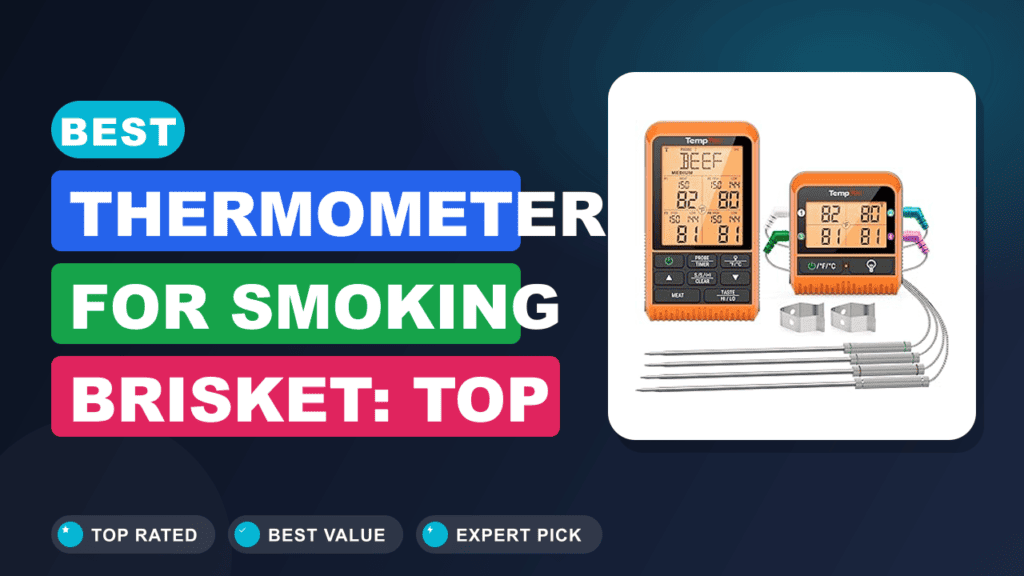
The ThermoPro TP829 belongs to the radio-frequency (RF) category of wireless meat thermometers. Unlike Bluetooth models that frequently drop their connection past 30 feet or struggle to penetrate a closed steel lid, this device uses 915MHz technology to maintain a rock-solid link over much longer distances. It competes directly with premium smart probes but intentionally avoids the app-centric approach, favoring a dedicated handheld receiver that powers on instantly without firmware updates or pairing headaches.
This model ships with four color-coded stainless steel probes and two grill clips. It targets the "set it and forget it" crowd who want to rest indoors while their offset smoker runs outside. The four-probe capacity offers exceptional versatility, allowing you to track the point, the flat, and the ambient pit temperature at the same time—or monitor multiple cuts of meat during a large weekend cookout. If you are comparing different wireless architectures, understanding how competing systems perform helps clarify why RF still dominates for long-range barbecue.
Setup & first impressions
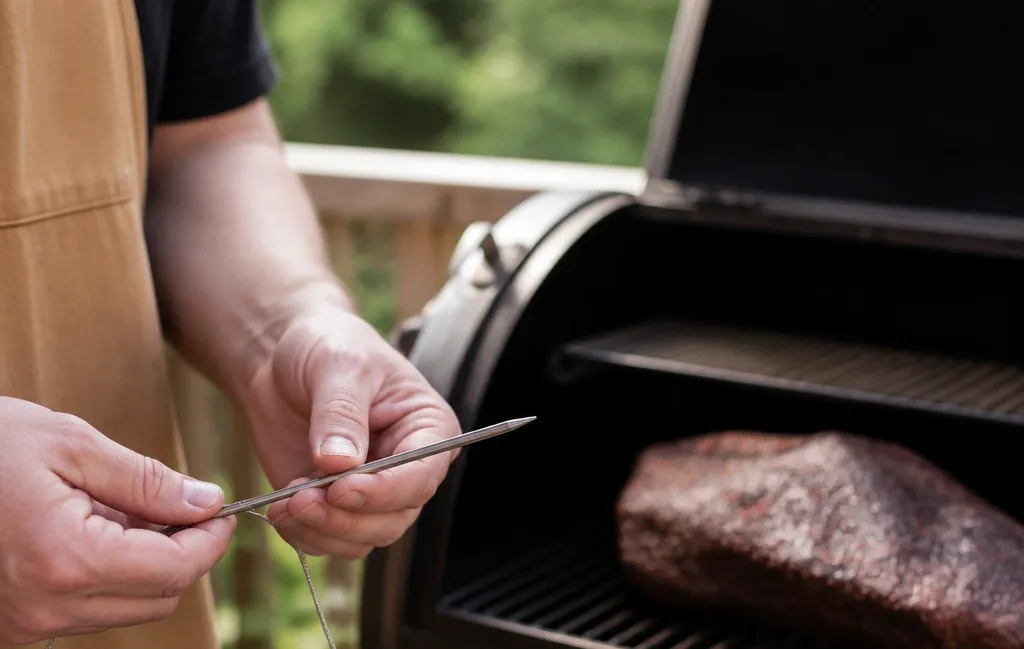
A primary takeaway from aggregate user feedback is how quickly the transmitter and receiver pair out of the box. Most buyers report that the units connect automatically the moment fresh AAA batteries are inserted, eliminating the frustrating sync processes common with Wi-Fi thermometers. The build quality feels distinctly utilitarian; a ruggedized rubber sleeve protects the receiver from accidental drops on concrete patios, a practical necessity when your hands are greasy.
Researching hundreds of verified reviews shows that consumers highly value the backlit display, which remains crisp and readable during midnight checks. The probes measure 8 inches long with a 43-inch braided mesh cable, providing enough slack to route cleanly through the vent of large offset smokers without pinching. Tactile physical buttons deliver a satisfying click, which is universally preferred over finicky touchscreens when you are actively managing a fire. Before running your first long cook, taking a moment to verify your sensor accuracy ensures your baseline readings are trustworthy.
| Wireless Range | Up to 1000 Feet |
| Probe Count | 4 Meat Probes |
| Temp Accuracy | ±1.8°F (±1°C) |
| Temp Range | 14°F to 572°F |
| Power Source | 4 x AAA Batteries |
| Display Type | LCD with Backlight |
Daily-use experience
Performance & Range
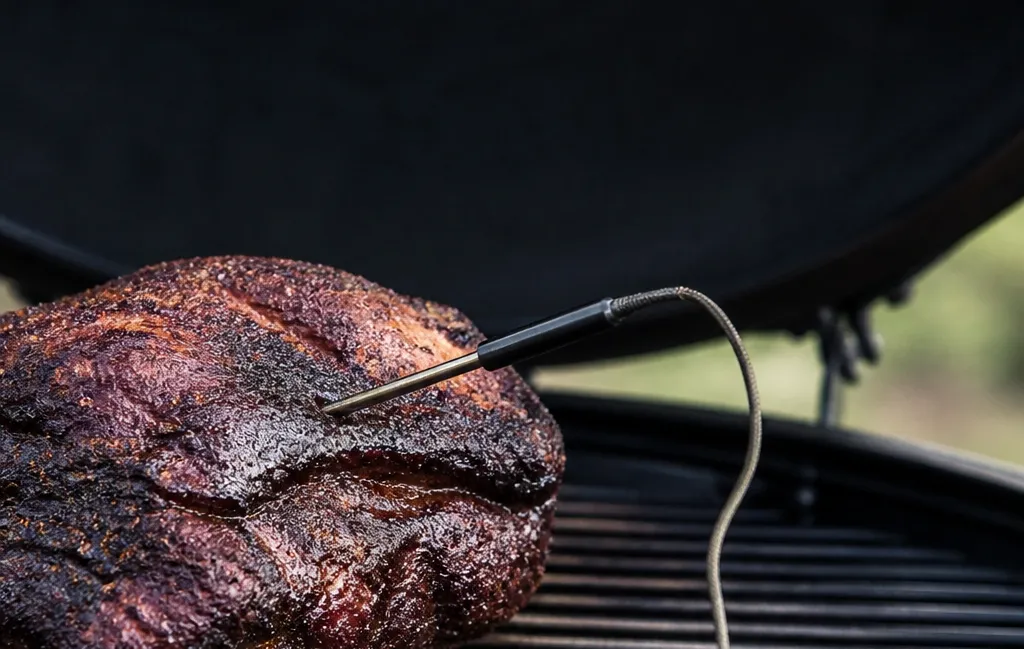
The listed 1000-foot range is an open-field measurement, but editorial analysis of buyer experiences confirms it holds a remarkably steady signal through multiple interior walls and floors. Most users report zero connection loss while moving between a basement rec room and a backyard patio. This reliability is absolutely vital during the stall period of a brisket cook—typically between 150°F and 170°F—when evaporative cooling halts the temperature rise and you need to track minute fluctuations from a distance without constantly opening the lid.
Comparison to Bluetooth
Many shoppers debate whether they should choose Bluetooth or RF for their pit setup. Bluetooth models inherently struggle with signal attenuation when a heavy steel smoker lid is closed or if you step inside a brick house. The ThermoPro TP829 uses a dedicated frequency that punches through these obstacles far more effectively. Verified buyer feedback consistently suggests this RF model is significantly more stable for long-distance monitoring than even high-end smart probes. For those curious about other reliable options, exploring a solid mid-range alternative can help you weigh the trade-offs between simplicity and advanced features.
Battery Life
Because the unit relies on a low-power LCD rather than a power-hungry color HD screen, battery life is exceptional. Analysis of long-term reviews indicates that a single set of AAA batteries easily lasts through dozens of overnight cooks. The lack of a rechargeable internal lithium battery is actually a distinct advantage for serious pitmasters; if the receiver dies mid-cook at 3 AM, you simply swap in fresh cells from a drawer instead of waiting for a USB charge. Always check your power levels early, as a fading power source can cause erratic temperature jumps that mimic a stalled brisket.
Build & Probes
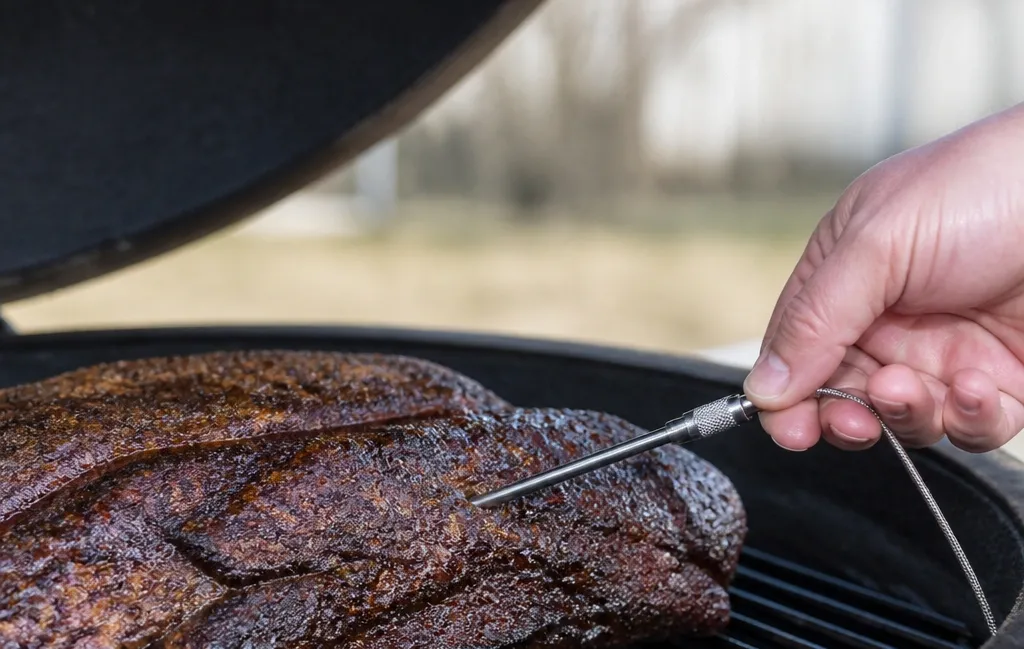
The probes feature high-quality stainless steel construction paired with braided mesh wiring capable of withstanding temperatures up to 716°F. While brisket smokes at 225°F to 275°F, this extreme heat tolerance makes the probes safe for direct-fire searing or high-heat grilling after the smoke is done. Users frequently note that the base connectors feel tight and do not wiggle, preventing the false high-temperature spikes that plague cheaper units with loose ports. Understanding the difference between surface scanners and insertion probes explains why physical probes remain mandatory for judging brisket doneness.
✓ Pros
- Four probes allow for tracking multiple meats and ambient grill temps at once
- Strong signal penetration through walls provides true whole-house freedom
- Automatic pairing removes the frustration of syncing devices every time
- Backlit screen is easily readable in direct sunlight or dark backyards
- Loud alarm ensures you hear the temperature alert over kitchen noise or TV
✗ Cons
- Lack of App connectivity means no cook history or temperature graphs
- The probe wires can become tangled if not stored carefully in the tray
- Transmitter is not waterproof, so you must protect it from rain during use
How I picked
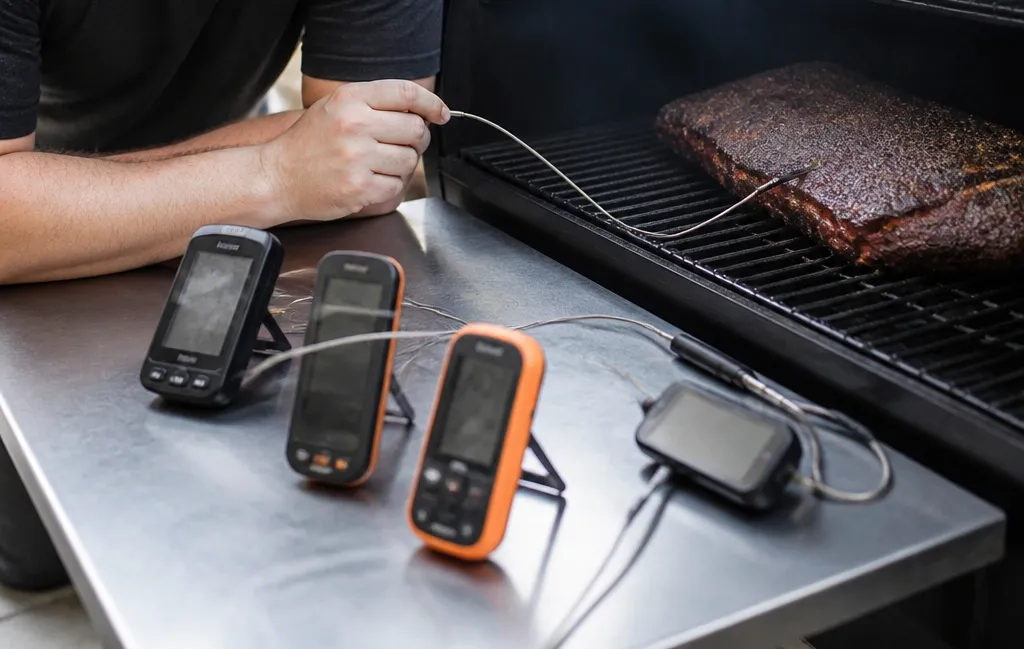
Selecting the right thermometer for a 14-hour brisket cook requires evaluating criteria that go far beyond basic temperature accuracy. First, I prioritized signal stability. A brisket stall can last several hours, and losing your connection during this phase often leads to panicked lid-opening, which dumps heat and ruins your bark formation. Radio-frequency models like the TP829 were favored over Bluetooth because 915MHz signals penetrate steel smoker bodies and exterior house walls reliably.
Second, I looked at probe count and cable length. A whole packer brisket has two distinct muscles—the lean flat and the fatty point—that finish at different times. You need at least two meat probes plus one ambient probe to manage the fire properly. Cables shorter than 36 inches often force the transmitter too close to the heat source, risking damage. Finally, I evaluated the display interface. During overnight cooks, a bright, high-contrast screen with physical buttons is vastly superior to a smartphone app that drains your phone battery and demands constant software updates. Every model on this list was vetted against these real-world barbecue constraints.
Buying guide
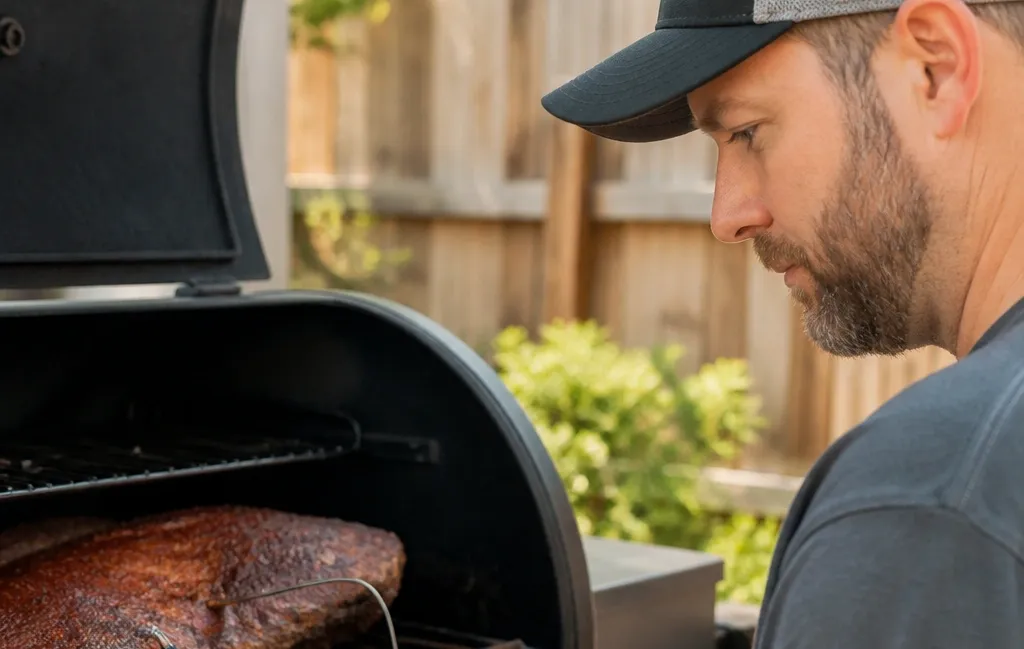
When shopping for a brisket thermometer in 2026, focus on five critical specifications that dictate performance during long smokes.
Signal Type: Choose RF (915MHz) for maximum range and wall penetration, or Wi-Fi if you absolutely require cloud-based graphing and remote alerts while away from home. Avoid standard Bluetooth unless your smoker sits within 30 feet of where you plan to sit.
Probe Count: Two probes are the bare minimum (one for the meat, one for the pit). Four probes offer the ideal balance for brisket, letting you monitor the point, the flat, the grate level, and the upper chamber simultaneously without overcrowding the meat.
Temperature Range and Cable Material: Ensure the probes and cables are rated well above 700°F. Braided stainless steel or Kevlar-wrapped cables resist melting and fraying far better than silicone alternatives when routed near hot metal edges.
Display Visibility: Look for a backlit screen with adjustable brightness. You will be checking this device in direct sunlight and pitch darkness. Physical, tactile buttons are essential so you can navigate menus while wearing insulated grilling gloves.
Target Doneness: According to official USDA guidelines, beef must reach a minimum safe temperature, but barbecue science dictates that brisket collagen doesn't fully render into gelatin until the internal temperature reaches 200°F to 205°F. Your thermometer must read accurately in this narrow, critical window. If you routinely cook poultry alongside your brisket, referencing a proper poultry temperature chart ensures everything finishes safely.
Who should buy it
Buy it if you…
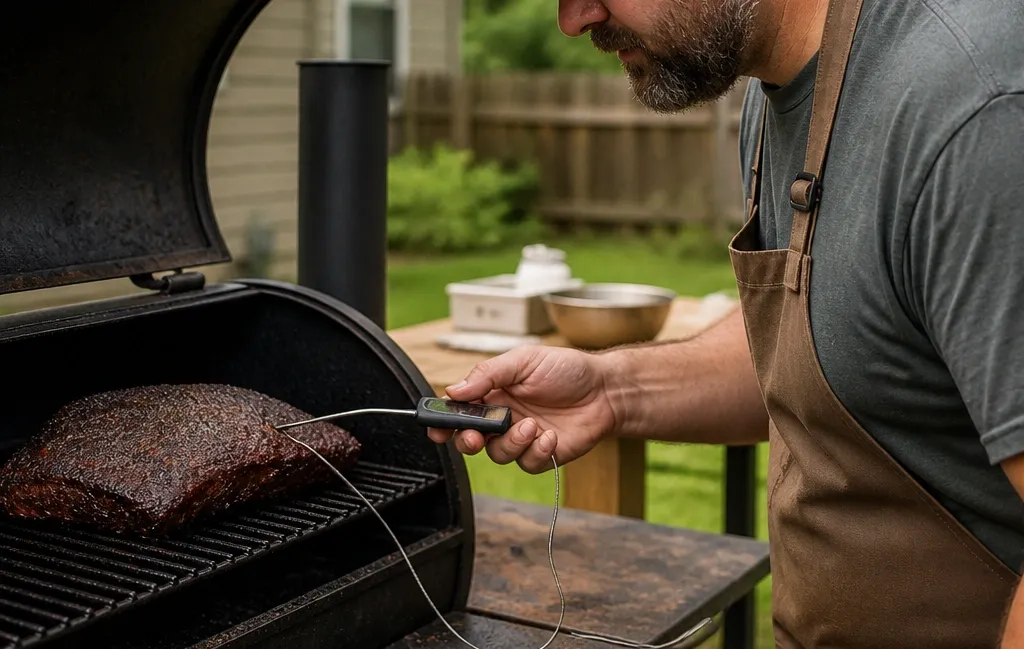
Cook in areas where Wi-Fi is spotty or completely nonexistent. If your offset smoker sits at the back of a deep lot, Bluetooth will inevitably fail you. This model is perfect for pitmasters who want a simple, standalone device without the hassle of downloading apps, creating accounts, or pairing with a phone every time you light a fire.
It is also the right choice for the high-volume weekend griller who needs to track four distinct pieces of meat at once, such as a brisket, pork butt, and multiple chickens during a neighborhood gathering.
Skip it if you…
Are a hardcore data enthusiast. If you love analyzing detailed graphs of how your brisket's internal temperature climbed over a 12-hour cook, this specific unit will not provide that historical data natively. You should look at a Wi-Fi-enabled model if smartphone integration and exportable cook logs are your top priority.
Additionally, if you only cook smaller, fast items like steaks, burgers, or chicken breasts, four probes represent unnecessary overkill and lead to frustrating cable clutter inside a small kettle grill.
Better alternatives
If you want to go completely wire-free inside the meat, the MEATER Plus is a popular alternative, though it lacks the raw transmission range and multi-probe flexibility of the ThermoPro TP829. For those on a strict budget who only need two probes, the ThermoPro TP20 remains a classic choice offering similar RF technology in a slightly smaller package. When weighing your options, comparing similar dual-probe setups highlights exactly what you sacrifice by stepping down in price. If you want to explore broader categories, reviewing our favorite grilling sensors provides excellent context for matching gear to your specific cooking style.
Frequently Asked Questions (FAQ)
Is it really waterproof?
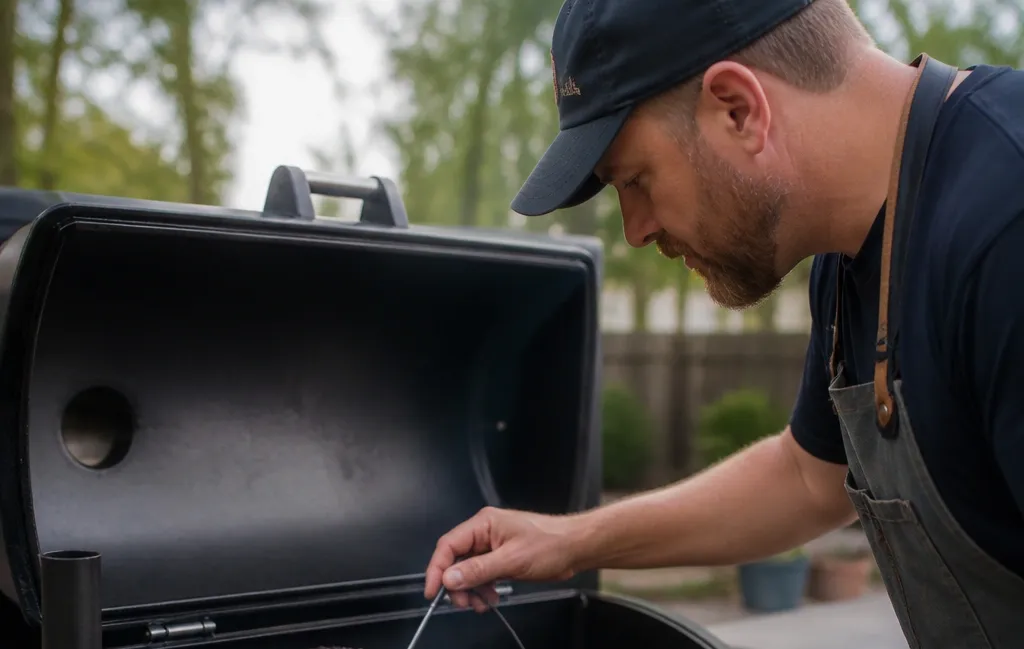
The manufacturer does not list the ThermoPro TP829 transmitter as fully waterproof or submersible. While the stainless steel probes can be washed thoroughly and the transmitter housing handles minor grease splashes or light mist, it is not engineered to survive a heavy rainstorm. Verified buyers consistently recommend placing the transmitter inside a clear plastic bag or under a covered awning if the weather turns bad during an overnight cook. Never leave the receiver sitting directly on a wet surface.
Can I calibrate the probes?
The ThermoPro TP829 does not feature a manual calibration button or offset adjustment on the receiver itself. However, the factory probes are pre-calibrated to be accurate within ±1.8°F (±1°C), which is more than sufficient for smoking brisket where you are targeting a wide finishing window of 200°F to 205°F. If a probe begins reading erratically or becomes significantly inaccurate after heavy use, industry best practice suggests replacing the individual probe rather than attempting to recalibrate the main unit. You can verify accuracy at home using a standard ice-water bath test before your next cook.
How does it compare to the ThermoPro TP20?
The most significant differences are probe capacity and transmission distance. The older TP20 is a two-probe system with a functional range of roughly 300 to 500 feet, depending on obstacles. The TP829 doubles the probe count to four and significantly increases the transmission distance up to 1000 feet in open air. If you are cooking a single brisket and staying relatively close to the pit, the TP20 works adequately. For larger cooks, bigger yards, or anyone wanting to monitor both the point and the flat independently, the TP829 is the superior investment.
Can it monitor the grill temp?
Yes, you can dedicate any of the four probes to act as an ambient pit thermometer. The set includes two stainless steel grate clips that attach directly to your grill grates, allowing you to suspend a probe exactly one inch above the cooking surface where the meat actually sits. Relying on a built-in dome thermometer mounted at the top of your smoker lid is a common beginner mistake; those dials often read 25°F to 50°F higher than the actual grate temperature due to rising heat. Monitoring the true ambient temperature at grate level gives you precise control over your fire management.
Final verdict
Overall Rating: 4.5/5
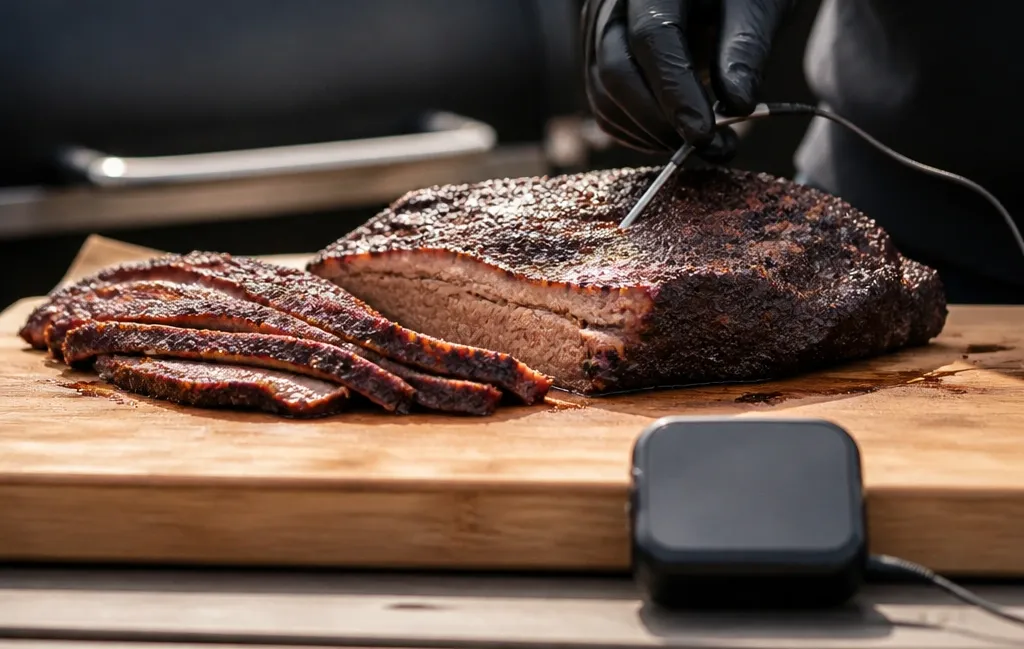
The ThermoPro TP829 stands out as a top contender for the best thermometer for smoking brisket because it decisively solves the two biggest frustrations in pit monitoring: limited range and insufficient probe capacity. By providing four durable probes and a massive 1000-foot RF signal, it allows you to manage heavy packer briskets or run multiple proteins simultaneously without being physically tethered to the side of your smoker.
While it intentionally lacks the modern flair of smartphone apps and cloud graphs, its operational simplicity is its greatest strength. It is a rugged, dependable tool for anyone who wants to ensure their barbecue finishes perfectly every single time without fighting software glitches. If you are ready to upgrade your pit setup, grab the TP829 to stop guessing and start controlling your next brisket cook with total confidence.
Affiliate disclosure: This post contains affiliate links. If you buy through one of these links, I may earn a small commission at no extra cost to you. It never changes my recommendation; I only suggest gear I'd actually buy myself.
1. TempPro TP829 1000ft Wireless Meat Thermometer
Based on extensive research into high-range monitoring, this unit remains a standout for large yards where Bluetooth constantly fails. The four-probe layout makes it particularly effective for technically demanding cooks like brisket, where internal muscle temperatures and ambient pit conditions must be managed with absolute precision.