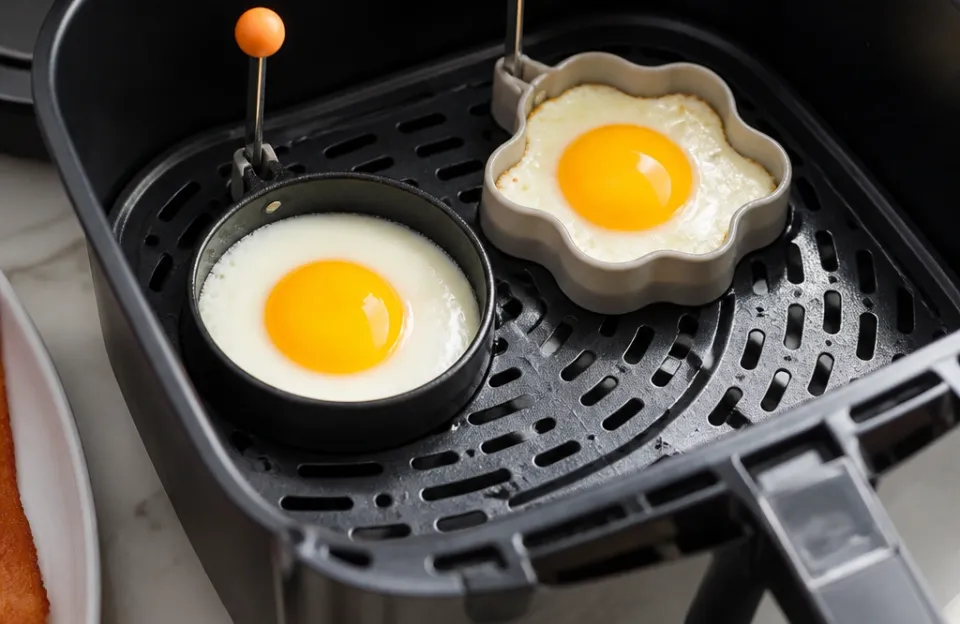
Air fryer replacement pans are spare baskets, crisper trays, or solid inserts sold separately to swap out a worn or damaged original cooking chamber. They come in nonstick metal, stainless steel, ceramic coated, and silicone versions. The right one depends on your air fryer's exact dimensions, shape, and brand.
If the coating on your current basket is peeling, or if you just want a backup tray for batch cooking, finding the correct fit matters more than picking a specific material. A pan that sits too high blocks the heating element. One that sits too low ruins airflow.
This guide covers how these pans work, what materials hold up best, how to measure for a proper fit, and when a replacement makes sense compared to buying a new appliance.
Why the Original Basket Wears Out
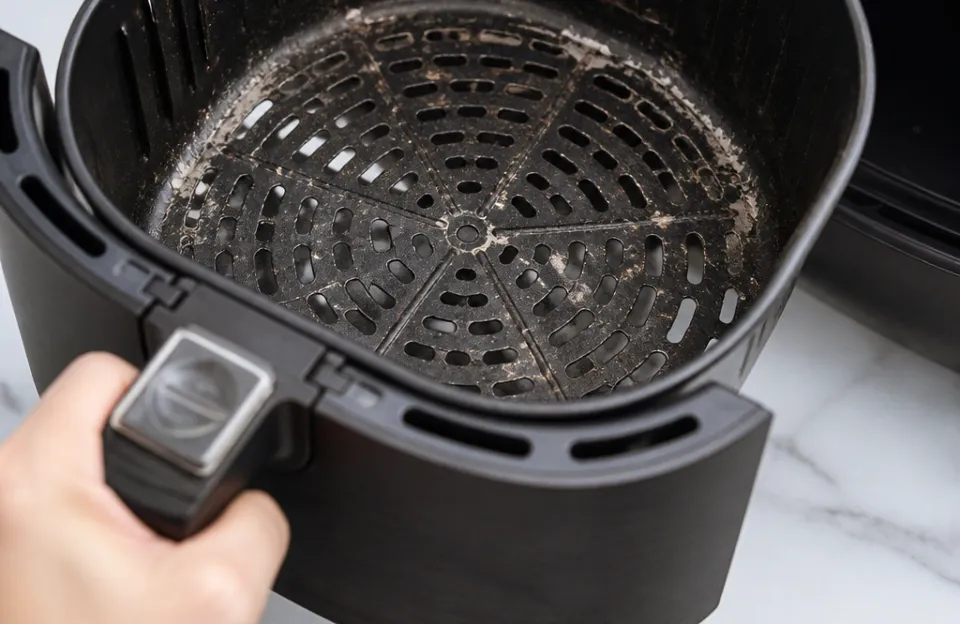
Most factory air fryer baskets use a PTFE based nonstick coating applied over stamped steel or aluminum. That coating handles daily cooking for about two to three years before it starts to degrade. High heat accelerates this process.
Scraping food off with metal utensils scratches the surface. Even washing it in a dishwasher strips the finish faster than hand washing. Once the coating chips, food sticks badly, and the exposed base metal can rust.
The FDA regulates cookware coatings for food contact safety. When a nonstick surface flakes into your food, the pan has reached the end of its safe lifespan. Swapping it out prevents metallic tastes and keeps small coating fragments away from your meals.
Heat cycles cause physical warping too. Thin metal expands and contracts every time you run the machine at 400 degrees. Over hundreds of uses, a perfectly round basket slowly turns oval.
It stops clicking into the housing correctly. Air leaks out the sides instead of circulating through the bottom vents. Replacing the warped pan restores that tight seal.
Peeling Coatings and Scratched Surfaces
A scratched nonstick surface loses its release properties quickly. Oil pools in the grooves left by spatulas or forks. Food burns onto those spots during the next cook.
You scrub harder to clean it, which creates deeper scratches. This cycle destroys the pan within months once it starts. Replacement pans give you a fresh cooking surface without paying for an entire new countertop appliance.
Warped Shapes That Block Airflow
Air fryers cook by moving superheated air rapidly around the food. The basket shape directs that flow. If the bottom dents inward or the rim bends outward, the fan pushes air against flat metal instead of through the perforations.
Your food steams rather than crisps. A new pan restores the geometry the engineers designed for that specific model. Getting the right amount of crisp relies heavily on that unobstructed circulation.
Materials Used for Air Fryer Replacement Pans
Manufacturers make replacement pans from four main materials. Each one changes how heat transfers, how long the pan lasts, and how much maintenance it requires.
| Material | Max Safe Temp | Durability | Cleaning Method | Typical Cost Range |
|---|---|---|---|---|
| Nonstick Coated Steel | 450°F | 1 to 3 years | Hand wash only | $15 to $35 |
| Stainless Steel | 600°F+ | 5+ years | Dishwasher safe | $25 to $50 |
| Ceramic Coated | 500°F | 2 to 4 years | Hand wash preferred | $20 to $45 |
| Silicone | 450°F | 3+ years | Dishwasher safe | $10 to $25 |
Nonstick coated steel matches what came in the box originally. It releases food easily and heats up fast. The downside is the same limited lifespan that forced you to buy a replacement in the first place.
Avoid aerosol cooking sprays on these surfaces. The propellants leave a residue that bonds to the coating under high heat, creating a sticky film that soap cannot remove.
Stainless steel lasts the longest. It doesn't chip because there is no coating to chip. You can scrub it with steel wool if something burns on.
The tradeoff is sticking. Lean proteins and battered foods bond to bare stainless steel unless you apply a thin layer of oil first. If you frequently prepare flour dredged items, expect some cleanup effort with bare steel.
Ceramic coated pans sit between nonstick and stainless. They use a silica based sol gel coating instead of PTFE. This material handles slightly higher temperatures without breaking down.
It feels smoother than standard nonstick. However, ceramic coatings lose their slickness gradually. They don't peel like PTFE, but food starts requiring more oil to release after a year or two of heavy use.
Silicone options are usually solid liners or flexible baskets that drop into the existing metal frame. They catch grease and crumbs, keeping the main metal basket clean. Silicone doesn't conduct heat well.
Food sitting directly on thick silicone won't brown on the bottom. These work best as protective liners rather than primary cooking vessels.
Measuring for the Correct Fit
Buying a replacement pan without measuring your old one leads to returns. Air fryer housings have zero tolerance for oversized parts. Even being off by a quarter inch prevents the drawer from closing fully.
Remove the old basket. Measure the width across the widest point. For round baskets, measure the diameter straight across the center.
For square or rectangular ones, measure both length and width. Write these numbers down.
Next, measure the height from the bottom exterior to the top rim. Include any feet or raised bumps on the bottom. The housing has a fixed depth.
A taller pan hits the heating coil above it. A shorter pan drops too far down, leaving a gap where hot air escapes without touching the food.
Check the handle attachment point. Some brands use a push button release mechanism built into the handle base. The replacement pan needs the exact cutout or bracket spacing to accept that handle.
Universal pans skip this entirely and rely on silicone grips or separate tongs, which changes how you load and unload the machine.
Round Baskets Versus Square Drawers
Round baskets spin or sit inside cylindrical housings common in older or smaller models. Square drawers slide in and out like an oven rack. They maximize corner space.
You cannot put a square pan in a round housing, and a round pan in a square drawer leaves large dead zones where air swirls uselessly. Match the shape exactly.
Checking Clearance Above the Heating Element
Open the empty air fryer and look up at the exposed coil or halogen bulb. There needs to be at least half an inch of space between the top edge of your food and that element. If you buy a deeper replacement pan, that clearance shrinks.
Grease splatters hitting a heating element smoke instantly. Keep the pan depth identical to the original to maintain safe overhead room. Monitoring internal temps with a reliable digital probe gets harder if the pan sits too high and blocks access.
OEM Parts Versus Third Party Options
Original equipment manufacturer parts carry the brand name of your air fryer. They guarantee a perfect fit because they are the exact same part installed at the factory. They also cost more.
Brands know you need that specific shape, so pricing stays high. Availability is another issue. Manufacturers stop producing parts for discontinued models after a few years.
Third party companies reverse engineer popular sizes. They sell "compatible with" pans for major brands. These cost less and often come in multi packs.
The quality varies wildly. Some third party pans use thicker gauge steel than the original. Others use thinner metal that warps within weeks.
Read reviews specifically looking for comments about fitment. If multiple buyers mention the handle wobbling or the drawer sticking, skip that listing.
Universal pans exist for people whose models are completely discontinued. These are standalone containers that sit inside the outer shell without locking into a specific rail system. They work, but they lack the secure click of a fitted basket.
You have to pull them out carefully using oven mitts or silicone grabbers.
When you cook marinated recipes, a poorly fitting third party pan might leak sugary liquids directly onto the base plate. Sugars burn fast and create difficult messes. Stick to OEM or highly rated compatible options if you cook wet batters or heavy glazes regularly.
When to Replace the Pan Instead of the Appliance
An air fryer is mostly a heating element, a fan, and a plastic shell. The basket takes all the physical abuse. If the machine powers on, the fan spins quietly, and the heater reaches temperature, replacing the pan makes financial sense.
A quality replacement costs a fraction of a new unit.
Look at the condition of the outer housing. If the plastic is melting near the vents, or the power cord shows exposed wire, the problem goes beyond the basket. Those are fire hazards.
Stop using the machine entirely. But if the exterior is fine and only the cooking surface is ruined, a new pan extends the appliance's life by years.
Consider your cooking habits. If you started using the machine occasionally and now cook daily, upgrading to a heavier duty replacement pan makes sense. Moving from a thin nonstick factory pan to a thick stainless steel insert changes how the machine performs.
It holds heat better between batches. Batch cooking becomes easier when you aren't waiting for a flimsy pan to reheat. Planning ahead for weekly meal prep sessions is much smoother with a sturdy insert that resists warping.
Maintaining Replacement Pans for Maximum Lifespan
How you treat the new pan determines whether it lasts six months or five years. Thermal shock is the biggest killer. Never take a 400 degree metal pan and set it directly under cold running water.
The rapid contraction bends the metal permanently. Let it cool on a heat safe trivet until you can touch it comfortably. Then wash it.
Hand washing preserves nonstick and ceramic coatings. Use a soft sponge and standard dish soap. Avoid abrasive scrubbers.
If baked on grease accumulates, soak the pan in warm soapy water for twenty minutes. The residue softens and wipes away without scraping.
For stainless steel replacements, you have more freedom. Barkeepers Friend or similar powdered cleaners remove rainbow heat stains and stuck on carbon. Scrub with the grain of the steel, not in circles, to avoid visible scratching patterns.
Rinse thoroughly.
Dry the pan completely before storing it. Trapped moisture causes flash rust on uncoated steel edges. Leave the drawer slightly open after washing to let air circulate inside the housing.
This prevents mold growth in humid kitchens.
If you use silicone liners inside your replacement pan, wash them separately. Grease builds up on silicone differently than metal. It creates a white film over time.
Boiling the liner in water with a splash of vinegar strips that film and restores the original texture. Keeping track of overall calorie counts means accounting for residual oils trapped in degraded silicone, which can transfer unwanted fats back onto fresh food.
Compatibility Issues Across Popular Brands
Different manufacturers design their locking mechanisms differently. A pan that fits physically might not trigger the safety switch that tells the machine it is closed. Many air fryers have a microswitch near the back or side of the housing.
The basket pushes a lever to engage it. If the replacement pan lacks the exact tab placement, the machine stays off even when fully inserted.
Basket style fryers usually have a detachable inner crisper plate that sits inside the outer drawer. You need to replace both if the outer drawer warps. Crisper plates alone are cheaper and easier to find.
Drawer style units combine everything into one piece. Replacing the whole assembly costs more.
Some newer dual zone models share identical baskets between the left and right sides. Others use one large and one small. Check your specific model number on the sticker underneath the unit.
Searching by visual appearance alone leads to wrong sizes because brands reuse exterior shells for different capacity internals.
Always verify the maximum temperature rating printed on the replacement packaging. Factory pans are tested alongside the heating element's output. A third party pan rated only to 350 degrees will fail quickly in a machine that routinely runs at 400.
Pairing New Pans With Cooking Adjustments
A fresh pan conducts heat differently than a degraded one. Old scratched pans lose thermal efficiency because dark carbon buildup acts as an insulator. A shiny new pan reflects radiant heat initially, then absorbs it evenly.
You might notice food cooks slightly faster or browns more aggressively during the first few uses.
Reduce your usual cook time by one or two minutes on the first attempt. Check the food early. Once you understand how the new material behaves, adjust your recipes accordingly.
Stainless steel requires preheating the empty pan for three minutes before adding food. This closes the pores in the metal and creates a temporary natural release layer. Nonstick and ceramic pans do not need preheating.
Adding food to a cold nonstick pan is fine. Adding food to cold stainless guarantees sticking.
Oil application changes too. With a new nonstick surface, you barely need spray. With stainless, brush a light coat of high smoke point oil directly onto the metal.
Avocado oil or refined coconut oil works well. Olive oil smokes too fast at air frying temperatures. Pairing your new pan with a bright acidic dip cuts through any slight excess oil needed during the break in period.
If you switched from a perforated metal basket to a solid silicone liner, expect softer bottoms. Air cannot reach the underside of the food. Flip items halfway through cooking to compensate.
Solid pans work better for baking tasks like muffins or casseroles inside the air fryer. Perforated pans remain superior for roasting vegetables or crisping proteins.
Using a quick reading thermometer helps calibrate your timing with the new pan. Different metals transfer heat at different rates, meaning the internal temp of your food might climb faster or slower than you are used to.
Frequently asked questions
Can I use a slightly smaller pan if my exact size is discontinued?
You can, but it reduces cooking capacity and alters airflow. A smaller pan leaves gaps around the edges where hot air rushes past without interacting with the food. The machine may run hotter internally because the fan encounters less resistance.
Place the smaller pan in the center and monitor the exterior housing for excessive heat during the first few uses.
Are silicone replacement pans safe at 400 degrees?
Food grade silicone is generally rated to 428 or 450 degrees Fahrenheit. Check the manufacturer stamp on your specific product. At sustained high temperatures near their limit, silicone can become brittle over time.
It won't melt inside a standard home air fryer, but it degrades faster than metal. Keep silicone options for lower temperature roasting rather than maximum heat searing.
Do I need to season a stainless steel air fryer pan?
Yes. Wash it with soap first to remove manufacturing oils. Dry it completely.
Rub a thin layer of high smoke point oil over the interior. Run the air fryer at 400 degrees for ten minutes. Let it cool.
Wipe out the excess oil. This polymerizes the fat into the microscopic pores of the steel, creating a semi nonstick patina. Repeat this monthly if you use it daily.
Will a universal pan void my air fryer warranty?
Warranties typically cover defects in the motor, heating element, and electronics. Using an unapproved accessory rarely voids the electrical warranty unless it directly causes damage. If a universal pan blocks a vent and melts the plastic housing, the manufacturer will likely deny that specific claim.
Stick to approved accessories while the warranty period is active.
How do I stop the new nonstick pan from smelling like chemicals?
New PTFE coatings sometimes off gas slightly during their first heating cycle. Wash the pan thoroughly before use. Run the empty air fryer outside or under a strong exhaust hood at 350 degrees for fifteen minutes.
Open windows. The smell dissipates after this initial burn off. If a strong odor persists after three uses, the coating may be defective or made from lower grade materials.
Is it worth buying a ceramic coated replacement over standard nonstick?
Ceramic handles higher heat without releasing fumes and avoids PTFE entirely. It provides excellent initial food release. The tradeoff is longevity.
Standard PTFE nonstick tends to last longer under heavy daily use before losing its slickness, provided you never exceed 450 degrees or use metal tools. Ceramic loses its nonstick properties gradually regardless of care. Choose ceramic if avoiding PTFE is your priority.
Choose standard nonstick if maximizing lifespan per dollar matters most.
Before You Buy a Replacement
Measure twice. Check the microswitch alignment. Decide if you want easy cleanup or long term durability.
Air fryer replacement pans solve the most common failure point of countertop convection cooking without forcing you to replace a perfectly good machine. Match the material to your actual cooking habits, respect the temperature limits, and the new pan will outlast the original.