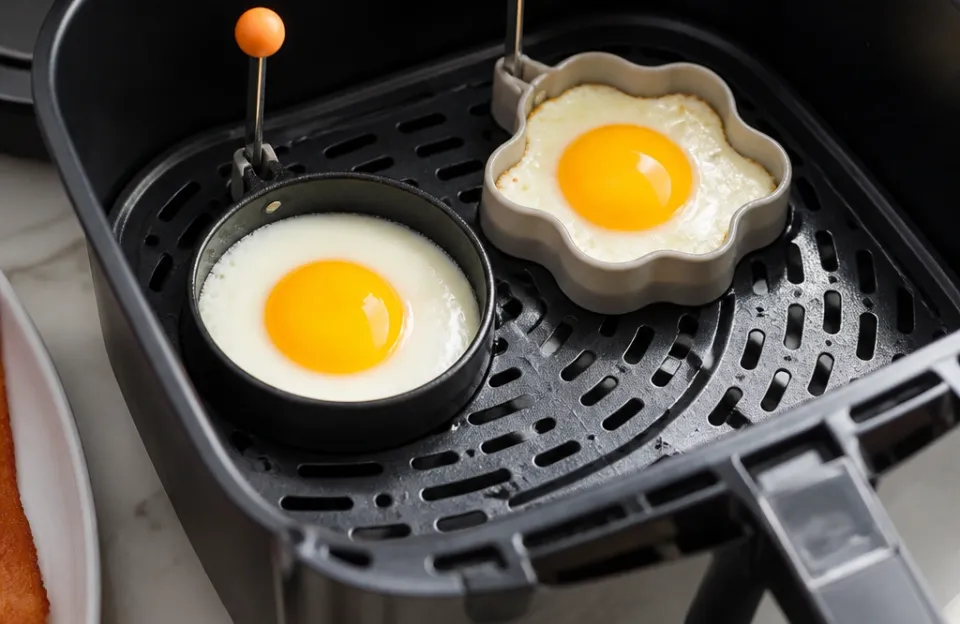
Air fryer replacement trays are the removable baskets, crisper plates, or racks that sit inside your air fryer to hold food and allow hot air to circulate. Over time, the nonstick coating wears off, the metal warps, or the mesh tears. When that happens, buying a new tray is far cheaper than replacing the entire appliance.
Finding the right air fryer replacement trays depends on your specific brand, basket shape, and exact dimensions. A tray meant for a Cosori square basket will not fit a round Ninja drawer, even if both machines hold five quarts. This guide covers why these parts wear out, what materials work best, how to measure your machine for a perfect fit, and where people usually go wrong when shopping for them.
Why the original basket stops working
The nonstick coating on most factory trays uses PTFE, commonly known as Teflon. Repeated exposure to temperatures above 400 degrees Fahrenheit breaks down this coating. You will see it start to flake, peel, or turn dull.
Once the coating fails, food sticks aggressively. Scrubbing stuck-on food with abrasive sponges only accelerates the damage.
Heat cycling also causes physical changes to the metal. The tray heats up rapidly during cooking and cools down quickly when you pull it out. Over hundreds of cycles, thin aluminum or steel can warp.
A warped crisper plate no longer sits flat in the drawer. It rattles when the fan spins, and it blocks airflow unevenly, leaving some food raw while burning the rest.
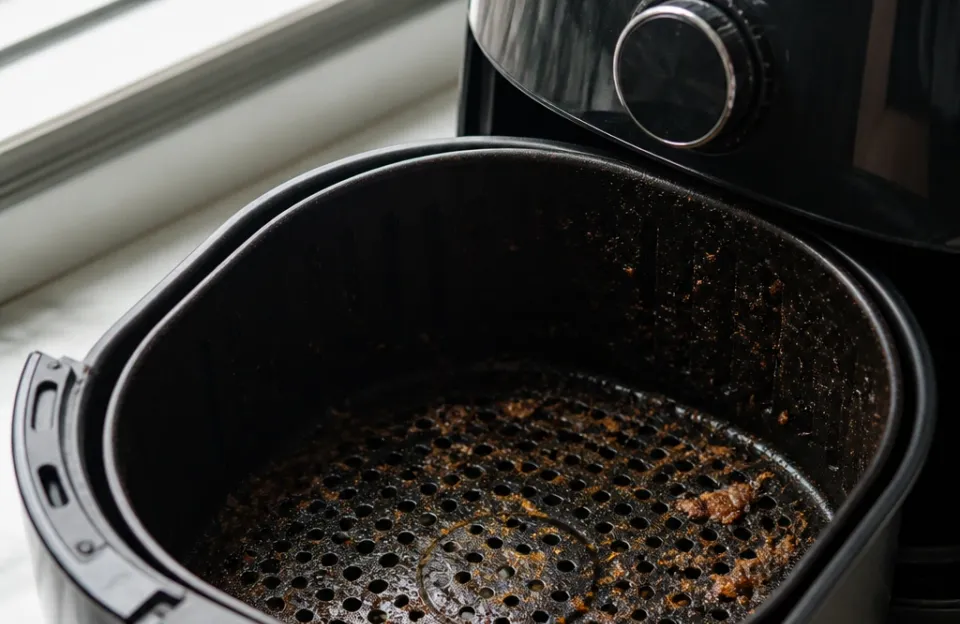
Grease buildup plays a role too. If you frequently cook fatty foods like crispy chicken skin, rendered fat bakes into the corners and mesh holes. Eventually, carbonized grease clogs the perforations.
The tray loses its ability to let air pass through, which defeats the purpose of convection cooking.
Materials used for air fryer replacement trays
Manufacturers use three main materials for aftermarket trays: stainless steel, aluminum with a fresh nonstick coating, and silicone. Each has distinct tradeoffs regarding heat tolerance, weight, and cleanup.
Stainless steel racks and baskets
Stainless steel does not have a chemical coating to peel off. It handles any temperature an air fryer can produce, typically up to 500 degrees Fahrenheit. You can scrub it with steel wool without ruining the surface.
Many third-party sellers offer stainless steel racks designed to replace the standard crisper plate.
The main drawback is sticking. Without a nonstick layer, proteins and starchy foods bond directly to bare steel. You need to apply oil before cooking.
Stainless steel is also heavier than aluminum, which matters if you have a lightweight plastic drawer that might crack under extra weight.
Aluminum with ceramic or PTFE coatings
Most original equipment manufacturer (OEM) trays are stamped aluminum coated with PTFE or a ceramic alternative. Aftermarket versions follow the same design. They are lightweight, heat up fast, and release food easily when the coating is intact.
Ceramic coatings avoid PTFE entirely. They handle high heat well and do not release toxic fumes if overheated. However, ceramic tends to lose its slickness faster than PTFE.
After a few months of daily use, a ceramic-coated tray often requires more oil to prevent sticking. Always verify that the coating meets FDA food-contact safety standards by checking the FDA guidelines on cookware before buying from unknown brands.
Silicone inserts and mats
Silicone trays or mats sit inside your existing metal basket. They are flexible, completely nonstick, and easy to wash. They catch crumbs and drippings, keeping the main basket clean.
Silicone restricts airflow. Most silicone mats have raised ridges or punched holes to compensate, but they still block more air than a wire rack. Food cooked on silicone takes slightly longer to brown.
Silicone is also floppy, making it hard to lift out when loaded with heavy items like a batch of marinated wings prepared ahead of time for easy weekday dinners.
| Material | Max Temp | Nonstick Level | Durability | Airflow |
|---|---|---|---|---|
| Stainless Steel | 500°F+ | Low | Very High | Excellent |
| Coated Aluminum | 400-450°F | High | Moderate | Good |
| Ceramic Coated | 450-500°F | Medium-High | Moderate | Good |
| Silicone | 430-450°F | Very High | High | Poor-Moderate |
Measuring your machine for a proper fit
Buying a tray based solely on quart capacity leads to returns. A "5-quart tray" from one brand might be round, while yours is square. Even among square baskets, corner radii differ.
You must measure the interior space yourself.
Remove the old tray. Use a tape measure to record the length and width at the widest points. If the basket has rounded corners, measure the straight edges, then note the radius of the curve.
Measure the depth from the bottom of the tray to the top lip. Finally, check the height clearance. The heating element sits just above the basket.
If your new tray is taller than the original, it will hit the element and cause a fire hazard.
Write these numbers down. When shopping online, compare your measurements to the seller's listed dimensions. Allow a margin of about one-eighth of an inch so the tray slides in without jamming.
If you cannot find an exact match, look for universal adjustable racks, though these rarely fit as snugly as model-specific parts.
If you rely on precise cooking times, remember that a different tray material changes heat transfer. Switching from aluminum to stainless steel might require adjusting your timing, especially when tracking the exact calorie output of a strict meal plan, since uneven heat alters how much fat renders out.
OEM versus third-party options
Original replacement parts come directly from the air fryer manufacturer. Brands like Ninja, Cosori, Philips, and Instant Pot sell spare baskets and crisper plates through their websites or authorized retailers. These guarantee a perfect fit and use the same coating as the original unit.
OEM parts cost more. A replacement basket from a major brand often runs between twenty and forty dollars. Third-party sellers on Amazon or eBay offer similar-looking trays for ten to twenty dollars.
The savings are obvious, but quality varies wildly. Cheap third-party trays sometimes use thinner metal that warps faster, or unverified coatings that may not meet consumer safety regulations outlined by the Consumer Product Safety Commission.
Read reviews specifically looking for mentions of warping or peeling after a month of use. A third-party tray made of solid stainless steel is often safer than a cheap coated aluminum one, because you remove the risk of ingesting flaking chemicals entirely.
Universal racks and multi-layer setups
Some air fryers support stacking multiple racks to cook different items simultaneously. Universal replacement racks are sold in sets of two or three, often with small silicone feet to keep them separated.
These work well for dehydrating fruit or roasting vegetables. They are less effective for foods that need direct, high-speed air circulation to crisp up. If you stack wet batter or heavily sauced items, the top rack drips onto the bottom one.
When using multi-layer setups, rotate the racks halfway through cooking. The top rack sits closer to the heating element and browns faster. Swapping them prevents burnt tops and raw bottoms.
Keep in mind that adding extra racks reduces the overall volume available for each layer. You will need to cook smaller batches per shelf.
Cleaning habits that ruin replacement trays
A new tray lasts exactly as long as your cleaning habits allow. The most common mistake is washing a hot tray under cold water. Thermal shock bends metal instantly.
Let the tray cool completely on a heat-safe surface before taking it to the sink.
Avoid the dishwasher unless the manufacturer explicitly states the tray is dishwasher safe. Dishwasher detergent is highly alkaline. It eats away at nonstick coatings and discolors bare aluminum.
Hand washing with warm water, mild dish soap, and a soft sponge preserves the surface.
For baked-on grease, soak the tray in warm soapy water for twenty minutes. If you frequently use wet batters or flour dredges, soaking immediately after cooking prevents the starch from cementing to the metal. Never use metal spatulas to scrape food off a coated tray.
Nylon or silicone tools protect the finish.
If you notice stubborn residue after cooking heavily seasoned foods, try wiping the tray down while it is still warm, using a method similar to how you would manage a sticky dipping sauce spill before it dries and hardens on the surface.
Signs you need a new tray immediately
Sometimes a worn tray is just annoying. Other times, it is unsafe. Stop using the air fryer and order air fryer replacement trays if you notice any of these conditions:
- Flaking coating inside the food area. Small black specks in your meals mean the PTFE or ceramic layer is detaching. While ingesting small flakes of PTFE passes through the body without acute toxicity, breathing fumes from an overheated, degraded coating is dangerous.
- Visible warping. If the tray rocks back and forth when placed on a flat counter, it is bent. A bent tray disrupts the seal inside the drawer, allowing hot air to escape into the machine's electronics.
- Rust spots. Bare steel or damaged aluminum oxidizes when exposed to moisture. Rust compromises structural integrity and contaminates food.
- Torn mesh. Wire baskets rely on intact mesh to hold small items. Broken wires create sharp edges and allow food to fall into the heating chamber below.
If you are monitoring dietary intake closely, such as testing whether a lighter cooking method actually yields a healthier final dish, a degraded tray skews results by forcing you to add excess oil to compensate for lost nonstick properties.
How to swap the old tray safely
Replacing the tray takes less than a minute, but doing it wrong can damage the drawer mechanism. Unplug the machine and let it cool completely. Pull the drawer out fully.
Lift the old crisper plate straight up. Do not pry it from the edges, as this bends the retaining tabs inside the basket.
Before dropping in the new tray, wipe the bottom of the empty drawer. Crumbs and grease pool underneath the crisper plate over time. Leaving that debris in place causes smoking during the next preheat cycle.
Set the new tray in gently. Press down near the center until it clicks or sits flush against the bottom supports. Slide the drawer back into the housing.
It should glide smoothly. If you feel resistance, the tray is misaligned. Forcing the drawer closed can crack the plastic rails.
Run the empty air fryer at 350 degrees for five minutes before cooking food. This burns off any manufacturing oils left on the new metal. Open a window or turn on your exhaust fan during this step, as the initial heating often produces a slight odor.
Common mistakes buyers make
Shopping for air fryer replacement trays seems simple, yet people regularly end up with parts that do not work. Here are the frequent errors:
- Matching by model name instead of dimensions. Manufacturers update internal designs without changing the external model number. A 2021 version of a popular fryer might have a slightly wider basket than the 2023 version. Always measure.
- Assuming all round trays are interchangeable. Diameter matters, but so does the placement of the feet or lips that hold the tray above the drawer floor. A tray with feet in the wrong spots will tilt.
- Ignoring height restrictions. Buying a deeper basket to hold more food sounds logical. If that extra depth pushes food closer to the top heating coil, the food burns before the inside cooks.
- Buying coated trays for high-heat searing. If you routinely cook at 450 degrees, a standard PTFE tray degrades rapidly. Switch to stainless steel for high-heat applications.
- Overlooking the handle attachment. Some trays integrate with the drawer handle mechanism. A generic flat plate will not lock into these proprietary systems.
Frequently asked questions
Can I use a silicone liner instead of replacing the whole tray?
Yes, a silicone liner protects a scratched tray from further damage and prevents food from sticking to exposed metal. However, it does not fix a warped tray that rattles or blocks airflow. Silicone also reduces crisping efficiency because it traps moisture beneath the food.
Use liners as a temporary fix or for baking tasks, rather than a permanent substitute for a structurally sound basket.
Are stainless steel replacement trays safe for nonstick air fryers?
Stainless steel is perfectly safe to use inside an air fryer originally sold with a nonstick basket. The metal itself does not react with the machine. The only concern is weight.
Verify that your plastic drawer can support the heavier steel tray without cracking. Also, remember to oil the steel lightly, since food will stick to bare metal much faster than it stuck to the original coating.
Why does my new replacement tray smell like burning plastic?
New metal trays often ship with a thin layer of protective oil to prevent rust during storage. When heated, this oil smokes and smells foul. Wash the new tray thoroughly with hot soapy water before first use.
Then run the air fryer empty at 350 degrees for five to ten minutes in a ventilated room. The smell dissipates after this initial burn-off. If the smell persists after three cycles, the coating itself may be defective.
Do I need to buy the exact brand of tray for my air fryer?
You do not always need the original brand, provided the dimensions match perfectly. Third-party stainless steel racks often fit multiple brands if the diameter and height align. However, for proprietary drawer systems where the tray locks into the handle mechanism, you usually must buy the OEM part.
Generic flat plates will not engage those safety latches.
How long should a replacement air fryer tray last?
A coated aluminum tray typically lasts one to two years with daily use before the nonstick surface degrades. Stainless steel trays last indefinitely unless physically bent. Silicone mats generally survive two to three years before becoming brittle from repeated heat exposure.
Extending the lifespan relies entirely on avoiding thermal shock, skipping the dishwasher, and using soft utensils.
Will a different tray change my cooking times?
Changing materials alters heat conductivity. Aluminum heats faster than stainless steel. If you switch from an aluminum tray to a steel one, expect food to take slightly longer to brown on the bottom.
Conversely, switching to a thinner aftermarket aluminum tray might cause faster browning. Check your food a minute or two earlier than usual when using a new tray for the first time, especially when following a specific recipe for flour-dusted wings that relies on precise timing to set the crust.
Before you buy your next basket
Replacing a worn-out tray keeps your air fryer running safely without the expense of a whole new countertop appliance. The process comes down to measuring your drawer accurately, choosing a material that matches your typical cooking temperature, and verifying that the new piece clears the heating element. Skip the guesswork based on quart size alone.
Grab a tape measure, write down the numbers, and match them to the specs. That single step prevents almost every return and frustration associated with finding the right fit.