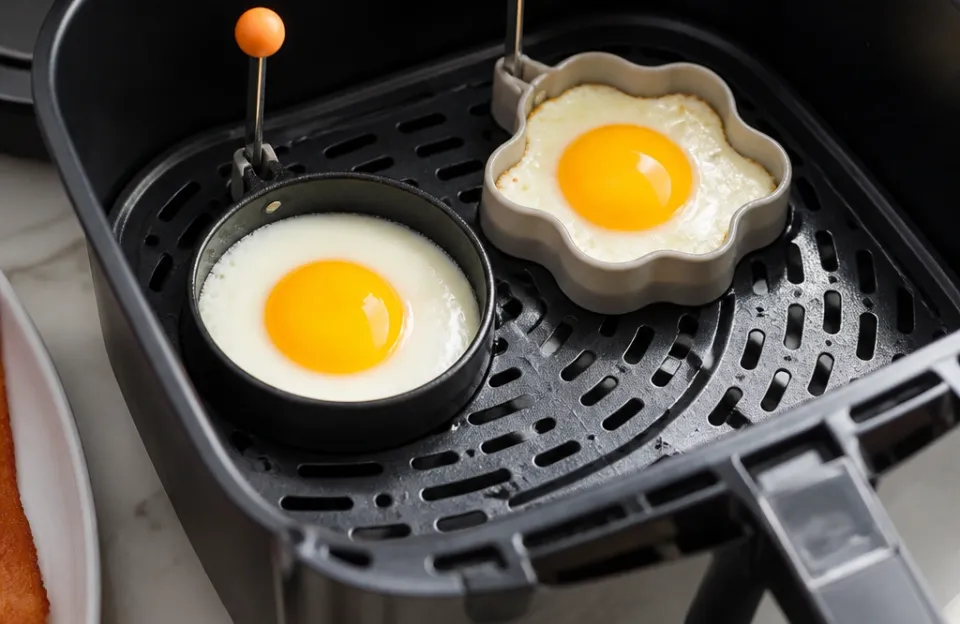
Air fryer replacement racks are aftermarket or manufacturer-specific wire grids, mesh trays, or crisper plates designed to swap out the original cooking surface inside your appliance. They exist because factory racks warp, peel, rust, or simply don't fit the way you want to cook. If your original rack is damaged or you need a different style for specific foods, buying an air fryer replacement rack is the standard fix.
This article covers why factory racks fail, what materials hold up best under high heat, how to measure your basket so a new rack actually fits, and the practical differences between mesh screens, wire grids, and multi-tier stacking systems.
Why Factory Air Fryer Racks Stop Working
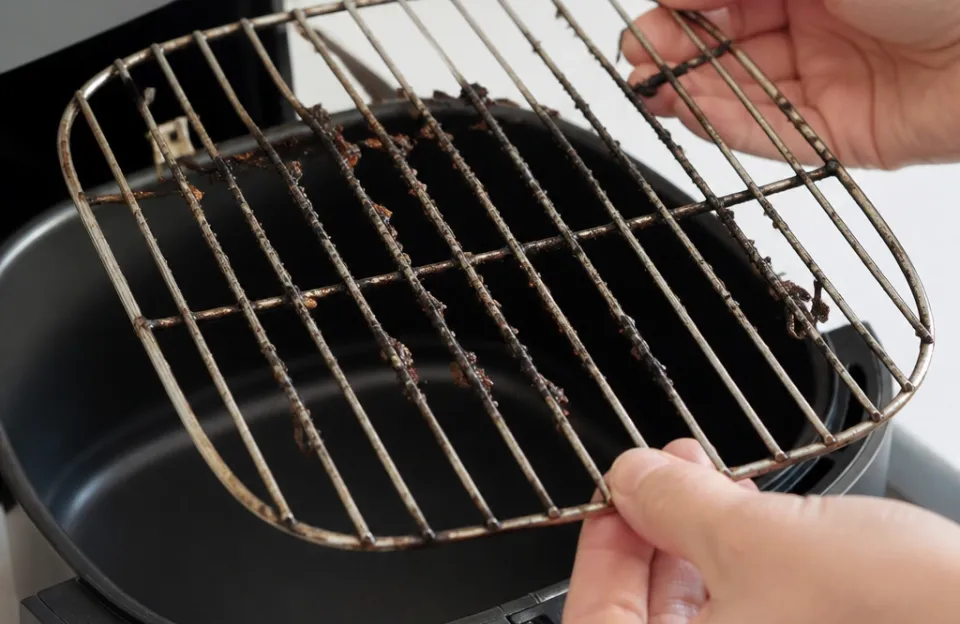
Most stock air fryer racks use thin carbon steel stamped into a grid pattern, then coated with a nonstick layer. That coating takes a beating every time you cook. High heat cycles, metal spatulas, and abrasive sponges wear it down.
Once the coating chips off, the bare steel underneath meets moisture from food and condensation. Rust follows quickly. A rusty rack leaves metallic flakes on your dinner and creates rough spots where food sticks permanently.
Warping is the second major failure point. Thin metal expands when heated. If the rack sits too close to the top heating element, or if you drop cold water on a hot tray, the metal bends out of shape.
A warped rack won't sit flat in the basket. It wobbles when you try to flip chicken wings, and it blocks the fan from pushing hot air evenly around the food. You can read more about getting that perfect crunch when airflow stays consistent.
Some people also replace their racks simply because the original design doesn't match their cooking habits. A wide-spaced wire grid lets small vegetables fall through into the bottom pan. Switching to a fine mesh screen solves that problem without changing the appliance itself.
Materials Used for Air Fryer Replacement Racks
The material dictates how long the rack lasts, how much it weighs, and whether it reacts with acidic foods. Three metals dominate this space: stainless steel, carbon steel, and aluminum.
Stainless Steel Wire and Mesh
Stainless steel is the most durable option available. Grades 304 and 18/8 (which contain 18% chromium and 8% nickel) resist rust completely under normal kitchen conditions. These racks don't have a nonstick coating to chip off, so there's nothing to degrade over hundreds of heating cycles.
The tradeoff is weight. Stainless steel is heavier than carbon steel, and food tends to stick to bare stainless unless you apply a light coat of oil before cooking. According to the FDA guidelines on food contact surfaces, stainless steel is widely recognized as safe for repeated high-heat food preparation because it doesn't leach chemicals.
Carbon Steel With Nonstick Coating
Carbon steel racks are lighter and cheaper to produce. Manufacturers almost always apply a PTFE-based nonstick coating to them. When new, food slides right off.
But these coatings break down over time. Most consumer safety data suggests avoiding heating PTFE coatings above 500°F, though most air fryers max out at 400°F. Still, the constant thermal cycling causes the coating to blister and flake eventually.
If you buy a carbon steel air fryer replacement rack, expect to replace it again once the coating fails.
Aluminum Crisper Plates
Aluminum heats up very fast and distributes temperature evenly. Many basket-style air fryers use a solid aluminum plate with holes punched through it rather than a wire grid. Aluminum is soft, though.
It dents easily if you scrape it with a metal fork, and uncoated aluminum can react with highly acidic ingredients like tomatoes or lemon juice, leaving a metallic taste. Anodized aluminum solves the reactivity issue by hardening the surface, but it costs more.
| Material | Rust Resistance | Weight | Nonstick Behavior | Typical Lifespan |
|---|---|---|---|---|
| 304 Stainless Steel | Excellent | Heavy | Food sticks without oil | 5+ years |
| Coated Carbon Steel | Poor once chipped | Light | Great until coating peels | 1 to 2 years |
| Bare Aluminum | No rust, but oxidizes | Very Light | Moderate sticking | 2 to 3 years |
| Anodized Aluminum | Excellent | Light | Low sticking | 3 to 5 years |
Measuring Your Basket for a Proper Fit
Buying a random rack and hoping it fits rarely works out. Air fryer baskets come in dozens of shapes. Some are perfectly round.
Others are square with rounded corners, or rectangular with tapered sides. A rack that is even half an inch too wide will wedge against the walls, preventing you from lifting it out safely. One that is too small falls into the drip tray below and blocks the fan.
Start by pulling out your current rack or the crisper plate. Measure the width across the widest point. Then measure the depth from front to back.
If your basket is round, measure the diameter straight across the center. Write these numbers down in inches and millimeters.
Next, check the clearance height. Stackable air fryer replacement racks need vertical room. Measure from the bottom of the basket to the top rim.
Subtract the thickness of the food you plan to cook. If you only have two inches of clearance, a double-tier rack will press your food directly into the upper heating element, burning it instantly.
Always cross-reference your measurements with the exact model number of your air fryer. Brands like Ninja, Cosori, Instant Pot, and Philips use proprietary basket dimensions. A "universal 5-quart rack" might technically fit inside a 5-quart basket, but the lip shape might not catch the basket's internal rails.
Using a reliable digital tool helps here; keeping track of precise temperature readings matters just as much as physical dimensions when dialing in your setup.
Wire Grids Versus Fine Mesh Screens
The geometry of the rack changes how your food cooks. Wire grids consist of thick metal bars spaced a quarter-inch to half an inch apart. Mesh screens use very thin wires woven tightly together, creating holes barely large enough for a pinhead.
Wire grids provide maximum airflow. Hot air hits the bottom of the food directly. This makes them ideal for thick cuts of meat, breaded items, or anything where you want aggressive browning on all sides.
The downside is that wet batters drip straight through the gaps, pooling at the bottom of the drawer and smoking. Small items like diced onions or peas fall through entirely.
Mesh screens restrict airflow slightly compared to wide grids, but they support delicate foods perfectly. Fish fillets won't tear apart when you try to lift them. Shredded hash browns stay in one piece.
If you frequently cook battered items, a mesh screen catches the drips while still allowing convection currents to pass through. The tradeoff is cleaning. Grease and melted cheese bake into the tiny weave of a mesh screen, requiring soaking and scrubbing with a stiff brush.
When prepping batches ahead of time, choosing the right surface prevents sticking during storage and reheating, which ties directly into organizing your weekly wing prep.
Multi-Tier Stacking Racks for Extra Capacity
A standard air fryer cooks food in a single layer. Crowding the basket leads to steaming instead of crisping. Multi-tier air fryer replacement racks solve this by adding a second or third level inside the same basket.
These kits usually include a base rack, one or two elevated platforms with short legs, and sometimes silicone-tipped tongs for removing the hot layers.
Stacking racks work well for foods that don't release much grease. Roasting broccoli florets on three levels simultaneously saves time. Reheating leftover pizza slices on two tiers keeps the crust crisp without taking up oven space.
However, stacking heavy, greasy items creates problems. Fat dripping from chicken thighs on the top tier lands directly onto the vegetables below, altering the flavor and texture.
Weight distribution matters too. Cheap stacking racks use thin wire legs that buckle under heavy loads. If you stack two pounds of potatoes on a flimsy second tier, the legs bend, and the whole assembly collapses into the bottom tray.
Look for racks with thick, welded support legs rather than bent wire loops.
If you are monitoring fat rendering closely, pairing a good rack setup with accurate internal temp checks guarantees the proteins finish safely without drying out the lower tiers.
Cleaning and Maintenance of Replacement Racks
How you wash an air fryer replacement rack determines how long it survives. The nonstick coating on carbon steel models degrades rapidly in dishwashers. The high-pressure water jets and harsh detergents strip the chemical layer away months faster than hand washing.
Even if the packaging says "dishwasher safe," washing coated racks by hand extends their life significantly.
For stainless steel and bare aluminum racks, dishwashers are generally fine, though hard water deposits can leave white mineral spots on stainless. Hand washing with warm soapy water and a nylon sponge removes grease without scratching the metal. Avoid steel wool on any rack.
It scratches stainless steel, gouges aluminum, and destroys nonstick coatings immediately.
Baked-on grease requires soaking. Fill your sink or a large baking sheet with hot water and a few drops of dish soap. Let the rack sit for twenty minutes.
The heat and soap loosen the polymerized fat, allowing you to wipe it away. For stubborn carbon buildup on stainless steel mesh, a paste made of baking soda and water applied with a soft toothbrush reaches into the tight corners of the weave.
Proper maintenance also means checking the rack before every use. Look for loose welds, bent wires poking upward, or fresh rust spots. A broken wire can scratch the interior wall of your air fryer basket, damaging its nonstick lining as well.
Keeping the cooking surface clean pairs well with lighter marinades and sauces that leave less baked-on residue behind.
Edge Cases and Compatibility Warnings
Not every air fryer accepts a third-party rack. Drawer-style models with a removable crisper plate usually allow easy swaps. You pull out the old plate and drop in the new one.
Oven-style air fryers with slide-in shelves operate differently. Their tracks are built into the side walls at fixed intervals. Buying a generic wire shelf for an air fryer toaster oven often results in a rack that slides around or falls out when you open the door.
Another edge case involves the wattage and fan speed of your specific machine. A dense mesh screen restricts airflow. In a low-wattage air fryer (under 1400 watts), adding a heavy mesh screen might choke the fan enough that the food never browns properly.
High-wattage units push air hard enough to compensate. If you switch from a wide wire grid to a fine mesh screen and notice your cooking times doubling, the airflow restriction is likely the cause.
Finally, consider the handle design. Some replacement racks include fold-down handles or silicone grips to make lifting easier. While convenient, bulky handles reduce the usable cooking surface area.
A rack advertised as fitting a 6-quart basket might only give you 4 quarts of actual flat space once the handles are factored in. Measure the flat cooking area specifically, ignoring the outer rims and handles.
Common Mistakes When Swapping Racks
People run into the same issues repeatedly when upgrading or replacing their cooking grates.
- Ignoring the basket taper. Many air fryer baskets are wider at the top and narrower at the bottom. A rack measured at the rim will get stuck halfway down and won't reach the proper cooking position near the heating element.
- Using metal utensils on coated racks. Scraping a metal spatula across a nonstick air fryer replacement rack ruins the coating in one motion. Silicone or wooden tools are mandatory for coated surfaces.
- Overloading stackable tiers. Adding a second rack doesn't double the cooking capacity if the food touches the tier above it. Air needs space to circulate between layers. Leave at least half an inch of vertical clearance between the food and the next rack.
- Assuming universal sizing exists. There is no industry standard for air fryer basket dimensions. A rack marketed as "universal" simply fits the most common sizes, leaving out dozens of specific models. Always verify measurements.
- Skipping the seasoning step for bare steel. Uncoated stainless steel or cast iron racks benefit from a light rub of high-smoke-point oil heated briefly before the first real cook. This creates a temporary patina that reduces sticking.
Frequently Asked Questions
Can I use a regular oven cooling rack inside my air fryer?
Standard oven cooling racks are usually too large and made from materials not tested for enclosed high-speed convection. They can block the fan, scratch the nonstick basket walls, or melt plastic feet if they have them. Only use racks explicitly sized and rated for your specific air fryer model.
Do stainless steel air fryer replacement racks make food stick more?
Bare stainless steel lacks a chemical nonstick coating, so proteins and starches bond to it more readily than they do to PTFE-coated carbon steel. Brushing the rack lightly with avocado oil or using a quick spray of cooking oil before adding food prevents most sticking issues.
How often should I replace my air fryer rack?
Coated carbon steel racks typically last one to two years of regular use before the nonstick layer chips or blisters. Stainless steel and anodized aluminum racks can last five years or more since they don't rely on a fragile chemical coating to function. Replace any rack immediately if you spot exposed rust or sharp broken wires.
Will a mesh screen rack change my cooking times?
Yes. Fine mesh restricts airflow compared to wide wire grids. Foods may take a few extra minutes to brown fully because the hot air has to pass through smaller openings.
You might need to increase the temperature by 10 to 15 degrees or add two to three minutes to your usual cook time.
Are silicone air fryer racks a viable alternative to metal?
Silicone trivet mats exist, but they insulate the bottom of the food from direct radiant heat. They work fine for reheating pastries or keeping delicate items from sliding around, but they prevent the aggressive bottom-browning needed for crispy fried textures. Metal remains the standard for actual frying performance.
Is it safe to put a replacement rack in the dishwasher?
It depends entirely on the material. Stainless steel and bare aluminum handle dishwashers well. Carbon steel racks with nonstick coatings degrade much faster under dishwasher detergents and high-pressure water.
Check the manufacturer's care instructions for your specific air fryer replacement rack before loading it into the machine.
Getting the Right Fit the First Time
Replacing a worn-out rack keeps your air fryer functioning safely and prevents rust flakes from ending up in your meals. Focus on measuring your basket accurately, choosing a material that matches how often you cook, and picking a grid style suited to the foods you make most. Stainless steel lasts the longest, while coated carbon steel offers the easiest release until the finish wears out.
Take five minutes with a tape measure before ordering anything, and you'll avoid the hassle of returning parts that don't fit your machine.