Air fryer bacon cooks in 8 to 10 minutes at 350°F and produces crispy strips with significantly less grease than pan frying. The circulating hot air renders fat efficiently while keeping the meat flat, which eliminates curling and uneven cooking spots common on a stovetop. You get consistent texture batch after batch without standing over a hot skillet or dealing with dangerous oil splatter.
This method works for standard sliced bacon, thick-cut, and even turkey bacon with minor timing adjustments. The key is arranging strips in a single layer and checking progress at the six-minute mark to prevent burning. Cleanup takes seconds if you line the basket bottom with parchment paper or aluminum foil before cooking.
This guide covers exact times, temperatures, safety tips, and how to adapt the process for different cuts so every piece comes out exactly how you like it.
Why the Air Fryer Beats the Skillet for Bacon
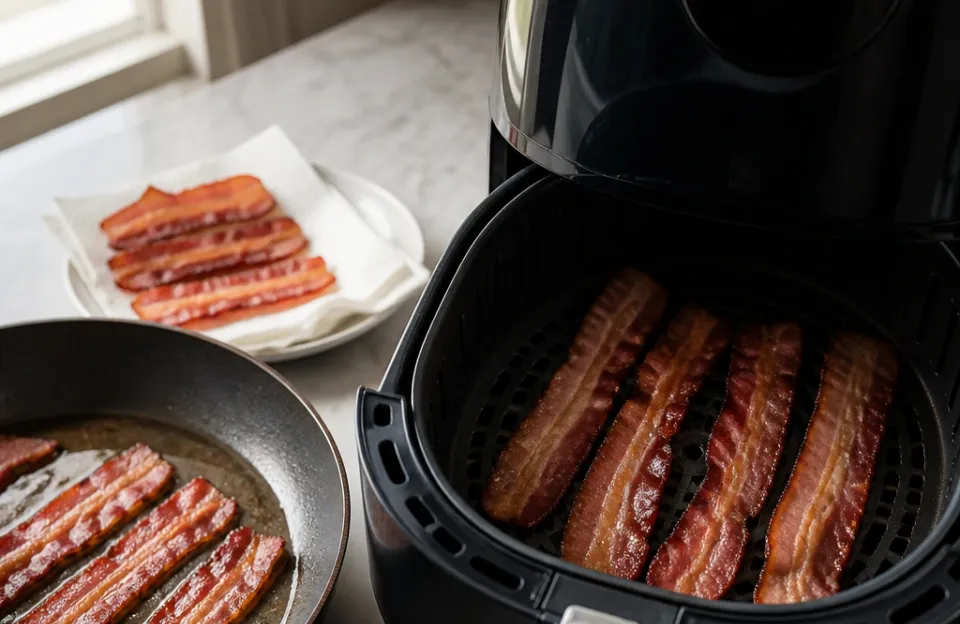
The air fryer wins on consistency and safety. Hot air surrounds each strip from all angles, which renders fat evenly across the entire surface. In a skillet, heat only comes from the bottom, so you often end up with burnt edges and chewy centers unless you flip constantly.
The air fryer removes that variable entirely. You set the temperature, walk away, and return to uniformly cooked bacon.
Grease management is another major advantage. As the fat renders, it drips through the basket grate into the drawer below instead of pooling around the meat. This means your bacon crisps up rather than fries in its own grease.
It also reduces the risk of burns from popping oil. For anyone who has ever wiped down a stovetop after making breakfast, this difference alone justifies the switch. If you're planning a larger brunch spread alongside items like garlic parmesan wings, having the bacon cook hands-free frees up valuable stove space and attention.
Smoke Point and Grease Control
Bacon fat has a smoke point around 375°F. Cooking at 350°F keeps you safely below that threshold while still achieving crispness. Going higher risks acrid smoke filling your kitchen and triggering detectors.
The lower temperature also gives you a wider window between perfectly crispy and burnt. Most air fryers circulate air fast enough at 350°F to render fat completely within the standard cook time.
If your model runs hot or you notice smoking, drop the temperature to 325°F and add two minutes. Placing a slice of bread or a small piece of parchment under the basket can also catch dripping fat before it hits the heating element, which is usually the source of smoke. Always check your specific appliance manual for manufacturer guidance on high-fat foods.
Exact Timing and Temperature by Cut
Thickness determines cook time more than anything else. Standard sliced bacon (about 1/16 inch) needs 8 to 9 minutes at 350°F. Thick-cut bacon (1/8 inch or more) needs 10 to 12 minutes at the same temperature.
Turkey bacon, being leaner, cooks faster and dries out easily, so check it at 6 to 7 minutes. These are starting points. Your specific air fryer wattage, basket size, and personal preference for chewy versus shatter-crisp will shift the ideal time by a minute or two.
Always preheat for three minutes. A cold start adds unpredictable variables and extends total cook time. Lay strips in a single layer with slight overlap allowed but no stacking.
Overlapping too much creates steam pockets that prevent crisping. Cook in batches if necessary rather than cramming the basket. Halfway through, open the basket and use tongs to flip each strip.
This ensures both sides render evenly and prevents sticking to the grate.
| Bacon Type | Temperature | Time Range | Flip At | Texture Notes |
|---|---|---|---|---|
| Standard Cut | 350°F | 8–9 min | 4 min | Crispy throughout, minimal chew |
| Thick-Cut | 350°F | 10–12 min | 5–6 min | Meaty center, crisp edges |
| Turkey Bacon | 350°F | 6–7 min | 3 min | Dries fast; watch closely |
| Center-Cut | 350°F | 7–8 min | 3–4 min | Leaner; less shrinkage |
| Peppered/Maple | 325°F | 9–10 min | 4–5 min | Sugar burns easily; lower temp |
For meal prep scenarios where you need reliable results repeatedly, using a digital meat thermometer to verify doneness removes guesswork entirely. While most people judge bacon visually, internal temperature confirms safety and texture consistency across different brands and thicknesses.
Arranging Strips for Even Rendering
Basket layout directly affects outcome. Place strips perpendicular to the grate lines when possible so they don’t sag through gaps as they shrink. Leave at least 1/4 inch between pieces for airflow.
If your basket is round, arrange strips like spokes on a wheel rather than parallel rows to maximize surface exposure. Avoid folding or draping strips over the basket edge, as those sections will cook unevenly and may touch the heating element.
Parchment paper liners cut for your specific model simplify cleanup and prevent small pieces from falling through. Poke a few holes in the paper to maintain airflow underneath. Never use wax paper, which melts at cooking temperatures.
Silicone mats designed for air fryers also work well and are reusable. Just ensure they’re rated for at least 400°F and don’t block more than half the basket floor area. When preparing multiple proteins for a gathering, such as honey garlic wings alongside bacon, proper spacing prevents cross-contamination of flavors and ensures each item cooks correctly.
Preventing Curling and Sticking Issues
Bacon curls because muscle fibers contract faster than fat renders. The air fryer minimizes this compared to pan frying, but it still happens with very lean or thin cuts. To keep strips flat, place a metal rack or trivet directly on top of them during the first three minutes of cooking.
Remove it afterward to allow direct air contact for crisping. Alternatively, gently stretch each strip lengthwise before placing it in the basket. This pre-tensions the fibers and reduces contraction.
Sticking usually occurs when the basket isn’t preheated or when sugary glazes are involved. Always preheat. For maple or peppered varieties, lightly spray the grate with neutral oil before adding bacon.
Check at the halfway flip point. If any strip resists lifting, give it another 30 seconds before forcing it. Premature flipping tears the meat and leaves residue baked onto the grate.
Using a reliable instant-read thermometer helps you avoid opening the basket excessively out of uncertainty, which preserves heat stability and reduces sticking risk.
Safety Considerations for High-Fat Cooking
Bacon grease is flammable and hot. Never leave the air fryer unattended during the first few uses until you know how your model handles fat rendering. Keep the appliance away from walls and cabinets to prevent heat damage.
Ensure the drip tray is empty before starting. Accumulated old grease can ignite or smoke excessively. Clean the tray and basket after every use with warm soapy water.
Avoid abrasive scrubbers on nonstick coatings.
Ventilation matters. Run an exhaust fan or open a window, especially in smaller kitchens. Even at safe temperatures, rendered fat produces some vapor.
If smoke appears, turn off the unit immediately and let it cool before inspecting. The cause is usually fat hitting the heating element or excess grease in the drawer. According to USDA food safety guidelines, pork products should reach a minimum internal temperature of 145°F with a rest time, though bacon is typically cooked well beyond this for texture.
Verifying temperature eliminates safety concerns when serving to vulnerable groups.
When cooking large quantities for events, plan your workflow so bacon finishes last or holds properly. Unlike items that benefit from resting, bacon loses quality quickly once cooled. Have a warming plate ready at 200°F if needed.
Pairing bacon with other air-fried items requires timing coordination. For example, if you're also making meal prep chicken wings, cook the wings first since they hold better, then finish the bacon just before serving.
Adapting for Specialty Cuts and Flavors
Center-cut bacon has less belly fat and more loin meat, so it shrinks less and cooks slightly faster. Treat it like standard cut but check one minute earlier. Canadian bacon is fully cooked and leaner.
It only needs 4 to 5 minutes at 350°F just to warm through and develop surface color. Slab bacon, sold unsliced, requires different handling. Slice it yourself to uniform thickness before air frying, or cook the whole slab at 300°F for 20 to 25 minutes, flipping halfway, then slice after resting.
Flavored bacons introduce sugar, spices, or curing agents that change browning behavior. Maple, honey, and brown sugar varieties burn above 325°F. Reduce temperature by 25 degrees and extend time by 1 to 2 minutes.
Watch closely after the six-minute mark. Spicy or peppered versions may appear darker due to seasoning, not burning. Rely on texture and internal temperature rather than color alone.
If experimenting with wet marinades or glazes applied mid-cook, pat the surface dry first to promote crisping. Understanding calorie differences in wing preparations can similarly inform how added fats or sugars affect overall nutrition when combining dishes.
Troubleshooting Common Texture Problems
Chewy bacon means insufficient rendering. Increase time by 1 to 2 minutes next batch, or raise temperature by 10 degrees if you suspect your unit runs cool. Verify with a thermometer that the thickest part reaches at least 160°F for shatter-crisp texture.
Burnt edges with raw centers indicate overcrowding or excessive overlap. Cook fewer strips per batch and ensure single-layer placement. Uneven browning suggests blocked airflow.
Rotate the basket halfway if your model doesn’t have a rotating paddle, and avoid lining the entire basket floor with solid parchment.
Soggy bacon usually results from steam trapped by overcrowding or inadequate preheating. Always preheat. Space strips properly.
If humidity is high in your kitchen, add 1 minute to cook time. Greasy mouthfeel means fat didn’t fully render. Lower temperature by 10 degrees and extend time by 2 minutes.
Slow rendering allows fat to melt completely rather than sear the surface while leaving interior fat intact. For extra assurance of doneness without constant monitoring, a wireless Bluetooth thermometer lets you track temperature remotely and pull the bacon at the exact moment it reaches your preferred texture.
Frequently Asked Questions
Can I cook frozen bacon in the air fryer?
Yes, but it requires adjustment. Separate frozen strips as much as possible before placing them in the basket. Add 3 to 4 minutes to the standard cook time and flip at the halfway point.
Expect slightly less even rendering compared to thawed bacon. For best results, thaw overnight in the refrigerator. Cooking from frozen works in a pinch but sacrifices some texture consistency.
Is air fryer bacon healthier than pan-fried?
It contains marginally less fat because excess grease drips away during cooking rather than staying in contact with the meat. Calorie reduction is modest, roughly 10 to 15 percent depending on cut and cook time. Sodium content remains unchanged since curing happens before packaging.
The primary health advantage is reduced exposure to hot oil splatter and easier portion control due to batch sizing. Don’t treat it as a health food, but it’s a cleaner cooking method.
How do I store and reheat leftover air fryer bacon?
Cool completely on paper towels, then store in an airtight container in the refrigerator for up to five days. Reheat in the air fryer at 350°F for 1 to 2 minutes to restore crispness. Microwaving makes it rubbery.
Freezing works for up to two months. Flash-freeze individual strips on a baking sheet before transferring to a freezer bag to prevent clumping. Thaw in the fridge before reheating.
Why does my air fryer smoke when cooking bacon?
Smoke occurs when rendered fat contacts the heating element or accumulates grease ignites in the drip tray. Ensure the tray is clean before each use. Place a small piece of bread or parchment under the basket to catch drips.
Lower temperature to 325°F if smoking persists. Some models benefit from adding a tablespoon of water to the drip tray to prevent fat from reaching ignition temperature. Always consult your appliance manual for model-specific guidance.
Can I cook bacon and eggs together in the air fryer?
Not recommended in the same basket simultaneously. Bacon grease will coat egg surfaces and alter flavor and texture. Eggs also require lower temperatures and shorter times.
Cook bacon first, remove it, wipe the basket, then cook eggs separately. If your air fryer has dual zones or racks, you can cook them concurrently with physical separation. Otherwise, stagger cooking to preserve quality of both items.
Before You Start Your Next Batch
Air fryer bacon delivers reliable crispness with minimal active effort once you dial in timing for your specific appliance and preferred cut. Start with the baseline temperatures and times outlined here, then adjust based on your first batch. Keep notes on what works for your favorite brand and thickness.
Consistency improves rapidly after two or three attempts. The payoff is breakfast-ready bacon that doesn’t demand constant attention or create a greasy mess. Whether you’re feeding a crowd or just making a quick weekday breakfast, this method earns its place in regular rotation.