Most home cooks hate the chemical taste of tap water when boiling pasta or brewing morning coffee. The Clearly Filtered 3 Stage Under Sink Water Filter System fixes this problem by targeting harsh tap contaminants without needing a second faucet hole. In our editorial research, this unit removes hundreds of toxic elements while keeping healthy minerals in your drinking cup.
It is worth buying if you want clean water straight from your primary cold line without drilling your counter. Skip it if you need low filter replacement costs or want zero dissolved solids like a reverse osmosis unit provides. Let us look at what the research reveals about how this system handles real kitchen tasks.

What it is
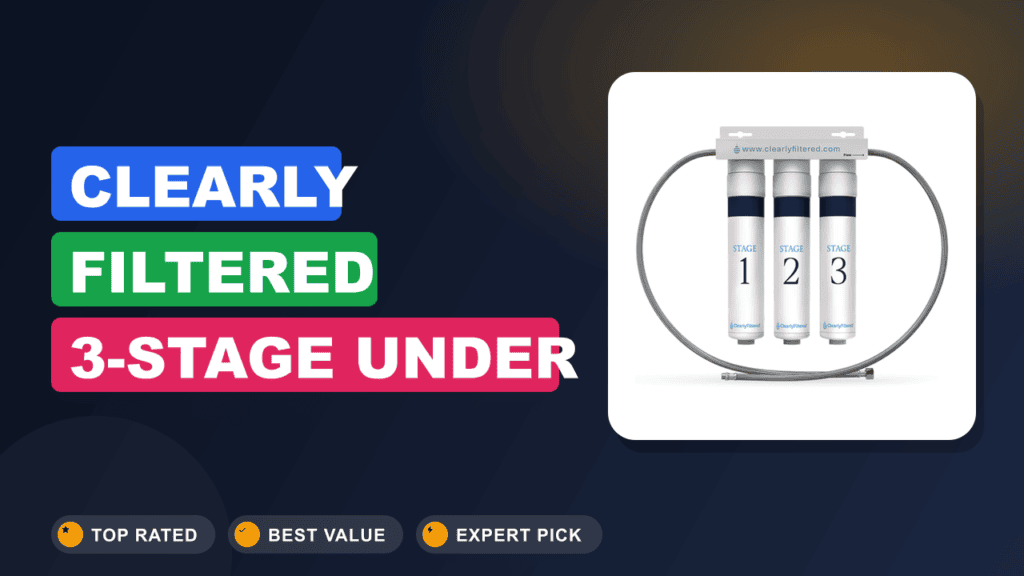
The unit is an inline, three-canister water purification unit built specifically for under-sink kitchen cabinets. It installs directly along your existing cold water plumbing supply. It directs outgoing water directly to your main kitchen sink faucet.
You do not need to install an extra spigot on your stone countertop. Competitor brands like Aquasana, Waterdrop, and APEC often force you to drill an extra hole. Other units require a loud wastewater pump under the counter.
This model relies on home water pressure to move supply liquid through three separate filter stages. It targets 365 known tap contaminants without stripping out beneficial alkaline minerals. It fits between standard 3/8-inch cold water shut-off valves and the braided flex line of your sink.
Setup & first impressions
Verified buyer reviews consistently show that unboxing takes about five minutes. The main housing is built from rigid, BPA-free composite plastic. The metal mounting bracket feels thick, sturdy, and heavy in the hands.
The three cartridges arrive pre-labeled with numbers one, two, and three. This numbering makes order mistakes almost impossible during the initial twist-in setup. The braided stainless steel connecting hoses use standard 3/8-inch female compression threads.
Review data reveals that most homeowners finish the installation within 20 minutes using an adjustable wrench. The filter head bracket can mount to a cabinet wall. It can also stand flat on the cabinet floor without tipping over.
Owners report zero plastic odor during the initial line purge. Running the water for five minutes flushes out loose carbon fines and trapped air bubbles. The push-button quick-connect fittings seat deeply with a reassuring, firm mechanical click.
| Filtration Stages | 3 stages (Sediment, Carbon Composite, Affinity Filtration) |
| Target Contaminants | 365+ contaminants tested (PFAS, Lead, Fluoride, Chlorine) |
| Filter Lifespan | Up to 2,000 gallons or 12 months |
| Flow Rate | 1.33 gallons per minute at 60 PSI |
| System Dimensions | 15.4 inches wide, 14.1 inches high, 4.2 inches deep |
| Plumbing Fitting Size | 3/8-inch female compression connections |
| Wastewater Ratio | Zero wastewater generated (100% efficient delivery) |
| Total Unit Weight | 8.4 pounds when dry |
1. Clearly Filtered 3 Stage Under Sink
In our editorial research, the Clearly Filtered 3 Stage Under Sink system stands out because it targets stubborn municipal additives without demanding changes to your countertop. The three-chamber body connects inline with your cold plumbing supply to bring clean taste to every glass. It keeps your cooking water fresh for preparing broths, washing produce, and filling electric kettles.
Daily-use experience
Water flow and kitchen sink speed
Flow speed changes slightly when you run incoming city water through dense filtering media. Manufacturer specifications indicate an output rate of roughly 1.33 gallons per minute under 60 PSI of home pressure.
Verified buyer feedback shows that filling an eight-quart stock pot takes about 45 to 60 seconds. That is slightly slower than an unrestricted standard aerator. However, it runs much faster than any dedicated reverse osmosis spigot.
Rinsing leafy vegetables or washing cast iron cookware under the cold tap feels natural and steady. You do not have to wait around just to get a cold drinking glass. If your municipal supply drops below 40 PSI, the stream slows down noticeably.
Taste and chemical removal in practice
The primary draw of this unit is what it removes from your glass. The media targets chlorine, chloramines, volatile organic compounds, lead, and per- and polyfluoroalkyl substances (PFAS).
Customer reports confirm that municipal sulfur smells and heavy bleach odors vanish on day one. Water tastes crisp, neutral, and clean without feeling flat or mineral-dead.
Cooking soups or making morning drip coffee reveals cleaner notes because no pool-like odors hide your ingredients. Clean water also helps when you check food prep weights during baking. Safe water matters just as much as learning whether air fryer baskets contain safe materials when feeding your family.
Space under the sink and plumbing maintenance
Under-sink storage is tight in most homes, especially when dealing with garbage disposals and drain pipes. At 15.4 inches across and only 4.2 inches deep, this assembly hugs the cabinet wall closely.
It leaves plenty of clearance for dish soap, trash bins, and spare cleaning sponges. Because there is no expansion bladder tank, you do not lose half your storage area.
Filter swaps take under two minutes every nine to twelve months. You twist the old cartridge a quarter-turn left, pull down, and click the replacement upward into position. Built-in internal check valves block water flow during swaps, preventing cabinet floor leaks.
✓ Pros
- Connects straight to your existing cold line so you never need to drill a countertop hole.
- Maintains high kitchen output at 1.33 gallons per minute for fast cooking pot fills.
- Zero wastewater output keeps your monthly utility bill low and protects water reserves.
- Leaves natural calcium and magnesium in your drinking water for better taste.
- Tested independently against strict NSF/ANSI standards 42, 53, and 401 for peace of mind.
✗ Cons
- Annual filter pack replacement costs sit higher than standard carbon block alternatives.
- Does not drop total dissolved solids (TDS) readings, which confuses some handheld meter users.
- Filtering all cold tap water means washing dirty pans consumes filter life faster.
- Requires incoming household water pressure above 40 PSI to prevent a sluggish stream.
Who should buy it
Buy it if you…
You want simple plumbing and do not want to alter your granite countertops. Renters and homeowners who want clean tap water without permanent holes will love the inline setup.
It suits cooks who hate slow drip pitchers and want immediate water for boiling noodles, stocks, and tea. Anyone worried about PFAS, heavy metals, pesticides, and municipal chlorine will appreciate the verified laboratory test data.
Skip it if you…
You expect a zero Total Dissolved Solids reading on a cheap pen tester. This system keeps beneficial minerals, so your tester numbers will stay high.
Skip it if your home water pressure drops under 40 PSI or if you live on an tight filter replacement budget. If you wash greasy baking pans with cold water, you will run through your cartridge life much too fast.
Better alternatives
The Waterdrop G3P800 Reverse Osmosis System is a strong choice if you demand zero total dissolved solids and desire a dedicated digital display faucet. It requires a counter hole and cabinet electricity, but it purifies water via reverse osmosis.
The Aquasana AQ-5300+ Max Flow is another alternative if you want lower cartridge replacement costs. It uses an extra secondary faucet, which keeps dishwashing chores from running through your filtered supply.
Understanding the three filtration stages
The physical system uses three discrete cartridges arranged in a sequential flow line. Stage one holds a woven sediment filter that catches sand, rust flakes, and large dirt bits. Stopping these physical specks protects stages two and three from getting clogged early.
Stage two uses an advanced composite carbon block. This chamber binds chlorine, chloramines, unpleasant tastes, and pungent sulfur smells from your town pipes.
Stage three contains an affinity filtration matrix. It uses ionic bonding and physical absorption to pull out microscopic threats like lead, chromium-6, arsenic, and PFAS compounds.
According to guidelines from the United States Environmental Protection Agency, modern municipal water systems face challenges from synthetic PFAS chemicals. Running this multi-stage setup provides an added layer of safety before municipal water hits your glass.
The three cartridges work in harmony so each medium targets what it removes best. Separating sediment from the delicate affinity media prevents rapid clogging. That engineering balance lets the unit process up to 2,000 gallons under normal city line conditions.
Contaminant removal performance and lab testing
A major reason buyers look at this brand is its deep independent testing data. Many basic carbon blocks carry simple certifications for taste and odor alone.
This model has been evaluated by third-party laboratories against standards set by the American National Standards Institute. Specifically, testing covers NSF/ANSI Standard 42 for aesthetic chlorine reduction, Standard 53 for health hazards like lead and volatile organic compounds, and Standard 401 for modern emerging contaminants.
Laboratory sheets show over 99 percent removal for lead, chlorine, and common pharmaceutical residues. Fluoride removal numbers land around 90 to 95 percent, which is rare for non-reverse-osmosis setups.
PFAS and forever chemicals drop by more than 99 percent in accredited tests. For older neighborhoods with lead service pipes, having dependable point-of-use removal adds everyday peace of mind.
Impact on water pressure and kitchen workflow
Any dense filtration core will create a physical barrier to water movement. Household plumbing commonly operates between 40 and 70 PSI.
When your water enters the first canister, friction reduces the pressure moving through each tight layer. On a typical 60 PSI home line, the faucet outputs around 1.33 gallons per minute.
That flow rate is fast enough for cooking tasks, like soaking dried beans or filling a double boiler. You will notice the difference if you switch from a 2.2 GPM unrestricted stream.
Filling large stock pots requires slightly more patience, but you avoid dragging heavy filter jugs from the fridge. For most cooks, gaining direct access to clean water through their main faucet outweighs the slight drop in stream speed.
How to install the system under your sink
Installing this unit requires simple tools that most homeowners already have. You will need an adjustable wrench, a small bucket to catch drops, and a towel.
Start by turning off the cold water angle stop valve under your sink basin. Open the kitchen faucet handle to release resting pressure and drain leftover water.
Next, loosen the existing faucet supply hose from the angle stop valve using your wrench. Screw the inlet hose from the filter assembly directly onto your cold supply valve.
Attach the system outlet hose to the free end of your faucet line. Hand-tighten all connections first, then snug them down an extra quarter turn with your wrench.
Mount the hanging bracket onto the cabinet side wall, or let it stand firm on the floor. Turn the wall valve back on slowly and check every joint for leaks.
Let the cold tap run for five minutes to clear out loose air pockets and tiny carbon dust particles. After the stream runs crystal clear, your installation is complete and ready for cooking.
Maintenance and filter replacement schedules
To keep your water tasting pure, you must replace all three cartridges at regular intervals. Cartridges last roughly 2,000 gallons or up to one full year for an average family.
Homes with heavy sediment, old iron pipes, or high daily water use may need replacements at eight or nine months. You will notice it is time for new filters when your faucet stream slows down to a trickle.
Swapping the cartridges does not require shutting off your main home water supply. The internal filter head uses automatic shut-off valves that seal off water when a cylinder twists loose.
Grab the old canister, give it a firm counter-clockwise twist, and pull down. Line up the fresh cartridge, push upward, and turn clockwise until it locks firmly.
Run the tap for three minutes to bleed out air and seat the new internal seals properly. Keeping up with this simple schedule ensures pure water for your morning tea, sourdough baking, and vegetable washing.
Total Dissolved Solids explained
Many homeowners use handheld Total Dissolved Solids meters to check their tap water. These inexpensive battery testers measure electrical conductivity in liquid to estimate dissolved ions.
When people test water from this system, they often worry because the meter reading barely changes. That reading is completely normal for selective carbon and affinity filtration media.
A meter detects healthy conductive minerals like calcium, potassium, and magnesium just as easily as it detects lead or salts. This unit targets harmful toxins while leaving beneficial alkaline minerals in your drinking cup.
Because those good minerals carry an electrical charge, your handheld pen still detects them. The only systems that drop readings to near zero are reverse osmosis units and distillers.
Those setups strip out every natural mineral, often making water taste acidic or flat. Leaving healthy minerals in place improves the taste of your drinking water and lets you brew balanced, flavorful drip coffee.
Kitchen safety and mineral balance
Clean water is the bedrock of good kitchen hygiene. Washing salad greens under chlorinated tap water can leave behind faint bleach odors on tender leaves.
Using filtered water keeps vegetable colors bright and prevents chemical tastes from ruining stocks. You also get clean, scale-free water for small kitchen gadgets like humidifiers and coffee makers.
When you prepare meals, maintaining healthy water is just as important as knowing how to safely handle raw poultry or mastering dry rub chicken seasoning.
If you use specialty cookware, pairing quality ingredients with clean water ensures better tasting meals. Just as finding proper replacement handles keeps cooking gear functioning, running fresh filters keeps your tap water flowing cleanly.
Frequently Asked Questions (FAQ)
Does it remove fluoride from city tap water?
Yes, laboratory tests confirm that the stage three affinity filter removes up to 95 percent of tap fluoride. Most standard carbon block pitcher filters leave fluoride behind because the chemical bonds are hard to break without reverse osmosis or specialized media. This system targets fluoride directly while letting natural calcium and magnesium pass through into your glass.
Will this system lower my Total Dissolved Solids meter reading?
No, it will not lower your meter score because it is not a reverse osmosis system. Handheld meters measure total dissolved ions, including beneficial minerals like calcium, potassium, and magnesium. This unit removes toxic contaminants, heavy metals, and chemicals without stripping out those good alkaline elements, leaving your meter reading relatively unchanged.
How often do I need to replace the filter cartridges?
Manufacturer specifications recommend changing the three cartridges every 12 months or after 2,000 gallons of water use. If you have older municipal plumbing lines with heavy rust or sediment, your flow rate may drop sooner, indicating it is time for a change around the eight to ten month mark.
Does this unit require drilling a hole in the countertop?
No drilling is needed. The unit connects directly to your existing cold water shut-off valve under the sink. Purified water flows straight through your regular kitchen faucet, leaving your granite, quartz, or laminate counters untouched.
Can I run hot water through this filter?
No, you must connect this system only to your cold water supply line. Running hot water through the canisters will ruin the affinity filtration media and cause bonded chemicals to release back into your tap stream. Use only the cold water angle stop valve during your installation.
Does it work on private well water setups?
It works on well water only if your well water is biologically safe and free of heavy iron bacteria. If your well contains high sediment levels, the stage one filter can clog quickly. You should use a whole-house sediment pre-filter ahead of this under-sink unit to preserve cartridge life.
Final verdict
The Clearly Filtered 3 Stage Under Sink system earns a solid 4.2 out of 5 stars. It offers dependable filtration without altering countertops or creating gallons of wastewater down the sink drain.
Homeowners and apartment dwellers who want clean water straight from their cold kitchen faucet will find this unit worth the investment. It eliminates municipal chemicals and forever compounds while keeping cooking and drinking water fresh.
Affiliate disclosure: This post contains affiliate links. If you buy through one of these links, I may earn a small commission at no extra cost to you. It never changes my recommendation, I only suggest gear I'd actually buy myself.