To clean an espresso machine, you need a daily wipe of the group head, a weekly backflush with detergent, and descaling every few months. How to clean an espresso machine depends on whether yours has a three-way solenoid valve. Machines with that valve can be backflushed.
Machines without one only need water rinses and regular descaling.
Why Cleaning Your Espresso Machine Matters
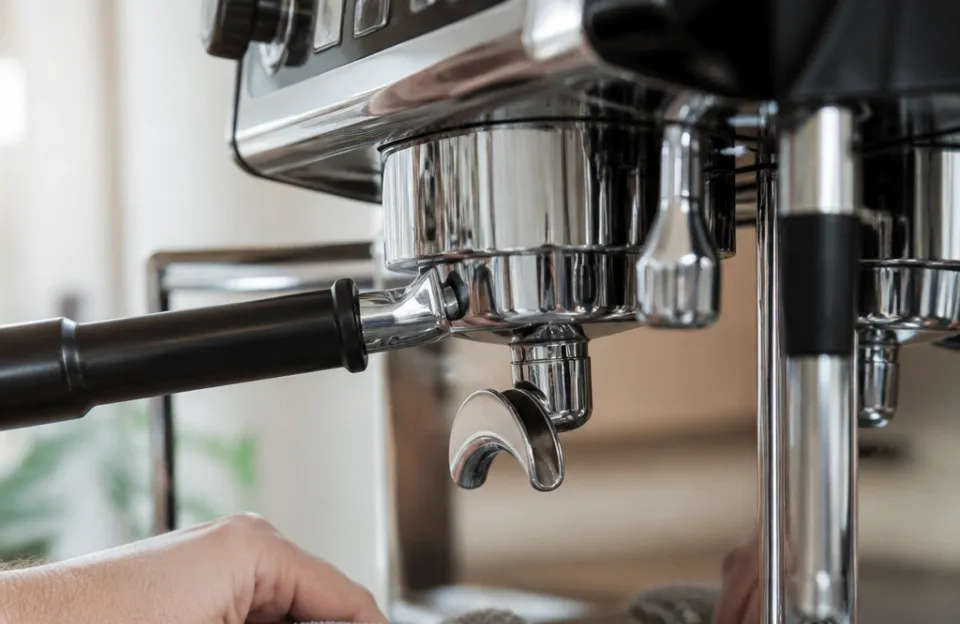
Coffee leaves behind oils. Those oils turn rancid fast. If you skip cleaning, your morning shot starts tasting bitter or sour.
You might think you bought a bad bag of beans. Usually, the problem is just old coffee grease stuck inside the machine.
Minerals in your tap water cause the second big problem. Calcium and magnesium build up inside the boiler and pipes. That scale blocks water flow.
It also changes the brewing temperature. A clogged machine works harder, runs hotter, and breaks sooner. The National Coffee Association points out that keeping brewing equipment free of residue is necessary for good flavor extraction.
Cleaning takes about ten minutes a week. Descaling takes thirty minutes once a quarter. That small effort keeps a $500 machine running like new for years.
Skipping it means expensive repair bills or buying a replacement early.
What You Need Before You Start
Gather everything first. Running around looking for supplies while the machine is hot wastes time.
- Microfiber cloths. Keep two or three near the machine. One for the steam wand, one for the drip tray, one for the body.
- A nylon group head brush. This looks like a large toothbrush with stiff bristles. It fits under the portafilter area to scrub away grounds.
- Espresso machine cleaning tablets or powder. These are made to dissolve coffee oils. Brands like Cafiza or Urnex make standard options. Do not use dish soap. Soap leaves a film and ruins the taste.
- Descaling solution. You can buy liquid descaler made for coffee machines. Some people use citric acid powder mixed with water. Avoid plain white vinegar in high-end machines, as the smell lingers and some manufacturers warn against it.
- A blind basket. This is a metal filter basket with no holes. You put it in your portafilter to force water backward through the machine during a backflush. Only use this if your machine supports backflushing.
Check the manual that came with your machine. It tells you exactly what chemicals are safe. Using the wrong cleaner can void your warranty.
Just like picking the right size liner for other kitchen appliances, matching the cleaning supply to your specific model prevents damage.
Daily Cleaning Steps
Do these steps every single day you pull shots. They take less than two minutes.
Purge and Wipe the Group Head
After you remove your portafilter, run a short burst of water through the group head. Let it run for about three seconds. This flushes out loose coffee grounds.
Take your damp microfiber cloth and wipe the underside of the group head. Feel around the rubber gasket. If you feel gritty bits, wipe them away.
Grounds baked onto that gasket will cause leaks over time.
Clean the Steam Wand Immediately
Milk dries into cement. You have to clean the steam wand the second you finish frothing. First, purge it.
Turn the steam on for two seconds to blow out any milk trapped inside the tip. Then, take your dedicated steam wand cloth and wipe the outside completely clean.
If milk is already stuck on it, soak a cloth in warm water. Wrap the wet cloth around the wand for five minutes. That softens the crust.
Wipe it off gently. Never use a knife or a metal scouring pad to scrape the wand. You will scratch the metal, and milk will stick to those scratches even faster next time.
Keeping exterior surfaces spotless applies to all your countertop gear, much like maintaining a grease-free air fryer basket.
Empty and Rinse the Drip Tray
The drip tray catches water, spilled coffee, and rinse cycles. Pull it out at the end of the day. Dump the liquid in the sink.
Wash the plastic tray with warm water and a little dish soap. Dry it before sliding it back. Leaving stagnant water in the tray breeds mold.
Knock Out the Puck and Rinse the Portafilter
Always knock out the used coffee puck right after brewing. Rinse the portafilter basket under hot water. Use your finger to rub the inside of the basket.
Make sure no tiny grounds are stuck in the holes. Leave the portafilter out of the machine to air dry overnight rather than locking it back in tight. This lets the rubber gasket breathe and last longer.
Weekly Deep Cleaning (Backflushing)
Backflushing pushes water and detergent backward through the brew path. It strips away the invisible layer of rancid coffee oil inside the valves.
Important rule: Only backflush if your machine has a three-way solenoid valve. Most prosumer and commercial machines have one. Many entry-level machines under $300 do not.
Check your manual. If you try to backflush a machine without this valve, you can crack the pump or blow a seal.
- Turn the machine on and let it reach brewing temperature.
- Remove the regular filter basket from your portafilter. Insert the blind basket.
- Put half a teaspoon of espresso cleaning powder into the blind basket. If you use tablets, drop one tablet in.
- Lock the portafilter into the group head tightly.
- Turn the brew switch on for ten seconds. You will hear the pump strain slightly. That is normal. Water is pushing against the solid metal.
- Turn the brew switch off for ten seconds. The pressure releases, sucking the soapy water back up into the machine’s internal lines.
- Repeat this ten-seconds-on, ten-seconds-off cycle five times.
- Remove the portafilter. Rinse the blind basket. You will see brown, oily sludge washing away. That is the stuff ruining your coffee.
- Put the portafilter back in without any detergent. Run the ten-second on/off cycle five more times to rinse the system with plain water.
- Remove the portafilter. Run a normal water flush through the open group head to clear any final drips.
- Pull one shot of espresso using real coffee and throw it away. This seasons the machine and removes any lingering soap taste.
Do this once a week if you make two to four drinks a day. If you make ten or more drinks a day, backflush twice a week. For machines that cannot be backflushed, simply run a water-only flush cycle and rely heavily on your nylon brush to scrub the group head screen.
How to Descale an Espresso Machine
Descaling removes hard water minerals. You must do this even if you use filtered water. How often depends on your water hardness and how many shots you pull.
For most homes using tap water, descale every three months. If you use bottled or filtered water, every six months is usually fine. If your machine takes noticeably longer to heat up, or the water comes out in weak spurts instead of a steady stream, scale is blocking the pipes.
Descale immediately.
The General Descaling Process
Every brand has slight variations. Breville, De’Longhi, Gaggia, and Rancilio all outline specific steps in their manuals. Follow this general framework if yours is lost:
- Mix the descaling solution. Fill the water reservoir with fresh water. Add the liquid descaler or dissolved citric acid according to the package directions.
- Place a large container under the group head and the steam wand.
- Turn the machine on. Run about half a cup of the solution through the brew head. Turn it off.
- Run about half a cup of the solution through the steam wand. Turn it off.
- Let the machine sit for twenty minutes. The acid needs time to eat the calcium deposits.
- Turn the machine back on. Run the rest of the solution through the brew head and steam wand in short bursts until the reservoir is empty.
- Remove the reservoir. Wash it thoroughly with plain water.
- Fill the reservoir completely with fresh, clean water.
- Run the entire tank of clean water through the brew head. Run another full tank through the steam wand. You must flush the system completely. Any leftover acid tastes terrible and can irritate your stomach. The FDA regulates food-contact surfaces, which is why using approved, fully rinsed descaling agents matters.
- Taste a cup of hot water from the machine. If it tastes metallic or sour, run another tank of fresh water through it.
If you own a super-automatic machine with a built-in grinder and milk carafe, the process is mostly automated. The screen will prompt you when it needs descaling. Follow the on-screen instructions, but never skip the final water-rinse phase.
Cleaning Removable Parts
Your espresso machine has several pieces that come off. They need attention too.
The Shower Screen
The shower screen is the metal mesh disc inside the group head where water pours out. Over months, coffee oils clog the tiny holes. On many machines, you can remove it with a flathead screwdriver or a Phillips head screw.
Take it out once a month. Soak it in hot water with a cleaning tablet for thirty minutes. Scrub it gently with your nylon brush.
Hold it up to the light. You should see clearly through every hole.
The Portafilter and Baskets
Soak your portafilter handle and the metal baskets in a bowl of hot water mixed with espresso cleaner once a month. Do not submerge the entire portafilter if it has a wooden or plastic handle that isn’t rated for soaking, as the finish can peel. Focus on the metal parts.
After soaking, scrub the baskets with a brush to push out any dark residue trapped in the mesh.
The Water Reservoir
Algae loves dark, wet places. Pull the water tank out once a week. Wash it with warm water and mild dish soap.
Rinse it perfectly. Let it air dry upside down on a towel before refilling it. Never leave water sitting in the tank over a long weekend trip.
Dump it out before you leave.
Common Mistakes People Make
Rushing the process causes the most damage. Here are the errors that break machines or ruin coffee.
Using vinegar in expensive boilers. White vinegar is cheap and acidic. But it smells awful, and the odor clings to rubber seals for weeks. In machines with brass or copper boilers, strong vinegar solutions can sometimes cause corrosion if left too long.
Stick to formulated descaling liquids or food-grade citric acid.
Skipping the rinse cycle after backflushing. Detergent tastes incredibly bitter. If you don’t run enough plain water through the machine after using cleaning powder, your next three espressos will taste like soap. Always pull a dummy shot and discard it.
Using abrasive pads on the exterior. Stainless steel scratches easily. Once you scratch the finish, coffee stains settle into those grooves permanently. Use only soft microfiber cloths on the outside of the machine.
Ignoring the water quality. If you live in an area with very hard water, your machine scales up twice as fast. Consider using a water filtration pitcher to fill the reservoir, or install a small inline filter. Softening the water reduces how often you need to descale.
Paying attention to water quality protects all your kitchen gadgets, similar to checking materials for safe heating in other appliances.
Leaving the portafilter locked in empty. Some people lock the portafilter back into the group head after cleaning to keep it warm. If you do this tightly without a basket, you compress the rubber gasket constantly. Over time, the gasket flattens out and loses its seal.
Either leave it loosely resting or take it off entirely.
Products That Help You Clean an Espresso Machine
You do not need a lot of gear. A few specific items make the job faster and safer for your machine.
Cafiza Espresso Machine Cleaning Powder
This is the industry standard for dissolving coffee oils. It works in almost any backflush-capable machine. A small jar lasts a long time because you only use half a teaspoon per session.
It rinses away cleanly without leaving a chemical scent.

Pallo Coffeetool Brush
This nylon brush is shaped specifically to fit under the group head while the machine is still hot. It has a built-in scraper for tough spots and a handle that keeps your fingers away from the boiling water. It is far better than trying to jam a regular kitchen sponge into a tight space.
Having the right tool for tight spaces saves frustration, much like finding attachments that actually fit your specific appliance model.
Impresa Espresso Machine Descaler
If you prefer a liquid descaler over mixing powders, this option comes pre-measured. It is formulated to be safe on aluminum, brass, and stainless steel boilers. It works well for both manual machines and super-automatic models.
58mm Blind Filter Basket
If your machine uses a standard 58mm portafilter, you need a blind basket for backflushing. This heavy-duty stainless steel insert has no holes. It creates the pressure needed to push the cleaning solution backward through the internal valves.
Measure your portafilter first, as some home machines use 51mm or 54mm sizes. Getting the exact measurement right is just as critical as measuring a basket for a proper fit anywhere else in your kitchen.
Cleaning Schedules by Machine Type
Not all espresso machines require the same routine. Match your schedule to the type of machine sitting on your counter.
| Machine Type | Daily Task | Weekly Task | Monthly Task | Quarterly Task |
|---|---|---|---|---|
| Manual / Lever | Flush group, wipe wand | N/A | Scrub shower screen | Descale |
| Semi-Automatic (No Valve) | Flush group, wipe wand | Water-only rinse | Scrub shower screen, soak baskets | Descale |
| Semi-Automatic (With Valve) | Flush group, wipe wand | Backflush with detergent | Scrub shower screen, soak baskets | Descale |
| Super-Automatic | Empty drip tray, rinse brew unit | Run auto-clean cycle | Wash bean hopper, clean spouts | Run auto-descale program |
Super-automatic machines handle a lot of this internally. When the screen says “Clean” or “Descale,” do not ignore it. The machine tracks water volume and shot counts.
Delaying the cycle can trigger error codes that lock you out of brewing entirely.
If you share your kitchen with family members who use the machine, post a simple checklist nearby. Everyone needs to know to wipe the steam wand immediately. One person leaving dried milk on the wand ruins the experience for the next person.
Establishing good habits keeps things running smoothly, whether you’re prepping poultry safely or pulling a perfect shot of espresso.
Frequently Asked Questions
Can I use baking soda to clean my espresso machine?
Do not put baking soda inside the internal water lines. It does not dissolve completely and can leave a gritty residue that clogs the valves. You can use a paste of baking soda and water to scrub the outside stainless steel body or the plastic drip tray, but keep it out of the boiler and group head.
How do I know if my espresso machine needs descaling?
Watch the water flow. If the stream comes out thin, sputters, or takes much longer to brew a shot than it used to, scale is blocking the pipes. You might also notice the machine making louder vibrating noises during brewing, or the coffee tastes unusually flat and dull.
Is it safe to use dish soap on the portafilter?
Dish soap is fine for the handle and the outside of the metal basket. Rinse it extremely well. However, never use dish soap for backflushing the internal components.
It foams too much, leaves a distinct soapy flavor, and is difficult to flush out of the narrow internal tubes. Stick to dedicated espresso detergents.
What happens if I never clean my espresso machine?
Coffee oils will go rancid and make every cup taste bitter. Scale will build up until the water cannot pass through the boiler. The pump will overwork and burn out.
Eventually, the machine will either leak from degraded seals or stop heating altogether. Regular cleaning prevents total failure.
As an Amazon Associate, we earn from qualifying purchases.