Air fryer mozzarella sticks are ready in 6 to 8 minutes at 390°F and need only a light oil spray to get crispy. The key is freezing them solid before cooking so the breading sets before the cheese melts and leaks. This method works for both store-bought frozen sticks and homemade versions, though timing varies slightly between the two.
You will find the exact steps for avoiding blowouts, the best breading techniques for homemade batches, and safe internal temperatures below. We also cover how to adapt this snack for meal prep and what to do if your air fryer runs hot or cool. Getting that bar-style crunch at home comes down to temperature control and patience during the freeze stage rather than any special equipment.
Why Freezing Solid Prevents Cheese Blowouts
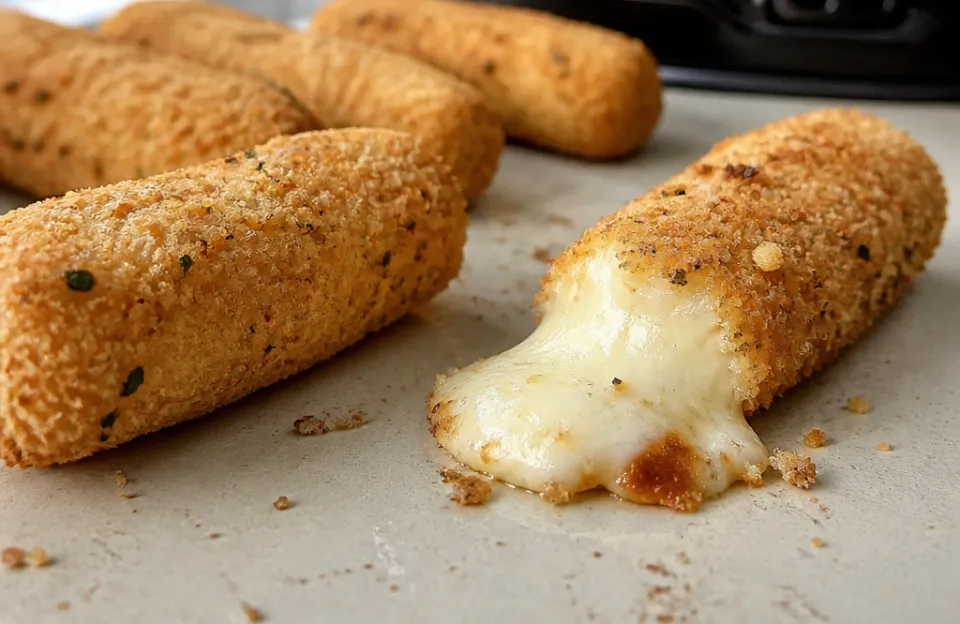
The most common failure with air fryer mozzarella sticks is cheese leaking out before the coating crisps. Air fryers cook by circulating superheated air, which heats the exterior rapidly. If the cheese inside is soft or only partially frozen when it hits that heat, it melts faster than the breading can set.
The result is a puddle of molten cheese on the basket floor and an empty bread shell.
Freezing the sticks for at least two hours, or ideally overnight, creates a thermal buffer. The frozen core takes longer to reach its melting point, giving the panko or breadcrumb coating enough time to dehydrate and brown. According to FDA food safety guidelines, keeping dairy products properly frozen until cooking also prevents bacterial growth that can occur during extended thawing at room temperature.
You should never skip this step even if the package says "cook from frozen," as home freezers often have less consistent temperatures than commercial ones.
Store-Bought vs Homemade Timing Differences
Store-bought frozen mozzarella sticks are flash-frozen industrially, meaning they are uniformly solid throughout. These typically need 6 to 8 minutes at 390°F. Homemade sticks, even after a full night in the freezer, may have slight temperature variations depending on your freezer's airflow and how densely you packed them.
Plan for 7 to 9 minutes for homemade batches and check one stick at the 6-minute mark to gauge doneness.
The size of the stick matters more than whether it is store-bought or homemade. Standard appetizer-sized sticks (about 3 inches long) follow the times above. Thicker pub-style cuts or mozzarella logs can require an additional 1 to 2 minutes.
Always arrange sticks in a single layer with space between them. Crowding drops the air temperature and steams the breading instead of crisping it.
Breading Setup for Maximum Crunch
A proper three-stage breading station is non-negotiable for homemade air fryer mozzarella sticks. Flour provides a dry surface for the egg wash to grip. Egg wash acts as the glue.
Panko breadcrumbs create the actual crunch because their larger, irregular flakes trap air and resist sogginess better than fine traditional breadcrumbs.
Set up three shallow dishes in this order: seasoned flour, beaten eggs with a tablespoon of water, and panko mixed with salt, garlic powder, and Italian seasoning. Press each cheese stick firmly into the flour, shake off excess, dip fully in egg, then press hard into the panko. That pressing motion is where most people fail.
Lightly tossing the stick in crumbs leaves gaps that become leak points. You want the panko embedded, not just resting on top.
Double-Breading for Extra Security
If you have had issues with cheese escaping in the past, double-bread your sticks. After the first coat of panko, dip the stick back in egg wash and press into panko a second time. This creates a thicker barrier that buys you another 30 to 60 seconds of cook time before the cheese threatens to break through.
The tradeoff is a heavier crust that can taste doughy if undercooked. Only use this method if single-breading has failed you, and add 1 minute to your cook time.
For those tracking nutrition alongside texture, understanding how breading thickness affects calorie counts in air fried snacks helps balance crunch with dietary goals. A double-breaded stick absorbs more oil spray and carries more carb-dense coating, which adds up quickly across a serving of six or eight pieces.
Cooking Steps and Temperature Control
Preheat your air fryer to 390°F for 3 to 5 minutes before adding the sticks. Preheating ensures the breading starts crisping immediately upon contact. Placing frozen sticks into a cold basket extends the time the cheese spends warming without the exterior browning, increasing blowout risk.
Spray the basket lightly with avocado or canola oil spray. Arrange the frozen sticks in a single layer without touching. Spray the tops of the sticks generously.
Oil conducts heat into the breading and promotes even browning. Dry spots stay pale and taste raw. Cook for 6 to 8 minutes, flipping halfway through with tongs.
Flipping ensures both sides get direct airflow and prevents the bottom from staying soggy against the basket.
Checking Doneness Without Guessing
Visual cues are unreliable because breading color varies by brand and oil amount. The safest way to confirm doneness is checking that the coating is golden brown and the cheese is visibly softening but not erupting. If you see cheese beginning to ooze from an end, pull the sticks immediately.
They will continue softening from residual heat.
Using an instant-read thermometer removes the guesswork entirely. Insert the probe into the center of a stick through the end. Safe internal temperature for melted mozzarella is 165°F, matching standard dairy reheating guidelines.
Tools like the Thermomaven digital thermometer give readings fast enough that you don't lose significant heat while checking. If the reading is below 160°F, return the sticks for 1-minute increments.
| Variable | Store-Bought Frozen | Homemade Frozen |
|---|---|---|
| Temperature | 390°F | 390°F |
| Base Cook Time | 6–8 min | 7–9 min |
| Flip Point | 3–4 min | 3–4 min |
| Oil Spray Needed | Yes | Yes |
| Double Bread Option | Rarely needed | Recommended if leaking |
| Rest Time Before Serving | 2 min | 2 min |
Adapting the Method for Meal Prep and Batch Cooking
Mozzarella sticks are best eaten within minutes of cooking, but you can prep components ahead. Freeze unbreaded cheese sticks individually on a parchment-lined sheet, then transfer to a bag once solid. Bread them straight from frozen when ready to cook.
This prevents the breading from getting gummy during storage.
Fully cooked sticks reheat poorly in the microwave, turning rubbery. Reheat leftovers in the air fryer at 350°F for 2 to 3 minutes to restore some crispness. Accept that reheated sticks won't match fresh ones.
If you're planning snacks for multiple days, consider how other air fryer proteins hold up in advance and apply similar batch-freezing logic to cheese sticks rather than trying to store them cooked.
Scaling Up Without Overcrowding
Cooking more than one batch requires discipline. Never stack sticks or fill the basket beyond a single layer. Batch-cook in rounds, keeping finished sticks warm on a wire rack set over a baking sheet in a 200°F oven.
The wire rack prevents steam from softening the underside. Paper towels trap moisture and undo your crisping work.
Between batches, let the air fryer recover temperature for 1 to 2 minutes. Opening the basket dumps heat, and adding cold frozen sticks compounds the drop. Giving the element time to reheat maintains consistent results across batch three and four.
This same principle applies when cooking larger items like garlic parmesan wings where overcrowding leads to uneven texture.
Troubleshooting Common Texture Problems
Soggy breading usually means insufficient oil spray, overcrowding, or skipping preheat. Check each variable before adjusting time. Adding more minutes to fix sogginess often burns the outside before the inside finishes.
Fix the root cause instead.
Pale but cooked sticks indicate low temperature or dry breading. Increase oil spray next time or verify your air fryer's calibration. Some models run 15 to 20 degrees cooler than displayed.
An oven-safe dial thermometer placed inside the basket during preheat confirms actual cooking temperature without relying on the unit's sensor.
When Cheese Leaks Despite Proper Technique
If you followed every step and still get leaks, your cheese may be too moist. Fresh mozzarella balls vary widely in moisture content compared to low-moisture block mozzarella. Always use low-moisture part-skim mozzarella for frying.
Drain fresh mozzarella thoroughly and pat dry before breading if you must use it, but expect higher failure rates.
Another culprit is breading that didn't adhere. Humid kitchens make flour clump and egg wash slide. Work in a cool, dry area and keep cheese sticks frozen until the moment of breading.
If the cheese warms during the breading process, return it to the freezer for 15 minutes before continuing. Patience here saves cleanup later.
Dipping Sauces and Serving Pairings
Marinara is standard, but the right sauce depends on what else you're serving. Acidic tomato-based sauces cut through fat effectively. Creamy ranch or garlic aioli complements milder cheese but adds richness that can overwhelm a heavy meal.
Sweet chili sauce offers contrast for those who prefer heat and sugar over savory notes.
Serve dipping sauces warm, not cold. Cold sauce firms up the cheese on contact and dulls flavor. Heat marinara to at least 140°F before serving.
If you're building a full appetizer spread, pair mozzarella sticks with items that offer different textures and flavors. Honey garlic wings provide a sweet-savory counterpoint, while something with a bold marinade profile prevents palate fatigue from too much mild cheese.
Portion Sizing for Different Occasions
Appetizer portions assume 3 to 4 sticks per person when served alongside other starters. As a standalone snack, plan for 5 to 6 sticks. Kids typically eat 2 to 3.
Overestimating leads to waste since leftovers degrade quickly. Underestimating at a party creates awkward shortages.
Factor in dietary restrictions when planning. Mozzarella sticks are vegetarian but not vegan or dairy-free. Have at least one alternative ready if guests have allergies.
Label clearly if serving buffet-style. Cross-contamination in shared air fryers is a real concern for those with severe dairy allergies, so clean the basket thoroughly between uses if preparing allergen-free items afterward.
Frequently Asked Questions
Can I cook mozzarella sticks without spraying oil?
You can, but the breading will be dry, pale, and taste floury. Oil spray conducts heat into the crumbs and triggers Maillard browning. Even a minimal spritz makes a significant difference in texture and flavor.
Skip oil only if you accept subpar results.
Why did my mozzarella sticks explode in the air fryer?
The cheese was likely not frozen solid, the temperature was too high, or the breading had gaps. Ensure sticks are rock-hard before cooking, verify temperature accuracy, and press breading firmly. Double-breading adds insurance against future blowouts.
Is it safe to eat mozzarella sticks that leaked cheese during cooking?
Yes, as long as the cheese reached 165°F internally and wasn't sitting at unsafe temperatures beforehand. The leaked cheese is simply messy, not hazardous. Clean the basket promptly to prevent burned residue from smoking during future cooks.
Can I use string cheese instead of mozzarella sticks?
String cheese works and is often cheaper. It is already portioned and low-moisture, making it ideal for frying. Unwrap and freeze individually before breading.
String cheese tends to be saltier than block mozzarella, so reduce added salt in your breading mix accordingly.
How do I know my air fryer temperature is accurate?
Place an independent oven thermometer inside the basket during preheat and compare the reading to your air fryer's display. Many units vary by 10 to 25 degrees. Adjust your set temperature based on the actual reading, not the dial.
Recalibrate periodically as heating elements age.
Worth Remembering
Air fryer mozzarella sticks succeed or fail based on preparation discipline, not recipe complexity. Freeze solid, bread with intention, preheat properly, and resist the urge to crowd the basket. Those four habits matter more than any secret ingredient or fancy technique.
Once you've nailed the basics, the method becomes reliable enough to scale for parties or streamline for weeknight snacks without second-guessing. Keep your thermometer handy and trust it over visual cues until you've built enough experience to read the signs confidently.