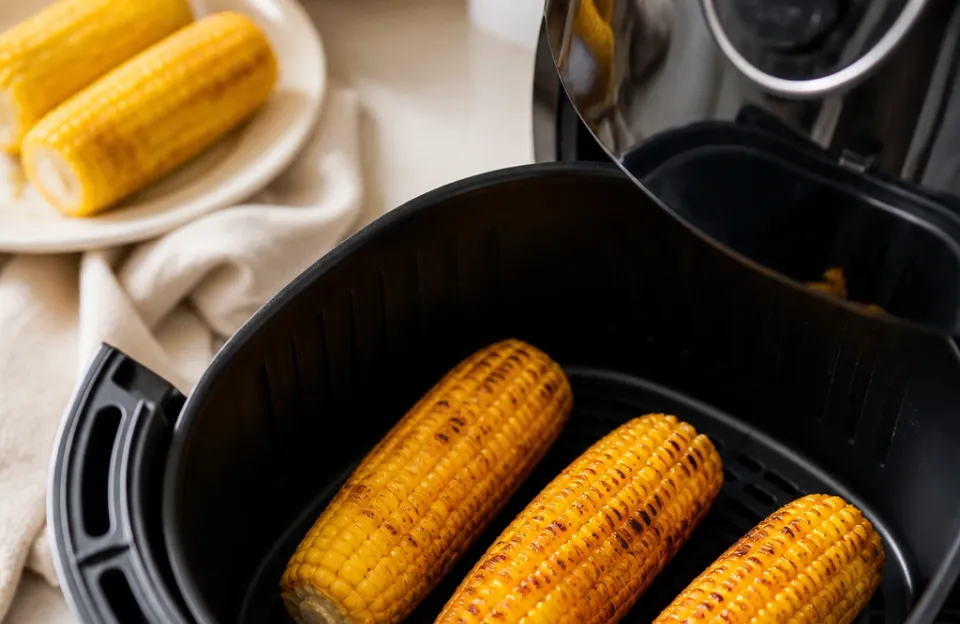
Air fryer corn on the cob cooks in about 12 to 15 minutes at 400°F. You get kernels that are lightly charred on the edges and tender all the way through, without heating up a grill or waiting for a big pot of water to boil. All you need is fresh corn, a little oil, salt, and your air fryer basket.
This guide covers exactly how to prep the ears, what temperature works best, and how long to leave them in depending on their size. We'll also go over seasoning ideas, what happens if you use frozen corn, and the mistakes that lead to dried out or unevenly cooked cobs. If you want a fast side dish for weeknight dinners or summer cookouts, this method gets it done with very little effort.
Why the air fryer changes how corn cooks
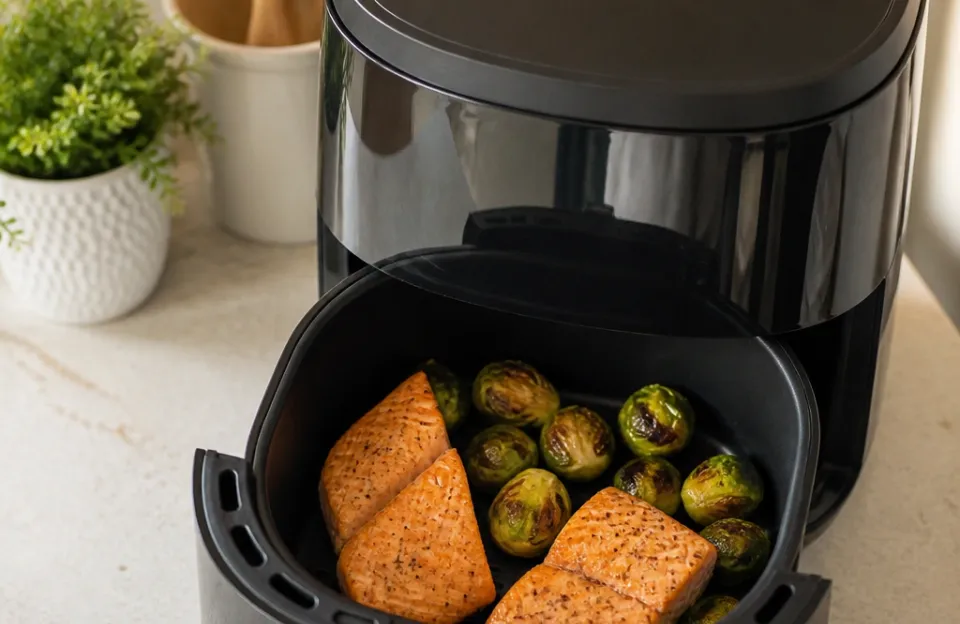
Cooking vegetables in an air fryer relies on rapid hot air circulation. The heating element sits right above the food, and a fan pushes that heat down and around the basket. For dense vegetables like potatoes or root crops, this means faster cooking times compared to a standard oven.
Corn benefits from this same process.
When you boil corn, the kernels absorb water. They plump up, but they can also lose some of their natural sweetness to the cooking liquid. Grilling gives you char and smoke, though it requires managing coals or gas burners outside.
Air frying sits between these two methods. The circulating hot air evaporates surface moisture quickly, which concentrates the sugars in the kernels. That concentration is what gives air fryer corn on the cob its distinct sweetness and slightly roasted flavor.
The Maillard reaction is responsible for the browning you see on the kernels. According to food science resources from the Institute of Food Technologists, this reaction occurs when amino acids and reducing sugars interact under high heat, creating new flavor compounds. An air fryer running at 400°F provides enough consistent heat to trigger this reaction on the surface of the corn without burning the inside.
How basket size limits your batch
Most standard air fryers hold between 3 and 6 quarts. A full ear of corn is usually 7 to 9 inches long. Depending on your model, you might only fit two or three ears in the basket at once without stacking them.
Stacking blocks the airflow, which leads to uneven cooking. The ears on top will brown while the ones underneath stay pale and firm.
If you're feeding a large group, you'll need to cook in batches. Alternatively, cutting the ears in half before cooking allows you to fit more pieces in a single layer. Half-ears take roughly the same amount of time to cook as whole ones, since the thickness of the cob remains unchanged.
Getting your ears ready for the basket
Prep work for this recipe takes about five minutes. Start by shucking the corn completely. Pull off all the green husks and strip away the silk threads.
Silk left behind will dry out and burn in the air fryer, leaving bitter black spots on your finished dish.
Once the ears are clean, pat them dry with a paper towel. Surface moisture creates steam, which prevents browning. You want the exterior as dry as possible before adding fat.
Rub each ear lightly with a neutral cooking oil. Avocado oil, canola oil, or light olive oil all work well because they have high smoke points. You don't need much.
About half a teaspoon per ear is plenty. The oil conducts the heat directly to the kernels and helps the seasonings stick.
Season generously with kosher salt right after oiling. Salt draws out a tiny bit of moisture initially, but the oil locks it in. At this stage, you can also add black pepper, garlic powder, smoked paprika, or chili powder.
Keep dry rubs simple so they don't burn before the corn finishes cooking.
Cutting them down to fit smaller machines
If your air fryer has a round basket that's less than 8 inches wide, whole ears won't lay flat. Use a sharp chef's knife to cut each cob in half crosswise. Place the knife firmly against the center of the cob and press down using your body weight rather than trying to saw through it.
Corn cobs are woody and tough in the middle. Halved cobs stand upright or lay side by side easily, giving the hot air room to move.
Cooking temperatures and timing for air fryer corn on the cob
Set your machine to 400°F. This temperature is high enough to blister the kernels and create char marks, low enough to cook the interior starches fully. Lower temperatures like 350°F tend to dry the corn out slowly without achieving any browning.
Higher settings risk burning the exterior while the center stays crunchy.
Place the oiled and seasoned ears in the basket in a single layer. Leave at least a quarter inch of space between them. Cook for 12 to 15 minutes total.
Pause halfway through, around the 6 or 7 minute mark, and use tongs to rotate each ear 180 degrees. This rotation exposes all sides to the direct heat from the top element.
Smaller ears, like those from early summer harvests, might be done in 10 to 12 minutes. Large, thick supermarket ears often need the full 15 minutes. You'll know they're ready when the kernels turn bright yellow, look slightly shrunken, and have dark brown spots scattered across the surface.
Pierce a kernel with the tip of a paring knife. It should slide in with zero resistance.
| Ear Size | Temperature | Total Time | Rotation Point |
|---|---|---|---|
| Small (under 7 inches) | 400°F | 10 to 12 minutes | 5 to 6 minutes |
| Medium (7 to 8 inches) | 400°F | 12 to 15 minutes | 6 to 7 minutes |
| Large (over 8 inches) | 400°F | 15 to 17 minutes | 8 minutes |
| Frozen (no thaw) | 380°F | 15 to 18 minutes | 8 to 9 minutes |
Checking the internal temperature isn't strictly necessary for vegetables, but if you prefer exact numbers, a quick reading confirms doneness. I keep a fast-reading kitchen probe in my drawer specifically for moments like this. Fully cooked sweet corn registers around 170°F to 180°F internally.
Push the probe into the thickest part of the cob, avoiding the woody core.
Seasoning combinations worth trying
Plain salt and pepper are fine, but corn acts as a blank canvas for heavier flavors. Because the air fryer uses dry heat, wet sauces applied before cooking will drip through the basket and burn on the bottom heating element. Stick to dry spices during the cooking phase, then add fats, cheeses, or wet sauces immediately after pulling the basket out.
Mexican street corn style (Elote). After cooking, brush the hot ears with mayonnaise or Mexican crema. Roll them in crumbled cotija cheese. Dust heavily with chili powder and squeeze fresh lime juice over the top.
The residual heat melts the cheese slightly into the mayo.
Garlic herb butter. Mix softened butter with minced fresh garlic, chopped parsley, and a pinch of salt. Smear this compound butter over the corn the second it comes out of the fryer. If you've been working on a good savory glaze for other dishes, that same garlic and parmesan combination translates perfectly here.
Toss the hot corn in grated parmesan and garlic powder for a drier, crispier crust.
Spicy honey drizzle. Combine honey with a few dashes of hot sauce or a pinch of cayenne. Drizzle over the cooked ears. The sweetness of the honey pairs with the caramelized sugars in the roasted kernels.
Finding the right balance of sweet and heat takes practice, similar to mixing sticky coatings where sugar can burn fast if exposed to direct heat too long. Always apply sugary glazes after cooking.
Smoked paprika and lime. Rub the raw ears with smoked paprika, salt, and oil before cooking. Finish with a heavy squeeze of fresh lime juice. The acid cuts through the smokiness and brightens the whole dish.
Using frozen ears instead of fresh
You can cook frozen corn on the cob directly in the air fryer without thawing it first. Thawing frozen corn on the counter usually results in a mushy texture because the ice crystals rupture the cell walls of the kernels as they melt slowly. Going straight from freezer to hot air preserves a firmer bite.
Lower the temperature slightly to 380°F. Frozen ears release a lot of water as they heat up. If you use 400°F, the outside will char while the inside remains icy.
The slightly lower temperature gives the core time to warm up evenly.
Expect the cooking time to increase by 3 to 5 minutes. A typical frozen ear takes about 15 to 18 minutes total. Rotate them at the halfway point just like fresh corn.
You'll notice more steam escaping the basket during the first five minutes. This is normal. Once the surface moisture evaporates, the kernels will begin to brown.
Frozen corn lacks the peak sweetness of fresh summer produce. Compensate by being slightly more aggressive with your salt and finishing seasonings. A heavier hand with butter or oil after cooking helps mask any textural differences.
Pairing this side dish with your main course
Corn on the cob fits naturally alongside grilled meats, fried chicken, or barbecue. When planning a meal, think about how the air fryer's capacity affects your timeline. If you're making a protein that also requires the air fryer, you'll need to sequence the cooking.
Corn holds its heat reasonably well for about 10 minutes after cooking. You can pull the ears out, tent them loosely with foil, and then use the same basket for your protein. For example, getting crispy skin on poultry requires high heat and empty space in the basket.
Cook the corn first, set it aside, then crank the heat back up for the meat.
If you're prepping meals ahead of time, cooked corn stores well in the refrigerator for up to three days. Cut the kernels off the cob and store them in an airtight container for salads, or wrap the whole ears tightly in foil. Reheating them takes about 3 to 4 minutes in the air fryer at 350°F.
Planning your weekly batch cooking schedule becomes easier when you know side dishes reheat quickly without turning to mush.
Mistakes that ruin the texture
Air frying is forgiving, but a few specific errors will ruin your corn. Paying attention to spacing, oil quantity, and timing prevents most issues.
- Overcrowding the basket. If the ears touch each other or overlap, the air cannot circulate. The touching spots will steam instead of roast, leaving you with pale, chewy patches. Cook in batches if necessary.
- Skipping the oil. Dry corn placed in a dry air fryer will dehydrate rapidly. The kernels turn leathery and tough. Oil conducts the heat and keeps the surface supple while allowing browning. Don't skip it, even if you're watching calories. A light brushing is sufficient.
- Applying sugar-based sauces too early. Honey, maple syrup, or barbecue sauce contain sugars that burn at temperatures above 350°F. If you coat the raw corn in these sauces, they will turn black and bitter within five minutes. Always apply sweet or wet sauces after the cooking cycle finishes.
- Undercooking thick cobs. Sweet corn contains starch that needs heat to gelatinize and become tender. If you pull a thick ear out at the 10 minute mark, the center kernels will taste starchy and hard. Stick to the 12 to 15 minute range for medium and large ears.
- Leaving silk attached. Even small strands of corn silk will scorch instantly in the concentrated heat. They taste like burnt hair and stick to the kernels. Take the extra minute to wipe the shucked ears down with a damp cloth to remove every thread.
Frequently asked questions
Can you put aluminum foil around the corn in the air fryer?
Wrapping corn in foil traps steam, which defeats the purpose of air frying. You'll end up with steamed corn rather than roasted corn. If you're worried about cleanup or drips, place a small piece of foil on the bottom of the basket beneath the rack, never wrapping the food itself.
The hot air needs direct contact with the kernels to create browning.
Do you need to soak the corn before air frying?
Soaking is required for grilling corn inside the husk to prevent the leaves from catching fire. Since you remove the husks for air frying, soaking adds unnecessary moisture that delays browning. Skip the soak.
Pat the shucked ears dry, oil them, and put them straight into the basket.
Is air fryer corn on the cob healthier than boiling it?
Boiling causes water-soluble vitamins, like vitamin C and certain B vitamins, to leach out into the cooking water. Air frying retains more of these nutrients because the corn doesn't sit in liquid. However, air frying requires added fat to prevent drying, which increases the calorie count slightly.
Overall, both methods are healthy ways to prepare a vegetable.
How do you know when the corn is completely done?
Visual cues are the fastest indicator. Look for bright yellow kernels with distinct brown or black char spots on the surfaces facing the heating element. The kernels will shrink slightly and pull away from each other.
For absolute certainty, insert a digital thermometer into the center of the cob. A reading between 170°F and 180°F means the starches have fully softened. A reliable wireless monitoring setup lets you check temps without constantly opening the basket and losing heat.
What happens if you leave the husk on?
Leaving the husk on in an air fryer is a fire hazard. The dry leaves sit very close to the top heating element and the powerful fan can blow loose pieces upward. Always shuck the corn completely before placing it in the machine.
If you want the flavor profile of husk-roasted corn, wrap the shucked ears in parchment paper instead, though you'll sacrifice the charred exterior.
Can you reheat leftover corn in the air fryer?
Leftover corn reheats beautifully in the air fryer. Set the temperature to 350°F and heat the ears for 3 to 4 minutes. This restores some of the crispy exterior that gets lost in the refrigerator.
Avoid microwaving leftovers if you care about texture, as the microwave turns the kernels rubbery and soft.
Before you start cooking
Air fryer corn on the cob is one of the fastest ways to get charred, sweet corn on the table without firing up outdoor equipment. The key details are simple: dry the ears thoroughly, use a thin coat of high-smoke-point oil, and give them enough space in the basket for the air to move. Stick to 400°F for fresh corn and drop down to 380°F if you're starting from frozen.
Keep your wet sauces and sugary glazes for the finishing step. Apply them the moment the basket opens so the residual heat helps them melt into the kernels. Once you dial in the timing for your specific machine's wattage and basket size, you'll likely stop boiling corn entirely.