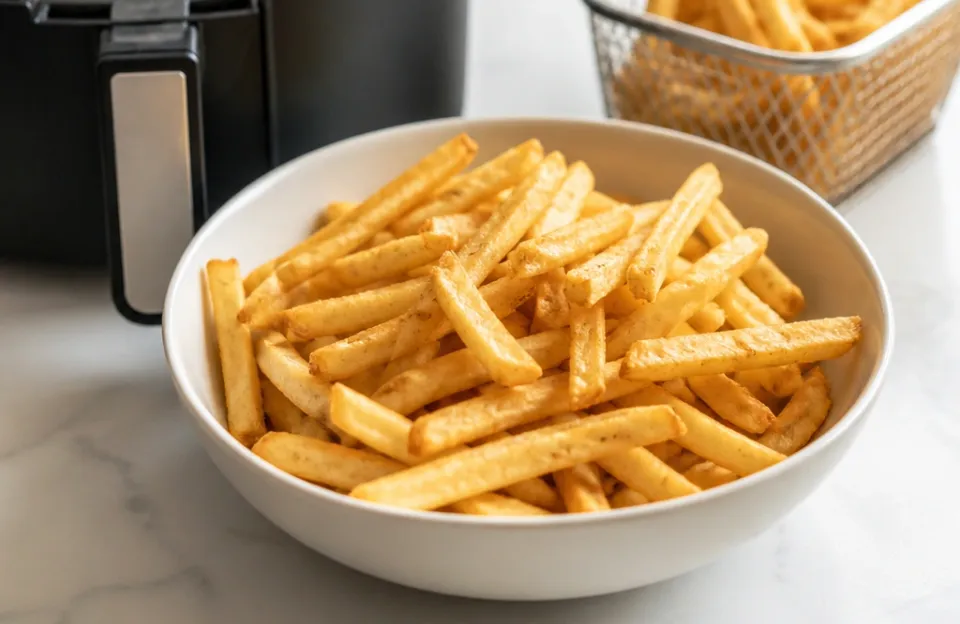
Air fryer French fries cook up crispy on the outside and fluffy inside using circulating hot air instead of a vat of oil. You get the texture of deep fried potatoes with a fraction of the grease, and the whole process takes about 20 to 25 minutes from start to finish.
Making air fryer French fries at home comes down to three things: cutting uniform pieces, soaking out the starch, and giving them enough room in the basket. Skip any of those steps and you end up with limp, pale sticks that taste more like baked potato wedges than actual fries. This guide covers exactly how to prep, season, and cook them so they turn out right every time.
Why Hot Air Beats Deep Oil for Homemade Fries
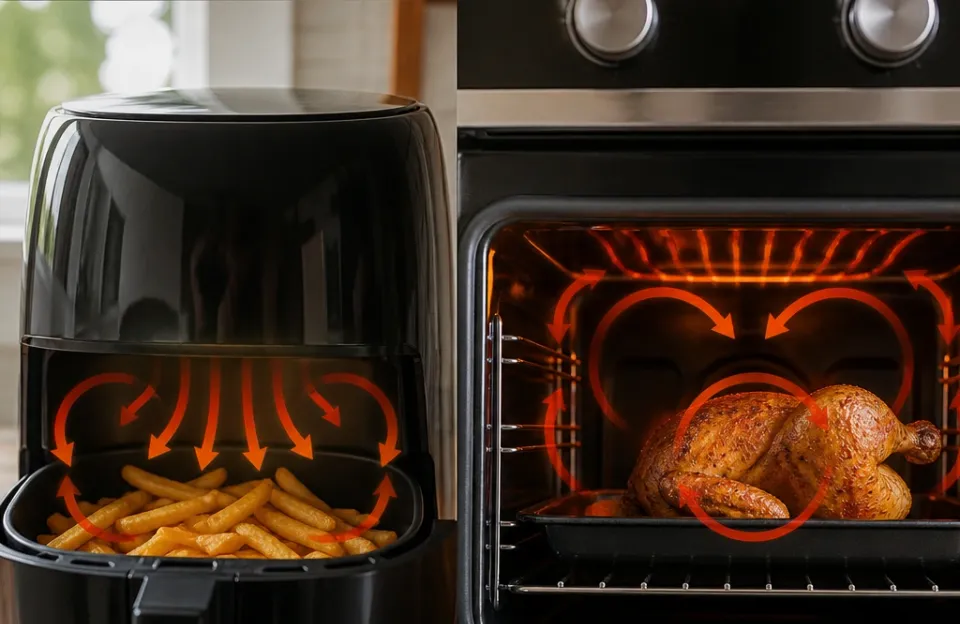
Traditional deep frying submerges potatoes in oil heated to around 350°F. The intense heat instantly vaporizes surface moisture, creating a hard crust while the inside steams. An air fryer uses a heating element and a powerful fan to push air past 400°F directly over the food.
That rapid airflow mimics the moisture removal of deep frying, though it happens slightly slower.
Because the cooking relies on moving air rather than liquid fat, you only need a light coating of oil. One to two tablespoons is enough for an entire batch. The oil conducts heat across the potato surface and helps seasonings stick.
Without it, the exterior dries out into a leathery skin instead of crisping up.
The tradeoff is capacity. A standard air fryer basket holds about two medium russet potatoes worth of fries in a single layer. If you pile them high, the air cannot circulate.
The fries in the middle steam each other, leaving you with a soggy clump. Cooking in smaller batches or shaking the basket frequently solves this. For a deeper look at reducing excess grease when using countertop appliances, adjusting your oil ratios makes a huge difference.
Picking the Right Potato Variety
Russet potatoes are the standard choice for air fryer French fries. They have a high starch content and low moisture, which translates to a fluffy interior and a crisp exterior. Yukon Gold potatoes work too, though they hold more water and produce a creamier, denser center.
Waxy varieties like red potatoes tend to stay firm and do not develop that classic fry texture.
If you want thick steak fries, Russets still hold their shape best. For thin shoestring cuts, the lower moisture prevents them from burning before the inside cooks through.
Cutting Thickness Changes the Cook Time
Uniformity matters more than the exact size. If one fry is half an inch thick and another is a quarter inch, the thin one will burn while the thick one stays raw in the center. Aim for pieces that match within an eighth of an inch.
| Cut Style | Approximate Thickness | Typical Cook Time at 380°F |
|---|---|---|
| Shoestring | 1/4 inch | 12 to 15 minutes |
| Standard Matchstick | 3/8 inch | 18 to 22 minutes |
| Steak Fry | 1/2 to 3/4 inch | 22 to 28 minutes |
A mandoline slicer gives you identical pieces every time. If you use a knife, take your time and measure the first few cuts against each other.
Prep Work Before the Basket Goes In
Raw potatoes are covered in surface starch. When exposed to high heat, that starch gelatinizes quickly and turns gummy. Soaking the cut potatoes in cold water washes away the excess starch and allows the exterior to dry out properly during cooking.
Fill a large bowl with cold water and drop the cut potatoes in. Leave them there for at least 30 minutes. You can soak them for up to 24 hours in the refrigerator if you are prepping ahead.
After soaking, the water will look cloudy. That cloudiness is the starch you just removed.
Drain the potatoes and spread them out on a clean kitchen towel or layers of paper towels. Pat them completely dry. This step is where most people rush.
Any water left on the surface has to boil off before the potato can start browning. Wet potatoes mean steamed potatoes, and steamed potatoes never get crispy. Let them sit on the towel for five extra minutes if you have time.
Once dry, transfer the potatoes to a dry bowl. Drizzle one tablespoon of a neutral, high smoke point oil over them. Avocado oil, refined peanut oil, or light olive oil all work.
Toss them with your hands until every piece has a faint sheen. Add your salt and spices now. Salt draws out moisture, so tossing the fries immediately before they go into the machine prevents them from getting wet again.
Cooking Air Fryer French Fries Step by Step
Preheat your air fryer to 380°F. Preheating takes about three to five minutes depending on the model. Dropping potatoes into a cold basket lowers the initial temperature and delays the crisping process.
Place the dried, oiled potatoes into the basket. Spread them out as much as possible. Some overlap is fine, but avoid stacking them more than two layers deep.
If you have a large batch, divide it in half and cook two separate rounds.
Set the timer for 10 minutes. When the timer goes off, pull the basket out and shake it vigorously. Use tongs to flip any pieces that are stuck together.
Shaking redistributes the fries so different sides face the heating element.
Slide the basket back in and cook for another 8 to 12 minutes. Check them at the 8 minute mark. The edges should be golden brown and rigid.
If they still bend easily or look pale, give them another 3 to 4 minutes. Thicker cuts might need the full extra time.
Remove the fries immediately once they hit the color you want. They continue to cook slightly from residual heat even after you pull the basket out. Transfer them to a wire rack or a plate lined with a paper towel.
Sprinkle a final pinch of flaky salt over them while they are still hot.
Adjusting Heat for Different Machines
Not every air fryer runs at the exact temperature displayed on the dial. Some run 10 to 15 degrees hotter, which burns the tips of thin fries before the centers soften. Using a reliable tool to verify internal temperatures inside your appliance prevents guessing.
If your first batch browns too fast on the outside but stays hard inside, drop the temperature to 360°F and add four minutes to the total time.
If you are pairing these fries with a protein cooked in the same appliance, you can apply similar techniques used when getting a crunchy exterior on other foods. High heat and dry surfaces drive both results.
Seasoning Blends Beyond Plain Salt
Plain salted fries are great, but the dry environment of an air fryer holds onto powdered spices better than deep frying does. In hot oil, fine powders often wash away or burn. In an air fryer, they toast gently alongside the potato.
Garlic powder, smoked paprika, and onion powder form a solid base. Mix them in a small bowl before tossing with the potatoes so they distribute evenly. Cayenne pepper adds heat without altering the texture.
Dried herbs like rosemary or thyme work well, but chop them finely. Large leaves burn and turn bitter at 380°F.
Cheese powder, like the kind found in boxed macaroni, clings perfectly to hot fries right out of the basket. Toss the fries in the powder immediately after cooking. Grated parmesan behaves the same way.
Avoid adding fresh grated cheese before cooking, as the moisture causes clumping and prevents browning. A quick flavorful dip on the side pairs perfectly with heavily seasoned potatoes.
For a savory umami kick, try dusting the raw oiled potatoes with mushroom powder or nutritional yeast before cooking. Both withstand the heat and deepen the flavor profile significantly.
Frozen Store Bought Fries in the Air Fryer
You can absolutely cook frozen french fries in an air fryer, and they usually turn out better than the oven instructions promise. Frozen fries are already blanched and coated in a microscopic layer of oil at the factory. You do not need to add any extra oil or thaw them first.
Preheat the machine to 400°F. The higher temperature compensates for the ice crystals on the frozen surface. Pour the frozen fries directly into the basket.
Do not fill past the halfway line. Shake the basket every five minutes. Most standard crinkle cuts or straight cuts take 15 to 20 minutes total.
Waffle fries might need 18 to 22 minutes because of their thicker intersections.
Watch them closely during the last three minutes. Factory coatings vary wildly between brands. Some brown rapidly while others stay pale longer.
Trust the texture over the color. If they feel rigid when you press one with tongs, they are done.
What Usually Goes Wrong and How to Fix It
Soggy fries almost always trace back to two mistakes: overcrowding the basket or skipping the drying step after soaking. When potatoes touch on all sides, the fan pushes moisture from one fry directly onto its neighbor. The result is a humid microclimate inside the basket.
Cook in smaller batches. Give the pieces space to breathe.
Fries that burn on the ends but stay raw in the middle indicate uneven cutting or a temperature that is too high. Sort your cuts before cooking. Put the thinner pieces in one batch and the thicker ones in another.
Lower the heat to 370°F if your specific model tends to run hot.
Sometimes the seasoning falls off and pools at the bottom of the basket. This happens when the potatoes are too wet when you apply the spices, or when you use coarse salt instead of fine salt before cooking. Fine salt dissolves into the oil coating and anchors the other spices.
Save coarse finishing salt for the moment they come out of the machine.
If your fries stick to the basket mesh, the nonstick coating might be wearing off, or you skipped the oil entirely. Even a light spray of avocado oil on the basket floor before loading the potatoes prevents sticking. Avoid aerosol cooking sprays that contain propellants, as those chemicals degrade nonstick surfaces over time.
Pump sprayers filled with pure oil are much safer for the appliance.
When testing for doneness, relying on sight alone fails often. Checking the internal temp of thicker cuts confirms whether the starchy center has actually softened. Potatoes are fully tender when the core reaches roughly 210°F.
Scaling Up for Larger Batches
Cooking air fryer French fries for a family of four requires strategy. A standard 4 quart basket handles about two medium potatoes comfortably. Four potatoes require at least two batches, sometimes three.
To keep the first batch warm while the second cooks, set your regular oven to 200°F. Place a wire cooling rack on a baking sheet. As each batch finishes in the air fryer, move the fries to the wire rack in the warm oven.
The low heat keeps them crisp without continuing to cook them. Leaving them piled on a plate traps steam and ruins the crust you just built.
Do not put raw potatoes into the basket while it is still packed with cooked fries. Remove the finished batch completely, give the basket a quick wipe if any oil pooled at the bottom, and load the next raw batch. Consistent starting conditions yield consistent results across multiple rounds.
Frequently Asked Questions
Do I really have to soak the potatoes first?
Yes, soaking removes surface starch that causes gumminess. If you skip it, the outside of the fry turns sticky and darkens unevenly before the inside softens. Thirty minutes in cold water is the minimum.
Rinse them until the water runs clear for the best texture.
Can I use sweet potatoes instead of russets?
Sweet potatoes contain more sugar and water than russets. They brown much faster and rarely achieve the same rigid crunch. To air fry sweet potato fries, cut them slightly thinner, reduce the temperature to 360°F, and check them early.
They will be softer than traditional fries regardless of technique.
Is it safe to use parchment paper liners in the basket?
Perforated parchment liners designed for air fryers are safe as long as they do not block the airflow underneath the food. Never place a liner in the basket during preheating without food weighing it down. The fan can blow loose paper into the heating element, causing a fire.
Weigh it down with the potatoes immediately.
Why did my fries turn out hollow inside?
Hollow centers happen when the outside cooks drastically faster than the inside, causing the interior moisture to flash into steam and escape, leaving a void. This usually means the oil was applied too heavily, the temperature was too high, or the potatoes were cut too thick for the chosen heat setting. Lower the temperature and extend the time.
Should I toss fries in cornstarch for extra crunch?
A very light dusting of cornstarch absorbs residual moisture and creates a micro crust. Toss the dried potatoes in no more than one teaspoon of cornstarch per pound of potatoes before adding the oil. Too much cornstarch creates a chalky, pasty coating that tastes raw.
How long do leftover air fryer French fries last?
Store cooled leftovers in an open container or loosely wrapped in foil in the refrigerator for up to two days. Sealing them in an airtight plastic bag traps moisture and makes them soggy. Reheat them in the air fryer at 375°F for three to four minutes to restore the crispness.
Microwaving them will leave them rubbery.
Getting the Crunch Right Every Time
Air fryer French fries reward patience during the prep stage. The actual cooking is mostly hands off aside from a mid cycle shake, but the soaking, drying, and uniform cutting dictate the final texture. Keep your batches small enough for the fan to do its job, use a high smoke point oil sparingly, and trust the golden brown color over a strict timer.
Once you dial in the routine for your specific machine, homemade fries become a fast weeknight staple rather than a weekend project.