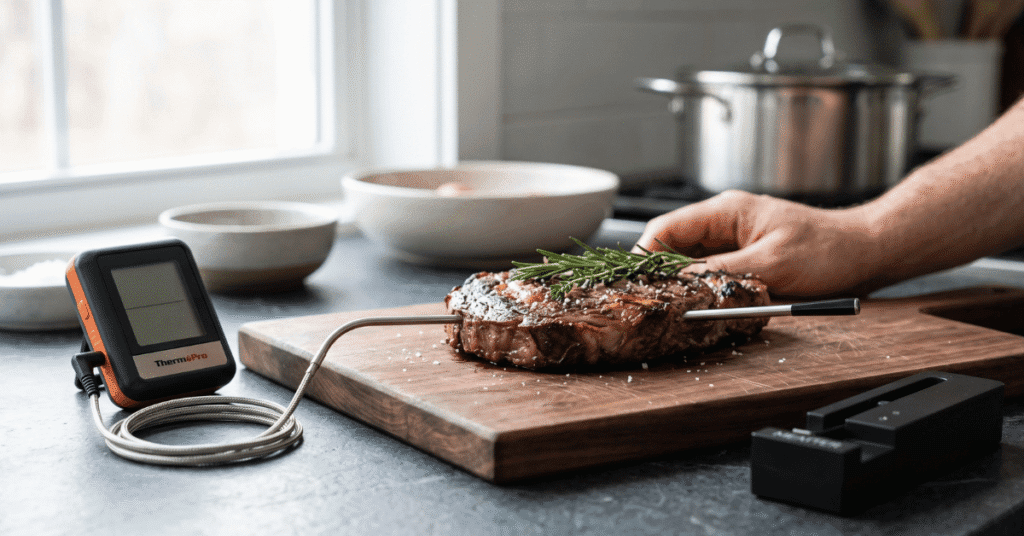
Pulling a steak off the grill only to find it gray and overcooked inside is a quick way to ruin a weekend. Most of us have been there, betrayed by a cheap grocery store thermometer or a bulky wire that got tangled in the grill grates. Truly wireless meat thermometers promised to fix this, but they are not all built the same way. In 2026, the market has matured significantly, yet choosing between the two dominant players remains surprisingly difficult.
This guide breaks down the Meater vs ThermoPro debate with practical, first-hand observations from heavy backyard use. Whether you need guided smartphone cooking or rugged hardware reliability, understanding the technical trade-offs will save you money and your next brisket. You can also read our guide on meat thermometer probe wire frayed is it dangerous to use.
Quick Pick: The Meater Plus is the best choice for most home cooks because of its guided app and simple setup. If you frequently cook large cuts on a rotisserie, need raw distance, or want a dedicated screen that does not rely entirely on your phone, the ThermoPro TempSpike is the better alternative.
What to Look For in a Wireless Meat Thermometer

Buying a wireless probe is not just about picking the one with the highest temperature rating. There are specific technical hurdles these devices have to clear to actually be useful in a hot kitchen or backyard. A common mistake is focusing solely on price while ignoring how the device communicates through solid objects. You can also read our guide on what is the ideal chicken internal temperature.
Connection Range and Obstructions
Manufacturers love to brag about “500 feet” of range, but that number is usually measured in a flat, open field with nothing in the way. In practice, your signal has to fight through a thick metal grill lid, brick walls, and kitchen appliances. Bluetooth signals degrade rapidly when passing through dense materials like cast iron or stainless steel. Look for thermometers that use a charging case as a “booster” to relay the signal from the probe to your phone. Without a booster, you will likely lose connection before you even reach your living room.
Probe Thickness and Insertion Depth
If you are cooking a delicate filet mignon, you do not want to shove a tent stake into the middle of it. Thick probes leave large holes that let juices escape, drying out smaller cuts. Because wireless probes house batteries and transmitters inside the handle, they are naturally thicker than wired ones. However, a difference of even two millimeters matters when plating food. Always check the minimum insertion line etched into the probe; failing to push it in deep enough exposes the internal battery to direct ambient heat, which can damage the electronics. You can also read our guide on why resting time still matters even with a perfect reading.
Dual-Sensor Accuracy
A good wireless probe does not just tell you the core temperature of the protein. It must also feature an ambient sensor near the handle to measure the air temperature inside your oven or smoker. This dual-sensor setup is what powers predictive algorithms. If the ambient sensor is slow or inaccurate, your estimated “time to finish” will be completely useless. Understanding the difference between measuring surface heat and core heat is critical, much like knowing when to use infrared versus probe tools for different tasks.
Battery Life and Charging
Wireless probes charge inside their carrying cases. Pay attention to how many full cooks a single charge supports. Probes left sitting in a drawer for months often arrive dead when you need them, so a case that doubles as a reliable charging dock is essential. Also, keep an eye on power levels during long smokes, as recognizing a fading power source early prevents mid-cook dropouts.
Meater vs ThermoPro: Core Model Breakdown
Both brands offer tiered ecosystems. Here is how their flagship models perform in real-world conditions.
Meater Plus: Best for Guided Cooking
The Meater Plus remains the gold standard for beginners and those who prefer a “set it and forget it” experience via a smartphone.
- Best for: Cooks who want software assistance and precise carryover predictions.
- Key specs: 165ft range (with charging case booster), dual sensors (internal and ambient), dishwasher safe body, stainless steel construction.
- Why it works: Meater’s biggest strength is its app ecosystem. It walks you through the entire process, including the “carryover cooking” phase where the meat continues to rise in temperature after you pull it off the heat. The app calculates exactly when to remove the protein based on the thermal mass and current heat of your oven. Based on extensive user feedback, the app’s estimated cook time is consistently among the most accurate available.
- Watch out for: The probe is quite thick compared to traditional instant-reads. It struggles to get an accurate reading in very thin cuts of meat like skirt steak or thin pork chops. If you frequently cook thin proteins, you may still need a secondary tool.
ThermoPro TempSpike: Best for Hardware Reliability
ThermoPro has been manufacturing temperature instruments for decades, and that heritage shows in the physical build quality of the TempSpike.
- Best for: Pitmasters who prioritize rugged construction and long-range Bluetooth stability.
- Key specs: Up to 500ft claimed range, IP67 waterproof rating, 10mm diameter, multi-month standby battery life per charge.
- Why it works: The TempSpike often maintains a Bluetooth connection through thick offset smokers where other brands drop out. In practice, the physical build feels slightly more substantial in the hand, and the pairing process is nearly instant. If you already know how to manage fire and just want the wires out of your way, this hardware-first approach is highly effective. If you are curious about the broader reputation of the manufacturer, evaluating their overall brand reliability explains why many professionals trust their gear.
- Watch out for: The app interface is not as polished as Meater’s. It provides the data you need, but it will not hold your hand through the cooking process with the same level of visual detail or predictive guidance.
Meater Block: Best for Multi-Tasking
For those hosting large dinner parties or smoking multiple proteins simultaneously, the Meater Block is the premium upgrade.
- Best for: Competitions, catering, or cooking four different items at once.
- Key specs: 4 independent probes included, built-in WiFi connectivity, standalone OLED display, powered via AA batteries or USB-C.
- Why it works: Since it has its own screen, you do not even need your phone nearby to check temperatures. It connects directly to your home WiFi network, meaning you can monitor your grill from the grocery store as long as both devices have internet access. The ability to track four distinct pieces of meat independently makes it a powerhouse for complex meals.
- Watch out for: It represents a massive price jump from the single-probe version. For most people who only cook one main protein at a time, it is expensive overkill.
ThermoPro Twin TempSpike: Best Value for Two Probes
If you regularly cook two different mains—like a medium-rare steak alongside chicken breasts—the Twin TempSpike offers excellent value.
- Best for: Couples or small families needing simultaneous monitoring without buying two separate kits.
- Key specs: 2 independent probes, color-coded handles, booster charging case with integrated LCD display.
- Why it works: You get two high-quality probes for significantly less than the cost of two Meater Plus units. The charging case displays the temperatures directly on its screen, so you are not tethered to your smartphone while managing the rest of your meal.
- Watch out for: The booster case needs to stay relatively close to the grill (within 10 to 20 feet) to reliably relay the signal to your phone. This can be annoying if your outdoor setup lacks a convenient side table.
When comparing these ecosystems against other budget-friendly competitors, looking at alternative wireless options reveals that ThermoPro generally maintains a hardware edge in durability.
Feature Comparison Table
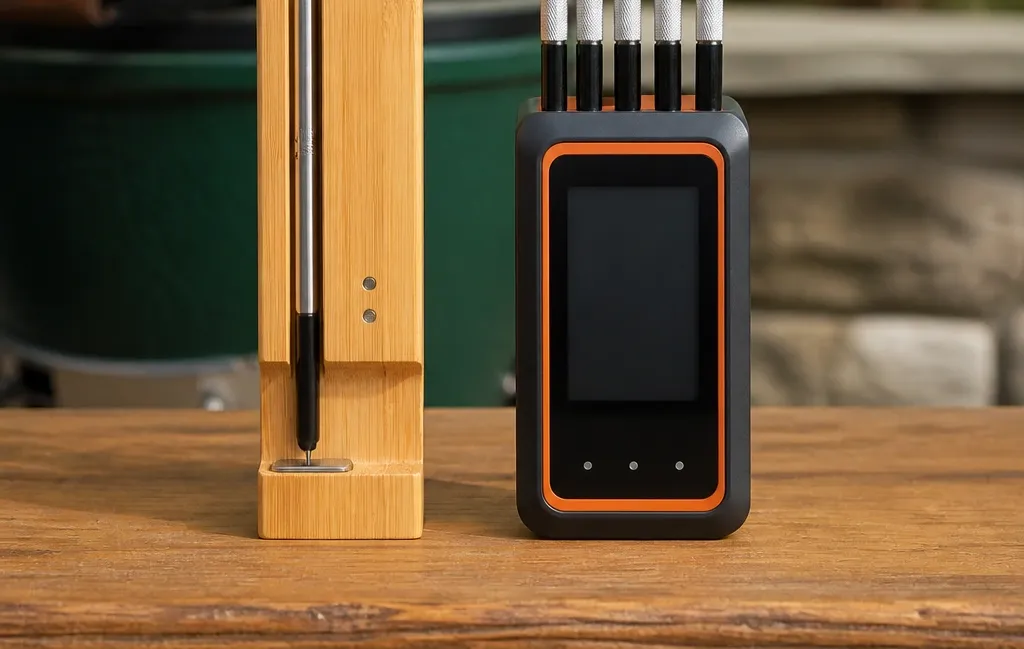
| Feature | Meater Plus | ThermoPro TempSpike | Meater Block | ThermoPro Twin TempSpike |
|---|---|---|---|---|
| Number of Probes | 1 | 1 | 4 | 2 |
| Connectivity | Bluetooth + Booster | Bluetooth + Booster | WiFi + Bluetooth | Bluetooth + Booster |
| App Guidance | Excellent (Predictive) | Good (Data-focused) | Excellent (Predictive) | Good (Data-focused) |
| Standalone Display | No (Phone required) | No (Phone required) | Yes (OLED Screen) | Yes (Case LCD) |
| Probe Thickness | ~6.5mm | ~10mm | ~6.5mm | ~10mm |
| Max Ambient Temp | 527°F (275°C) | 572°F (300°C) | 527°F (275°C) | 572°F (300°C) |
| Best Use Case | Everyday guided cooking | Long-range smoking | Large events / catering | Cooking two proteins |
Software Experience: App Quality and Predictive Algorithms
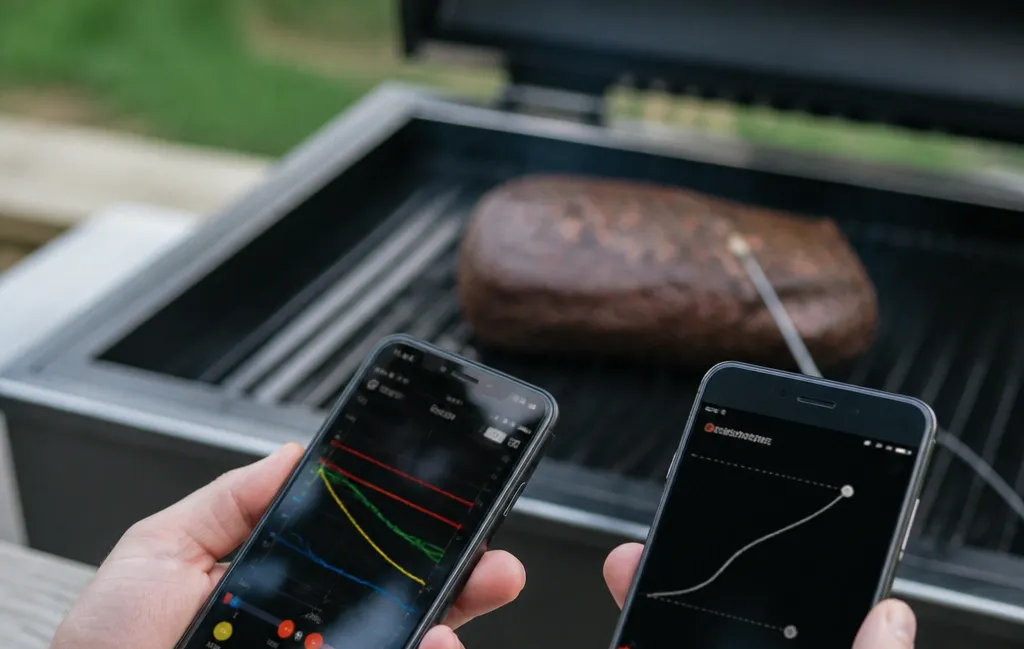
The sharpest dividing line in the Meater vs ThermoPro debate is software. Meater, now backed by Traeger, operates heavily as a tech company. Their app is designed to reduce anxiety for newer cooks. By combining the internal meat temperature with the ambient pit temperature, the algorithm calculates the rate of heat transfer. It then tells you exactly when to pull the meat off the heat so it reaches your target temperature during the resting phase.
ThermoPro takes a more utilitarian approach. Their app delivers clean, fast-updating graphs and alerts, but leaves the culinary math to you. If you already understand thermal dynamics and just need reliable numbers transmitted wirelessly, ThermoPro’s simpler interface gets out of your way. However, if you struggle with timing side dishes to finish alongside the main course, Meater’s predictive countdown is genuinely transformative.
Always ensure your final readings align with official safety standards. The USDA food safety guidelines provide exact minimum internal temperatures for poultry, beef, pork, and seafood that no app prediction should override.
Build Quality and Durability
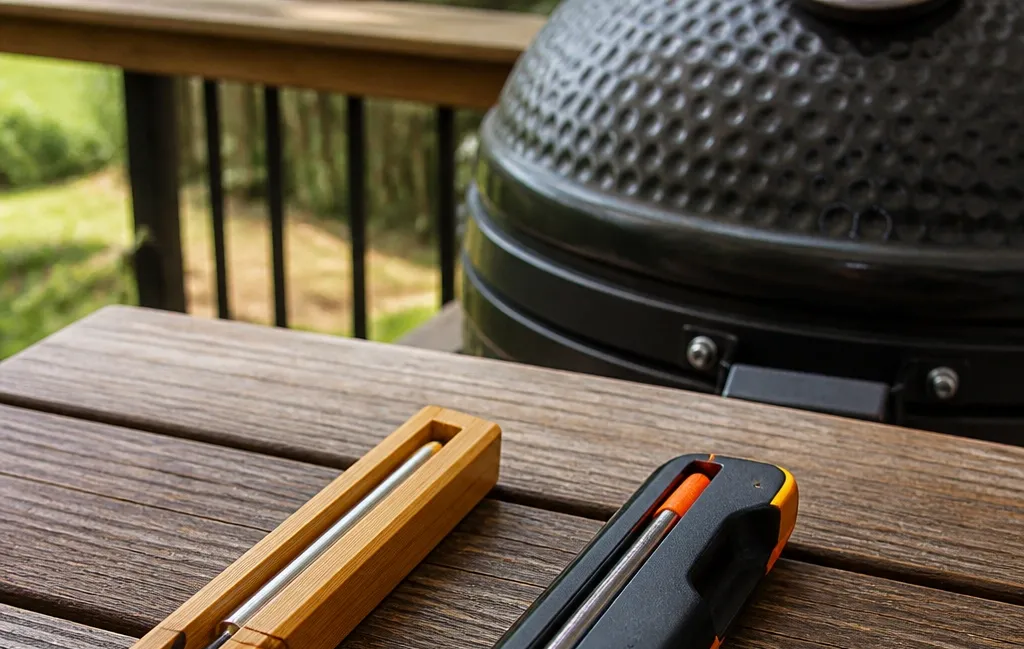
In practice, both brands survive the rigors of backyard cooking, but they feel different. Meater probes feature a sleek, modern aesthetic with a ceramic top half that houses the Bluetooth antenna. This ceramic section stays cooler, protecting the transmitter. ThermoPro probes tend to feel slightly heavier and more industrial, utilizing robust stainless steel throughout.
A critical durability factor is water resistance. Both brands claim high IP ratings, making them safe for rain and washing. However, repeatedly subjecting any electronic probe to extreme thermal shock—moving it from a 500°F grill directly into ice water—will eventually compromise the internal seals over years of use. Treat them well, and either will last through hundreds of cooks.
The Rotisserie Factor: Why Truly Wireless Wins
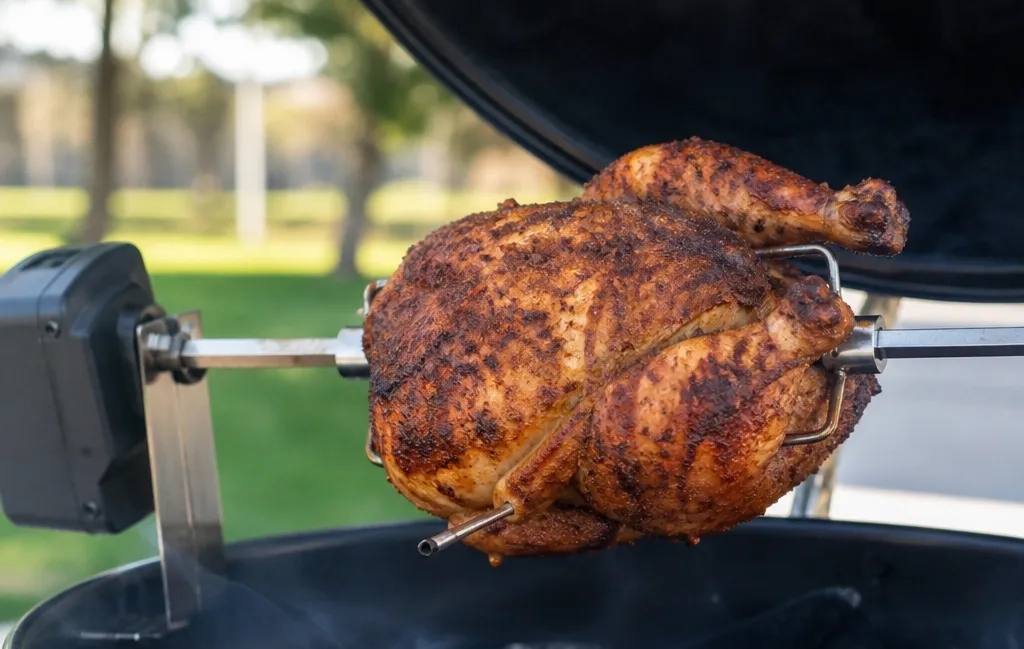
The absolute best reason to buy either of these systems is for rotisserie cooking. If you have ever tried to use a wired thermometer on a spinning chicken, you know the disaster that follows. The wires wrap around the spit rod, twist until they snap, or yank the probe out of the meat entirely.
Because Meater and ThermoPro probes are completely self-contained inside the meat, they spin flawlessly for hours. There are no cables to tangle and no base stations to mount awkwardly on a rotating spit. If you frequently roast whole birds or large joints on a rotisserie, a truly wireless probe is not a luxury; it is a functional requirement.
Common Buying Mistakes to Avoid
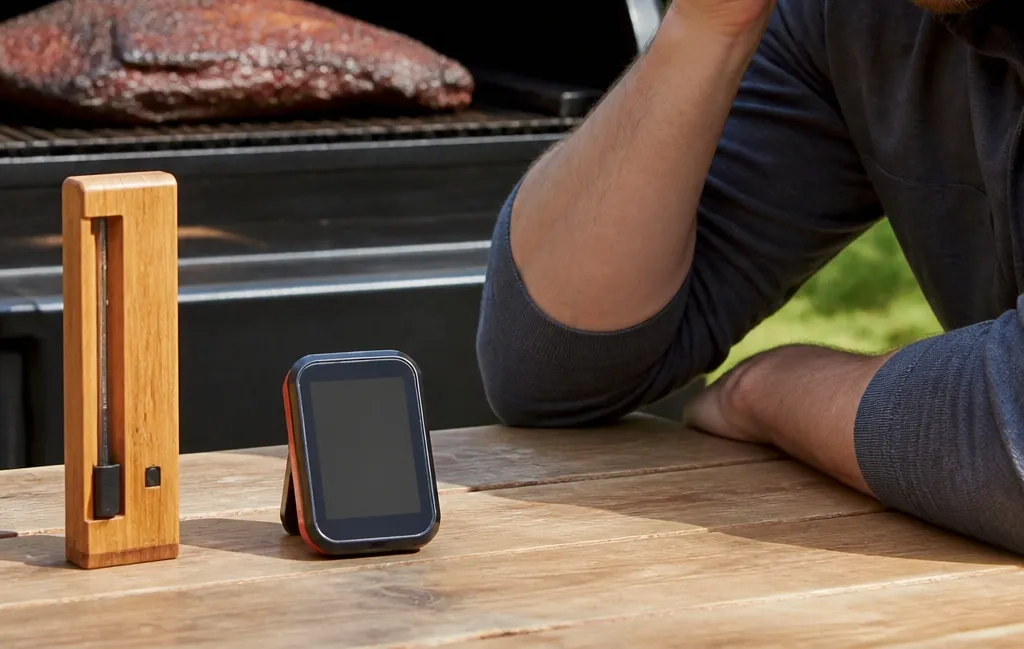
Even experienced cooks make errors when transitioning to wireless technology. Avoid these pitfalls to protect your investment.
- Assuming they work in deep fryers: Most wireless probes are not designed for the extreme, direct liquid immersion of a deep fryer. The intense, constant heat transfer through oil can overwhelm the ambient sensor and potentially damage the internal battery seals. Stick to ovens, grills, smokers, and air roasting.
- Leaving the probe in during oven cleaning: If you leave your probe inside the oven during a self-cleaning cycle, the 900-degree heat will permanently destroy the internal electronics instantly. Always remove probes before initiating high-heat cleaning modes.
- Ignoring the minimum insertion line: All wireless probes have a clearly marked notch or line. If you do not push the probe in past this point, the internal battery sits above the surface of the meat, exposed to the direct radiant heat of the grill. This will trigger over-temperature alarms and shorten the battery’s lifespan.
- Trusting maximum range claims blindly: Always assume your real-world range will be roughly 25% to 50% of what the box advertises. If you have thick exterior walls, a heavy cast-iron smoker, or significant WiFi interference, the signal will drop much sooner than expected. Keep the booster case as close to the cooker as safely possible.
If you are outfitting a new outdoor station or reorganizing your indoor space, ensuring you have adequate clearance around your cooking equipment is just as important as selecting the right tools.
Frequently Asked Questions

Will these thermometers work inside a heavy cast-iron Dutch oven?
Generally, no. A thick cast-iron lid acts like a Faraday cage and blocks the Bluetooth signal almost entirely. If you are braising short ribs in a Dutch oven, you will need to crack the lid slightly to let the signal escape, or use a wired probe that can snake out under the rim.
Is Meater or ThermoPro better for long-range monitoring?
ThermoPro typically wins on raw Bluetooth distance out of the box. However, Meater wins if you utilize their cloud-linking features. By leaving a tablet or second phone near the grill connected to WiFi, Meater can push the signal to the cloud, allowing you to monitor your cook from anywhere in the world via your primary phone.
Can I put the wireless probes in the dishwasher?
While manufacturers state their probes are dishwasher safe, many long-term users strongly suggest hand-washing them. High-pressure water jets and harsh alkaline detergents can eventually degrade the seals around the ceramic handle or antenna housing. To maximize the lifespan of either brand, wash them gently with warm soapy water.
Do I need a subscription to use the apps?
No. Both Meater and ThermoPro offer their primary monitoring and alert features entirely for free. Meater does offer supplementary video content and masterclasses, but the core functionality of temperature tracking, graphing, and cook estimation does not require a monthly fee.
How do these compare to standard instant-read thermometers?
Wireless probes are designed for continuous monitoring during the cook, whereas instant-reads are meant for spot-checking at the end. They serve different purposes. Many serious cooks keep a fast instant-read in their apron pocket to verify the wireless probe’s final reading before serving. Selecting top-rated grilling instruments usually means owning both types for different stages of the cook.
Conclusion
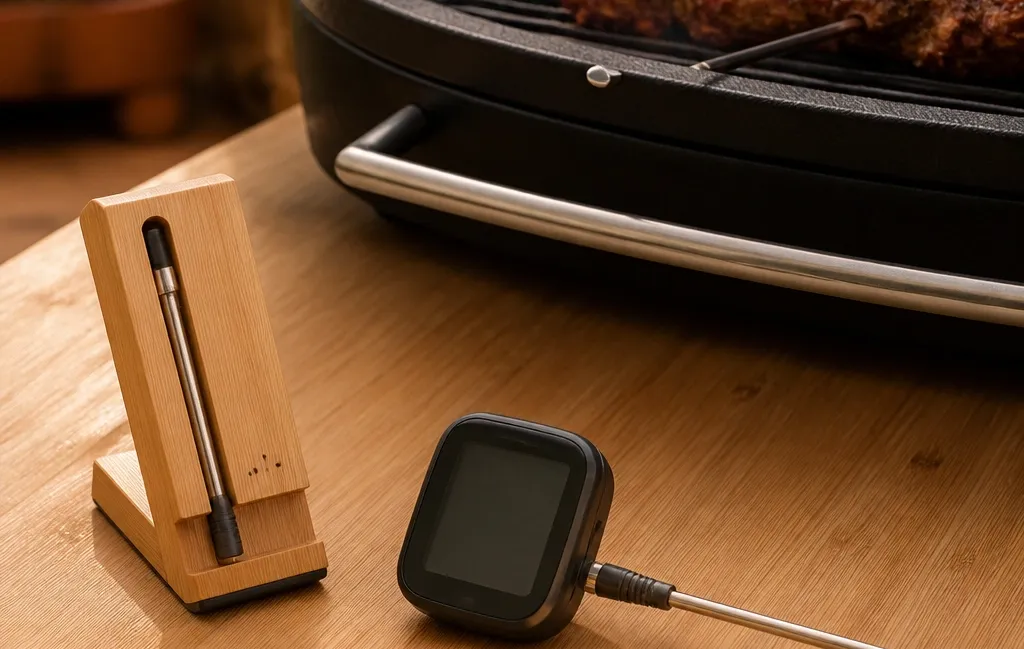
Choosing between Meater and ThermoPro ultimately comes down to whether you value software guidance or hardware ruggedness. The Meater ecosystem excels at removing guesswork, offering predictive algorithms and a polished app that actively makes you a better cook. ThermoPro delivers exceptional physical build quality, superior raw Bluetooth range, and a straightforward, data-first approach favored by experienced pitmasters. Neither is objectively wrong; they simply serve different styles of cooking.
Next Step: Evaluate your typical weekend menu. If you mostly cook single, expensive cuts where precision timing is critical, grab the Meater Plus. If you run a heavy smoker or need maximum distance without relying on WiFi, invest in the ThermoPro TempSpike. Whichever you choose, upgrading to a truly wireless system will immediately improve your consistency at the grill.