Choose MEATER Plus if you cook one cut at a time and want alerts for when to pull it and when resting is done. Choose ThermoPro TempSpike TP960 for a single probe with a higher published ambient limit, or Twin TempSpike TP962 for two probes and a screen on the booster. The original MEATER Block offers four probes, Wi-Fi and a standalone cooking mode.
Quick Pick by Cooking Scenario
| If this sounds like your cooking | Start here | Why |
|---|---|---|
| You cook one roast or steak at a time and want guidance on timing | Meater Plus | Predictive app guidance and carryover estimates for a single probe |
| You want two probes without buying two kits | ThermoPro Twin TempSpike | Two probes and a display-equipped booster case in one package |
| You cook four items at once or want a standalone display | Meater Block | Four probes, a built-in screen and 2.4 GHz Wi-Fi |
| You want a data-first probe for hot, long cooks | ThermoPro TempSpike | 572°F ambient limit and 48 hours or more of probe runtime, according to TempPro |
| You cook rotisserie | Either brand | Fully wireless probes spin with the spit; wired probes do not |
This comparison uses manufacturer specifications and app documentation. We did not measure range, battery life or cooking accuracy.
What Actually Decides This Choice
Range Through Obstructions
Manufacturer range figures are typically measured line-of-sight in open air. Your signal has to pass through a metal grill lid, exterior walls, and appliances, and dense materials weaken Bluetooth significantly. That is why both brands sell booster cases that relay the probe signal to your phone. Treat advertised range as a ceiling, not a promise, and keep the booster as close to the cooker as your setup allows.
Probe Thickness and Insertion Depth
Wireless probes house a battery and transmitter, so they run thicker than wired or instant-read probes. A thicker probe leaves a larger channel in thin cuts, which matters for skirt steak, thin chops, and delicate fish.
Every wireless probe also has a minimum insertion line. If the probe is not pushed past that mark, the battery and electronics sit above the meat surface, exposed to direct ambient heat. That shortens battery life and triggers over-temperature alarms.
Why Dual Sensors Matter
A wireless probe with both an internal and an ambient sensor is doing two jobs: reading the center of the meat and the air temperature around it. The gap between those readings is what allows software to estimate remaining cook time. An inaccurate or slow ambient sensor makes any predicted finish time unreliable. For how probe and infrared tools divide this work, see infrared versus probe tools.
Battery and Charging Behavior
Wireless probes charge in their cases, and a case that doubles as a reliable dock matters more than the number on the box. Probes stored for months often arrive depleted. During long smokes, watch power levels rather than assuming a full charge lasts the whole cook. Cold-weather performance is a known weak point for rechargeable batteries generally, so expect shorter runtime in freezing conditions and check the manufacturer’s stated operating range before a winter cook.
Meater Models

Meater Plus
Best for: Cooks who want the app to handle timing decisions for a single piece of meat.
Key specs: One 6 mm probe with a 212°F internal limit, a 527°F ambient limit and about 24 hours of cooking per charge. The AAA-powered dock relays the signal up to 165 ft to your phone in open air. The probe-to-dock link is rated up to 33 ft in open air. MEATER Plus support guide
Why it stands out: Meater’s main differentiator is predictive software. By combining internal and ambient readings, the app estimates when to pull the meat so it lands at target temperature during resting. If timing side dishes alongside a roast is your recurring problem, that guidance is the feature you are paying for.
Watch out for: Very thin cuts may not let you insert the full sensing section past the safety notch. Use an instant-read thermometer for those cuts.
Meater Block
Best for: Cooking four different items at once, or anyone who wants a display that does not depend on a phone.
Key specs: Four 6 mm probes, each rated up to 527°F ambient and 212°F internal, with about 24 hours of cooking per charge. The dock has an OLED display and runs on four AA batteries or Micro-USB power. The probes connect to the Block over Bluetooth, and the Block connects to your 2.4 GHz Wi-Fi network. MEATER Block support guide
Why it stands out: The onboard screen means you can check temperatures without reaching for your phone, and four probes let you track distinct proteins independently. That combination is the reason to buy it.
Watch out for: Even when the Block is on Wi-Fi, the probes still need to be within Bluetooth reach of the dock. Place it near the cooker and keep it away from direct heat.
ThermoPro Models
ThermoPro TempSpike (TP960)
Best for: Cooks who monitor one roast or brisket at a time and want a higher documented ambient limit than the original MEATER models.
Key specs: One 6.5 mm probe with a 572°F ambient limit, a 212°F internal limit and an IP67 rating. TempPro lists up to 500 ft of unobstructed Bluetooth range via the booster and at least 48 hours per full probe charge. TempSpike TP960 product specifications
Why it stands out: The 572°F ambient rating gives the handle more temperature headroom than the 527°F MEATER Plus. The app provides live readings, alerts, charts and a remaining-time estimate.
Watch out for: The booster has no temperature screen, so use your phone to read it. Follow the insertion mark and check that your cut is thick enough before you cook.
ThermoPro Twin TempSpike (TP962)
Best for: Households cooking two different mains at once, such as steak plus chicken.
Key specs: Two color-coded 6.5 mm probes and a backlit LCD booster. Each probe is IP67, rated up to 572°F ambient and 212°F internal, and rated for at least 36 hours per charge. TempPro advertises up to 500 ft between booster and phone in open areas. Twin TempSpike TP962 product specifications
Why it stands out: Two probes in one kit means one purchase instead of two, and the case display lets you check temperatures without opening the app. That combination is the value argument.
Watch out for: Set the booster on a nearby side table or shelf. The advertised 500 ft describes the booster-to-phone link in open areas. The probes still need to reach the booster.
Side-by-Side Comparison
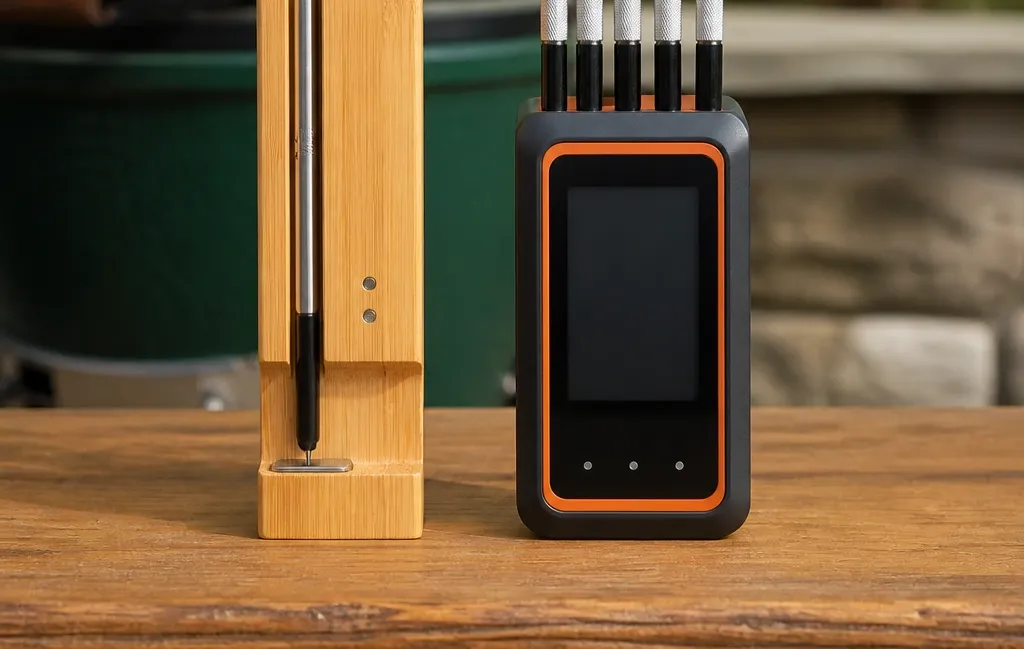
| Feature | MEATER Plus | TempSpike TP960 | MEATER Block | Twin TempSpike TP962 |
|---|---|---|---|---|
| Probes included | 1 | 1 | 4 | 2 |
| Connection | Bluetooth via dock | Bluetooth via booster | Bluetooth to Block; 2.4 GHz Wi-Fi to network | Bluetooth via booster |
| Published range | Up to 33 ft probe to dock; 165 ft dock to phone in open air | Up to 500 ft via booster in open air | Up to 33 ft probe to Block in open air; remote range depends on Wi-Fi coverage | Up to 500 ft booster to phone in open air |
| App timing | Guided cook with pull and rest estimates | Graphs, alerts and Estimated Time Left | Guided cook with pull and rest estimates | Graphs, alerts and Estimated Time Left |
| Readout without phone | No | No | OLED; standalone cook mode | Booster LCD; live readings |
| Max ambient at probe | 527°F (275°C) | 572°F (300°C) | 527°F (275°C) | 572°F (300°C) |
| Max internal at probe | 212°F (100°C) | 212°F (100°C) | 212°F (100°C) | 212°F (100°C) |
| Probe diameter | 6 mm | 6.5 mm | 6 mm | 6.5 mm |
| Published probe runtime | 24 hours | 48 hours or more | 24 hours | 36 hours or more |
| Probe care | Water resistant; hand-wash | IP67; dishwasher safe per TempPro | Water resistant; hand-wash | IP67; dishwasher safe per TempPro |
| Best fit | One cut with guided timing | One cut, higher ambient limit | Up to four cuts and Wi-Fi | Two cuts with an on-unit display |
These are the original MEATER Plus and MEATER Block and the TempSpike TP960 and TP962. Advertised range describes favorable conditions. A closed metal lid and exterior walls can shorten the signal on either side of the booster. The 500 ft entries concern Bluetooth, while the Block’s Wi-Fi link depends on your network.
App and Software Experience
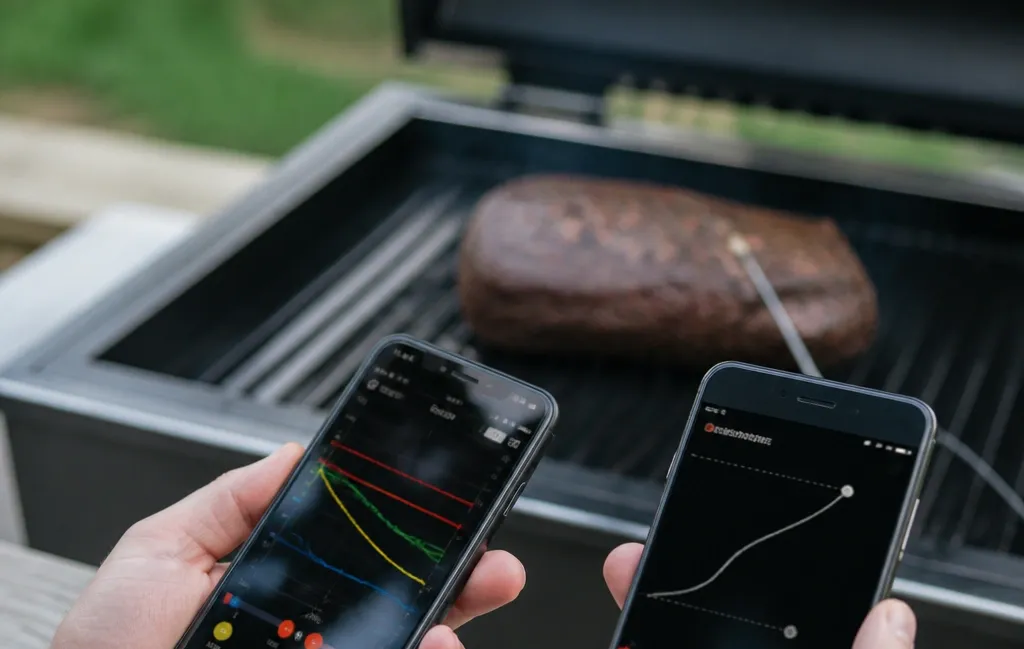
The clearest difference between the brands is what the app does with the data.
MEATER’s guided cooks estimate time to remove the meat from heat and account for carryover while it rests. Resting estimates depend on the type of cook you set up. MEATER’s cook estimator guide
TempSpike offers live readings, graphs and alerts. Its iOS release notes also document an Estimated Time Left feature. MEATER separately documents pull alerts and a resting estimate that accounts for carryover. TempSpike app release notes
Practical checks before buying: confirm the app supports your phone’s current OS version, confirm alerts work when the app is backgrounded, and confirm whether any features sit behind an account or paid tier. Feature tiers change, so verify the current free-versus-paid split on the official app listing rather than assuming.
Whatever the app estimates, treat it as a timing convenience rather than a safety check. For safe minimum internal temperatures, consult official food safety guidance such as the USDA food safety guidelines, and confirm the current page for your specific protein before relying on it.
Build Quality, Warranty, and Longevity
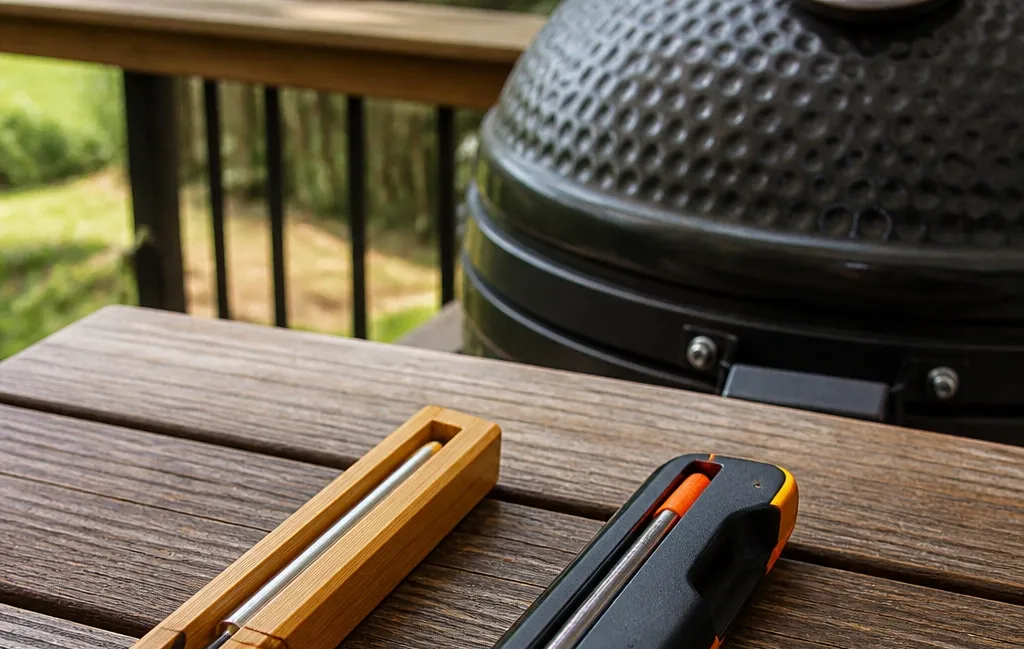
The two brands take different approaches to housing the antenna and electronics, and the practical difference is how heat reaches that housing during a cook. Confirm the current materials and construction for the exact model on each manufacturer’s product page, since designs change between generations.
TempPro lists the TP960 and TP962 probes as IP67 and dishwasher safe. MEATER’s storefront and support guides give different dishwasher advice for the Plus and original Block. Follow the model support guides and hand-wash those probes. Keep the electronic docks dry.
On warranty and probe replacement, policies vary by model, region, and purchase date. Check the warranty term and whether replacement probes are sold separately for the model you are considering, because a probe that cannot be replaced economically shortens the system’s useful life.
Cold weather is a real limitation for both: rechargeable cells lose capacity in freezing temperatures. Check the stated operating temperature range if you cook in winter.
The Rotisserie and Multi-Protein Cases
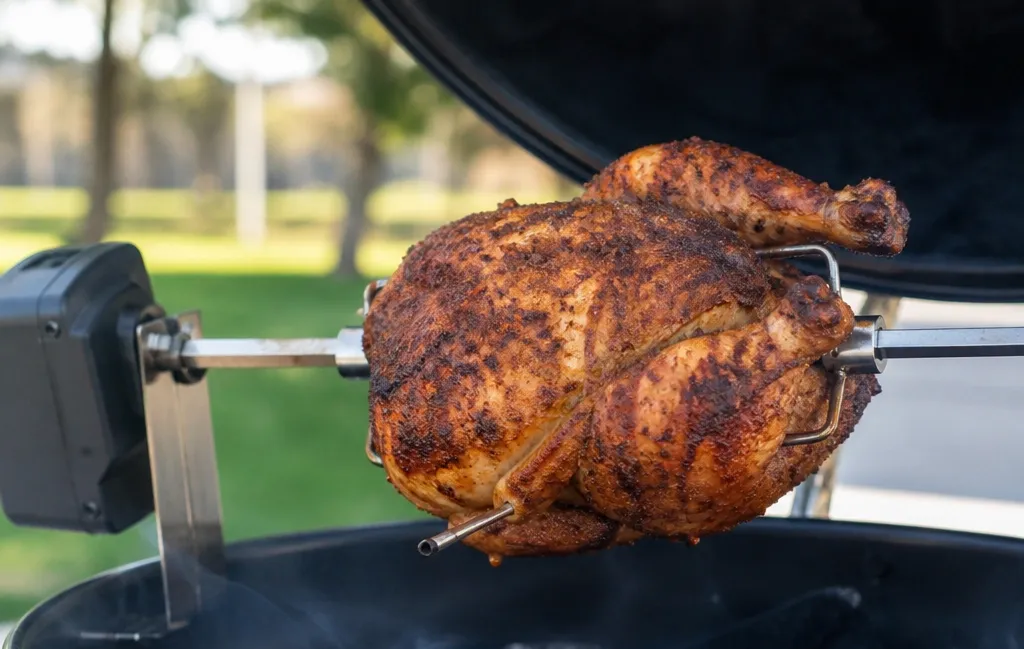
Rotisserie is the clearest functional argument for a fully wireless probe. A wired probe on a spinning spit wraps around the rod, twists, and either pulls free or breaks. A self-contained probe spins with the meat for the entire cook with no cable to manage. If you roast whole birds or large joints on a rotisserie, wireless is not a preference; it is the only workable option.
Multi-protein cooking is the second clear case. Cooking steak and chicken to different targets at the same time requires two independent probes. The Twin TempSpike comes with two probes and a live readout. The MEATER Block comes with four probes and can run cooks in standalone mode.
For single-cut, single-temperature cooks, neither capability applies, and a single-probe kit is the sensible spend.
Common Buying Mistakes and Safe-Temperature Practice
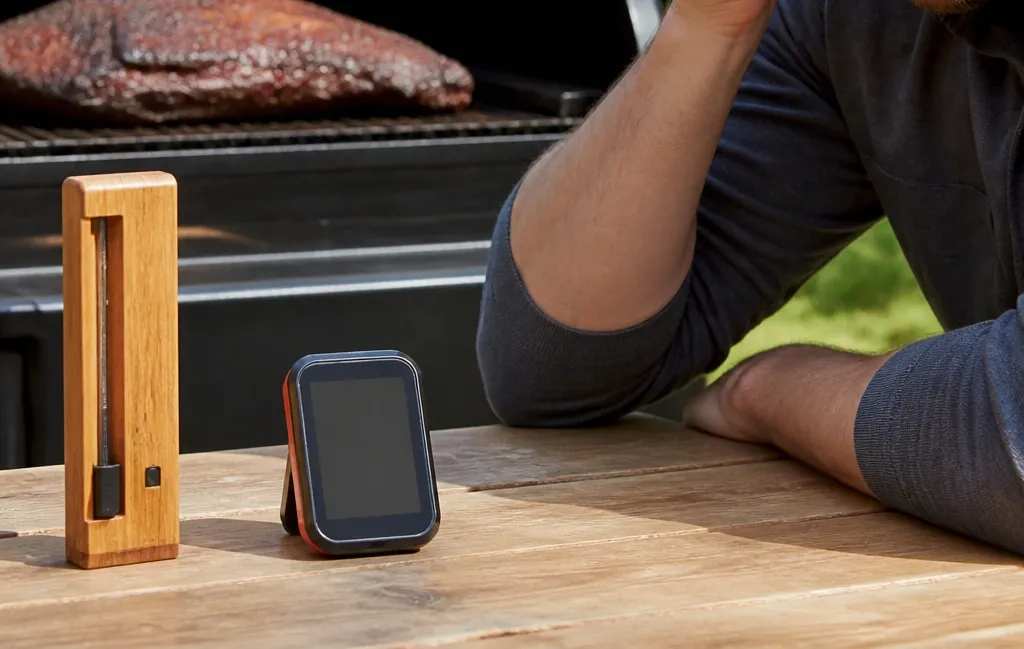
- Assuming deep-fryer use is fine. Constant immersion in hot oil is not what these probes are designed for. Direct liquid heat can overwhelm the ambient sensor and stress the battery seals. Stick to ovens, grills, smokers, and air roasting unless the manufacturer explicitly lists frying.
- Leaving the probe in during an oven self-clean cycle. Self-clean cycles reach temperatures far beyond any probe’s rating and will destroy the electronics. Remove probes first, every time.
- Ignoring the minimum insertion line. Short insertion exposes the battery to direct ambient heat, which triggers alarms and shortens lifespan.
- Trusting maximum range claims. Plan for real-world range well below the advertised figure, especially through exterior walls and heavy metal cookers.
- Using the app’s estimate as a safety check. Predictive estimates are a timing convenience. Confirm doneness with a probe reading and check it against official food safety guidance for the protein you are cooking.
- Buying four probes for one-protein cooking. Match probe count to your actual cooking pattern; unused capacity is the most common wasted spend in this category.
Decision Guide
Work through these in order:
- How many items do you cook at once? One: a single-probe kit. Two: Twin TempSpike. Four: Meater Block.
- Do you want the app to tell you when to pull the meat? MEATER publishes specific guidance for its pull and rest estimates. TempSpike’s app also shows an estimate of the time left.
- Do you cook very thin cuts often? If so, check the probe diameter against the cut thickness, and keep a fast instant-read for those cooks.
- Do you rotisserie? Either brand works; wireless is required.
- Do you cook in high heat or cold weather? Compare the stated maximum ambient temperature and operating range for the specific model.
- Do you want a screen that does not depend on your phone? Meater Block or Twin TempSpike.
Before you buy, check the model number on the listing, especially if it says “Plus.” The original TP960 and TP962 specifications above differ from the TP970 and TP972 Plus versions. Check replacement-probe availability, current price and regional warranty for the exact kit.
If you are also weighing instant-read tools against continuous monitoring, wireless probes are designed for continuous monitoring during the cook, while instant-reads are for spot checks. Many serious cooks keep both.
Frequently Asked Questions

Is Meater or ThermoPro Better for Long-Range Monitoring?
The TP960 and TP962 each advertise up to 500 ft in open areas. The MEATER Plus dock advertises up to 165 ft to a phone. The MEATER Block uses 2.4 GHz Wi-Fi, so range beyond the base depends on your network. Walls and metal lids shorten the Bluetooth link. Keep the base near the cooker and test from the room where you plan to monitor.
Will These Work Inside a Heavy Cast-Iron Dutch Oven?
Expect problems. Thick cast iron substantially attenuates Bluetooth signals, so the probe may lose connection with the lid fully closed. Options include leaving the lid slightly ajar or using a wired probe routed under the rim. Test your specific setup before relying on it for a long braise.
Can I Put the Wireless Probes in the Dishwasher?
TempPro lists the TP960 and TP962 probes as IP67 and dishwasher safe. For MEATER Plus and the original MEATER Block, follow the support guides and hand-wash the probes. Keep all chargers and boosters out of the dishwasher.
Do I Need a Subscription to Use the Apps?
Confirm the current free-versus-paid feature split on the official app store listing for the model you are considering before buying, since app features and pricing change over time.
How Do These Compare to Standard Instant-Read Thermometers?
They serve different jobs. Wireless probes monitor continuously through the whole cook; instant-reads verify doneness in seconds. A wireless probe does not replace a fast instant-read for thin cuts or final confirmation.
Conclusion
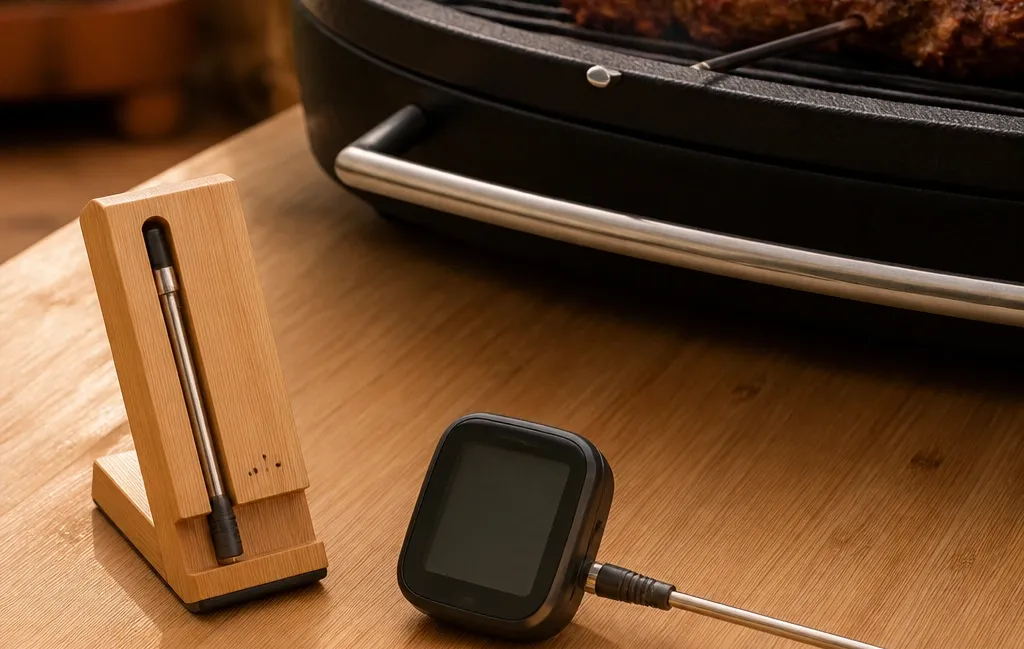
Start with MEATER Plus for a single guided cook, or MEATER Block for four cuts and standalone controls. Choose TP960 for one probe with a 572°F ambient rating, or TP962 if you want two probes and a booster screen.
Before your first long cook, shut the grill lid and check the connection from the room where you plan to monitor. The published range does not tell you whether it reaches that spot.