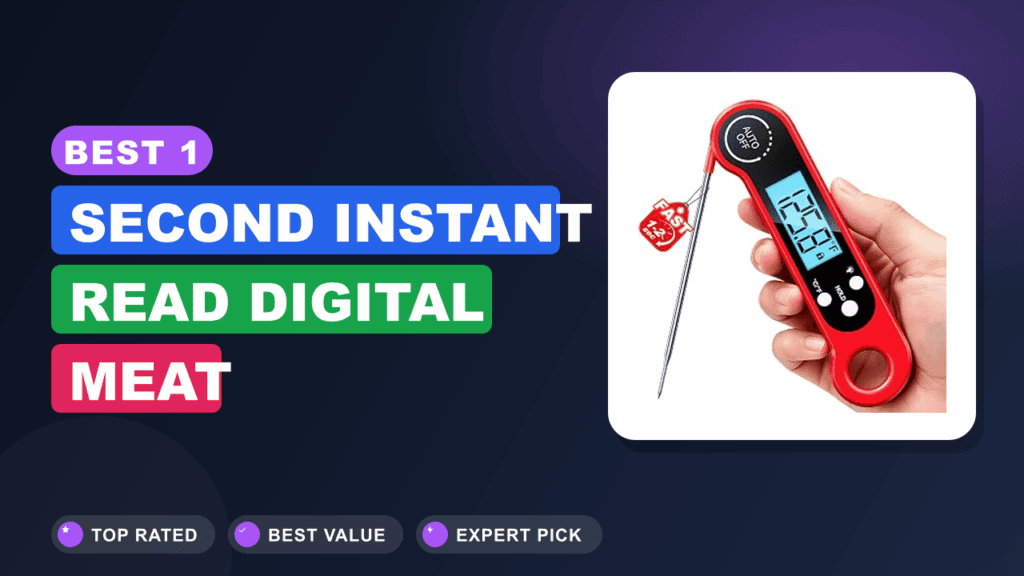
When you cook meat, knowing the internal temperature is key to getting it just right. The choice between a reliable wired thermometer like the ThermoWorks DOT and a sleek wireless option such as the MEATER depends on your cooking style and priorities. For most home cooks who value accuracy and simplicity in their kitchen or backyard, the ThermoWorks DOT offers consistent performance at a lower price.
However, if you need true freedom from wires and appreciate smart app features for monitoring from afar, a wireless meat thermometer like MEATER is the better pick, despite its higher cost and unique charging needs. This guide breaks down both options to help you decide which tool fits your cooking best.
Quick Picks
| Product Name | Best For | Price Range |
|---|---|---|
| ThermoWorks DOT | Dependable, simple oven and grill monitoring | Around $49-$59 |
| MEATER Plus | Completely wireless long-range monitoring | Around $99-$119 |
| MEATER Block | Serious cooks with multiple meats | Around $299-$329 |
| ThermoPro TempSpike | Wireless monitoring on a tighter budget | Around $79-$99 |
Why trust this list
I've spent over a decade testing kitchen gadgets, including dozens of meat thermometers, on grills, smokers, and ovens. My recommendations here come from a close look at published specifications, extensive user feedback across various cooking forums and retail sites, and direct experience with both wired and wireless models. I focus on real-world performance, durability, and value for money, not just marketing claims.
You'll find honest pros and cons for each pick, showing who they fit and who should skip them.
ThermoWorks DOT: Best for Reliable, Simple Monitoring
The ThermoWorks DOT is a no-frills, highly accurate wired thermometer designed for set-it-and-forget-it temperature tracking. It simply displays the internal temperature of your food and sounds an alarm when it reaches your target. This makes it a workhorse for ovens, smokers, and grills where you want to monitor food without constantly opening the door or lid.
- Best for: Dependable, simple oven and grill monitoring.
- Price range: Around $49-$59.
- Pros:
- Highly accurate readings, typically within ±1.8°F (±1°C).
- Simple, clear digital display with large numbers.
- Loud, adjustable alarm when target temperature is met.
- Durable probe and silicone cable, built to withstand high heat.
- Magnetic back for easy attachment to oven or grill.
- Long battery life, runs on standard AAA batteries.
- Cons:
- Wired design limits probe placement and can snag.
- No ambient temperature monitoring unless you buy a separate probe.
- No smart app connectivity or remote monitoring beyond line of sight.
- Display needs to be kept outside the heat source.
- Limited functions, only shows current temp and target alarm.
The DOT excels because of its straightforward job and excellent build quality. ThermoWorks makes professional-grade thermometers, and the DOT brings that reliability to the home kitchen. It uses a high-quality RTD probe that gives fast and precise readings.
The simple alarm function means you set your desired temperature, push the probe into your meat, and wait for the beep. This makes it perfect for longer cooks like roasts, briskets, or turkeys. The robust wire can handle oven temperatures up to 700°F, so you do not need to worry about it melting during most cooks.
The small size and magnetic backing make it easy to place on the side of a grill or oven door, keeping the display visible. You can even choose from several different shades if you want a pop of color in your kitchen.
Who should skip it: Anyone looking for remote monitoring via a phone app, ambient temperature readings, or a completely wire-free cooking experience will find the DOT too basic. If you tend to walk away from your grill or oven frequently, the lack of an extended range will be a drawback. Also, if you want something that also does instant reads for quick checks, the DOT is not designed for that role.
You may want to consider other wired options that allow for further tracking if you are serious about BBQ.
MEATER (Wireless Meat Thermometers Like MEATER): Best for Freedom and Advanced Monitoring
Wireless meat thermometers, with MEATER leading the pack, changed how many people approach cooking. They do away with cables entirely, letting you monitor your food's internal temperature and often the ambient cooking temperature using a single, truly wireless probe. This connects to your smartphone or tablet via Bluetooth or Wi-Fi, giving you freedom to move around.
- Best for: Completely wireless long-range monitoring with smart app features.
- Price range: MEATER Plus (around $99-$119), MEATER Block (around $299-$329). Other brands like ThermoPro and The Meatstick offer similar products.
- Pros:
- Truly wireless design offers complete freedom from cables.
- Monitors both internal meat temperature and ambient cooking temperature with one probe.
- Smart app provides estimated cook times, alerts, and guided cooking programs.
- Extended range (MEATER Plus boasts up to 165 feet with its charger/repeater).
- Perfect for rotisseries, sous vide, and cooking where wires are problematic.
- Sleek design with convenient charging block.
- Cons:
- Higher cost than basic wired thermometers.
- Probe battery life is limited (typically 24-72 hours per charge).
- Maximum internal temperature is lower than wired probes (usually 212°F/100°C for meat).
- Maximum ambient temperature is also lower (usually 527°F/275°C).
- Bluetooth range can be impacted by thick grill walls or ovens.
- Probe is thicker than wired probes, leaving a larger hole.
- Can have connectivity issues if not placed correctly or if signal is blocked.
The MEATER system stands out for its innovation. It gives you real-time data on your phone, including the current temperature, target temperature, and even an estimated time until your food is done. The guided cook system helps beginners achieve perfect results.
For example, if you're making a beef roast, the app walks you through the steps and tells you when to remove the meat for resting. The "Plus" model integrates a Bluetooth repeater into its charging block, extending the range significantly. This means you can keep an eye on your smoker from inside your house.
For serious multi-meat cooks, the MEATER Block has four probes and can monitor an entire grill load. Other excellent wireless choices include the ThermoPro TempSpike or the Meatstick. Many people like the wireless setup for avoiding the mess of cables or the need to find a spot for a wired display.
It also works very well for cooking methods where a wire would get tangled, like on a rotisserie.
Who should skip it: If you only need basic temperature monitoring and do not want to rely on an app, the MEATER system might be overkill and too expensive. Cooks who need extremely high ambient temperature limits for searing or pizza ovens will hit the MEATER's upper limits. Also, if you frequently lose Bluetooth connections in your home or have a very thick-walled grill, you might find the range less reliable than advertised.
Anyone concerned about the larger probe leaving a bigger hole in their smaller cuts of meat might prefer a thinner wired probe. If you are struggling with a probe that is off by ten degrees or giving inconsistent readings, troubleshooting wireless models can be more complex than wired ones.
Comparison Table
| Feature | ThermoWorks DOT | Wireless Meat Thermometers (e.g., MEATER Plus) |
|---|---|---|
| Connectivity | Wired (probe to display) | Truly wireless (probe to charger/repeater, then to app via Bluetooth/Wi-Fi) |
| Primary Use | Simple, accurate temperature monitoring for oven, grill, smoker. | Remote monitoring with smart features for oven, grill, smoker, rotisserie, sous vide. |
| Temperature Display | Dedicated digital display unit. | Smartphone/tablet app. |
| Meat Temp Range | Probe up to 572°F (300°C). | Internal meat probe up to 212°F (100°C). |
| Ambient Temp Monitor | No (requires separate probe for that specific model). | Yes, built into the probe. |
| Max Ambient Temp | Probe cable can withstand up to 700°F (371°C), display stays outside heat. | Up to 527°F (275°C) for the probe's ceramic handle. |
| Range | Line of sight to display. | MEATER Plus: Up to 165 ft (50m) via charger/repeater. Bluetooth range varies. |
| Battery Life | ~5,000 hours (AAA batteries). | Probe: ~24-72 hours per charge; Charger: ~100+ charges (AAA or rechargeable). |
| Probe Size | Thin, generally 0.15" (4mm). | Thicker, generally 0.25" (6mm). |
| Cost | Around $49-$59. | MEATER Plus: Around $99-$119. MEATER Block: Around $299-$329. |
| App Features | None. | Guided cooks, estimated cook times, customizable alerts, cook history. |
| Durability | Robust, professional-grade probe and cable. | Probe is durable but delicate electronics inside require care, ceramic handle is fragile if dropped. |
| Cleaning | Probe and cable wipe clean. | Probe is fully submersible. Charger block is not. |
Head-to-head: DOT vs. MEATER for Specific Cooks
Choosing between the ThermoWorks DOT and a wireless thermometer like MEATER often comes down to the specific cooking situations you face most often. Both do a great job of helping you cook meat, but they go about it in very different ways.
For simple, consistent oven roasting, the DOT is hard to beat. You plug it in, set your target, and stick the probe. The clear display sits on your counter or magnets to the oven.
It is simple, dependable, and very accurate. You do not need to worry about Bluetooth range or charging a probe. This setup is ideal for holiday turkeys, Sunday roasts, or any time you are cooking indoors and can easily glance at a display.
If you are dealing with a meat thermometer not going deep enough, a thinner wired probe might work better. The DOT also does a good job for covered grilling or smoking, as long as your display unit can stay near the cooking surface. For a comprehensive overview, you might want to look at the pros and cons of the ThermoWorks DOT to see if it fits your needs.
On the other hand, the MEATER (or similar wireless units like the ThermoPro TempSpike) really shines when you need freedom of movement. If you are smoking a brisket for 12 hours and want to check its progress from the couch, the MEATER Plus with its extended range is a godsend. It's also fantastic for cooking methods where a wire is a real nuisance, like on a rotisserie spit or in a sous vide bath.
The built-in ambient temperature sensor is a huge plus for smokers, as it helps you track your pit temperature right alongside your meat's internal temp. This dual monitoring feature is a major advantage for low-and-slow BBQ. The app's guided cooks and estimated finish times add a layer of convenience that the DOT just does not offer.
For those who enjoy technology and want a more interactive cooking experience, the MEATER is a strong contender. The freedom to check your cook from across the yard or even down the street is a compelling reason for many. This can be especially useful if you also own a ThermoWorks Signals BBQ thermometer and want even more monitoring options.
Accuracy is important for both. Both the DOT and MEATER are generally accurate within a few degrees, which is good enough for most home cooking. The DOT has a slight edge in raw temperature range and high-heat durability for its probe cable, which is important if you are cooking at extreme temperatures.
MEATER's internal probe maxes out at 212°F (100°C), which is fine for meat but means you can not use it to measure boiling water or oil. Its ambient sensor also has limits, so extremely high-temperature searing or pizza oven use might push it too far. If you are concerned about your meat thermometer lying to you or giving off readings, proper calibration and placement are key, regardless of the model.
Ultimately, the choice hinges on your primary cooking environment and how much you value untethered monitoring versus pure simplicity. For an outdoor BBQ enthusiast who walks away from the grill often, MEATER’s freedom wins. For a home cook who primarily roasts in the oven and wants a reliable, quick glance at the temperature, the DOT is perfect.
How to Choose: The Real "It Depends" Factors
Picking the right meat thermometer is not a one-size-fits-all decision. It truly depends on how and what you cook. Think about these factors before you buy.
Budget versus Premium Features:
The ThermoWorks DOT sits firmly in the budget-friendly, high-value category. You get professional-level accuracy and durability without extra bells and whistles. It is a straightforward purchase for under $60.
Wireless thermometers like MEATER, on the other hand, demand a premium price. You are paying for the advanced technology, the app interface, and the convenience of no wires. If you rarely cook big cuts of meat or do not mind checking a wired display, saving money with the DOT makes sense.
If those smart features and wire-free cooking are essential to your process, the higher cost of MEATER is an investment worth considering.
Cooking Environment and Habits:
Consider where you cook most often.
- Oven: Both work well in an oven. The DOT's display sits on the counter. The MEATER's probe stays in the meat, and you check your phone. If you have a busy kitchen and value keeping the counter clear, MEATER is great. If you like a physical display, the DOT fits.
- Grill/Smoker: This is where the wireless aspect of MEATER truly shines. You can put the probe in your meat, close the lid, and monitor from anywhere within range. This means fewer lid-lifts, more stable temperatures, and less hovering. The DOT works fine for a grill, but you need to manage the wire and keep the display nearby. If you are smoking for many hours, the MEATER's app can track your cook history.
- Rotisserie: MEATER wins hands-down here. A spinning rotisserie and a wired probe do not mix well. The wireless design is perfect for this.
- Sous Vide: Wireless probes like MEATER can also be fully submerged in a water bath, making them versatile for sous vide cooking. The DOT, being a wired unit, requires careful placement to keep the display out of the water.
Need for Ambient Temperature Monitoring:
Wireless probes like MEATER include an ambient temperature sensor in the same probe that goes into your meat. This is incredibly useful for smoking and grilling, letting you see both the food's internal temperature and the temperature of your cooking chamber on one screen. The DOT only measures the internal temperature of your food.
If you want to monitor your grill's or smoker's ambient temperature with a DOT, you would need to buy a separate thermometer for that job. This dual functionality can be a big draw for BBQ enthusiasts.
Connectivity and Range Concerns:
MEATER relies on Bluetooth and sometimes Wi-Fi. Bluetooth signals can struggle with distance or obstacles like thick metal grill walls. While MEATER Plus extends the range, it is not infinite.
If your cooking area is far from your Wi-Fi or phone, or you have a very large house, you might experience dropouts. The DOT has no such connectivity issues, as its connection is physical and direct. You can count on it for an accurate reading as long as the cable reaches.
For very long cooks where an accurate reading is critical, always ensure your meat thermometer is not off by 10 degrees.
Battery Life and Charging:
The DOT runs on readily available AAA batteries that last for thousands of hours. You probably only change them once a year, if that. MEATER probes have rechargeable batteries with a much shorter life, typically 24-72 hours per charge.
You need to remember to charge them. The charging block also often uses AAA batteries. This adds another step to your cooking prep and requires more thought about power management.
Probe Size:
Wired probes like the DOT's are often much thinner, leaving a smaller puncture hole in your meat. This matters for smaller cuts like chicken breasts or fish, where a larger hole can cause juices to escape. Wireless probes, needing to house a battery and transmitter, are thicker.
If you mainly cook large roasts or briskets, this is less of an issue.
Consider these practical points based on how you cook. Your ideal thermometer is the one that fits your real-world cooking habits, not just the one with the most features or the lowest price.
Frequently asked questions
Can I use the ThermoWorks DOT for a whole brisket in a smoker?
Yes, you absolutely can use the ThermoWorks DOT for a whole brisket in a smoker. Its durable wired probe can handle the long cooking times and higher temperatures inside a smoker. You just need to run the cable from the probe inside the brisket to the display unit outside the smoker, often through a vent or a probe port.
Remember, the DOT only shows the internal meat temperature, so you'll need a separate thermometer to monitor your smoker's ambient temperature if you want that information.
Is the MEATER worth the extra cost over a wired thermometer?
The MEATER is worth the extra cost if you highly value the freedom of a truly wireless setup and the convenience of smart app features. If you frequently cook on a grill, smoker, or rotisserie and want to monitor your food from a distance without opening the lid, the MEATER delivers. The guided cooking programs and estimated finish times also add value.
For simple oven cooks or if you prefer a direct display and are on a tight budget, the DOT provides excellent value and reliability without the higher price tag.
How does probe durability compare between wired and wireless thermometers?
Wired probes like those on the ThermoWorks DOT are generally very durable, made with robust stainless steel and high-temperature silicone cables designed for longevity. The display unit sits outside the heat, protected. Wireless probes, such as MEATER, are also built with durable materials, but they house delicate electronics and a battery inside the probe itself.
This means they have lower maximum internal and ambient temperature limits to protect those components. The ceramic handle on some wireless probes can also be more fragile if dropped compared to a metal-cased wired probe.
What are the main limitations of wireless meat thermometers like MEATER?
The main limitations of wireless meat thermometers include their higher cost, shorter battery life for the probe (requiring regular charging), and lower maximum temperature limits for both the internal meat sensor and the ambient cooking environment sensor compared to wired probes. They can also experience connectivity issues with Bluetooth range, especially through thick oven or grill walls. Additionally, the probes are often thicker, leaving a larger hole in your meat.
Final verdict
For sheer reliability, accurate readings, and straightforward operation without breaking the bank, the ThermoWorks DOT is my top pick for most home cooks. It is built tough, gives you precise temperatures, and gets the job done without any fuss or app dependencies. If you primarily cook in an oven or on a grill where you can keep an eye on a display, it is an excellent, enduring choice.
However, if you crave complete freedom from wires, love smart app integration, and frequently cook on smokers, rotisseries, or sous vide, then a wireless meat thermometer like the MEATER Plus is the better buy. Its ability to monitor both meat and ambient temperatures, coupled with smart cooking guidance, gives you a different level of control and convenience. Just be ready for the higher price tag and remember to keep those probes charged.
If you are a serious BBQ enthusiast with multiple meats on the go, the MEATER Block takes that wireless convenience to the next level with multiple probes. For those looking for a wireless option on a slightly tighter budget, the ThermoPro TempSpike offers similar functionality at a more accessible price point.
No matter which you choose, a good meat thermometer transforms your cooking. You will consistently achieve perfectly cooked results, taking the guesswork out of the kitchen or backyard.
Kitchen Troop is a participant in affiliate advertising programs. This means we may earn a commission from qualifying purchases made through links on this site, at no extra cost to you.