You pull a roast chicken from the oven, slice into the breast, and see a rosy blush near the bone. Or you grill a burger to the target temperature, cut it open, and find a pink center. In both cases the meat can be perfectly safe. The color of cooked meat is not a reliable indicator of doneness. Only a food thermometer can confirm that meat has reached its safe minimum internal temperature, because harmful bacteria cannot be seen, smelled, or tasted.
Why Color Lies About Doneness
The pink, red, or white color of meat comes primarily from myoglobin, an oxygen-storing protein located in muscle cells that holds oxygen brought by the blood until the cells need it. Heat changes myoglobin, but the exact color that results depends on more than temperature alone. The animal’s age, the cooking method, and gases in the cooking environment can all affect the final color. Turkey, for example, can remain pink even after being cooked to a safe minimum internal temperature of 165 F. Color is not a reliable indicator of doneness, so the thermometer reading, not the shade of the meat, is what confirms safety.
There is a related problem worth understanding: meat can also look done on the outside while still undercooked inside. But several factors can stop myoglobin from browning the way you expect, which is why a reliable digital probe and a one-second instant reader take the guesswork out of the decision.
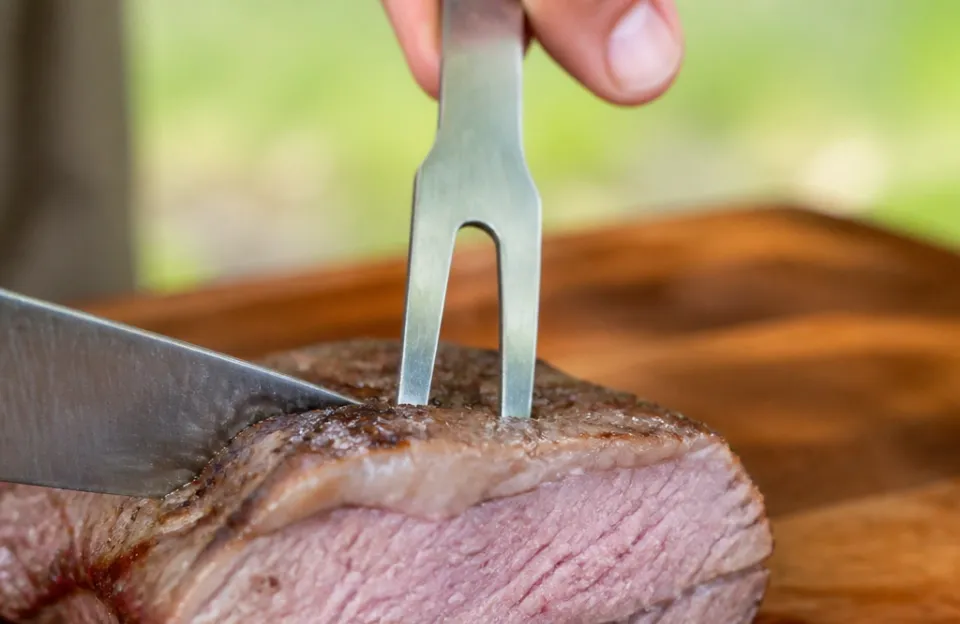
Color is not a reliable indicator of doneness, and the USDA advises cooking all meat and poultry to a safe minimum internal temperature measured with a food thermometer.
Myoglobin and Heat Exposure
Myoglobin is the major pigment found in all vertebrates, and it can exist in various forms that determine the resulting meat color. Poultry meat is much lighter in color than beef primarily because it is dramatically lower in myoglobin, and myoglobin content usually increases as an animal becomes older. Muscles that are exercised frequently have a greater oxygen storage capacity and therefore more myoglobin. Because myoglobin content varies by species, age, and muscle, two pieces of meat cooked to the same internal temperature can still look different.
When myoglobin is heated, it denatures and typically turns brown. But that browning is not guaranteed by reaching a safe internal temperature. The presence of high levels of myoglobin, or some of its redder forms due to incomplete denaturation during heat processing, can account for poultry having a pink to red color similar to that of an undercooked product. In other words, the protein may simply not have browned completely even though the meat is fully cooked.
Gases from Smoke and Gas Cooking
Pinkness in cooked poultry can occur when gases in the atmosphere of a heated gas or electric oven react chemically with hemoglobin in the meat tissues, producing the same substances that give red color to smoked hams and other cured meats. That reaction fixes a stable pink color that heat alone will not remove. Meat and poultry grilled or smoked outdoors can also look pink even when cooked to 165 F, and there may be a pink-colored rim about one-half inch wide around the outside of the cooked meat. This rim is the familiar smoke ring, and it is a chemical reaction rather than a sign of undercooking.
Curing works through the same family of reactions. The meat of commercially smoked turkeys is usually pink because it is prepared with natural smoke and liquid smoke flavor. The meat of smoked turkey is always pink. Nitrates and nitrites in the feed or water supply can also contribute. The natural presence of nitrates and nitrites, either in the feed or water supply used in poultry production, is a factor in nitrite levels in the birds. One study found that during 40 hours of storage at 40 F, naturally occurring microorganisms converted nitrate to nitrite, and the local water supply contained nitrate that could serve as a nitrate source during processing.
The pH Level of the Meat
The acidity of muscle tissue may affect how readily myoglobin browns during cooking, though the exact relationship is complex and depends on the specific meat and cooking conditions. This is one possible reason why two cuts cooked to the same doneness can look noticeably different. Some burgers can also stay pinkish inside even after reaching a safe temperature, though the reasons are not fully established and may involve factors beyond pH alone.
Age of the animal interacts with these factors as well. Meat of younger birds often shows the most pink because their thinner skins permit oven gases to reach the flesh, and young birds or animals also lack the shield of a fat covering. Combined with lower myoglobin in younger animals, this makes younger poultry especially prone to a rosy appearance even when fully cooked.
Specific Causes by Type
Poultry Legs and Thighs
Legs and thighs naturally look redder than breast meat even when fully cooked, partly because exercised muscles contain more myoglobin. The oven-gas reaction described above also concentrates near the surface, which is why a whole roasted bird can show a pinkish tinge near the bone while the breast reads 165 F on a thermometer. A dual-sensor probe helps you confirm that both the thickest part of the thigh and the area near the bone have reached temperature.
Pork Chops and Roasts
The USDA lists 145 F with a three-minute rest as the safe minimum internal temperature for whole cuts of pork, and at that temperature a slight pink tint can remain. A pork temperature breakdown covers the specific targets for chops, loin, and roasts.
Smoked Brisket and Ribs
The smoke ring that forms on brisket and ribs is a chemical reaction between combustion gases and myoglobin, not a measure of rawness. It appears as a pink-colored rim around the outside of the cooked meat. Long cooks on a smoker often stall, and monitoring remotely helps you avoid opening the lid repeatedly. If your wireless connection drops out, verify the reading with an instant-read probe at the end of the cook.
Ground Beef Burgers
Ground beef is the one area where pinkness demands extra caution. Ground meats must reach a minimum internal temperature of 160 F, and ground poultry must reach 165 F. Even at 160 F, burgers can sometimes remain slightly pink. When a burger reaches 160 F in the center, measured correctly with a precise tip sensor such as a rapid-read grilling thermometer, it has met the USDA minimum internal temperature for ground meats. That guidance assumes the meat was handled safely before cooking and that the thermometer reading is accurate. For more on USDA food safety guidance, see the USDA Food Safety and Inspection Service.
How to Verify Doneness Without Guessing
All food should be cooked to the specified minimum internal temperatures, as measured with a food thermometer, before removing food from the heat source. For reasons of personal preference, consumers may choose to cook food to higher temperatures.
| Meat Type | Safe Minimum Internal Temperature | Rest Time |
|---|---|---|
| All poultry (breasts, whole bird, legs, thighs, wings, ground poultry, giblets, stuffing) | 165 F (73.9 C) | None required |
| Ground meats (beef, pork, veal, lamb) | 160 F (71.1 C) | None required |
| Beef, pork, veal, lamb steaks, chops, roasts | 145 F (62.8 C) | At least 3 minutes |
| Fresh or smoked uncooked ham | 145 F (62.8 C) | At least 3 minutes |
| Fully cooked ham to reheat, packaged in USDA-inspected plants | 140 F (60 C) | None required |
| Fully cooked ham to reheat, all others | 165 F (73.9 C) | None required |
These values are the USDA safe minimum internal temperatures, measured with a food thermometer before the food is removed from the heat source. They set the safety floor, not a guarantee that any single reading is accurate. Thermometer calibration, probe placement, and how the meat was handled before cooking all affect whether a reading reflects the true internal temperature.
The USDA instruction is to measure the internal temperature with a food thermometer before removing the food from the heat source. In practice, that means placing the probe in the thickest part of the meat, away from bone, fat, and gristle, and checking more than one spot on large cuts, since the breast and thigh of a whole bird can differ. If you’re managing a long smoke, a Wi-Fi-enabled model like the Typhur Sync Gold setup lets you monitor the stall remotely without opening the lid.
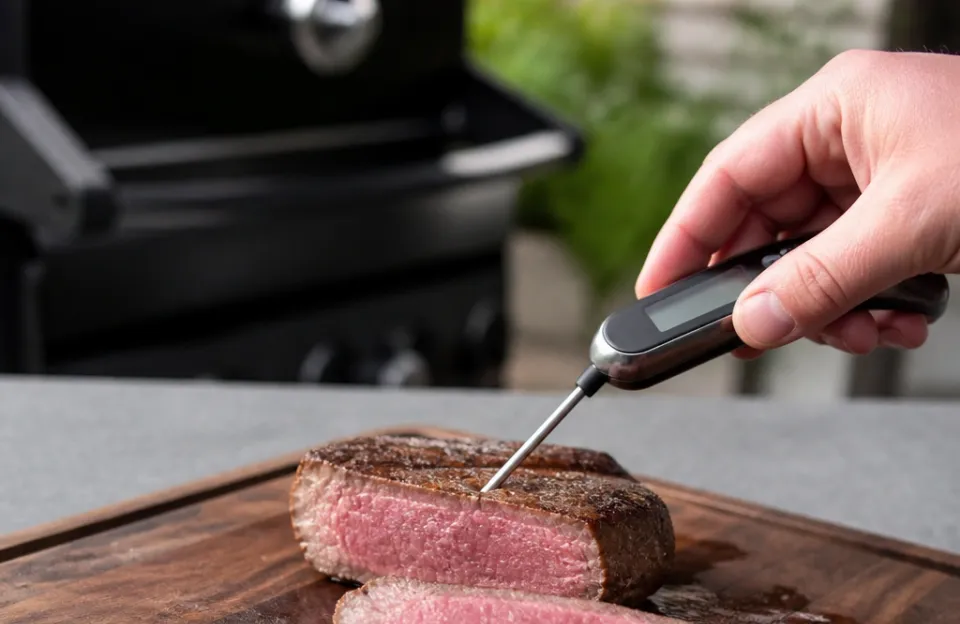
A food thermometer is the only tool that confirms the target temperature was reached, because harmful bacteria cannot be seen, smelled, or tasted.
Common Misconceptions About Pink Meat
Clear juices mean the meat is done. Juice color is not a reliable indicator of bacterial kill. A fully cooked chicken can release pink-tinged juices, so judge doneness by the thermometer reading rather than the juices.
A pop-up timer is reliable. A pop-up timer is not a substitute for a food thermometer. The USDA guidance is to measure the internal temperature with a food thermometer before removing food from the heat source, so rely on that check rather than a single non-thermometer indicator.
Pink near the bone means undercooked. As noted above, thinner skin on young birds and oven gases can produce pinkness at safe temperatures. Use a thermometer rather than appearance.
You can tell by looking or smelling. You cannot see, smell, or taste harmful bacteria that may cause illness. Only a thermometer confirms the target temperature was reached.
A Note on Poultry Production
For context on the meat itself: no hormones are used in the raising of chickens, and the FDA has not approved steroid hormone implants for growth purposes in poultry. Antibiotics may be used to prevent disease and increase feed efficiency, and a withdrawal period is required before slaughter. The Food Safety and Inspection Service randomly samples poultry at slaughter and tests for residues to make sure levels are not above the tolerance level.
Before You Serve
Rely on temperature, not color. When a correctly measured reading reaches the applicable USDA minimum internal temperature, the meat has met the safety standard regardless of its color. The exceptions to guard most carefully are ground meats and ground poultry, which must reach 160 F and 165 F respectively. For whole cuts of beef, pork, veal, and lamb, 145 F with a three-minute rest is the target. For all poultry, 165 F is the standard. When in doubt, measure again in a second spot, and trust the number over the blush.