Meat can look browned, white, or otherwise “done” on the outside while harmful bacteria survive inside. The color changes you see come from myoglobin, a muscle protein that shifts color as it reacts to heat, oxygen, and acidity. Those reactions don’t line up with the temperatures that kill pathogens like Salmonella or E. coli. The only reliable way to confirm safety is a food thermometer reading taken in the thickest part of the meat.
This matters because color and texture are unreliable indicators of safety, and a thermometer is the only way to ensure meat, poultry, seafood, and egg products are safely cooked for any cooking method. Harmful bacteria that cause illness cannot be seen, smelled, or tasted. Here’s why visual cues mislead, and how to check doneness correctly.
Why Meat Can Look Done Before It’s Safe
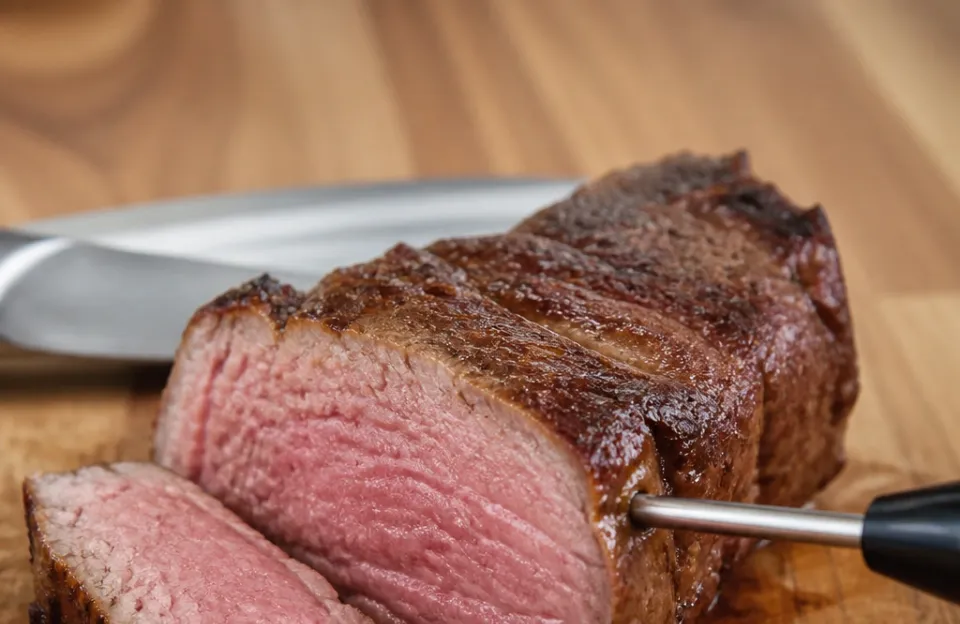
The core reason is chemistry. Raw red meat gets its color from myoglobin, a protein that stores oxygen in muscle cells. Heat makes myoglobin change shape and lose its ability to hold oxygen, shifting the meat from red or pink toward brown or gray. That color shift can happen at temperatures below the ones that destroy pathogens.
Ground beef is the clearest example: it can turn brown on the outside during cooking before it reaches a safe internal temperature that destroys foodborne illness-causing bacteria. Most pathogens are destroyed between 140°F and 165°F. A hamburger cooked to 160°F, as measured with a food thermometer, is safe regardless of its color.
External factors also change how quickly meat browns. Marinades, smoke, and even animal feed can alter the browning process, so two pieces cooked identically may look completely different. Visual judgment can’t account for those variables.
It’s worth separating two questions people often merge. “Doneness” refers to the sensory state you want, meaning texture, appearance, and juiciness. Safety depends on internal temperature. Consumers may choose higher internal temperatures for personal preference, but the safety floor stays the same.
The Myoglobin Reaction Doesn’t Wait for Bacteria to Die
Myoglobin changes color based on its chemical environment, including pH. Meat with a slightly higher pH can brown faster, so two steaks cooked to the same temperature can look noticeably different. One may appear medium-well while the other looks rare. Bacteria don’t respond to those pH-driven color shifts; they are destroyed by sufficient heat.
Poultry Browns Unevenly Due to Bone Marrow
Chicken and turkey have their own color traps. Darkening of bones and the meat around them occurs primarily in young broiler-fryer chickens (6 to 8 weeks old) because the bones haven’t calcified completely, letting pigment from the bone marrow seep into the surrounding tissue. That pink or red hue near the bone doesn’t mean the meat is raw.
Meanwhile, thin cuts like chicken breast can turn opaque and white on the surface quickly over high heat, long before the thickest part reaches 165°F. Judging by the surface alone can leave the center undercooked.
Smoked Meats Stay Pink on Purpose
Low-and-slow smoking produces the classic pink ring in barbecue. The smoke ring is a color reaction, not a sign of rawness, and it can persist after the meat is fully cooked. A smoked brisket can look pink just beneath the surface while being completely safe. What matters is the internal temperature, not the shade. Note that smoke-ring chemistry isn’t covered by the official sources here, so treat this as a general caution rather than a precise culinary explanation.
Checking Internal Temperatures Correctly
Since your eyes can mislead you, a good thermometer is essential. Knowing why meat can look done before it’s safe should push you to stop guessing entirely.
Insert the probe into the thickest part of the food, away from bone, fat, or gristle. Bone conducts heat differently than muscle, and fat insulates the probe, so either can give you a misleading reading. For thin items like burgers or chicken breasts, insert the probe through the side until it reaches the center.
Read the manufacturer’s instructions to learn how far the thermometer must be inserted to give an accurate reading. A dial thermometer, for instance, must be inserted about 2 to 3 inches into the food. If a thermometer is inserted incorrectly or placed in the wrong area, the reading won’t accurately reflect the food’s internal temperature.
Most food thermometers give an accurate reading within 2 to 4 degrees F. Check every piece of food, because pieces cook at different rates. For large or irregularly shaped items such as a beef roast, check the temperature in several places.
If you’re managing multiple proteins at once, a wireless setup with dual sensors saves you from constantly opening the oven door and losing heat. Speed matters too: a fast-reacting digital probe gives you a reading in a second or two so you can close the door immediately. For a deeper look at beef targets, see this guide to steak and roast temperatures.
Safe Minimum Internal Temperatures and Rest Times
Cook all food to these minimum internal temperatures, as measured with a food thermometer, before removing it from the heat source. The figures below are U.S. Department of Agriculture guidance; readers elsewhere should follow their local food safety authority.
| Food | Minimum Internal Temperature | Rest Time |
|---|---|---|
| Beef, pork, veal, and lamb steaks, chops, and roasts | 145°F (62.8°C) | At least 3 minutes |
| Ground meats | 160°F (71.1°C) | None specified |
| All poultry, including ground poultry, giblets, and stuffing | 165°F (73.9°C) | None specified |
| Fresh or smoked uncooked ham | 145°F (62.8°C) | At least 3 minutes |
| Fully cooked ham packaged in USDA-inspected plants | 140°F (60°C) | None specified |
| Other fully cooked ham | 165°F (73.9°C) | None specified |
| Fish and shellfish | 145°F (62.8°C) | None specified |
| Leftovers and casseroles | 165°F (73.9°C) | None specified |
Rest time matters because it allows the innermost parts and juices of certain meats to become fully and safely cooked. That’s why the 3-minute rest applies to whole cuts and fresh ham but not to ground meats.
Common Mistakes When Judging Cooked Meat
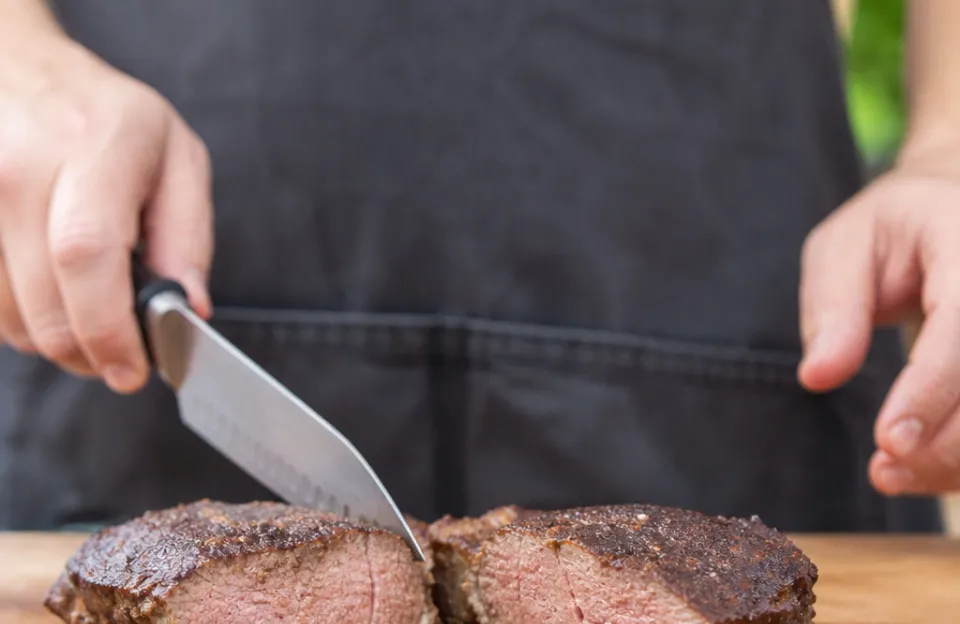
People repeat the same errors when judging doneness by eye. Here are the ones that cause the most trouble.
- Pressing the meat to check firmness. Recipes often suggest pressing a steak to see if it feels like the palm of your hand. Muscle density varies between animals and cuts, so firmness doesn’t guarantee a safe internal temperature.
- Checking for clear juices. Clear juices are a traditional sign of done poultry, but color and texture are unreliable indicators of safety. A USDA study found 21% of participants relied on visual cues such as color and grill marks to decide whether hamburger patties were fully cooked.
- Using an infrared gun for internal temps. An infrared laser tool only reads surface temperature. The outside of a pork chop can read hot while the center remains dangerously cool. Surface readings tell you nothing about bacterial survival inside the muscle.
- Ignoring carryover cooking. Meat continues to rise in temperature after you remove it from the heat. Pulling a roast early based on color means it may stall below the safe zone. Monitor the temperature and honor the required rest.
Edge Cases Where Color Is Even Less Reliable
Some ingredients and cooking methods distort meat color further, making visual checks completely invalid. The official sources used here don’t document each of these effects in detail, so treat the following as practical cautions rather than precise chemistry.
Cured meats. Curing salts containing sodium nitrite keep meat pink, so bacon, ham, and hot dogs can stay pink regardless of temperature. Applying standard visual rules to cured meats would lead you to overcook them. For smoked and uncured products, follow the temperature chart instead.
Acidic marinades. Cooking in acidic environments, such as tomato sauce or vinegar-heavy marinades, speeds up protein changes on the surface. The outside of the meat can turn gray or brown rapidly while the interior remains raw. Braises need temperature checks, especially with large cuts like pork that need specific targets.
Sous vide. Vacuum-sealed cooking keeps meat away from oxygen, so myoglobin can stay purple or deep red even after the meat has been held at a pasteurizing temperature. Judge sous vide results by time and temperature, not by the color in the bag. The official sources here don’t cover sous vide time-temperature pasteurization, so follow a dedicated sous vide safety guide if you cook this way.
Oven accuracy. An oven thermometer that sits on the rack helps you verify your appliance is holding the temperature you set. If your oven runs 25 degrees cool, your meat takes longer to cook, and the exterior may brown unevenly compared with the interior.
Keeping Your Kitchen Habits Safe
Understanding why meat can look done before it’s safe changes how you approach dinner. Color is a chemical reaction shaped by pH, oxygen, smoke, and curing agents. Bacteria are destroyed only by sustained heat, and the two rarely align perfectly.
Stop cutting into food to check the center or pressing it to test firmness. Use a thermometer every time, insert it correctly, and check every piece. Refrigerate or freeze meat, poultry, eggs, seafood, and other perishables within 2 hours of cooking or purchasing, or within 1 hour when the outside temperature is above 90°F. If your probe reads slowly or seems inaccurate, replacing it is a cheap way to protect your household. A faster instant-read model makes the habit easy to keep. Trust the numbers, not the color.