Beef steaks need 145°F for medium, while roasts hit that same safe mark at 145°F after resting. Ground beef requires 160°F across the board. An internal temperature guide for beef (steaks & roasts) removes the guesswork from grilling or oven cooking.
You stop cutting into meat to check color and start using a thermometer.
This guide covers USDA safety minimums, doneness ranges for whole cuts, why carryover heat changes your pull time, and how thickness shifts the math.
Why Whole Cuts and Ground Beef Have Different Rules
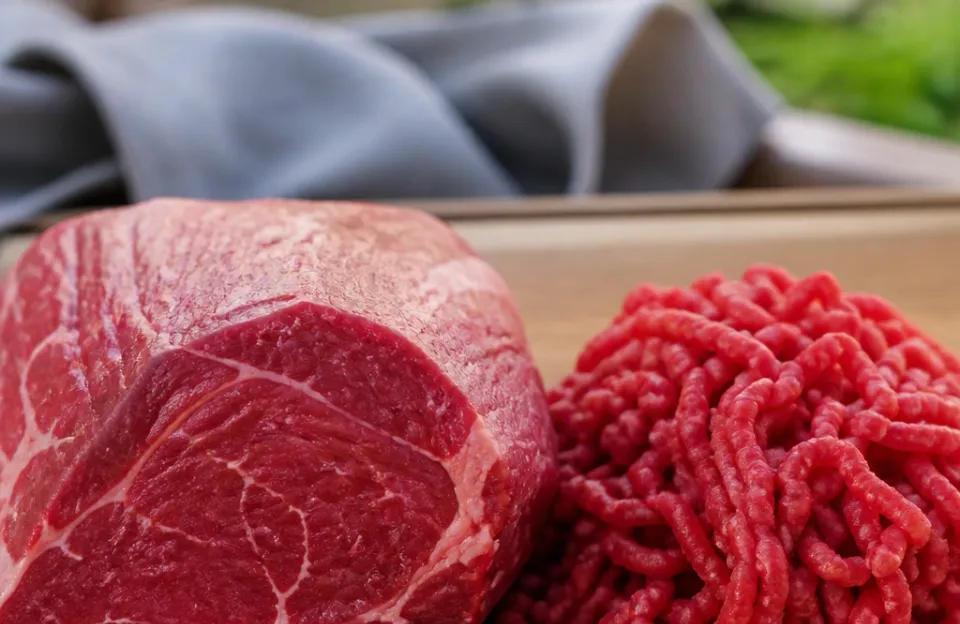
The USDA sets the minimum safe internal temperature for whole muscle beef at 145°F, followed by a three-minute rest. That applies to steaks, roasts, and chops. Bacteria live on the outside surface of intact muscle.
Searing the exterior kills them, leaving the inside safe at lower temperatures.
Ground beef follows a different rule. The grinding process mixes surface bacteria throughout the meat. The USDA requires ground beef to reach 160°F internally to kill pathogens like E. coli.
This applies whether you are making burgers, meatloaf, or taco filling. Color is an unreliable indicator of safety in both cases. A burger can brown before it hits 160°F.
A steak can stay pink well past 145°F. Relying on a thermometer is the only way to confirm safety.
If you cook pork alongside your beef, the rules shift slightly. Check out our pork temperature targets for those specific numbers.
Doneness Levels for Steaks and Roasts
Doneness is a spectrum based on final internal temperature. These numbers apply to whole cuts like ribeyes, strip steaks, tenderloins, chuck roasts, and prime rib.
| Doneness | Final Internal Temp | Pull Temp (Before Rest) | Color Center | Texture |
|---|---|---|---|---|
| Rare | 120°F to 125°F | 115°F to 120°F | Bright red | Soft, cool center |
| Medium Rare | 130°F to 135°F | 125°F to 130°F | Warm red | Yielding, juicy |
| Medium | 140°F to 145°F | 135°F to 140°F | Pink | Firm, moist |
| Medium Well | 150°F to 155°F | 145°F to 150°F | Slight pink | Stiff, drying out |
| Well Done | 160°F+ | 155°F+ | Brown/gray | Tough, dry |
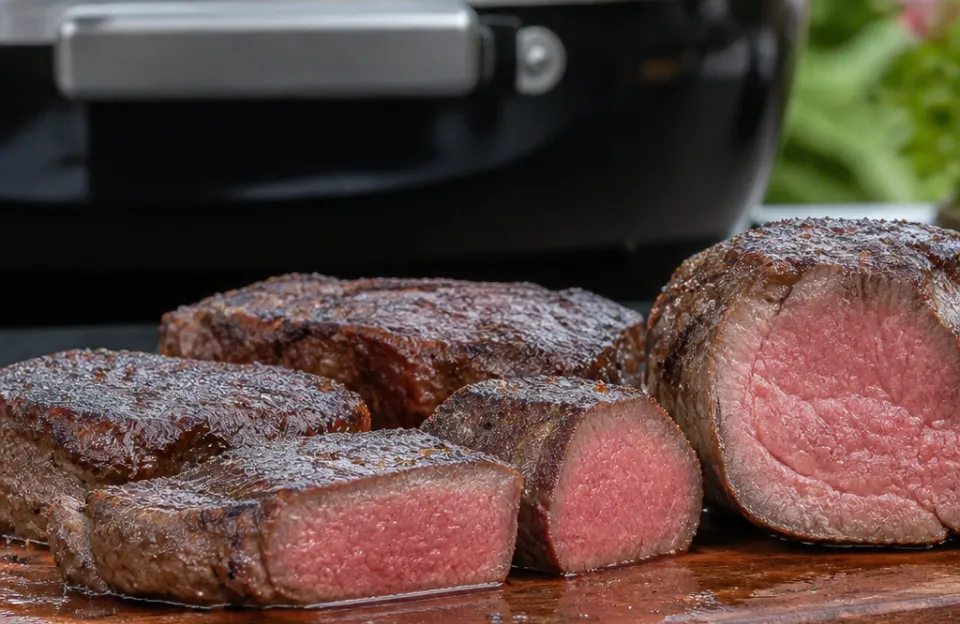
Medium rare sits between 130°F and 135°F. This is where most chefs recommend eating high-quality steaks. The fat renders slightly, and the muscle fibers stay relaxed.
Moisture loss remains minimal.
Medium hits 140°F to 145°F. This matches the USDA minimum for safety when you include the rest period. The center turns pink.
More moisture squeezes out of the muscle fibers, making the meat firmer.
Well done pushes past 160°F. At this point, muscle proteins contract tightly. They force out water and fat.
The texture becomes chewy. If you prefer well-done beef, choose cuts with heavy marbling or use braising methods for roasts to compensate for moisture loss.
How Carryover Cooking Changes Your Pull Time
Meat continues to cook after you take it off the heat. This happens because the hot exterior transfers thermal energy toward the cooler center. The temperature rises during the resting phase.
This is called carryover cooking.
For thin steaks under one inch thick, the temperature might only rise 3°F to 5°F. For thick roasts or steaks over two inches thick, the internal temperature can climb 10°F to 15°F. If you wait until a prime rib reads 135°F in the oven, it will overshoot medium rare and land at medium or medium well by the time you carve it.
You must pull beef off the heat before it reaches your target temperature. To serve a medium-rare steak at 130°F, remove it from the grill at 125°F. Let it rest.
To serve a medium roast at 145°F, pull it at 135°F.
Resting also allows juices to redistribute. Cutting into a steak immediately causes the liquid to pool on the plate. Waiting five to ten minutes lets the muscle fibers relax and reabsorb some of that moisture.
Large roasts need longer. A standing rib roast should rest for 20 to 30 minutes under loose foil.
Tracking these shifting temperatures accurately requires reliable gear. We have notes on what holds up over time if your current setup drifts.
Taking an Accurate Reading Every Time
Where you place the probe determines whether your reading is accurate. Push the thermometer tip into the thickest part of the meat. Avoid fat pockets, gristle, and bone.
Fat and bone conduct heat differently than muscle tissue. Hitting a bone gives a falsely high reading. Hitting a large fat cap gives a falsely low one.
For a steak, insert the probe through the side rather than the top. This lets you push the sensing area directly into the geometric center. Most digital thermometers have a sensing zone near the tip, usually the bottom half-inch.
Make sure that zone sits in the middle of the cut.
For a roast, insert the probe deep into the center of the thickest section. If you are monitoring a large roast in the oven, a leave-in probe works best. You avoid opening the door repeatedly.
Opening the oven drops the ambient temperature and slows cooking. Wireless models let you watch the numbers from across the room, which helps when signal drops happen.
Speed matters too. Leaving the oven door open while waiting for a slow dial to settle ruins your heat environment. A fast digital model solves this.
Some cooks prefer a quick-reading tool for checking steaks rapidly right at the grill grate. Others want a unit that handles two spots simultaneously to compare the thick end of a roast against the thinner end.
When Thickness and Cut Change the Math
A half-inch skirt steak and a three-inch tomahawk ribeye do not cook the same way. Thin cuts cook incredibly fast. By the time you get a good sear on both sides, a thin steak might already be well done in the center.
Carryover cooking hits thin cuts hard because there is less mass to absorb the residual heat.
Thick cuts give you more margin for error. A two-inch filet mignon takes longer to sear, allowing the center to come up to temperature gradually. You have a wider window to pull it at the exact right moment.
Roasts present a different challenge. The exterior dries out long before the center reaches temperature if the oven is too hot. Low and slow cooking reduces the temperature gradient between the outside and the inside.
This results in more even doneness from edge to edge. Cooking a chuck roast at 275°F yields a smaller band of overcooked gray meat around the edges compared to blasting it at 400°F.
Bone-in cuts cook slightly faster near the bone because bone conducts heat. However, the meat touching the bone is harder to measure. Always probe away from the bone to get a true muscle temperature.
Mistakes That Ruin Good Beef
Even with a thermometer, bad habits lead to overcooked or unsafe meat.
- Trusting color over numbers. Myoglobin, the protein that makes meat red, changes color based on pH and packaging, not just heat. A burger can look brown at 140°F. It still needs to reach 160°F to be safe.
- Calibrating infrequently. Thermometers drift. Test yours in ice water. It should read 32°F. If it reads 35°F, adjust it or factor in the offset. Many people skip this step entirely.
- Skipping the rest period. The USDA specifies a three-minute rest for whole cuts at 145°F. That rest time destroys remaining pathogens. Skipping it means the meat has not technically reached the safe standard.
- Probing the wrong spot. Hitting the pan, a bone, or a fat pocket gives useless data. Take two or three readings in different thick spots if you are unsure.
- Using the wrong tool. Infrared laser thermometers only read surface temperature. They cannot tell you what the inside of a roast is doing. Save those for checking skillet heat or pizza stones.
Frequently Asked Questions
Is 145°F safe for all types of beef?
It is safe for whole cuts like steaks and roasts, provided you let the meat rest for three minutes afterward. Ground beef, including patties and crumbles, must reach 160°F because bacteria mix throughout the meat during processing.
Can I eat steak below 145°F?
The USDA recommends 145°F as the minimum safe temperature for whole cuts. Many people eat steaks at 130°F (medium rare) or lower. Consuming undercooked beef carries a foodborne illness risk, though the danger is significantly lower for intact whole muscles than for ground beef.
Does the bone make a roast cook faster?
Bone conducts heat more efficiently than meat. The flesh closest to the bone heats up slightly faster, but the bone also blocks direct heat from reaching the deepest center. Always probe the thickest meat away from the bone for an accurate reading.
Why does my thermometer give different readings in the same steak?
Temperature varies throughout a piece of meat while it cooks. The edges are hotter than the center. Fat insulates differently than lean muscle.
Insert the probe into the exact geometric center of the thickest portion to find the lowest internal temperature.
Do I need to rest a burger like I rest a steak?
Burgers benefit from a short rest of two to three minutes to keep juices inside the patty. Because ground beef must reach 160°F, carryover cooking is less of a concern for hitting a specific doneness level. Focus primarily on pulling the burger exactly when it hits 160°F.
Before You Fire Up the Grill
Hitting the right internal temperature comes down to knowing your target, understanding carryover heat, and placing your probe correctly. Steaks and roasts follow the 145°F rule with a rest. Ground beef demands 160°F every time.
Keep a fast, calibrated thermometer nearby, trust the numbers over the color, and let the meat rest before slicing.