Most air fryer noise comes from the internal fan spinning at high speed to push hot air around your food. A steady hum or whooshing sound is normal. If you hear rattling, loud grinding, or sudden squeaking, something inside needs attention.
If you're wondering why is my air fryer making noise, the answer usually points to airflow, loose parts, or grease buildup on the fan blades. This article breaks down every common sound an air fryer makes, explains what causes each one, and tells you how to quiet things down. We'll also cover when a strange sound means you should stop cooking and unplug the machine.
How the fan and heating element create everyday sounds
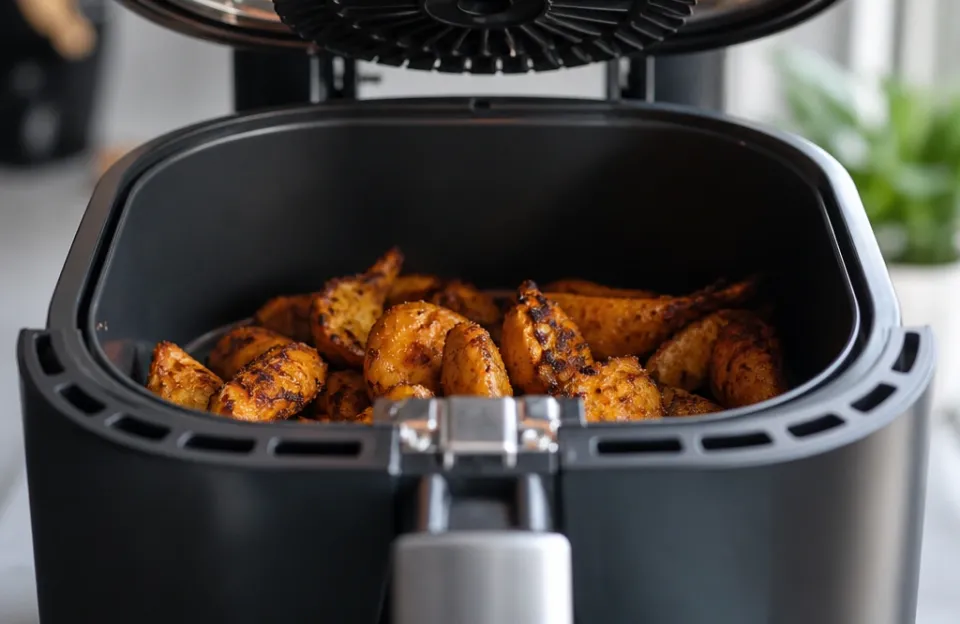
An air fryer cooks by moving hot air very fast. A motor at the top of the unit spins a fan blade, while a heating coil warms the air right below it. That rapid movement is what gives you crispy results without submerging food in oil.
It's also the main reason these appliances aren't silent.
When you turn the machine on, the motor draws power and the fan starts spinning. You'll hear a low hum as the motor runs. As the air speeds up, that hum turns into a rushing sound.
Most models operate between 50 and 65 decibels during normal use. That volume sits somewhere between a quiet conversation and background music in a restaurant.
The heating element itself doesn't make much noise. You might hear a faint click when the thermostat cycles the coil on or off to hold your target temperature. Some units also have a small cooling fan near the electronics housing.
That secondary fan adds a slight extra whir. All of these sounds together form the baseline operating noise for any standard countertop model.
Normal humming versus sounds that signal trouble
A steady hum means the motor is doing its job. The pitch stays consistent throughout the cook time. It might rise slightly when the unit first heats up and drop when it cools down.
This variation is expected.
Trouble sounds are different. They interrupt the steady rhythm. You'll hear sharp clicks, scraping, uneven vibrations, or a high-pitched squeal.
These noises mean a physical part is out of place, worn out, or blocked. Pay attention to when the sound happens. Does it start immediately?
Does it only happen when you shake the basket? Pinpointing the timing helps you find the exact cause.
Why is my air fryer making noise that sounds like rattling
Rattling is the most common complaint people have about their machines. It almost always means two hard surfaces are hitting each other because of the vibration from the fan.
The drawer or basket is usually the culprit. Air fryers rely on tight tolerances to keep hot air flowing in the right direction. Over time, the metal rails or plastic guides that hold the basket can wear down slightly.
When the fan spins, the vibration transfers through the housing and shakes the basket against those guides. You get a metallic or plastic chatter.
Another frequent cause is a loose crumb tray. Many models include a removable tray at the bottom to catch drips. If this tray isn't pushed all the way in, or if the tabs holding it have warped from heat, it will vibrate loudly.
Taking the tray out, wiping the edges, and reseating it firmly often stops the noise immediately.
Sometimes the rattle comes from inside the upper housing where the fan lives. A screw holding the motor bracket might have backed out due to repeated heating and cooling cycles. If the rattle sounds deep and muffled rather than bright and metallic, the issue is likely inside the top section.
Loose screws and warped plastic housings
Plastic expands when it gets hot and shrinks when it cools. After months of daily use, the outer shell of an air fryer can warp just enough to change how the pieces fit together. Screws that were tight at the factory can loosen as the plastic shifts.
Check the exterior screws first. Use a Phillips head screwdriver to gently tighten any visible fasteners on the back or bottom of the unit. Don't over-tighten them.
Stripped plastic threads create a permanent rattle that tape or glue rarely fixes well.
If the housing itself feels loose when you press on it, the internal clips might be broken. This happens more often if the unit has been dropped or bumped hard against a cabinet. In practice, placing a folded silicone pad under the air fryer absorbs some vibration and reduces the transfer of noise to your countertop.
High-pitched squealing coming from the motor
A squealing or screeching noise points directly to the fan motor. Electric motors use bearings to let the shaft spin smoothly. Those bearings need lubrication.
At high temperatures, the factory grease dries out faster than it would in a standard room fan.
When the lubricant thins out or disappears, metal rubs against metal. The friction creates a high-pitched squeal. You'll usually notice this sound getting louder as the unit runs longer and the motor heats up.
Once you turn the machine off and it cools down, the squeal might disappear temporarily.
Running a motor with dry bearings causes permanent damage. The friction generates excess heat, which degrades the copper windings inside the motor. Eventually, the motor seizes or burns out entirely.
If you hear squealing, limit your use of the appliance until you address the bearing issue.
Grease buildup slowing down the fan blades
Grease doesn't just sit on the heating coil. Vaporized fat travels upward with the hot air and coats the fan blades. Over weeks of cooking fatty foods, a thick layer of sticky residue builds up on the blades and the central hub.
This buildup changes the aerodynamics of the fan. The motor has to work harder to push the same amount of air. That extra strain can cause a groaning or labored whining sound.
Uneven grease distribution also throws the fan off balance. An unbalanced fan wobbles on its shaft, creating a rhythmic ticking or scraping noise as it spins.
Cleaning the fan requires opening the top housing. Unplug the machine and let it cool completely. Remove the screws holding the top cover.
Use a degreaser and a soft brush to clean the blades carefully. Avoid bending them. Even a slight bend alters the airflow and creates new noise problems.
For tips on keeping your machine running smoothly after a heavy cook session, check out routine upkeep steps for popular countertop models.
Clicking and popping sounds during a regular cook cycle
Not every click means something is broken. Air fryers use a mechanical thermostat or an electronic relay to control the heating element. When the internal temperature reaches your set point, the switch opens.
When it drops below the threshold, the switch closes again.
Mechanical thermostats use a bimetallic strip that physically bends with temperature changes. When it snaps back into position, it makes a distinct click. Electronic relays also produce a soft clicking sound when they engage or disengage the power circuit.
Hearing a click every few minutes is completely normal. It means the temperature control is working.
Popping sounds are different. Popping usually comes from the food or moisture interacting with the heating element. If water drips onto the hot coil, it flashes into steam instantly.
That rapid expansion creates a sharp pop. Foods with high water content or wet batters cause this more frequently.
Thermal expansion shifting the metal basket
Metal expands when heated. The inner basket and the outer drawer are often made of different metals or have different thicknesses. They expand at different rates.
As the unit heats up, the basket shifts slightly inside the drawer. This movement produces ticking or light popping noises.
You'll hear this most often during the first five minutes of preheating. Once the metal reaches a stable temperature, the expansion stops and the noise goes away. This is harmless.
It doesn't indicate a defect or a safety hazard.
If the popping is extremely loud or accompanied by smoke, unplug the unit. Loud pops combined with smoke suggest electrical arcing or burning debris on the heating coil. Check our guide on safe cooking temperatures for poultry to avoid excessive grease splatter that leads to smoking and popping.
Food placement causing unexpected scraping noises
Where you put your food matters just as much as how the machine works. Overfilling the basket is a common mistake that leads to strange noises. When the basket is packed too tightly, lightweight items get caught in the high-speed airstream.
The fan pulls air from the bottom, pushes it through the heating element, and forces it down around the food. If a piece of parchment paper, a thin slice of vegetable, or a leaf of herb gets lifted by that draft, it hits the spinning fan blade. This creates a rapid ticking or scraping sound.
It happens fast and sounds alarming.
Always leave space between items so air can circulate freely. If you use parchment liners, weigh them down with food before turning the machine on. Never let the liner extend above the rim of the basket where the fan can catch the edge.
Heavy items vibrating against the non-stick coating
Dense foods like large potato wedges or bone-in chicken pieces carry weight. When the fan vibrates the basket, those heavy items shift and bump against the sides. Repeated impact wears down the non-stick coating over time.
It also creates a dull thudding noise.
Arranging heavy items in a single flat layer prevents them from rolling into each other. If you're cooking dense root vegetables, shaking the basket halfway through is standard practice. Getting the timing right prevents overcrowding and keeps the food from banging around.
Follow a reliable method for prepping dense root vegetables to minimize shifting during the cook.
Identifying the source of your air fryer noise
Figuring out exactly where the sound originates saves you from taking apart the whole machine unnecessarily. Different sounds map to different components. Here is a breakdown of what specific noises typically mean and where they come from.
| Sound Type | Likely Source | Severity | Common Fix |
|---|---|---|---|
| Steady Hum | Motor and Fan | Normal operation | None required |
| Rattling | Basket, Tray, or Housing | Low | Reseat parts, tighten screws |
| Squealing | Motor Bearings | High | Lubricate or replace motor |
| Clicking | Thermostat or Relay | Normal operation | None required |
| Popping | Moisture on Heating Coil | Medium | Pat food dry before cooking |
| Rapid Ticking | Debris hitting Fan Blade | High | Stop unit, remove obstruction |
| Grinding | Worn Motor or Fan Hub | High | Professional repair needed |
Use this table as a starting point. Listen closely to the machine while it runs. Try to match the pitch and rhythm of the sound to the descriptions above.
If the noise only happens when you push the drawer in, focus on the basket alignment and the housing rails. If the noise persists even when the drawer is removed and the fan is running alone, the problem is in the upper motor assembly. Isolating the variable tells you exactly which half of the machine needs your attention.
Steps to quiet a noisy air fryer safely
Once you know what's making the noise, you can take action. Always unplug the appliance and let it cool for at least thirty minutes before touching internal parts. The heating element retains heat long after the power is off.
Start with the easiest fixes. Pull the basket out and inspect the rails. Look for built-up carbon or grease that might prevent the drawer from seating flush.
Wash the basket and the interior cavity with warm soapy water. Dry everything thoroughly. Moisture left inside causes rust on the rails, which increases friction and rattling.
Next, check the exterior screws. Tighten any that feel loose. Place the unit on a flat, stable surface.
A wobbly counter amplifies every vibration the motor produces. Putting a damp kitchen towel or a silicone mat under the feet absorbs shock and lowers the overall volume significantly.
If the fan is dirty, clean it. Accessing the fan varies by brand. Some require removing four screws on the back panel.
Others have a twist-off top cover. Consult your owner's manual for the specific disassembly steps for your model. Wipe the blades gently.
Removing accumulated grease restores balance and reduces motor strain. When you're ready to test the unit again, try warming up leftover slices to see if the noise returns under a light load.
Checking the rubber feet and countertop stability
Air fryers have small rubber or silicone feet designed to isolate vibration. Over time, these feet compress, crack, or fall off entirely. Without them, the hard plastic base sits directly on your countertop.
Every vibration from the motor transfers straight into the surface, acting as a sounding board.
Flip the unit over and inspect the feet. If one is missing, the machine sits unevenly. This tilt puts extra stress on the fan bearings and worsens squealing.
Replacement adhesive rubber feet are available at most hardware stores. Stick a new set on if yours are flattened or gone.
Also consider the material of your countertop. Thin laminate or hollow-core surfaces resonate easily. Heavy granite or solid wood absorbs sound better.
Moving the air fryer to a sturdier section of your kitchen counter sometimes eliminates a rattle without any repairs at all.
When loud noises mean you should stop using the machine
Some sounds are warnings. Ignoring them risks electrical failure, fire, or total destruction of the motor. Knowing when to pull the plug protects both your kitchen and your safety.
A loud grinding noise indicates severe bearing failure or a foreign object lodged deep in the motor housing. Metal shavings from a grinding motor can fall onto the heating element or into your food. Stop using the unit immediately if you hear grinding.
Burning smells paired with unusual noises mean electrical insulation is melting. The motor windings are coated in a thin enamel. When the motor overheats due to friction or blockage, that enamel melts.
It produces a sharp chemical smell and often a sizzling or buzzing sound. Unplug the machine from the wall. Don't just turn off the dial.
Cut the power at the source.
Sparking or visible arcing inside the top vents is an emergency. This happens when wires fray or connections loosen enough to jump gaps. Do not attempt to fix internal wiring yourself unless you have electrical repair experience.
The Consumer Product Safety Commission provides guidelines on handling faulty household appliances safely. Contact the manufacturer or a certified small appliance repair shop instead.
Warranty coverage for persistent motor failures
If your air fryer is less than a year old and making abnormal noises, the motor failure is likely covered under warranty. Most major brands offer a one-year limited warranty against manufacturing defects. A bearing that fails prematurely falls squarely into that category.
Don't open the motor housing if you plan to claim the warranty. Breaking the warranty seal voids your coverage. Contact customer support first.
Describe the sound clearly. Tell them when it started and whether it changes with temperature. Manufacturers track failure patterns.
Your report might match a known batch issue.
Keep your proof of purchase. Write down the serial number located on the sticker underneath or behind the unit. Having this information ready speeds up the replacement process.
If the warranty period has passed, weigh the cost of a professional repair against buying a new machine. Small appliance labor rates often make repairing a budget-friendly air fryer economically impractical. If you decide to upgrade, reading detailed reviews on multi-function countertop cookers helps you choose a quieter, more durable model.
Frequently asked questions
Is it normal for an air fryer to be loud?
Yes, a certain level of noise is expected. The internal fan moves air rapidly to cook food evenly, which creates a constant rushing or humming sound. Most units operate around 50 to 65 decibels.
If the noise is suddenly much louder than usual or changes pitch drastically, something is wrong.
Why does my air fryer click while cooking?
Clicking is usually the thermostat or relay cycling the heating element on and off to maintain your set temperature. This is normal mechanical behavior. However, continuous rapid clicking that doesn't stop could indicate a failing control board or a faulty temperature sensor.
Can I spray WD-40 on the fan motor to stop squeaking?
No. Standard WD-40 is a solvent and water displacer, not a high-temperature lubricant. Spraying it near the heating element or inside the motor housing creates a serious fire hazard and toxic fumes.
If the motor bearings need lubrication, use a food-safe, high-temperature synthetic grease applied carefully by someone experienced with appliance repair.
Why does my air fryer rattle only when I put the basket in?
The basket is likely misaligned or the guide rails are worn. When you slide the drawer in, it might not lock fully into the rear stabilizer clip. The vibration from the fan then shakes the loose basket against the outer housing.
Clean the rails, check for warped plastic, and push the drawer firmly until it seats properly.
Does a larger air fryer make more noise than a small one?
Generally, larger models require bigger fans and more powerful motors to circulate air through a larger cavity. This can result in a slightly louder baseline hum. However, larger units often have heavier construction and thicker insulation, which can dampen rattling and vibration better than thin, lightweight compact models.
What causes a burning smell along with a weird noise?
A burning smell combined with grinding, buzzing, or squealing usually means the motor is overheating. Grease buildup on the fan blades forces the motor to work harder, generating excess heat. Alternatively, the motor bearings may have failed completely, causing metal-on-metal friction.
Unplug the appliance immediately and do not use it again until it is inspected.
Before you run another batch
Hearing a strange sound from your countertop cooker is stressful, especially when dinner is halfway done. Most of the time, the reason why is my air fryer making noise comes down to simple physics. Vibrations shake loose parts.
Grease weighs down fan blades. Metal expands as it heats.
Pay attention to the type of sound. A steady hum is fine. A rattle needs a tightened screw or a reseated tray.
A squeal or grind demands immediate attention. Keeping the interior clean and the exterior stable prevents the vast majority of noise complaints.
Routine cleaning after heavy meals goes a long way. Whether you're cooking crispy breaded wings or roasting vegetables, wiping down the basket and checking the crumb tray weekly keeps parts fitting tightly. Treat the machine well, listen to what it tells you, and it will stay quiet for years.