An air fryer fan gets loud because it spins at high speeds to push hot air around your food. Most models run between 40 and 65 decibels during normal operation. That sounds similar to a running dishwasher or a standard kitchen exhaust vent.
If you're wondering why is my air fryer fan so loud, the answer usually comes down to grease buildup, loose parts, restricted airflow, or a worn motor bearing.
A sudden change in noise means something shifted inside the machine. A constant loud hum from day one might just be how that specific model was built. This article covers what causes the extra volume, how to tell if the sound points to a real problem, and what you can do to quiet things down safely.
How the internal fan creates that constant noise
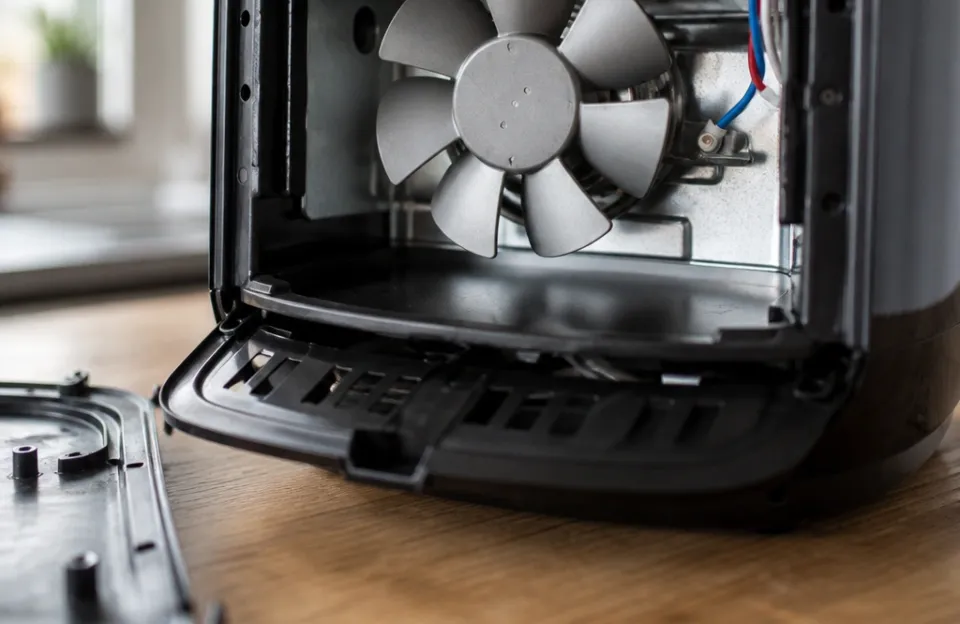
Every air fryer has a heating element and a fan mounted near the top of the unit. The fan pulls room temperature air in, pushes it over the heating coil, and forces the hot air down into the basket. It then circulates back up through vents to repeat the cycle.
This rapid movement is what cooks food quickly and gives items like crispy chicken wings their texture without needing much oil.
Because the fan needs to move a large volume of air through a small space, it spins fast. High speed means more wind noise. The motor driving the blade also generates its own mechanical hum.
Put those two things together inside a compact plastic or metal housing, and you get a noisy appliance.
Smaller countertop models tend to be louder than larger oven-style units. They pack the same basic components into a tighter box, which leaves less room for sound insulation. If you recently switched from a toaster oven style to a basket style, the jump in volume is normal.
Grease buildup weighing down the blades
Cooking fatty foods releases oil vapor. Over time, that vapor settles on the fan blades above the heating element. A thin layer of grease changes the aerodynamics of the blade.
It adds weight and creates drag. The motor has to work harder to keep the fan spinning at the target speed, which increases the pitch and volume of the sound.
If you frequently cook bacon or heavily marinated meats, this buildup happens faster. Knowing how long bacon takes to crisp helps you plan your cooking sessions, but the grease still escapes into the upper chamber regardless of timing. You won't see this grease easily because the fan sits behind the heating element, out of direct sight.
Sticky residue also attracts dust and small food particles that get kicked up during cooking. Those particles stick to the greasy blades and create an uneven surface. An unbalanced fan wobbles slightly as it spins.
That wobble translates directly into a rattling or vibrating noise that carries through the whole appliance.
Loose screws or vibrating exterior panels
Air fryers vibrate when they run. Constant vibration slowly backs out screws and loosens snap-fit plastic joints. When a panel isn't held tightly against the frame, the fan's airflow makes it buzz.
This buzzing often sounds much worse than the actual fan noise. It creates a sharp, metallic, or hollow rattling that people mistake for a broken motor.
The bottom plate and the back panel are common spots for this issue. Screws hidden under rubber feet can loosen after months of use. If the noise changes when you press your hand firmly against the side or top of the machine, you've found a vibrating panel.
Internal components can also rattle. The wire guard over the heating element might shift out of its groove. A loose screw inside the housing will bounce around while the fan runs.
These internal rattles are harder to track down because opening the main housing voids most warranties and exposes you to electrical risks.
Blocked intake vents forcing the motor to strain
The fan needs a clear path to pull air in. Most machines have vents on the back or top. Pushing the appliance flush against a wall or tucking it under a low cabinet blocks these openings.
When the intake is restricted, the motor strains to pull enough air through the gap. This strain produces a higher-pitched whine or a heavy, labored humming sound.
Blocked vents also cause overheating. The machine's thermal sensor might force the fan to run at maximum speed to cool the internal electronics, adding even more noise. Always leave at least five inches of clearance on all sides of the unit.
This applies whether you are cooking potato chunks or reheating leftovers. Proper spacing keeps the airflow steady and the motor relaxed.
Food debris can also block internal vents. Small pieces of breading or crumbs sometimes bypass the basket and fall into the lower chamber. If they get pulled toward the rear exhaust path, they restrict airflow just like a blocked external vent would.
Worn bearings inside the fan motor
Fan motors use small bearings to let the shaft spin smoothly. In cheaper models, these are often sleeve bearings rather than sealed ball bearings. Sleeve bearings rely on a thin film of lubricant.
Heat and time dry that lubricant out. Once it's gone, metal rubs against metal.
A failing bearing produces a distinct grinding, squealing, or scraping sound. It usually starts faint and gets louder over several weeks. Unlike a rattling panel, pressing on the outside of the machine won't change the sound.
The noise comes from deep inside the motor housing.
High heat accelerates bearing wear. Air fryers operate in a harsh environment compared to standard desk fans or ceiling fans. The motor sits right next to a heating element that regularly reaches 400 degrees Fahrenheit.
Even with a heat shield, ambient temperatures inside the top housing remain very high.
Why is my air fryer fan so loud compared to other models
Not all machines sound the same. The noise level depends heavily on the build quality, the type of motor used, and the overall design. If you're comparing your current unit to one you used previously, or to a friend's appliance, the difference usually comes down to a few specific engineering choices.
Basket-style fryers generally run louder than oven-style ones. The compact shape forces the fan to work harder to circulate air effectively. Brands also use different types of motors.
Brushless motors run quieter and last longer, but they cost more to manufacture. Budget-friendly units often use brushed motors, which generate more friction and more audible noise.
| Appliance Type | Typical Noise Level (Decibels) | Primary Sound Source |
|---|---|---|
| Basket Air Fryer | 55 to 65 dB | High-speed fan and compact housing |
| Oven-Style Air Fryer | 45 to 55 dB | Fan spread across a larger cavity |
| Standard Microwave | 45 to 55 dB | Magnetron hum and turntable motor |
| Kitchen Exhaust Hood | 50 to 70 dB | Blower motor pushing air outside |
Some manufacturers add sound-dampening foam or thicker plastic walls to reduce noise. Others prioritize keeping the retail price low, which means thinner materials that transmit vibration easily. Checking reviews for a specific model before buying is the best way to gauge its baseline volume.
If you're researching different brands, reading about a popular Ninja model's performance can give you a sense of how specific designs handle heat and noise.
Separating normal operating sounds from actual problems
You need to know what a healthy machine sounds like before you can diagnose a sick one. A normal air fryer produces a steady rush of moving air combined with a consistent electrical hum. The pitch stays the same throughout the cooking cycle.
It might pulse slightly if the thermostat cycles the heating element off and on, but the fan speed itself remains constant.
Abnormal noises fall into a few categories. Grinding or scraping means metal is touching metal. This points to a bad bearing or a fan blade hitting a shroud.
Clicking or ticking usually means a blade is striking something, like a loose wire or a piece of debris. Rattling or buzzing indicates a loose panel or screw. A high-pitched squeal often means the motor is struggling due to lack of lubrication or restricted airflow.
If the noise started suddenly after you dropped the unit or bumped it hard, something likely came loose inside. If it got gradually louder over months of use, you're probably dealing with grease accumulation or bearing wear. Pay attention to when the sound happens.
Does it start immediately when you plug it in, or only after the unit heats up? Thermal expansion can cause parts to shift and rattle only when hot.
Steps to quiet a noisy air fryer fan
Fixing the noise requires finding the exact source first. Don't take the machine apart blindly. Start with the easiest external checks and work your way inward.
Always unplug the appliance and let it cool completely before doing any maintenance.
- Check the placement. Pull the unit away from the wall. Make sure nothing is blocking the back or top vents. Place it on a flat, solid surface. A flimsy table or a silicone mat that's too soft can amplify vibrations.
- Clean the interior thoroughly. Remove the basket and crisper plate. Turn the machine upside down and look through the bottom vents or the open cavity. Use a soft brush or compressed air to dislodge crumbs stuck near the heating element. Grease trapped up near the fan requires more effort. You can wipe accessible areas with a damp cloth and mild dish soap. Avoid spraying liquid directly into the upper housing where the motor lives.
- Tighten visible screws. Inspect the back and bottom panels. If you see Phillips or Torx screws, check them with a screwdriver. Don't overtighten plastic threads; just make sure they are snug.
- Press on the panels while it runs. Plug the unit in and start it empty. Gently press your hand against different sides of the housing. If the noise stops when you apply pressure to a specific spot, that panel is vibrating. You can sometimes fix this by placing a small piece of heat-resistant tape along the seam, or simply tightening the nearest screw.
- Inspect the heating element guard. Look up inside the cooking chamber. There is usually a metal mesh or wire guard protecting the heating coil and fan. Make sure it hasn't popped out of its retaining clips. If it's loose, gently press it back into place.
If you use your machine daily for tasks like prepping meals ahead of time, you'll need to clean it more often to prevent grease-related noise. Routine cleaning prevents the heavy buildup that throws the fan off balance.
When a deeper cleaning is necessary
Sometimes surface wiping doesn't reach the grease coating the fan blades. If you've ruled out loose panels and placement issues, baked-on grease is the likely culprit. Accessing the fan directly usually requires removing the outer casing.
This involves taking out multiple screws and separating plastic clips.
Opening the housing voids the warranty on almost every brand. It also exposes wiring and capacitors that can hold a charge even when unplugged. If you aren't comfortable working with small appliances, stop here.
For those who proceed, carefully document where each screw goes. Once the top cover is off, you can access the fan assembly. Wipe the blades individually with a degreaser safe for electronics.
Spin the fan by hand to ensure it moves freely without scraping the surrounding shroud.
After reassembling, run the machine empty for five minutes to burn off any residual cleaning solution. This step is important so you don't end up tasting cleaner the next time you warm up leftover pizza slices.
Situations where the noise points to a dying motor
Cleaning and tightening won't fix a motor that has reached the end of its lifespan. If the fan makes a loud buzzing sound but spins very slowly, or doesn't spin at all, the motor windings might be failing. A burning smell accompanying the noise is a definitive sign of electrical failure.
Unplug the machine immediately and don't use it again.
Worn bearings present another terminal issue. If you've cleaned the blades and the grinding noise persists, the bearing is shot. Replacement bearings exist, but sourcing the exact size for a specific appliance brand is difficult.
Soldering or splicing a new motor into the existing wiring harness requires technical skill. For budget models, replacing the entire air fryer is usually cheaper and safer than attempting a motor rebuild.
Consider the age of the appliance. Most countertop models have a practical lifespan of two to four years with regular use. If yours is older and getting louder, the internal components are simply wearing out from heat exposure and friction.
Misconceptions about air fryer noise levels
People often misinterpret what they hear, leading to unnecessary worry or incorrect fixes. Here are a few common mistakes regarding appliance noise:
- Assuming louder means hotter. A louder fan doesn't mean the machine is cooking at a higher temperature. The thermostat controls the heat. The fan just moves the air. A dirty fan might be louder but actually circulate heat less efficiently.
- Using water to silence internal rattles. Never pour water into the upper vents hoping to lubricate a squeaky motor. Water will short out the electronics and create a severe shock hazard. Only use appropriate dry lubricants on accessible moving parts, and only if the manufacturer permits it.
- Ignoring a changing pitch. If the sound shifts from a steady hum to a fluctuating whine, the motor is struggling. Continuing to run it can trip your home's circuit breaker or melt internal wiring.
- Thinking all brands should sound identical. Motor size, blade shape, and housing thickness vary wildly between manufacturers. Comparing your current unit's volume to a completely different brand sets an unrealistic expectation.
- Wrapping the exterior in towels to muffle sound. Blocking the exterior vents to reduce noise traps heat inside the casing. This triggers thermal shutoffs or melts plastic components. Always keep ventilation paths completely clear.
Understanding how your specific appliance handles heat and airflow helps set realistic expectations. Reading about the history of these countertop appliances shows how far motor technology has come, though basic physics still dictates that moving air fast creates sound.
Frequently asked questions
Is it safe to use an air fryer if the fan is making a grinding noise?
No. A grinding noise usually means the fan blade is hitting something or the motor bearing is failing. Continuing to run the appliance can cause the motor to seize or overheat.
Unplug the machine and inspect the interior for obstructions before using it again. If the grinding persists after cleaning, the motor is likely damaged.
Why does my air fryer fan sound louder at higher temperatures?
At higher temperatures, the thermostat demands continuous heating. The fan runs constantly without pausing, whereas at lower settings it might cycle differently depending on the model. Additionally, metal components expand as they heat up.
This thermal expansion can tighten tolerances inside the motor or cause panels to shift, increasing vibration and noise.
Can I spray WD-40 on the air fryer fan to stop it from squeaking?
Standard WD-40 is not a long-term lubricant and is highly flammable. Spraying it near a heating element creates a fire risk. If you must lubricate an accessible motor shaft, use a high-temperature, food-safe lubricant designed for small appliances.
However, most modern fan motors have sealed bearings that cannot be lubricated from the outside.
Do larger air fryers have quieter fans than smaller ones?
Generally, yes. Larger oven-style air fryers have more physical space inside the housing. This allows manufacturers to use larger fan blades that move the same amount of air at slower rotational speeds.
Slower speeds produce less wind noise. The thicker walls of larger units also absorb more vibration than thin, compact basket models.
How often should I clean the inside to prevent fan noise?
Wipe down the interior basket and lower chamber after every use. Deep cleaning the area around the heating element and fan guard should happen every few months, depending on how often you cook fatty foods. If you notice the pitch of the fan changing or a slight rattling starting, it's time to clean the upper chamber to remove grease buildup before it hardens.
Will putting a mat under the air fryer reduce the noise?
A thick silicone or rubber mat can absorb some vibration traveling from the machine into your countertop. This reduces the resonant humming sound that countertops sometimes amplify. However, a mat won't fix noise coming from the fan motor itself, and you must verify the mat is rated for high temperatures so it doesn't melt during use.
Keeping your kitchen quiet
A noisy air fryer fan usually points to a solvable maintenance issue rather than a catastrophic failure. Grease accumulation, loose exterior panels, and blocked intake vents account for the vast majority of sudden volume increases. Keeping the machine clean and giving it plenty of breathing room on your counter prevents most of these problems from developing in the first place.
Pay attention to the type of sound the appliance makes. Rattles and buzzes are typically physical vibrations you can fix with a screwdriver or a thorough cleaning. Grinding and squealing point toward internal motor wear that might signal the end of the appliance's usable life.
Regular upkeep extends the lifespan of the unit and keeps the noise level manageable. If your current model is simply too loud for your space despite being perfectly clean and functional, looking into oven-style designs or models specifically marketed with insulated housings is the most practical next step.