Soggy air fryer food usually comes down to one of two problems: moisture is sitting on the surface of the food, or hot air cannot reach it. Air fryers work as small countertop convection ovens, and food becomes crisp because hot air circulates quickly around it. When that circulation is blocked or the surface stays wet, the food steams instead of browning.
The five mistakes below cover the most common causes of sogginess. Each one includes what goes wrong and the specific adjustment that fixes it.
How Rapid Air Circulation Creates a Crunch
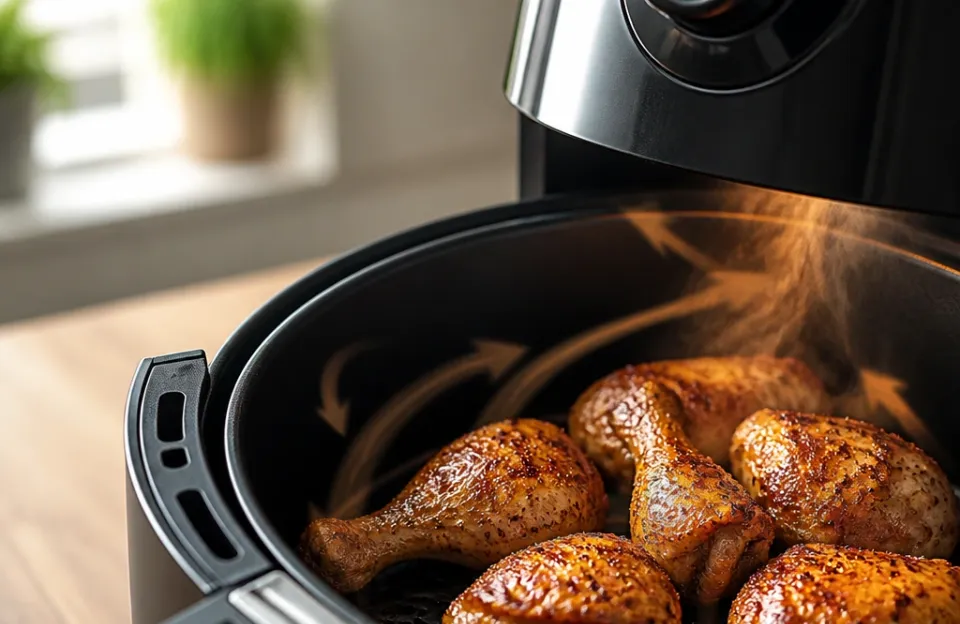
An air fryer is a compact convection oven with a fan that circulates heated air around the food. That moving air drives moisture off the surface, and a dry surface is what allows browning and crisping to begin.
That process depends on two things working together: uninterrupted airflow and a surface that can shed water. Foods generally cook in the 350°F to 400°F range for roughly 5 to 25 minutes, and manufacturer instructions on the package should take priority when they exist.
If either airflow or surface drying fails, you get pale, soft food with a steamed texture. Understanding that mechanism makes every fix below easier to apply.
Mistake 1: Overcrowding the Basket Blocks the Heat
A packed basket is one of the most common causes of soggy results. Overcrowding prevents enough air circulation to cook the food properly, so the pieces pressed together release steam that cannot escape. The outside never dries, and the food effectively steams.
The fix is simple but requires patience. Cook large amounts in batches rather than all at once. Aim for a single layer with visible gaps between pieces. If you are cooking french fries, for example, a crowded basket produces limp fries even at the correct temperature.
Shaking or flipping halfway through helps reposition pieces that settle against each other. The goal is to expose as much surface area as possible to moving air at all times.
Stacking Ingredients with Different Moisture Levels
Combining wet and dry ingredients in one basket spreads moisture around. If you cook watery vegetables alongside something that needs to crisp, the released steam affects both. Cook high-moisture items separately or give them their own batch.
Using a Basket That Is Too Small for the Recipe
A small basket forces you to crowd it. If your recipes consistently overflow, a larger multi-quart countertop unit gives you the room to spread food in a single layer. That is a capacity decision, not a guarantee of better results on its own.
Mistake 2: Wet Batters Drip Instead of Setting
Traditional deep-frying batters rely on a hot oil bath to set the coating quickly. In an air fryer, a thin wet batter can drip off before it firms up, leaving a gummy layer that holds moisture against the food.
Dry coatings behave differently. Flour, breadcrumbs and cornstarch create a surface layer that can dry and harden as the hot air moves across it. Cornstarch is a common choice for crisping, though that mechanism is a widely used technique rather than a formally proven one.
If you want a coating that holds, get the dredging technique right: pat the food dry, apply a light oil coating, then press the dry coating on firmly. Skip soaking wet batters unless the recipe is specifically written for air frying.
Mistake 3: Starting Cold Delays Crust Formation
Preheating is not required for every recipe or model. Some foods cook well from a cold start, while preheating improves repeatability and browning for others. When a recipe depends on a quick crust, a cold basket can give surface moisture extra time to migrate outward before browning begins.
For many compact basket-style air fryers that allow manual preheating, about 3 to 5 minutes at 350°F or 400°F is a practical starting range, but it is not a universal rule. Your model, wattage and chamber size all affect the actual time, so check your manual.
Preheat with the basket inserted but empty unless the recipe says otherwise, because adding food during preheat can lower the basket temperature during the first minutes of cooking.
When a Cold Start Is Fine
Leftovers, thin items and foods with very little surface moisture often do not need preheating. If you are reheating or cooking something that will release its own fat, a cold start may matter less. The mistake is skipping preheat for foods that need immediate high heat, such as thicker cuts where the timer matters.
Mistake 4: High-Moisture Ingredients Fight the Machine
Surface water has to evaporate before browning can begin. Ingredients with high water content, such as zucchini, tomatoes and frozen foods with ice glaze, push that evaporation stage out and delay crisping.
Pat everything dry before it goes in. This matters even more for items you have marinated or rinsed. A quick pass with paper towels removes the free surface water that would otherwise turn to steam.
The Potato Soaking Trick
Soaking cut potatoes in water is a common step that can help remove surface starch. The catch is that they must be thoroughly dried afterward. Wet potatoes will not crisp, no matter the temperature. If root vegetables come out soft, check whether they were dry before cooking.
Frozen Foods and Excess Ice
Many frozen foods are designed to cook from frozen, and package directions should guide you. What matters is ice glaze: shake off loose ice crystals before the food goes in, because that surface ice becomes water in the basket. Foods that release a lot of moisture, including chicken wings, benefit from being spread out so the steam can escape.
Dealing with Rendered Fat
Fatty foods such as bacon release liquid fat as they cook. If that fat pools under the food, the bottom stays soft while the top crisps bacon timing matters here. Pour off accumulated fat partway through, or use a rack so the food sits above the liquid.
Mistake 5: Wrong Temperature Settings and Poor Maintenance Trap Humidity
Browning generally needs 175°C / 350°F or higher for most foods. If your food comes out pale and soft rather than burnt, the set temperature may simply be too low. Raising it by 10 to 20°C can help when the display is accurate but the food is not browning.
Air fryers can reach 400°F (200°C) and expel hot air and steam, so the vents need to stay clear. A unit positioned too close to a wall, or one with grease buildup on the heating element or fan, cannot move air efficiently and traps humidity inside.
Check your manufacturer manual for the required clearance around your specific model, since the correct distance depends on the unit. Clean the basket after every use and check that the vents are unobstructed.
Maintenance Checks Worth Doing
Grease and food debris reduce airflow over time. If your results have gotten worse without any change in technique, inspect the heating element, the fan area and the vents. Unplug the unit before cleaning.
Stop and unplug immediately if you notice sparking, a hot cord or plug, or a burning-plastic smell. Black or chemical-smelling smoke can indicate melted plastic, packaging left in the basket, or non-stick coating burning off, so stop, ventilate and inspect before using the unit again.
Diagnosing Your Sogginess: A Quick Check Sequence
Most air-fryer problems trace back to a small set of causes: airflow, oil, temperature or contact. Work through these checks in order when food comes out soft.
- Was the basket overcrowded? Aim for a single layer with gaps. If not, that is a likely cause.
- Was the surface dry before cooking? Pat food dry, and shake off ice glaze.
- Was the coating wet or dry? Wet batters drip. Switch to a dry coating.
- Did you preheat, and was the temperature high enough? Browning generally needs 350°F or higher for most foods.
- Is the unit clean with clear vents? Grease and blocked vents can trap humidity.
If you fix airflow and surface moisture and the food still steams, temperature or maintenance is the next suspect.
Safe Accessories and Coatings: Parchment, Racks and Oil Sprays
Parchment liners can help with cleanup, but loose parchment paper, lightweight liners and other unsecured items should never be left in an empty running air fryer, because the fan can lift them toward the heating element. Always weigh a liner down with food, and never preheat with a loose liner in the basket.
Wire racks raise food above rendered fat and pooled liquid, which helps the bottom crisp. Check your appliance manual for rack and liner compatibility, and make sure any rack fits without blocking the airflow path.
On aerosol cooking sprays, the evidence is limited. Propellants and emulsifiers in aerosol sprays may cause issues for PTFE non-stick coatings, but that assessment comes from general interest writing rather than manufacturer documentation, and the long-term effects are not established. Check your appliance manual for coating guidance, and note that a brushed-on oil or a pump spray gives you more control.
Getting the Crunch Right Every Time
Soggy air fryer food usually comes down to moisture on the surface or blocked airflow, and the five mistakes above address both. Space food in a single layer, use dry coatings instead of wet batters, preheat when the recipe calls for it, dry high-moisture ingredients thoroughly, and follow your recipe or manual for temperature with a clean, well-ventilated unit.
Food safety still applies alongside texture. Cook air-fried foods to safe minimum internal temperatures: fish to 145°F, whole cuts of beef, pork, veal and lamb to 145°F with a 3-minute rest, ground meat to 160°F, and poultry to 165°F. Raw, stuffed breaded chicken breast products should not be cooked in an air fryer. Refrigerate leftovers within 2 hours to stay out of the Danger Zone between 40°F and 140°F.
Fix the moisture and airflow first. If the food is safe and still soft, adjust one variable at a time until the texture lands where you want it.
Reheating Leftovers Without Losing the Crunch
Reheating is its own sogginess trap, because the food already holds moisture and a microwave-style reheat softens it further. Use the air fryer at a moderate temperature and keep the food uncovered so steam escapes. Reheat pizza or fried foods in a single layer, and refrigerate anything you do not eat within 2 hours.
If the surface starts to look damp during reheating, raise the temperature slightly and give it a few more minutes rather than covering it.