An air fryer burns food mainly because it is a small, high-speed convection oven: intense circulating heat dries and browns surfaces fast, so high set temperatures, crowded baskets, thin or sugary pieces, and leftover grease can scorch food before the inside is done. Lowering the temperature slightly, cooking in a single layer, and checking doneness with a thermometer usually fixes it.
The rapid convection that makes these appliances so quick also leaves very little margin for error. A few extra minutes or a slightly crowded drawer can take dinner from golden brown to blackened in seconds.
How Rapid Convection Causes Scorched Meals
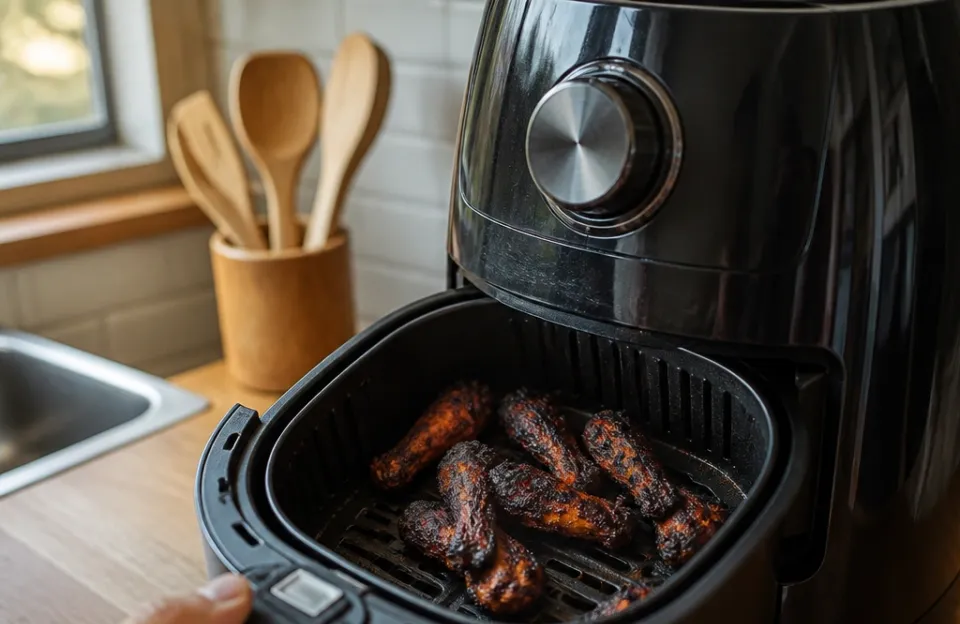
Air fryers circulate hot air quickly inside an airtight chamber, heating food intensely and rapidly. A conventional oven holds its heat source further away and gives air more room to move gradually. An air fryer compresses that same thermal energy into a tiny space, so the fan pushes air much faster than a standard convection setting and creates a strong browning effect on whatever surface faces the coil.
That concentrated heat transfers energy to the exterior of your food quickly. If the outside absorbs heat faster than the inside cooks, the surface dries out and carbonizes before the center is done. Thick cuts of meat and dense root vegetables are especially prone to this.
Most air-fried foods cook for 5 to 25 minutes at 350°F to 400°F. Poultry is safe once it reaches 165°F internally, but reaching that temperature in an air fryer can mean the outside spends too long under direct heat if you leave the dial set too high. That is why balancing external browning with internal doneness matters for both flavor and safety.
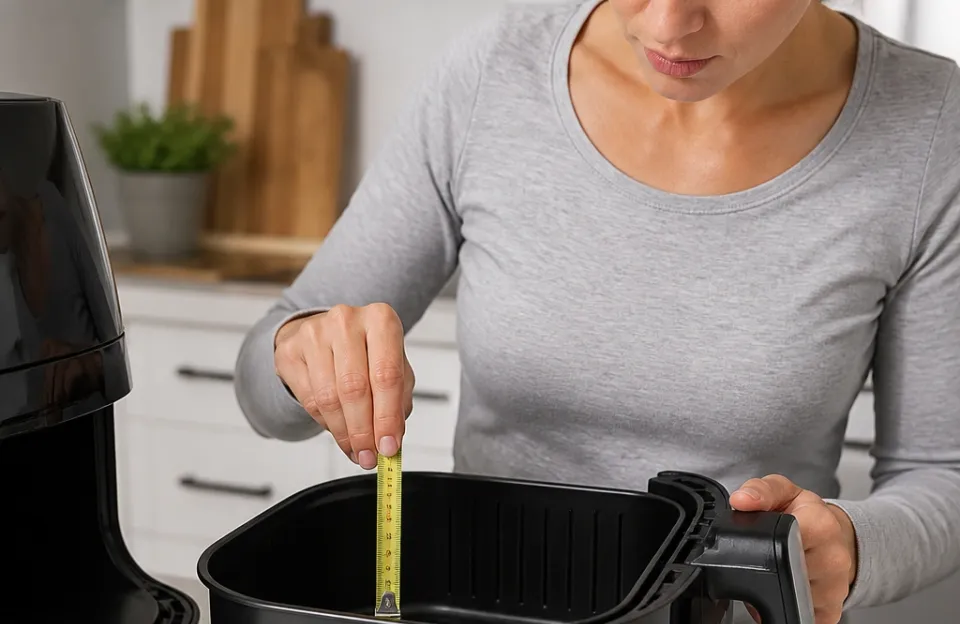
The distance to the heating element matters too. In a small two-quart machine, the top of your food may sit just a couple of inches below a 400°F coil, exposing the surface to direct radiant heat on top of the moving hot air. Read your model’s manual for any guidance on maximum fill and positioning.
Sugar Caramelization Happens Too Fast
Ingredients coated in marinades, barbecue sauce, or dry rubs containing sugar scorch quickly in this environment. Sugar begins to caramelize at high heat and turns bitter once the surface carbonizes, and because air fryers easily sustain 380°F to 400°F, any sweet glaze applied at the start of the cook time will likely blacken.
This applies heavily to chicken wings tossed in sweet sauces. If you want sticky, caramelized skin without ash, apply sugary sauces only during the last two or three minutes of cooking. Dry rubs made mostly of salt, pepper, garlic powder, and paprika hold up better, though even paprika can turn bitter if exposed to maximum heat for too long.
Learning the right timing for wings prevents that burnt exterior while keeping the meat juicy underneath.
Thin Edges and Small Pieces Overcook First
Uniformity dictates how evenly food browns. When you toss irregularly cut potatoes or mixed vegetables into the basket, the thinnest pieces finish cooking long before the thickest ones, and those thin edges keep absorbing heat until they dry out completely and burn.
Sliced zucchini presents the same problem. The watery centers need time to soften, but the paper-thin edges dehydrate and char almost immediately under heavy airflow. Adjusting your prep to cut consistent thickness across every piece solves a large percentage of burning issues.
Check how long summer squash needs so you can pull the basket before the thinner slices turn to ash.
Why Does My Air Fryer Burn Food When I Follow Recipes?
A very common frustration is following a recipe perfectly and still ending up with a burnt result. Cooking times vary between air fryers because of differences in appliance size and power, so a recipe tested in one machine may not translate directly to yours. Even among similar high-capacity countertop units, airflow dynamics change with the shape of the drawer.
Many online recipes also fail to account for preheating. If a recipe assumes a cold start but you preheat your machine first, your food immediately hits peak temperature rather than ramping up gradually. That head start can shave off several minutes of necessary cook time, pushing the food straight into the burning zone. If your air fryer’s programmed cycle already includes preheating, follow the add-food prompt rather than restarting a full cook-time countdown. When a recipe doesn’t mention preheating, assume a cold start, or check the food early if you prefer to preheat.
Altitude and ambient humidity may also play a role: drier air can strip moisture from food surfaces faster. If you live in an arid region, try lowering recipe temperatures slightly and adjust based on your results.
| Cause of Burning | Mechanism | Quick Adjustment |
|---|---|---|
| High sugar content | Glazes caramelize and carbonize under high heat | Add glazes in the final 2 to 3 minutes |
| Crowded basket | Blocks airflow, creates uneven hot spots | Cook in smaller batches |
| Irregular cutting | Thin pieces overcook before thick ones finish | Cut everything to identical sizes |
| Preheating mismatch | Food hits max heat instantly instead of ramping up | Check food 2 to 3 minutes early |
| High wattage variance | Stronger elements cook faster than recipe expects | Drop temperature by 25°F initially |
Overcrowding the Basket Blocks Proper Airflow
It is tempting to dump an entire bag of frozen fries or a full pound of bacon into the drawer to save time. Doing so chokes the airflow the appliance relies on. Overcrowding the basket can prevent enough air circulation to cook food properly, so when air frying a large amount, it may be best to do so in batches. Overfilling also risks uneven cooking and undercooking. When food is piled on top of itself, airflow is blocked and the cooking advantage disappears.
When items are stacked or pressed tightly together, air takes the path of least resistance. It flows around the outer edges of the pile, leaving the center trapped in stagnant steam. Meanwhile, the few pieces sitting directly under the heating element absorb all the direct radiant energy because the surrounding mass blocks the circulating air from cooling them down.
The result is a mix of soggy, undercooked food in the middle and severely burnt pieces on the top layer.
Cooking fatty items like breakfast meats requires specific attention to spacing. Grease renders out and pools at the bottom. If the basket is too full, that grease splatters upward onto the heating coil, causing smoke flare-ups that deposit bitter, burnt carbon directly onto the food.
Finding the ideal batch size for bacon keeps the fat rendering cleanly without smoking out your kitchen. Single-layer placement is always the rule for anything you want crispy rather than charred.
Temperature Settings Run Hotter Than Standard Ovens
Many oven-to-air-fryer conversions suggest dropping the temperature by 25°F and reducing the time by 20 percent. While that is a solid starting point, many machines run even hotter than that formula accounts for. The built-in thermostats in countertop appliances are often imprecise, so a dial set to 375°F might expose your food to closer to 400°F. This is one reason why air fryer cooking times vary so much between models.
Dense proteins suffer the most from this hidden heat spike. A two-pound meatloaf needs sustained heat to cook through to the center safely. Ground meats are safe at 160°F, but if the exterior temperature is running hotter than you think, the crust will harden and burn long before the center reaches a safe internal temperature.
Lowering the heat to 325°F or 330°F and extending the cook time yields a much better result for large, dense items. Follow a tested guide for cooking heavier ground meat dishes to avoid the dreaded black shell with a raw middle.
Fish presents the opposite challenge. Salmon fillets are relatively thin and contain delicate fats that break down quickly. Exposing them to 400°F for the same duration you would use for chicken guarantees a dry, scorched top layer. Fish and shellfish are safe at a minimum internal temperature of 145°F, which they reach quickly. Dialing the heat down to 360°F and watching the clock closely preserves the texture. Knowing exactly when to pull delicate fish prevents the proteins from seizing up and turning chalky under the intense fan circulation.
A food thermometer is the only reliable way to confirm that meat, poultry, seafood, and egg products are safely cooked, since color and texture can mislead. Whole cuts of beef, pork, veal, and lamb are safe at 145°F with a three-minute rest.
Oil Application Mistakes That Lead to Charring
Using too much oil, or the wrong type of oil, directly causes burning. Every cooking fat has a smoke point, the temperature where it stops shimmering and starts breaking down into visible smoke and acrid compounds. If you coat your food heavily in an oil with a relatively low smoke point and set the machine to 400°F, the oil itself can burn before the food finishes cooking. Exact smoke points vary by oil and by refinement, so check the label or a reliable reference for the oil you use.
Aerosol cooking sprays sold in supermarkets often contain propellants and emulsifiers like soy lecithin. These additives have very low burn thresholds. Spraying them directly onto the basket or the food at high heat leaves a sticky, burnt residue that ruins the non-stick coating and flavors your meal with a harsh chemical taste.
Using a refillable oil mister filled with a high-smoke-point oil gives you control over the volume without introducing flammable propellants.
You only need a very light coating. Tossing vegetables in a bowl with a teaspoon of oil before transferring them to the basket distributes the fat evenly. Pouring oil directly over food sitting in the fryer drawer usually results in pooling. Those puddles heat up past their smoke point rapidly, frying the bottom of the food in burnt grease while the top dries out under the fan.
Leftover Crumbs and Grease Buildup
Every time you cook, microscopic food particles, rendered fat, and stray seasoning fall through the perforated basket into the bottom drawer. If you do not wash the machine thoroughly between uses, those remnants sit directly beneath the heating element during your next session.
Old grease reheats and smokes almost immediately. Burnt breadcrumbs from yesterday’s chicken coating catch air currents from the fan and blow upward, sticking to wet batter or fresh marinades. This introduces a bitter, burnt flavor to entirely new dishes, and a heavy buildup of grease near the coil is a fire risk.
Washing the basket and the drip pan with warm soapy water after every single use is the simplest safeguard. Wiping down the interior walls and the area around the heating element (once the unit is completely cool and unplugged) removes airborne grease deposits. Some users place a small amount of water in the bottom drawer beneath the basket when cooking exceptionally fatty foods to catch dripping grease before it hits the hot metal base and smokes. This practice is not manufacturer-verified, and water can damage an air fryer if it reaches electrical components, the heating element, fan, or control panel, so check your manual first and never add so much that it could spill. For instance, reading through model-specific maintenance details helps you understand which parts tolerate soaking and which require gentle wiping to protect the heating assembly.
If you see flames or heavy smoke that does not stop, unplug the unit if it is safe to do so, keep the drawer closed to smother flames, and do not use the appliance again until it has been inspected and cleaned.
Adjustments for Foods Prone to Drying Out
Certain ingredients lack the structural density or fat content to survive aggressive convection cooking. Battered foods, lean poultry breasts, and delicate baked goods fall into this category. Wet batters, like the kind used for deep-fried fish, do not work well in an air fryer. The fan blows the liquid batter off the food before it can set, pooling it at the bottom where it burns into a solid, smoky mess.
If you want a breaded coating, use a standard three-step dredge: flour, egg wash, then breadcrumbs. Press the crumbs firmly into the protein so the air current cannot rip them loose. Lightly misting the breaded surface with oil helps it brown evenly without drying out the underlying meat.
Getting the dredging technique right for wings ensures the crust stays attached and crisps uniformly rather than flaking off and burning at the bottom of the drawer.
Reheating leftovers also triggers burning if treated like raw cooking. A slice of pizza already contains fully cooked cheese and cured meats. Putting it in at 400°F will incinerate the pepperoni and turn the crust to charcoal within three minutes. Reheating requires much lower temperatures, usually around 320°F to 350°F, just long enough to melt the cheese and warm the dough. Following precise reheating times for baked slices saves you from scraping melted, burnt cheese off the perforated tray.
Troubleshooting Uneven Browning Versus Actual Burning
There is a difference between food that is unevenly browned and food that is genuinely burnt. If half your french fries are pale and the other half are dark brown, your issue is overcrowding or a failure to shake the basket halfway through cooking. The pale pieces were shielded from the airflow, while the dark pieces sat exposed on the outer edge.
True burning means the food has turned black, tastes bitter, and smells acrid. This points to excessive temperature, prolonged cook time, or sugar combustion. To diagnose which one is happening, run a test batch of plain potato cubes tossed lightly in a high-smoke-point oil. Use a moderate setting such as 375°F and shake once halfway through, then adjust based on how evenly they brown; check them early the first time, since your model may run hotter than the dial suggests.
If the test batch comes out evenly golden, your machine’s calibration is likely fine, and previous burning came from your ingredients (too much sugar, too much oil, or poor spacing). If the test batch comes out blackened on top, your machine runs hot, and you will likely need to reduce your recipe temperatures by 25°F to 50°F across the board.
Understanding how long starchy tubers actually need gives you a reliable baseline to test your specific appliance’s true heat output.
Frequently Asked Questions
Can Parchment Paper Liners Cause Food to Burn?
Parchment liners designed for air fryers have perforations to let air pass through. If you use solid parchment paper without holes, it blocks the airflow from underneath the food. The top receives all the direct heat from the coil while the bottom steams, forcing you to cook longer, which eventually scorches the top layer. Always use perforated liners sized specifically for your basket. Never preheat the machine with unweighted paper inside, as the fan can lift it into the heating element.
Does Opening the Basket to Check on Food Ruin the Cooking Process?
Opening the drawer pauses the heating element and fan on most models, and pulling it out to shake the contents or check doneness drops the internal temperature temporarily. That brief pause protects against burning. Leaving the machine closed for the entire duration of a recipe written for a different, weaker model is a common reason food chars unexpectedly. Check your food two to three minutes before the recipe says it should be done.
Why Does My Air Fryer Smoke and Smell Like Burning Plastic?
If the smell is distinctly chemical or plastic-like during the first few uses, it is likely factory oils burning off the heating coil. Running the empty machine at 400°F for 15 minutes in a ventilated area resolves this. If it happens on an older machine, accumulated grease has likely reached its smoke point, or a piece of food has lodged against the heating element. Unplug the unit, let it cool completely, and inspect the upper coil for debris.
Is It Safe to Eat Food That Got Slightly Scorched on the Edges?
Trim off heavily blackened portions. Acrylamide forms in plant-based foods such as potatoes and cereal grains during high-temperature cooking, including frying, roasting, and baking. High acrylamide doses caused cancer in laboratory animals, but those doses were much greater than levels found in human food, and the human risk is not clearly established. Slight dark brown crispiness is normal for convection cooking. Ash-black carbon is not. Cut away the burnt sections and adjust your temperature downward by 25°F for the next attempt.
Do Smaller Air Fryers Burn Food Faster Than Large Ones?
Smaller baskets position the food physically closer to the top-mounted heating element, and the reduced volume means air cycles through the space faster, concentrating thermal transfer. Since cooking times vary between air fryers because of differences in size and power, a recipe developed in a six-quart oven may need lower heat or less time in a two-quart model. Use a food thermometer to confirm doneness rather than relying on time alone.
Keeping Your Meals Golden Instead of Blackened
Fixing burnt food in an air fryer rarely requires changing the appliance. It requires changing how you manage the intense heat it produces. Lower your temperatures by 25°F compared to standard oven recipes, space your ingredients out so the fan can actually circulate, and hold off on sugary glazes until the final minutes of cooking. Cook in batches rather than overcrowding, and use the size-and-power variance between models as a reason to check your food early rather than trust the timer blindly. Remember that a thermometer is the only reliable doneness check.
Pay attention to the smoke point of your oils and keep the basket clean of old grease. Once you map out how your specific model handles heat, you can rely on it for perfectly browned results without hovering nervously by the counter.