Most air fryers last between two and five years with regular use. You should replace an air fryer when the nonstick coating starts flaking into your food, the heating element stops reaching the set temperature, or you notice smoke coming from areas other than the exhaust vent. Minor issues like a squeaky fan can sometimes be fixed, but electrical faults or peeling interiors mean it is time for a new machine.
Figuring out when should you replace an air fryer usually comes down to safety and food quality. A failing unit cooks unevenly, takes much longer to heat up, or poses a fire risk. This guide covers the exact warning signs that mean your appliance is done, how to tell if a problem is worth fixing, and what changes in newer models might make an upgrade worth your money even if your current one still runs.
How Heat and Airflow Break Down Over Time
An air fryer works by pushing hot air rapidly around food using a heating coil and a high-speed fan. That simple process involves constant thermal stress. The heating element expands and contracts every time you turn the machine on and off.
The fan motor spins at thousands of revolutions per minute. The nonstick basket endures repeated scraping, washing, and high heat.
Over a few years, these parts wear out. The heating coil loses efficiency and takes longer to reach 400°F. The fan bearings dry out, making the unit louder and moving less air.
Less airflow means food steams instead of crisping. If you have noticed your meals taking much longer to brown, the internal mechanics are likely degrading.
The basket itself takes the most abuse. Every time you cook something starchy, like figuring out how long potatoes need to get tender, the basket handles intense direct heat. Eventually, the materials simply give out.
Why the Heating Element Fails First
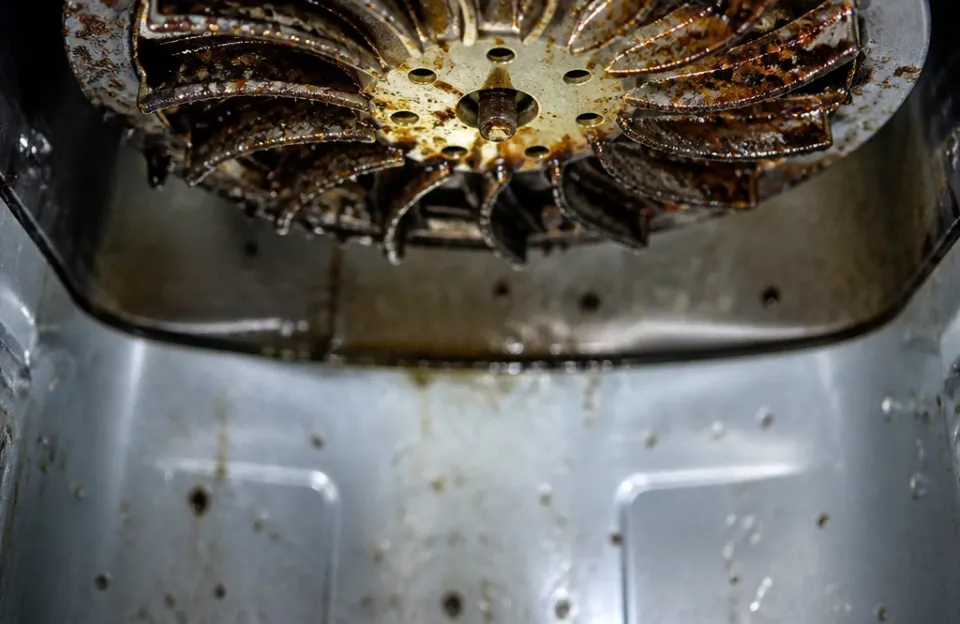
The heating element sits directly above the food. It absorbs grease splatter and moisture during every single cook. Even with careful cleaning, carbon buildup forms on the coil over time.
This buildup acts as insulation, forcing the element to work harder to push heat through the grime.
A struggling element draws more electricity and runs hotter internally. This accelerates the breakdown of the metal alloy inside the coil. You will notice this failure when the air fryer no longer reaches its maximum temperature, or when it shuts off randomly mid-cycle because the internal thermal fuse trips to prevent a fire.
Fan Motor Wear and Uneven Cooking
The fan is what separates an air fryer from a small convection oven. When the motor wears down, the fan spins slower. Slower air circulation creates hot spots inside the basket.
One side of your food burns while the other stays raw.
You can usually hear a failing fan before you see the cooking results. A healthy motor produces a steady, low hum. Worn bearings introduce a grinding noise, a high-pitched whine, or a rhythmic clicking.
Once the fan slows down significantly, the appliance can no longer perform its primary job.
Physical Warning Signs Your Air Fryer Is Done
Some problems are invisible until your food tastes wrong. Others are obvious the moment you pull the basket out. Knowing when should you replace an air fryer requires checking the physical condition of the machine regularly.
Flaking Nonstick Coating
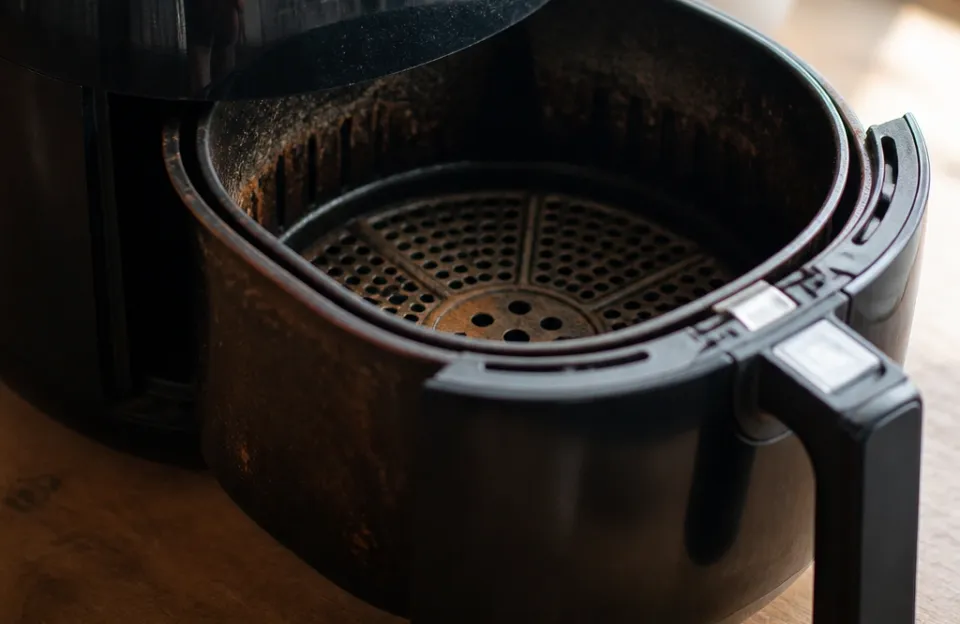
This is the most common reason people throw away an otherwise working air fryer. The nonstick coating on the basket and crisper plate degrades under high heat and mechanical friction. Using metal tongs or abrasive sponges speeds up this damage.
Once the coating begins to chip, those flakes mix directly into your food. While many modern coatings are PFOA-free, eating pieces of degraded chemical coating is something everyone wants to avoid. More importantly, once the bare metal underneath is exposed, food sticks aggressively.
You end up scrubbing harder, which removes more coating, creating a cycle that ruins the basket completely. Replacement baskets are available for some popular models, but they often cost nearly as much as a new entry-level unit.
Cracks in the Plastic Housing
The outer shell of most air fryers is made from heat-resistant plastic. Over years of heating and cooling cycles, this plastic becomes brittle. You might notice hairline cracks forming near the vents or around the handle mechanism.
Cracks compromise the structural integrity of the appliance. They also allow heat to escape from places it shouldn't, potentially melting nearby countertop items or burning your hand when you move the unit. If the housing is cracked, the appliance is no longer safe to operate.
Frayed Power Cords and Loose Plugs
Check where the power cord enters the base of the machine. Constant pulling and shifting on the counter can fray the internal wires or loosen the connection port. A loose plug causes arcing, which generates extreme localized heat and is a serious fire hazard.
If the cord feels unusually warm during operation, or if you see any exposed wire casing, unplug the machine immediately. Do not attempt to tape or wrap a damaged power cord on a high-wattage kitchen appliance.
| Warning Sign | Safety Risk Level | Repairable? |
|---|---|---|
| Flaking nonstick coating | Moderate (ingestion risk) | Replace basket only |
| Cracked outer housing | High (burn/fire risk) | No |
| Frayed power cord | Severe (fire/shock risk) | Professional repair needed |
| Smoke from base | Severe (electrical fault) | No |
| Grinding fan noise | Low to Moderate | Rarely worth cost |
Electrical and Performance Red Flags
Physical damage is easy to spot. Electrical failures happen inside the machine and reveal themselves through strange behavior during cooking. These issues are the main reason you need to know when should you replace an air fryer rather than trying to fix it yourself.
Tripping Circuit Breakers
Air fryers typically draw between 1,400 and 1,800 watts. They require a dedicated circuit or at least a circuit without other heavy loads running simultaneously. However, if your air fryer suddenly starts tripping the breaker when it never did before, the internal wiring may be shorting out.
A short circuit happens when damaged insulation allows electrical current to flow along the wrong path. This draws excessive amperage, triggering your home's safety breakers. Repeatedly resetting the breaker to force the appliance to run is dangerous and can cause an electrical fire inside your walls.
Smoke and Burning Smells
A little steam is normal, especially when cooking fatty foods. Getting the right level of crispness on bacon naturally produces some smoke from rendering fat hitting the hot base. But thick, acrid smoke smelling like burning plastic or ozone means an electrical component is melting.
Unplug the machine immediately and leave it unplugged. Do not open the base to look for the source unless you are a qualified technician. Capacitors inside the appliance can hold a dangerous charge even after being unplugged.
Inaccurate Temperature Control
If you set the dial or digital display to 375°F, the internal thermostat should maintain that heat. Aging thermostats lose their calibration. Your food might burn at 350°F or stay pale and soggy at 400°F.
This inconsistency makes following recipes impossible. If you find yourself constantly guessing how long things take, or if reheating leftover slices yields wildly different results each time, the control board or thermostat has failed. Digital control boards are proprietary parts that manufacturers rarely sell to consumers, making replacement impractical.
Repair vs. Buying a New Unit
When something goes wrong, the first instinct is often to fix it. With small kitchen appliances, the math rarely works out in favor of a repair.
Most standard air fryers cost between $60 and $150. A diagnostic fee at a small appliance repair shop often starts around $40 to $50, before any parts or labor are added. If the heating element or the main control board needs replacing, the total repair bill easily exceeds the price of buying a brand-new machine.
There are exceptions. If you own a premium combination oven or a high-end model that originally cost over $250, replacing a specific part like a fan motor or a door hinge might make financial sense. For basic basket-style units, replacement is almost always the cheaper and safer route.
Before throwing it away, check your warranty. Many manufacturers offer one-year limited warranties, and some extend coverage for the heating element specifically. Contacting the manufacturer's support line is worth the five-minute phone call, even if you suspect the warranty has expired.
Sometimes they offer pro-rated discounts on replacements.
Reasons to Upgrade Before Your Machine Breaks
Sometimes the answer to when should you replace an air fryer has nothing to do with broken parts. Technology moves fast in this category, and older machines lack conveniences that change how you cook daily.
Better Capacity and Dual Zones
Early air fryers had small, round baskets that barely fit two chicken breasts. Trying to prep wings for the whole week in a 3-quart model means cooking in endless batches. Modern dual-zone models let you cook two different foods at two different temperatures simultaneously.
If you are spending 45 minutes standing over a tiny basket to feed your family, upgrading saves you hours every week.
Improved Safety Standards
Older models lacked automatic shut-off timers or cool-touch exteriors. Organizations like UL (Underwriters Laboratories) continually update safety standards for countertop cooking appliances. Newer certified models include better thermal fuses, insulated housings that stay cool to the touch, and auto-shutoff functions that activate if the fan fails.
If your current machine gets dangerously hot on the outside during use, it predates these stricter safety designs.
Easier Cleaning Designs
First-generation air fryers had deep crevices where grease collected permanently. Newer designs use removable drip trays, dishwasher-safe ceramic-coated baskets, and smooth interior cavities that wipe clean in seconds. Spending ten minutes scrubbing baked-on grease after every meal is a strong signal that your current design is outdated.
If you want to see how far the technology has come, looking at modern multi-function builds shows just how much capacity and convenience you gain compared to older single-basket units.
Extending the Lifespan of Your Current Appliance
If your air fryer is still working well and you want to delay replacement, proper maintenance adds years to its life. Neglect is what kills them early.
Always let the machine cool completely before washing the basket. Plunging a hot nonstick pan into cold water causes thermal shock, which warps the metal and cracks the coating instantly. Wash the basket by hand with warm soapy water and a soft sponge.
Avoid the dishwasher unless the manual explicitly states the basket is dishwasher safe, as harsh detergents strip nonstick surfaces quickly.
Wipe down the interior heating element area regularly. Use a damp cloth or soft brush to remove grease splatter from the coil once the unit is cool and unplugged. Baked-on grease forces the element to overwork.
Keeping it clean maintains efficient heat transfer.
Never overcrowd the basket. Blocking the airflow forces the fan motor to strain against resistance, wearing out the bearings faster. Cook in smaller batches to keep the air circulating freely.
Also, avoid spraying aerosol nonstick cooking sprays directly onto the basket. These sprays contain propellants that build up a sticky residue on the coating, eventually causing it to peel. Use a pump oil mister or brush oil on lightly instead.
Even with perfect care, components age. Knowing which dipping sauces pair best with your freshly cooked food is great, but it won't save a dying heating element. Recognize when maintenance stops being enough.
Disposing of an Old Air Fryer Safely
Once you decide to replace the unit, don't toss it in the regular household trash. Air fryers contain electronic circuit boards, copper wiring, and sometimes capacitors that classify them as e-waste.
Check with your local municipal waste authority for e-waste drop-off locations or scheduled collection days. Many electronics retailers also run free recycling programs for small appliances. Dropping it off properly prevents heavy metals from leaching into landfills.
If the machine still turns on but has cosmetic damage or a slightly loud fan, consider donating it to a local thrift store or listing it for free online. Be transparent about the flaw so the next user knows exactly what they are getting. Never donate a machine with electrical shorts, frayed cords, or exposed heating elements.
Frequently asked questions
How many years does an average air fryer last?
With daily use, a typical air fryer lasts between two and three years. If you only use it a few times a week and clean it carefully after every session, it can easily last five years or more. Heavy commercial use or constant maximum-temperature cooking shortens that lifespan significantly.
Can I replace the nonstick basket instead of the whole machine?
Yes, if the manufacturer sells replacement parts for your specific model. Check the brand's official website or contact their customer service. For many budget models under $80, a replacement basket costs almost as much as buying a completely new unit, making a full replacement the more practical choice.
Is a loud air fryer a sign it is breaking?
A sudden increase in noise usually points to worn fan bearings or debris caught in the fan blades. If the sound is a light rattle, check for loose crumbs. If it is a grinding or screeching noise, the motor is failing.
Continued use with a failing motor can lead to overheating.
Are old air fryers a fire hazard?
They can be if the wiring degrades, the thermal fuse fails, or heavy grease buildup ignites near the heating element. Always inspect the power cord for fraying and ensure the exterior vents are not blocked. If the machine smells like burning plastic or trips your circuit breaker, unplug it permanently.
Does leaving it plugged in shorten its life?
Leaving an air fryer plugged in when not in use does not actively wear out the heating element or fan. However, it leaves the internal circuitry energized, which makes the appliance vulnerable to power surges. Unplugging it or using a switched outlet protects the control board from voltage spikes.
Should I repair a broken heating element?
In almost all cases, no. Replacing a heating element requires disassembling the entire base, dealing with high-voltage connections, and sourcing a specific OEM part. The cost of professional labor plus the part routinely exceeds the price of a brand-new machine with a fresh warranty.
Deciding When to Let Go
Knowing when should you replace an air fryer comes down to paying attention to how it behaves day to day. Peeling coatings, strange noises, and inconsistent cooking temperatures are the machine telling you it is finished. Don't ignore electrical warnings or try to patch a cracked housing to squeeze out a few more weeks of use.
Small kitchen appliances operate at high wattages in close proximity to your hands and countertops. When the physical or electrical integrity fails, the safest and most economical choice is replacing it entirely. Keep the basket clean, avoid metal utensils, and your next unit will easily outlast the last one.