Air fryer basket peeling happens when the nonstick coating breaks down from heat stress, harsh scrubbing, or chemical damage. You can prevent it by washing the basket by hand with a soft sponge, avoiding aerosol cooking sprays, and keeping the temperature within the manufacturer's limits. Most baskets use a PTFE-based coating that degrades quickly under abuse.
Learning how to prevent air fryer basket peeling takes about five minutes of reading. The habits you build during cleanup and prep determine whether your basket lasts six months or three years. This guide covers why the coating fails, the daily routines that protect it, what to do when flakes appear, and how different materials hold up over time.
Why the Nonstick Coating Flakes Off in the First Place
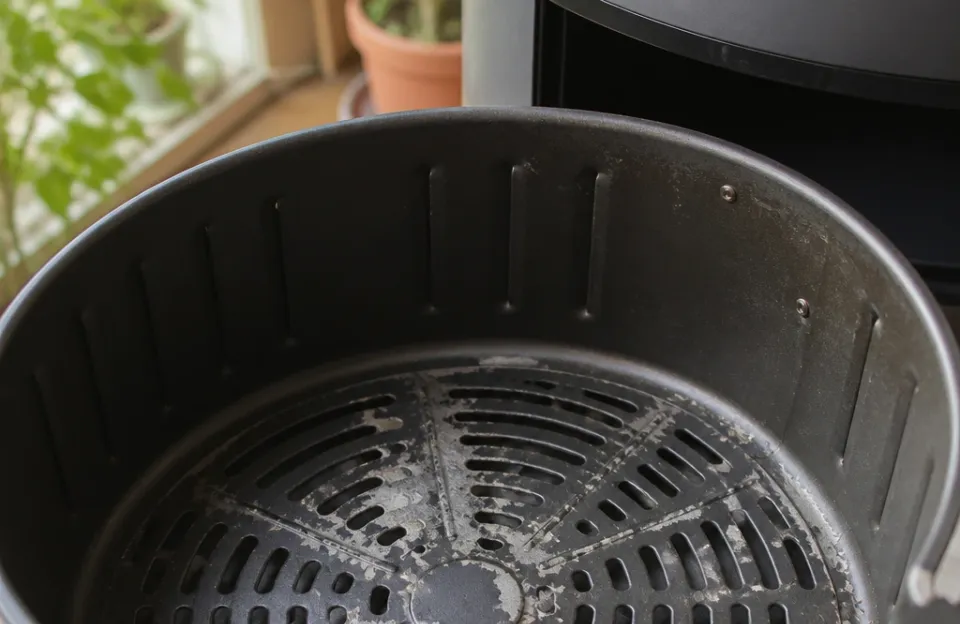
The dark surface inside your air fryer basket is usually polytetrafluoroethylene, commonly known as PTFE. Manufacturers apply this coating in thin layers over stamped steel or aluminum. That layer is often less than 30 microns thick.
It bonds to the metal through a primer coat baked on at the factory.
PTFE handles friction well, which is why food slides off easily. It struggles with rapid temperature changes and physical impact. When you drag a metal fork across the bottom to flip chicken legs, you score the surface.
Those tiny scratches expand every time the basket heats up and cools down. Eventually, the coating lifts away from the primer.
Aerosol cooking sprays cause a different type of failure. Commercial sprays contain propellants like butane or propane, plus emulsifiers such as soy lecithin. These additives bake onto the PTFE at high temperatures.
They form a sticky residue that bonds tighter than the coating itself. When you try to scrub that residue off later, you pull the nonstick layer up with it. If you routinely cook items like crispy wings for meal prep, that sticky buildup accumulates fast unless you change your oil application method.
Thermal shock is the third major culprit. Dropping a 400-degree basket into cold tap water causes the underlying metal to contract faster than the PTFE layer. This mismatched shrinking creates shear stress at the bond line.
Do this enough times, and the coating blisters and chips.
Daily Cleaning Habits That Stop Air Fryer Basket Peeling
Washing the basket correctly after every single use prevents most peeling issues. Let the appliance cool down completely before you touch the basket. Wait until the metal is safe to handle bare-handed.
Then remove the basket and place it on a towel.
Fill your sink with warm water and a few drops of standard dish soap. Submerge the basket and let it soak for ten to fifteen minutes. Soaking loosens baked-on grease without requiring any scraping.
After soaking, wipe the interior with a soft microfiber cloth or a non-abrasive cellulose sponge. Use gentle circular motions. Avoid pressing hard on stuck spots.
Rinse the basket thoroughly with warm water. Soap residue left behind can carbonize during the next cooking cycle, creating hard deposits that tempt you to scrub aggressively later. Dry the basket completely with a clean towel before sliding it back into the machine.
Leaving moisture on the surface promotes rust around the edges where the coating is naturally thinnest.
Never put an air fryer basket in the dishwasher. Dishwasher detergent contains alkaline salts and enzymes designed to strip baked-on proteins. These chemicals attack PTFE coatings.
The high-pressure spray arms also blast water against the surface at angles that force moisture beneath microscopic edge gaps. Hand washing takes two extra minutes and keeps the finish intact.
If you frequently reheat leftovers, say figuring out the right timing for warming pizza, the basket goes through repeated heating cycles. Each cycle stresses the coating slightly. Consistent, gentle cleaning between those cycles is what stops small stress marks from turning into large flakes.
Choosing the Right Oils and Utensils for Your Basket
The tools and fats you introduce to the basket matter just as much as how you wash it. Standard pump-style oil sprayers filled with pure olive oil, avocado oil, or canola oil are safe. These contain no propellants or lecithin.
A light mist coats the food evenly without leaving a polymerized film on the PTFE.
Brushing oil directly onto the food rather than spraying the basket provides another layer of protection. When you brush oil onto potato wedges before cooking, the fat stays on the food instead of pooling in the basket's corners. This reduces the amount of carbon buildup you need to clean later.
Getting potatoes perfectly cooked relies on proper oil distribution anyway, so brushing hits two goals at once.
Utensil choice dictates the physical wear on the surface. Silicone-tipped tongs, wooden spatulas, and nylon turners will not scratch PTFE. Metal forks, knives, and stainless steel tongs gouge the coating instantly.
Even dragging a metal spoon across the bottom to scoop out sauce leaves permanent marks. Keep a dedicated set of silicone or wooden tools near the appliance so you never reach for metal out of habit.
When tossing food halfway through a cook, lift and shake the basket using its handle. Don't stir the contents with a utensil. Shaking redistributes the food evenly without any tool touching the nonstick surface.
| Tool or Oil Type | Effect on PTFE Coating | Recommended Alternative |
|---|---|---|
| Aerosol cooking spray | Leaves polymerized residue; pulls coating off during cleaning | Pump sprayer with pure oil |
| Metal tongs or forks | Gouges and scratches the surface immediately | Silicone-tipped tongs or wood |
| Abrasive scouring pads | Sands away the top layer of the nonstick finish | Microfiber cloth or soft sponge |
| Dishwasher detergent | Alkaline salts degrade the chemical bond | Mild liquid dish soap |
| Cold water on hot metal | Thermal shock causes blistering and delamination | Warm water after full cooling |
Managing Temperatures to Protect the Nonstick Finish
Every PTFE coating has a maximum continuous use temperature. For most consumer air fryers, that limit sits between 400°F and 450°F. Running the machine at its absolute maximum setting for extended periods accelerates the breakdown of the polymer chains in the coating.
Preheating is common practice, especially if you want salmon to cook evenly or achieve a good sear on meat. However, running an empty preheat cycle at 450°F for ten minutes exposes the bare coating to intense radiant heat from the element above. Without food absorbing that thermal energy, the basket surface gets significantly hotter than the air temperature displayed on the screen.
Keep preheat times short, around three to five minutes, and avoid using the highest temperature setting when the basket is empty.
Cooking fatty foods like bacon or heavily marinated meats introduces another variable. Rendered fat drips through the basket holes and hits the solid drip pan below. If that fat reaches its smoke point, it generates acrid smoke and deposits carbon directly onto the underside of the basket.
Over time, these carbon deposits fuse to the metal. Trying to chip them off damages the surrounding coating. Wipe the drip pan between batches when cooking high-fat items.
If your recipe calls for extreme heat, consider lowering the temperature by 25 degrees and adding a minute or two to the cook time. The food still browns through the Maillard reaction, and the coating experiences less thermal fatigue. Understanding how long specific appliances have been around helps contextualize this.
Older models often lacked precise thermostats, making overheating a frequent cause of early coating failure. Modern units regulate better, but user settings still dictate the final stress on the basket.
What to Do When You Notice the First Flakes
Spotting a tiny chip in the corner of your basket doesn't mean you have to throw the whole appliance away immediately. Small imperfections near the rim or the handle attachment points happen through normal wear. The first step is assessing the size and location of the damage.
If the flake is smaller than a grain of rice and located where food doesn't rest, you can continue using the basket. Wash it gently to remove any loose particles around the edges of the chip. Inspect it before every subsequent use to confirm the area isn't spreading.
If the peeling is larger than a dime, or if it's happening in the center where food sits directly on the surface, stop using that basket for cooking. Ingesting small amounts of PTFE passes through the digestive system without harm, according to general toxicological data. The concern is the exposed bare metal underneath.
Once the primer and base metal are exposed to moisture and acidic foods like tomato sauce or lemon juice, they oxidize rapidly. Rust forms, and rust particles mix into your meals.
You can buy replacement baskets directly from manufacturers for many popular models. Check the model number on the back or bottom of your unit and order the specific part. Using a generic basket that doesn't fit perfectly disrupts airflow and creates uneven cooking.
Some people attempt to patch small chips with high-heat epoxy or food-safe sealants. This rarely works long-term. The patch material expands and contracts at a different rate than the surrounding PTFE and metal.
It usually pops off within a few heating cycles, potentially ending up in the food. Replacement is the only reliable fix for significant peeling.
If you own a model with a glass cooking chamber, like this specific four-in-one design, peeling isn't an issue because there is no coated metal basket to degrade. Glass surfaces require different care, primarily avoiding heavy impacts, but they eliminate the PTFE problem entirely.
Liners, Parchment, and Other Protective Layers
Adding a barrier between the food and the basket coating reduces direct wear. Perforated parchment paper liners designed specifically for air fryers are the safest option. The perforations allow the high-speed fan to push hot air through the food, maintaining the crisping effect while catching grease and preventing direct contact with the PTFE.
Cut parchment paper to fit the flat bottom of the basket. Never leave excess paper hanging up the sides where the heating element can reach it. Loose parchment can blow upward into the element during the fan cycle and ignite.
Always weigh the paper down with food before turning the machine on.
Silicone basket liners are reusable and withstand high heat. They fit snugly into the basket and provide a completely non-stick surface that you can wash separately. The tradeoff is airflow.
Solid silicone bottoms block the downward circulation that makes air frying work. Look for silicone liners with raised ridges or large holes to maintain proper convection. If you notice your food steaming instead of crisping when using a silicone liner, switch back to perforated parchment.
Aluminum foil is sometimes used as a liner, though it requires caution. Foil reflects heat differently than the dark basket coating, which can alter cooking times. It can also react with highly acidic foods.
If you use foil, poke several holes in it manually to preserve airflow, and keep it strictly on the bottom of the basket, away from the heating element.
Using liners does reduce the mechanical friction caused by tongs and food shifting during cooking. For users who cook daily, rotating between bare-basket cooking and lined cooking extends the overall lifespan of the original coating.
How Different Basket Materials Hold Up Over Time
Not all air fryer baskets use the same base metal or coating thickness, and these manufacturing choices dictate longevity. Stamped steel baskets are common in budget-friendly models. Steel is rigid, but it transfers heat unevenly compared to aluminum.
To compensate, manufacturers apply a standard PTFE layer. Because steel expands and contracts differently than the coating during heating cycles, stamped steel baskets tend to show edge peeling sooner than other types.
Cast aluminum baskets conduct heat rapidly and evenly. The porous nature of cast aluminum allows the PTFE primer to anchor more deeply into the metal surface. Baskets made from cast aluminum generally resist thermal shock better than stamped steel.
You'll find these in mid-range to premium countertop models.
Ceramic nonstick coatings represent a different approach. Instead of PTFE, these use a sol-gel derived silicon dioxide layer. Ceramic coatings don't release toxic fumes if accidentally overheated past 500°F, which addresses a common safety concern.
However, ceramic loses its nonstick properties faster than PTFE. Food begins sticking to ceramic baskets after roughly six to twelve months of regular use, even if the coating hasn't visibly peeled. Once food sticks, users tend to scrub harder, accelerating the physical degradation.
Stainless steel baskets without any nonstick coating exist in some commercial or specialty home units. They will never peel because there is nothing applied to the surface. The tradeoff is that food sticks aggressively unless you use ample oil and manage the heat precisely.
Cleaning uncoated stainless steel requires soaking and scrubbing, which some users prefer to avoid.
Understanding these material differences helps set expectations. If you bought a budget model with a thin stamped steel basket, strict adherence to gentle cleaning and low-heat practices is mandatory to get more than a year out of it. Premium cast aluminum or high-end units, such as certain well-built countertop models, forgive minor mistakes better due to thicker base metals and stronger primer bonds.
Frequently asked questions
Is it dangerous to eat food cooked in a peeling air fryer basket?
Ingesting a small flake of PTFE coating is generally considered harmless because the material is chemically inert and passes through the digestive tract without breaking down. The real risk comes from the exposed metal underneath the chip. Bare steel or aluminum can rust or leach into food, especially when cooking acidic ingredients.
If the peeling is extensive or located directly under where food rests, replace the basket.
Can I recoat my air fryer basket myself with nonstick spray?
Consumer-grade nonstick sprays meant for baking pans cannot replicate the factory-applied PTFE or ceramic bonding process. Factory coatings are baked onto primed metal at extremely high industrial temperatures. Spraying a DIY product onto a damaged basket results in a temporary layer that burns off quickly, smokes heavily, and leaves a worse mess than the original peeling.
Buy a manufacturer-approved replacement basket.
Does cooking at lower temperatures completely stop the coating from degrading?
Lower temperatures slow down the thermal degradation of the PTFE polymer chains, extending the life of the coating. Heat is only one factor, though. Mechanical abrasion from utensils, chemical damage from aerosol sprays, and thermal shock from improper washing still cause peeling regardless of the cooking temperature.
You must combine moderate heat with gentle cleaning and safe tools to protect the finish.
Why does my new air fryer basket smell like burning plastic during the first use?
Manufacturers apply protective oils and curing agents during production. The initial heating cycle burns off these residual factory compounds, producing a chemical odor. Run the empty air fryer at 400°F for 15 to 20 minutes in a well-ventilated room before cooking food in it for the first time.
This burn-off period is normal and prevents those residues from interacting with the fresh PTFE coating during actual meals.
Are silicone mats better than parchment paper for protecting the basket?
Silicone mats offer reusability and save money over time, but they block more airflow than perforated parchment paper. Restricted airflow leads to soggy food because the convection current cannot circulate properly beneath the ingredients. Parchment paper designed with pre-cut holes maintains the crisping action while shielding the coating from direct contact.
Choose parchment for crispy results and silicone only for moist dishes where browning isn't the goal.
Keeping Your Basket Intact Long Term
Preventing air fryer basket peeling comes down to treating the nonstick surface as a fragile layer rather than a tough shield. Hand wash with soft sponges, skip the aerosol sprays, use silicone tools, and let the metal cool before introducing water. These small adjustments add years to the basket's lifespan.
If your current basket is already shedding large flakes into your meals, stop using it and source a direct replacement from the manufacturer. No amount of careful cooking fixes a compromised bond. Maintaining a healthy basket means your food cooks evenly, cleans up fast, and stays free of unwanted metal exposure.