An inline water filter is a compact filter installed directly in a water line. Water passes through it on the way to a faucet, refrigerator, ice maker, coffee maker, or other appliance. What it removes depends on the specific cartridge and its certification, not on the fact that it is inline.
Unlike a pitcher filter, it doesn’t need a separate container. Unlike a whole-house system, it usually treats water at one outlet or appliance. That small size makes it useful in kitchens where counter space is limited, but it also means the filter has a limited flow rate and cartridge life.
What Is an Inline Water Filter Used For?
An inline water filter treats water as it travels through a connected supply tube. The housing stays in place, while the internal cartridge catches or reduces certain substances.
Common uses include:
- Supplying filtered water to a refrigerator dispenser
- Reducing chlorine taste in an ice maker line
- Filtering water for a coffee maker or espresso machine
- Improving the taste of water from a dedicated drinking faucet
- Reducing sediment before water reaches a small appliance
- Replacing a built-in filter that is expensive or hard to find
Many inline filters use activated carbon. Carbon can reduce chlorine, odors, and some organic compounds. Other cartridges use sediment media, ion exchange material, or a combination of filter types.
The exact result depends on the cartridge. An inline filter that improves taste may not reduce lead, fluoride, hardness minerals, bacteria, or other contaminants. Read the performance claims for the specific model instead of treating every inline water filter as a complete water treatment system.
This matters with coffee equipment. Filtered water can reduce unpleasant taste and visible sediment, but the wrong filter may leave hard water minerals behind. Those minerals can collect inside heating paths and boilers.
If you use an espresso machine, the water supply is only one part of routine care. You can also review coffee machine cleaning intervals to keep residue from building up.
How Does an Inline Water Filter Work?
An inline filter connects between a water source and the appliance or faucet. Most have an inlet, an outlet, and a sealed cartridge inside a plastic housing.
As water flows through the cartridge, the media holds back or absorbs substances according to its design. A sediment filter may catch particles such as sand or rust. Activated carbon can trap some compounds and reduce chlorine taste. A cartridge with ion exchange resin may reduce certain dissolved minerals, depending on its formula and capacity.
The filter does not clean every contaminant from every water supply. Its performance depends on the filter media, water pressure, flow rate, water temperature, the starting quality of the water, how often the cartridge is replaced, and whether the cartridge has been independently certified for the claim.
A filter rated for a slow drinking faucet may not work well on a high-flow refrigerator dispenser. If water moves too quickly, it may not spend enough time in the media for the cartridge to work as intended.
Some inline filters are disposable. Others have replaceable cartridges inside a reusable housing, although disposable models are more common for refrigerator and appliance connections. A disposable cartridge is simpler to change, while a reusable housing may create less waste over time but requires more hands-on maintenance.
What Can an Inline Filter Remove?
An inline filter can reduce some substances, but the answer always depends on the model and its certification. The two standards most often used to compare household filter claims are NSF/ANSI 42, which covers aesthetic effects such as chlorine taste, odor, and particulates, and NSF/ANSI 53, which covers health-related reduction claims such as lead, volatile organic compounds, microbial cysts, chromium-6, and asbestos. A certification logo on a filter box refers to a specific, limited set of tested claims rather than blanket water safety.
Chlorine, Taste, and Odor
Activated carbon filters commonly target chlorine taste and odor. This is the most typical reason people install an inline filter on a drinking water or coffee line.
The water may taste cleaner, especially if the supply has a noticeable pool-like smell. But taste improvement does not prove that the filter removes a specific health-related contaminant.
Sediment and Visible Particles
Sediment filters can catch larger particles, including rust flakes and grit from plumbing, and improve clarity, but they do not disinfect water. They are useful when water arrives cloudy after plumbing work or when small particles keep appearing in an appliance line.
A sediment filter can clog faster in a home with older pipes or disturbed plumbing. Reduced flow is often the first sign that the cartridge is loaded with particles.
Lead and Other Regulated Contaminants
Some filters are designed and certified to reduce lead or other regulated contaminants. Those claims must appear on the product documentation. Look for a specific contaminant reduction claim and an applicable NSF or ANSI certification.
Public water systems must provide customers with an annual water quality report, called a Consumer Confidence Report, and the EPA requires utilities to send it each year by July 1. The report shows whether contaminants were within safe ranges and whether the utility had violations. Households on private wells do not receive a Consumer Confidence Report. Under the Safe Drinking Water Act, a drinking water supplier must send customers information about water quality every year, and the EPA maintains a drinking water hotline to answer questions. If you do not receive a report, you can contact your water utility, health department, or the EPA Drinking Water Hotline.
A basic carbon inline filter should not be assumed to remove lead just because it improves taste. If lead is a concern, choose a filter tested for lead reduction and follow the replacement schedule closely.
Hardness Minerals
Most ordinary carbon inline filters do not soften water. They may reduce taste and odor while leaving calcium and magnesium in place.
Some cartridges include ion exchange material and can reduce certain hardness minerals for a limited time. That does not make every inline filter a water softener. If scale is your main problem, check whether the cartridge specifically lists hardness reduction, and look at its rated capacity.
Hard water can leave white deposits in kettles, coffee makers, and espresso equipment. A filter may slow that buildup, but it won’t remove scale that is already inside the machine. Descaling remains a separate task.
Inline Water Filter Types Compared
| Filter type | Main purpose | Common kitchen use | Main limitation |
|---|---|---|---|
| Activated carbon | Reduces chlorine, taste, and odor | Drinking faucet, coffee maker, refrigerator | Does not remove every contaminant |
| Sediment filter | Catches particles | Appliance line, older plumbing | Can clog when water contains heavy sediment; does not disinfect water |
| Carbon and sediment combination | Handles taste plus particles | Refrigerator or dedicated faucet | May have a lower flow rate |
| Ion exchange cartridge | Reduces selected dissolved minerals | Coffee or espresso water line | Capacity varies and it is not a complete softener |
| Specialty contaminant filter | Targets named contaminants | Drinking water connection | Must match the exact contaminant and certification |
Reverse osmosis systems are a different category. They use several stages and a membrane, usually with a storage tank and a drain connection. They reduce many dissolved substances and fine particles depending on membrane condition, but they should not automatically replace boiling during a public notice. An inline filter may be part of an RO system, but a single inline cartridge is not the same as a complete reverse osmosis setup.
Where Does an Inline Water Filter Connect?
The connection point depends on what you want to filter.
For a refrigerator, the filter usually sits in the small water tube leading to the refrigerator. It treats water used by the dispenser and ice maker. It does not filter water from the rest of the kitchen.
For a coffee maker, the filter can connect between the water supply and the machine if the coffee maker is plumbed in. A countertop coffee maker with a removable tank usually needs a tank filter, pitcher filter, or filtered water added by hand instead.
Espresso machines differ by design. Some use a tank, while others connect directly to a water line. Espresso machines with built-in tanks usually need a compatible tank filter rather than an inline plumbing filter.
A dedicated drinking faucet may use an inline cartridge under the sink. The cartridge can sit in the cold-water line that feeds that faucet. It won’t filter hot water unless the product specifically allows hot-water use, which is uncommon for small carbon cartridges.
Never connect a filter to a hot-water line unless the manufacturer lists a safe operating temperature. Heat can damage the housing, reduce performance, or create a leak.
What Do You Need to Check Before Buying One?
The biggest mistake is buying by the words “universal inline filter.” The filter still needs the right connection, flow rating, pressure range, and cartridge capacity.
1. Connection Size and Tubing
Check the tubing diameter and fitting style before ordering. Kitchen appliance lines often use small plastic tubing, but fittings are not automatically interchangeable.
Push-to-connect fittings are quick to install, while threaded fittings may need an adapter. A filter can have the correct cartridge but still fail to connect to your existing line.
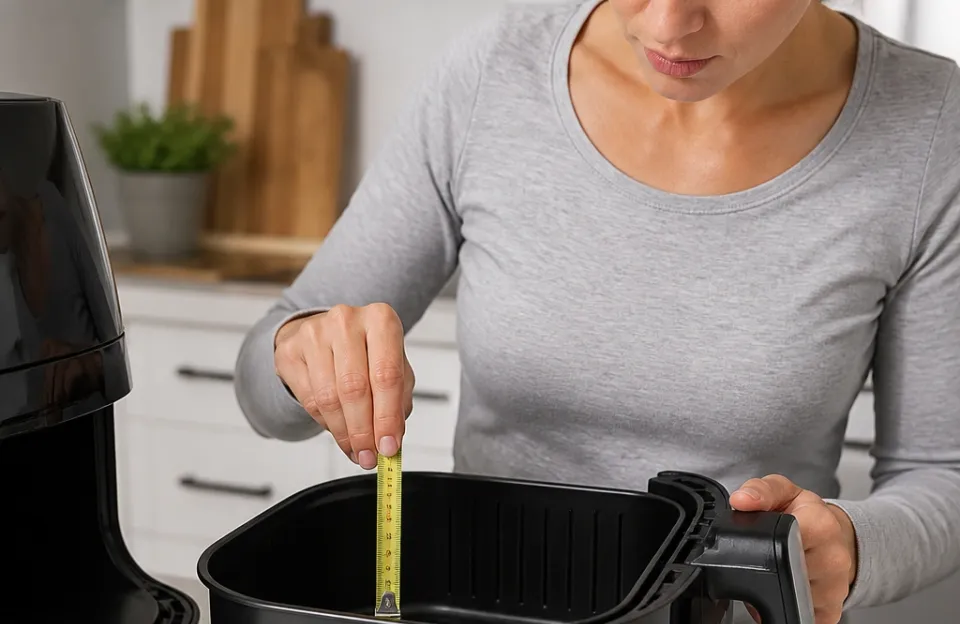
Measure the outside diameter of the tube, identify the fitting on the appliance, and check whether adapters are included. Don’t force a fitting into place. A loose connection can drip slowly behind a refrigerator or cabinet for weeks.
2. Flow Rate
A low-flow filter may work well for a drinking faucet but make a refrigerator dispenser frustratingly slow. The rating should match the appliance’s normal demand.
For a coffee machine, flow rate is often less of a problem because the machine draws water gradually. For an ice maker, the filter must allow enough water to enter during the fill cycle. A filter that is too restrictive can cause weak dispensing, slow ice production, or error messages on some appliances.
3. Filter Life
Filter life is usually listed by gallons, months, or both. Use whichever limit comes first.
A household with heavy water use may reach the gallon limit early. A lightly used filter can still need replacement after the stated number of months because the media can lose performance over time.
Do not wait for bad taste alone. Some contaminants have no noticeable taste or smell. Write the installation date on the cartridge or set a calendar reminder.
4. Specific Reduction Claims
Look for the substances the cartridge is tested to reduce. A broad phrase such as “purifies water” tells you very little.
For a taste problem, chlorine and odor reduction may be enough. For lead, cysts, or another specific concern, choose a cartridge with a matching claim and recognized certification.
A product can meet NSF/ANSI 42 without addressing every substance covered by NSF/ANSI 53. Check the certification listing for the exact model and the exact contaminant rather than assuming that any logo covers your concern.
5. Space and Replacement Access
Measure the cabinet or appliance area before buying. The cartridge needs enough room for the tubing to bend without kinking.
Leave space to remove the filter later. A cartridge wedged behind a refrigerator may be difficult to turn or pull out. Under-sink models also need room for a shutoff valve and a small service loop in the tubing.
How Do You Install an Inline Water Filter?
Many small inline filters use push-to-connect fittings, so installation can be straightforward. The exact steps vary by product, but the basic process is similar.
- Shut off the water supply feeding the appliance or faucet.
- Open the faucet or dispenser briefly to release pressure.
- Cut the tubing cleanly if the instructions require a new connection.
- Connect the water line to the filter inlet.
- Connect the filter outlet to the appliance or faucet.
- Turn the water back on slowly.
- Check every connection for leaks.
- Flush the cartridge for the amount of time listed by the manufacturer.
The inlet and outlet matter. Installing the cartridge backward may reduce performance or cause poor flow.
Flushing is a normal break-in step, not a sign of a faulty filter. During the flush, dispense water and ice until it runs clear and tastes clean, and discard the first batch of ice. If the water remains cloudy, tastes strongly of carbon, or leaks at the fitting after flushing, shut off the supply and inspect the installation. A persistent leak or cloudy water is a stop condition, not something to ignore.
Cut tubing squarely. An angled cut may not seal properly inside a push-to-connect fitting. If the line is brittle, cracked, or too short to reconnect without tension, replace the affected section rather than stretching it into place.
Inline Filters and Coffee Makers
Water quality affects both flavor and maintenance, but a stronger filter is not always better for coffee.
Coffee makers need water with enough mineral content to extract flavor. Extremely low-mineral water can produce flat-tasting coffee in some machines, while hard water can leave scale. The best choice depends on your local water and the coffee maker’s instructions.
A plumbed-in coffee maker can use an inline filter installed on its cold-water supply. A countertop model with a removable tank usually cannot. For that setup, use the type of filtration the manufacturer allows.
Different espresso designs also change the answer. Espresso machine types use different water paths, heating systems, and maintenance routines. A filter that works for a direct-connect machine may not fit a tank-fed model.
Don’t use an inline filter as a reason to skip cleaning or descaling. It can reduce what enters the machine, but it does not remove coffee oils, old water, or mineral deposits that are already present.
Inline Filters and Boil Water Notices
An inline filter is not an emergency disinfection device. Most common home water filters are designed for taste, certain chemicals, sediment, or dissolved solids rather than emergency microbial treatment. A carbon filter that improves chlorine taste should not be assumed to make microbiologically unsafe water safe to drink.
During a boil water notice, authorities may direct residents to use only bottled, boiled, or disinfected water until regular water service is restored. Boiling water for at least one minute at a rolling boil kills most disease-causing microorganisms, and three minutes is advised above 5,000 feet (1,000 meters). Boiling or disinfection does not destroy other contaminants such as heavy metals, salts, and most other chemicals, so boiling and filtering address different problems.
Most household filters do not remove bacteria or viruses, so filtered water should still be boiled during a boil water advisory. During an active notice, follow the issuing authority’s instructions rather than relying on filter marketing or a low TDS reading. Some specialized devices are tested for reduction of bacteria, viruses, or cysts under defined standards, but those claims are not interchangeable with aesthetic claims. Filters can also become contamination points if potentially contaminated water passes through cartridges, reservoirs, or lines, so those surfaces may need attention after the notice ends.
Signs an Inline Filter Needs Attention
A sudden change in water flow is the clearest warning sign. Other signs include:
- A return of chlorine taste or odor
- Dark particles after the normal initial flush
- Leaking around a fitting
- Slower refrigerator dispensing
- Reduced ice production
- A cartridge that has passed its time or gallon limit
- Cloudy water that does not clear after flushing
A leak needs attention right away, especially under a sink or behind an appliance. Turn off the supply, dry the area, and inspect the tube and fittings. If you need help tracing the source, see these tips on what to do when an inline water filter is leaking.
If the filter clogs repeatedly soon after installation, the water may contain more sediment than the cartridge can handle. A separate sediment prefilter or a plumbing inspection may be a better fix than replacing the same small cartridge over and over.
Common Questions About Inline Water Filters
Does an Inline Water Filter Make Tap Water Safe to Drink?
An inline water filter can reduce specific contaminants, but it does not automatically make unsafe water safe. Use a cartridge tested for the contaminant you are concerned about, and follow local boil water or water safety notices.
Does an Inline Filter Remove Bacteria?
Most basic carbon inline filters are not designed to disinfect water or remove all bacteria. Check the product’s exact microbiological claims, and don’t use an ordinary appliance filter as a substitute for approved treatment during a water emergency.
Is an Inline Water Filter Better Than a Pitcher Filter?
Neither is always better. An inline filter saves counter space and treats water as it reaches one appliance or faucet, while a pitcher filter is easier to move and can supply several uses. The better choice depends on the connection, flow needs, and filter claims.
Can an Inline Water Filter Reduce Limescale?
Some cartridges reduce selected hardness minerals, but ordinary carbon filters usually do not soften water. Check the rated hardness reduction and capacity if scale is your main concern.
How Often Should an Inline Water Filter Be Replaced?
Replace it by the manufacturer’s gallon or time limit, whichever comes first. Change it sooner if flow drops, taste returns, or the filter has been exposed to unusual sediment.
Is an Inline Water Filter Right for Your Kitchen?
An inline water filter makes sense when you want filtered water at one appliance or faucet without keeping a pitcher on the counter. Match the cartridge’s certified claims to your specific water concern, and confirm the fittings and operating limits with the manufacturer’s datasheet. If your water report shows violations, consider testing or additional treatment and ask your health department for advice.
Skip a basic inline cartridge if you need whole-house treatment, serious hardness control, or a solution for a known contaminant that the cartridge does not list. For those needs, a larger certified system may be more suitable.