Buying pre-ground coffee often leaves you with a flat, stale cup that tastes nothing like your favorite cafe. A coffee grinder is a kitchen tool that breaks whole beans into smaller pieces right before you brew them. It works by using sharp blades or heavy burrs to crush the beans so hot water can pull out their full flavor.
The Core Job of a Coffee Grinder
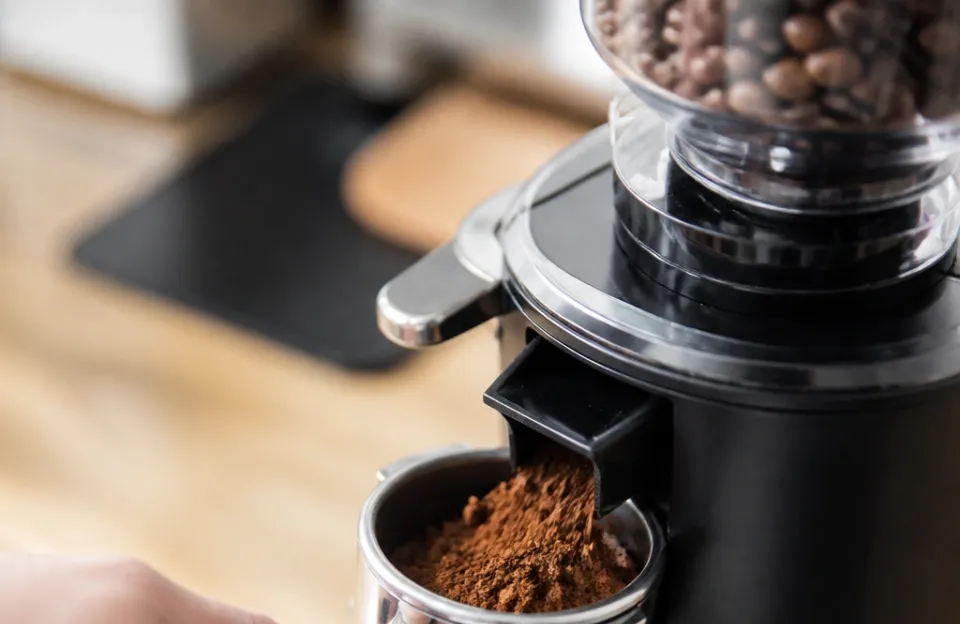
Whole coffee beans hold onto their oils and smells. Once you break them open, those good flavors start to fade fast. Grinding your beans just before brewing keeps the taste fresh.
A coffee grinder does this one job. You put dry roasted beans in the top. You turn it on.
Out come small bits of coffee ready for your filter or pot.
The size of those bits matters a lot. Big chunks work well for a French press. Fine dust is what you need for espresso.
The grinder gives you control over that size. That control changes how your morning cup tastes.
If you want to know more about pulling shots at home, read up on different espresso setups to see why grind size matters so much.
Blade Grinders and How They Chop
A blade grinder looks a bit like a small blender. It has a metal cup with a lid. At the bottom, a small propeller-shaped blade spins very fast.
When you push the button, an electric motor spins that blade. The blade hits the coffee beans and chops them. The longer you hold the button, the smaller the pieces get.
These grinders are cheap and easy to find. They take up very little space on your counter. For someone who just wants basic drip coffee, they do the job.
But they have a real flaw. The blade chops randomly. You end up with big chunks mixed with fine powder in the same batch.
This mix makes your coffee taste uneven. Some parts will be too weak, and some will taste bitter.
The fast-spinning blade also creates heat. According to the National Coffee Association, excess heat during grinding can damage the delicate oils in roasted beans. That heat can cook the edges of the coffee dust, giving your drink a burnt taste.
Burr Grinders and How They Crush
Burr grinders take a different approach. Instead of chopping, they crush the beans between two rough surfaces. These surfaces are called burrs.
One burr stays still. The other one spins. You pour beans into the top hopper.
Gravity pulls them down into the gap between the burrs. The spinning action cracks and crushes the beans until they fall through the bottom.
The magic here is the gap. You can change the distance between the two burrs. Move them closer together, and you get fine grounds.
Move them apart, and you get coarse grounds.
This setup gives you a very even grind. Every piece of coffee comes out roughly the same size. Even grounds mean water flows through them at the same rate.
Your coffee ends up tasting balanced and smooth.
Burr grinders cost more money than blade models. They are also heavier. A typical home burr grinder weighs between 5 and 10 pounds.
It will sit firmly on your counter, but moving it to clean underneath takes some effort.
Flat Burrs Versus Conical Burrs
Burr grinders come in two main shapes. Both work well, but they feel a bit different in use.
Flat burrs look like two matching rings with sharp teeth. They sit flat against each other. Beans get pulled to the center and pushed outward as they are crushed.
Flat burrs give a very exact, uniform grind. Many high-end home models use them. They do run a bit louder, and they can build up more heat if you grind a lot at once.
Conical burrs look like a cone sitting inside a ring. The inner cone spins while the outer ring stays still. Gravity helps pull the beans down through the teeth.
Conical burrs spin slower than flat ones. Because they spin slower, they make less noise and less heat. They are very common in home kitchens.
Neither shape is wrong. Flat burrs offer slight precision gains. Conical burrs offer a quieter, cooler experience.
Both beat a blade grinder by a wide margin.
Manual Grinders and Hand Power
Not every grinder needs a wall outlet. Manual grinders use your arm strength to do the work.
A manual grinder usually has conical burrs inside a small metal or wood body. You pour beans in the top. You attach a handle.
Then you twist the handle round and round until all the beans fall through.
These are great for travel or camping. They weigh under two pounds and fit in a bag. They are also very quiet.
You won't wake up the whole house when you make your morning cup.
The downside is the effort. Grinding enough beans for a large pot takes a few minutes of steady twisting. If you have sore hands or arthritis, turning the crank can hurt.
They are best suited for people who only brew one or two cups at a time.
Electric Motors and Speed Control
Electric grinders plug into your kitchen wall. An internal motor turns the blade or the burrs for you. You just push a button or flip a switch.
Motor power matters. A weak motor might stall if you try to grind very dense, light-roast beans. Look for a motor rated around 150 to 300 watts for normal home use.
That provides enough torque to crush beans without slowing down.
Speed is another factor. Fast motors spin at high RPMs. High speeds create friction, and friction creates heat.
As mentioned earlier, heat hurts coffee flavor. Better electric burr grinders use gear reduction to spin the burrs slowly, even if the motor itself runs fast. This keeps the beans cool while they break apart.
Noise is the trade-off for speed and ease. Electric grinders are loud. A cheap blade model sounds like a small vacuum cleaner.
A good burr model is quieter, but it still makes a distinct grinding hum. Keep this in mind if your kitchen is close to a bedroom.
Matching Grind Size to Brew Method
How a coffee grinder works ties directly to how you brew. Water needs a certain amount of surface area to pull flavor from the bean. Different brew methods need different surface areas.
Extra coarse grounds look like chunky sea salt. You use these for cold brew. Cold water sits on the coffee for 12 to 24 hours.
Big chunks stop the drink from getting bitter over that long time.
Coarse grounds look like rough sand. French presses need this size. The metal mesh filter in a French press has large holes.
Fine dust would slip right through and make your cup muddy.
Medium grounds look like regular beach sand. Standard drip coffee makers use this size. The water drips through the filter in about five minutes.
Medium grounds let the water flow at the right pace.
Fine grounds feel like table salt. Espresso machines force hot water through a tight puck of coffee in 25 to 30 seconds. You need fine grounds to slow the water down enough to extract the flavor.
Extra fine grounds feel like powdered sugar. Turkish coffee requires this dust-like texture. The coffee boils directly in the water, so it must dissolve almost completely.
A good grinder lets you dial in these sizes. Blade grinders struggle here because you just guess how long to hold the button. Burr grinders have numbered settings to match these exact needs.
Hopper Capacity and Bean Storage
The hopper is the clear plastic container on top of the grinder. You pour your roasted beans in there. Its size tells you how much coffee you can load at once.
Small home grinders hold about 8 ounces of beans. That is enough for a few days of normal drinking. Large models might hold 16 ounces or more.
Leaving beans in the hopper exposes them to air and light. Both things make coffee go stale faster. If you don't drink coffee every single day, only put what you need into the hopper.
Keep the rest in an airtight bag in a dark cabinet.
Some hoppers lock and remove easily. This lets you swap between two types of beans without mixing them. If you drink dark roast in the morning and light roast at night, a removable hopper saves time.
Catch Cups and Static Cling
Ground coffee falls out of the bottom into a catch cup or bin. On blade grinders, you often grind directly into the main cup. On burr grinders, a separate bin catches the grounds.
Static electricity is a real annoyance here. Dry coffee grounds stick to plastic bins. When you pull the bin out, grounds spill onto your counter.
This happens more in dry winter months.
Metal catch cups cause less static than plastic ones. Tapping the side of the grinder gently before removing the bin also helps drop the stuck grounds. Some users lightly mist the whole beans with a single drop of water before grinding.
This trick cuts down static, but adding too much water will clog your burrs.
Cleaning Burrs and Blades Safely
Coffee beans contain natural oils. Over weeks of use, those oils coat the blades or burrs. Old oil goes rancid.
Rancid oil makes fresh coffee taste sour or dirty. You have to clean your grinder regularly.
Unplug the machine first. Never put your fingers near sharp blades or heavy burrs while the unit has power.
For blade grinders, wipe the inside cup with a dry paper towel. You can grind a handful of plain white rice to absorb leftover oils. Dump the rice powder and wipe again.
Do not wash the base in water, as the motor sits right below the cup.
Burr grinders need more care. Take out the top burr according to the manual. Use a stiff, dry brush to sweep away old grounds from the teeth.
Wipe the chute where the coffee falls.
Never use water to wash steel burrs unless the maker says it is safe. Water causes bare steel to rust quickly. Rust ruins the sharp edges and flakes into your coffee.
Ceramic burrs can handle a quick rinse, but they must dry fully before you put them back.
There are special cleaning tablets made for grinders. You run them through just like coffee beans. They soak up oils and push out stuck grounds.
Based on customer feedback, running these tablets once a month keeps the taste clean.
Noise Levels in a Home Kitchen
Grinding coffee is a loud task. Knowing how a grinder works means accepting the noise it makes.
Blade grinders scream. The high-speed motor and bouncing beans create a harsh, high-pitched sound. If you share walls with others, early morning use might cause complaints.
Burr grinders are lower in pitch. They produce a deep rumble or crunching noise. Slow-speed conical burr grinders are the quietest electric option.
They still make noise, but it is much easier to tolerate.
Manual grinders are nearly silent. You only hear the soft crunch of beans breaking. If noise is your biggest worry, a hand grinder solves the problem completely.
Just be ready for the physical work.
Heat Buildup During Long Grinds
Friction creates heat. When hard steel rubs against hard coffee beans, temperatures rise.
A short grind for one cup rarely causes problems. But grinding a huge batch for a party takes longer. The motor runs more, and the burrs spin continuously.
High heat bakes the coffee grounds slightly. It burns off the bright, fruity notes first. What remains tastes flat, woody, or ashy.
This is why commercial shops use massive grinders with large burrs. Big burrs spread the work out over more surface area. They finish faster and stay cooler.
At home, sticking to small batches keeps the temperature down. Let the machine rest for a minute if you need to grind multiple loads back-to-back.
Dosing Methods and Consistency
Dosing means measuring how much coffee you grind. Getting this right changes your brew.
Some people fill the hopper and press a timed button. The grinder runs for ten seconds and stops. This method is fast but not very exact.
Beans pack differently each time, so ten seconds might give you 14 grams today and 16 grams tomorrow.
Weighing your beans before grinding is much better. You put a scale on the counter. You measure exactly 18 grams of whole beans.
You pour them into the grinder. You grind until it is empty. This way, you always use the exact same amount of coffee.
Single-dose grinders are built for this. They have small hoppers meant for one serving at a time. No beans are left behind to go stale.
This method takes a few extra seconds but gives you total control over your recipe.
Common Mistakes That Ruin Grounds
People often treat grinders poorly without knowing it. Bad habits ruin the coffee before water ever touches it.
Grinding too far ahead of time is the biggest mistake. Ground coffee loses its best smells within 30 minutes. Only grind what you plan to brew right now.
Using flavored beans clogs everything up. Flavored beans are coated in sticky syrups. Those syrups melt into the burrs and glue old grounds to the metal.
Cleaning flavored syrup out of a burr set is a tedious chore. Stick to plain roasted beans in your grinder.
Ignoring dull burrs is another issue. Steel burrs wear down after grinding hundreds of pounds of beans. Dull burrs smash the beans instead of cutting them.
Smashed beans create too much dust. If your coffee suddenly tastes worse and your grind looks uneven, the burrs might need replacing. Check the manufacturer's guide for expected lifespans.
Picking the Right Grinder for Your Counter
Your daily habit decides which grinder you need. Think about how you drink coffee before you buy one.
If you use a standard drip pot and want to save money, a basic blade grinder works. It beats buying pre-ground bags. Just pulse it in short bursts to avoid heating the beans.
If you use a French press or pour-over, step up to an entry-level burr grinder. You need the even chunks to stop sludge from forming in your mug.
If you drink espresso, you must buy a grinder made for espresso. Standard burr grinders often cannot grind fine enough. Espresso grinders have tiny adjustment steps to dial in the perfect shot.
Pairing the right grinder with your setup is just as important as picking a reliable brewer for your kitchen.
Think about counter space too. Measure the height under your cabinets. Some tall burr grinders will not fit beneath standard 18-inch upper cabinets.
Check the spec sheet for the exact height before ordering.
Frequently Asked Questions
Can I grind spices in my coffee grinder?
You can, but you shouldn't use the same one for both. Spices leave strong oils behind. If you grind cinnamon today, your coffee will taste like cinnamon tomorrow.
Buy a cheap, separate blade grinder just for spices.
How long do steel burrs last?
According to most manufacturers, steel burrs last for about 500 to 1000 pounds of coffee. For a home user making two cups a day, that equals several years of daily use. Ceramic burrs last even longer but chip easier if dropped.
Why does my coffee taste bitter after grinding?
Bitterness usually means your grounds are too fine for your brew method. Fine dust over-extracts in hot water. Adjust your grinder to a coarser setting and try again.
Is a manual grinder worth the effort?
Yes, if you only brew one cup at a time or travel often. High-quality manual burr grinders produce excellent, even grounds. The trade-off is the time and arm strength required to turn the crank.
Do I need to unplug the grinder to clean it?
Always unplug any electric grinder before taking it apart. The switches can bump accidentally. Touching spinning burrs or blades causes serious cuts.
Safety comes first.