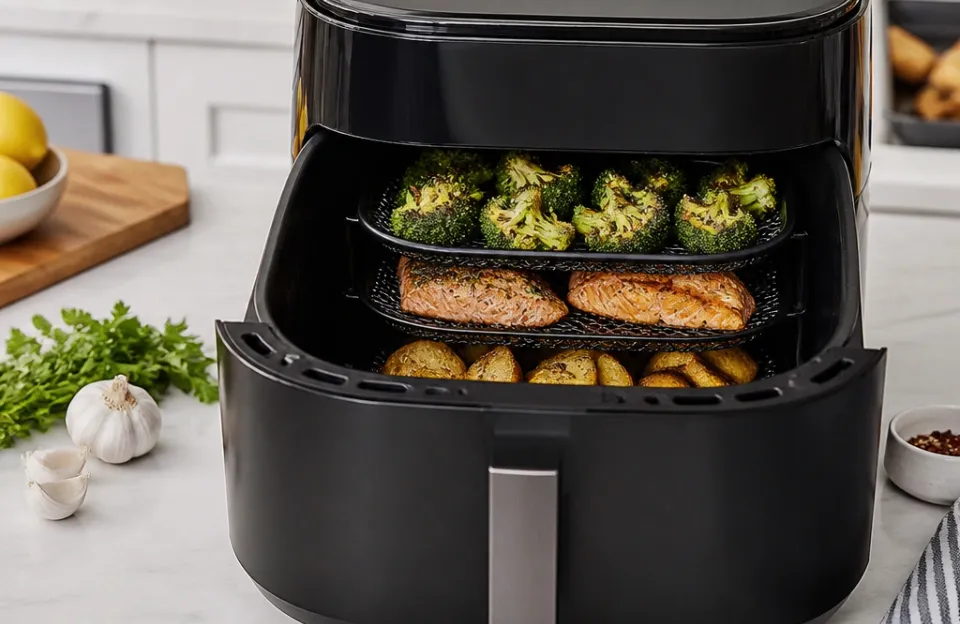
Reheating food in an air fryer takes between 3 and 8 minutes at 350°F for most leftovers. The circulating hot air warms the food evenly while bringing back the crisp texture that microwaves destroy. You need your leftover food, a machine preheated to the right temperature, and occasionally a light spray of oil or a splash of water depending on what you are warming up.
Knowing how to reheat food in an air fryer changes the way you handle meal prep. Pizza gets its crunch back. Fried chicken tastes fresh again.
Even roasted vegetables lose that sad, soggy fridge texture. The process is fast, and it avoids the rubbery results you get from a microwave. This guide walks through the exact temperatures, timing, and techniques for every common leftover, plus the few foods you should leave out of the basket entirely.
Setting the Right Temperature for Leftovers
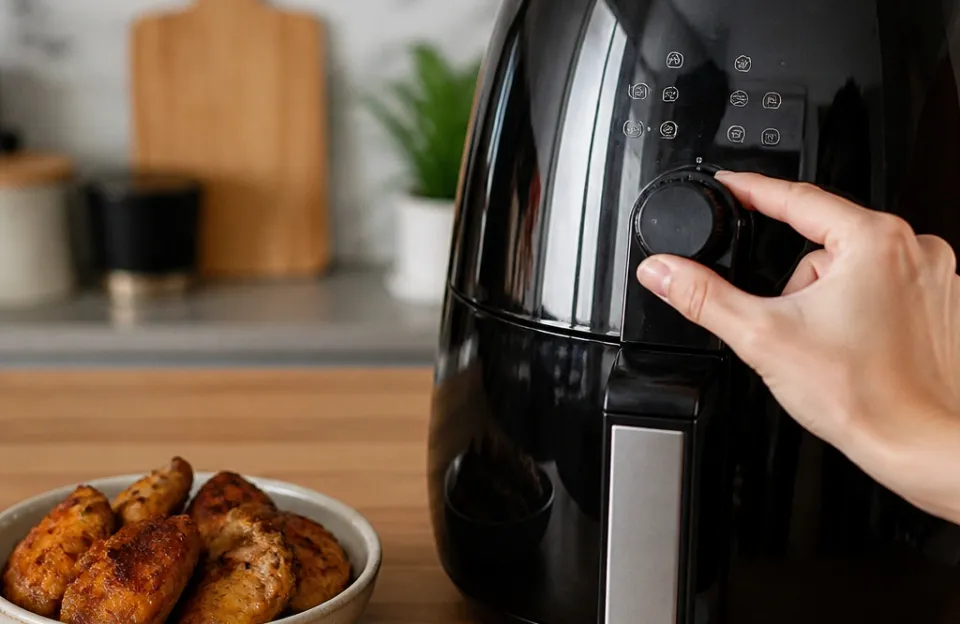
The standard temperature to reheat food in an air fryer is 350°F. This heat level warms the center of the food without scorching the outside. Microwaves use radiation to excite water molecules, which turns bread gummy and makes fried coatings limp.
An air fryer uses convection. A heating element warms the air, and a fan pushes it rapidly around the food. That moving air evaporates surface moisture, which restores crispness.
Setting the dial too high causes problems. If you push the heat to 400°F, the outside burns before the inside thaws. Dropping it to 300°F works for delicate items, but thick cuts of meat will sit lukewarm in the middle.
Stick to 350°F as your baseline. Adjust down by 25 degrees only when dealing with thin baked goods or items heavily coated in sugar, since sugar scorches quickly under intense convection heat.
Preheating matters here. Many people skip this step when cooking raw ingredients, but warming leftovers requires immediate heat. A cold basket drops the temperature of the food on contact.
Let the empty unit run for two or three minutes before sliding the tray in.
| Food Category | Target Temperature | Typical Time Range |
|---|---|---|
| Pizza slices | 350°F | 3 to 4 minutes |
| Fried chicken | 375°F | 4 to 6 minutes |
| French fries | 375°F | 3 to 5 minutes |
| Roasted vegetables | 350°F | 3 to 4 minutes |
| Baked pasta dishes | 325°F | 5 to 8 minutes |
| Bread rolls | 300°F | 2 to 3 minutes |
Arranging the Basket for Even Heat
Spacing is the biggest factor in getting good results. Air needs to flow over every surface. When you pile leftovers on top of each other, the touching sides stay wet and cold.
Lay everything out in a single layer. Leave a small gap between pieces. If you have a lot of food, warm it in batches.
Two quick batches yield better texture than one crowded basket.
For items like french fries or tater tots, shaking the basket halfway through breaks up any clumps. You can find the right timing for freshly cooked potatoes easily enough, but reheated ones dry out faster, so keep the total time shorter. Grab the handle and give it a firm shake at the two-minute mark.
Thicker items like stuffed peppers or dense casseroles benefit from being flipped once. Use tongs to turn them over gently so the filling doesn't spill into the bottom of the drawer. If you're warming up something that originally required precise timing, like a thick salmon fillet, lower the heat slightly and check it early to prevent the edges from turning to jerky.
Reheating Specific Foods
Different leftovers react differently to rapid convection heat. Meat dries out. Cheese melts fast.
Bread hardens. Knowing how to reheat food in an air fryer means adjusting your approach based on what is sitting in front of you.
Pizza Slices
Pizza is the best candidate for this method. Place the slices directly on the rack or in the basket. Set the heat to 350°F.
Check them after three minutes. The cheese will bubble, and the crust will snap when you bend it. Do not stack pizza slices.
The cheese from the top slice will glue itself to the bottom of the one above it. If the crust is very thick, like a deep dish, drop the temperature to 325°F and add two extra minutes so the center warms without blackening the edges.
Fried Chicken and Wings
Fried poultry loses its crunch in the fridge as the breading absorbs ambient moisture. To fix this, set the machine to 375°F. Arrange the pieces with space between them.
Bone-in pieces take about five to six minutes. Tenders or nuggets take three to four.
If you previously made crispy wings using baking soda to draw out moisture, they will reheat exceptionally well because the skin structure is already altered to resist sogginess. For larger bone-in pieces, think about the original cook times used when preparing whole chicken legs. Reheating always takes less time than the initial cook, but thicker bones hold cold longer, so position those pieces near the center of the basket where the airflow concentrates.
A light mist of cooking spray helps if the breading looks dull or powdery after sitting in the fridge. Just a quick spritz. Too much oil makes the coating greasy rather than crisp.
French Fries and Tater Tots
Starchy sides go stale fast. Spread them in a single layer. Set the dial to 375°F.
Three minutes is usually plenty. Shake the basket once. If you originally timed your golden french fries perfectly during the first cook, the reheated version will finish even faster.
Watch them closely past the two-minute mark. Overcooked fries turn into hard sticks that can chip a tooth.
Roasted Vegetables
Vegetables release water as they sit. Zucchini, bell peppers, and broccoli all get soft in the fridge. Spread them out and heat at 350°F for three to four minutes.
The moving air drives off the condensed water and caramelizes the edges again. Keep in mind that delicate veggies cook fast initially; if you recall how quickly fresh zucchini softens, you know reheated zucchini needs constant watching to avoid turning to mush.
Pasta Bakes and Casseroles
Baked ziti, lasagna, and macaroni and cheese present a challenge. The top layer dries out while the dense center stays frozen. Lower the temperature to 325°F.
Cover the dish loosely with aluminum foil for the first four minutes to trap steam and warm the middle. Remove the foil for the last two minutes to brown the cheese on top. Only do this if your specific model allows foil.
Check the manual. Loose foil can fly up into the heating element and cause a fire. Weigh it down or crimp it tightly around the edges of an oven-safe dish.
Bread and Pastries
Dinner rolls, croissants, and bagels dry out instantly under high heat. Drop the temperature to 300°F. One to two minutes is all you need.
Any longer, and the moisture evaporates completely, leaving you with a crouton. Wrapping a roll in foil before warming it keeps the interior soft while taking the chill off.
Managing Moisture During the Process
Convection heat strips moisture away. That is great for pizza crust and terrible for lean meat. You have to manage the water content manually when you reheat food in an air fryer.
For dry items like fries or breaded cutlets, you want maximum evaporation. Leave them uncovered. Let the fan do its job.
For moist items like grilled chicken breasts, pork chops, or rice, you need to add a barrier. Sprinkle a few drops of water or broth over the meat before closing the drawer. The water turns to steam immediately, creating a humid microclimate that prevents the protein fibers from tightening and squeezing out their juices.
Alternatively, wrap the meat loosely in foil.
According to FDA food safety guidelines, all reheated leftovers must reach an internal temperature of 165°F to kill potential bacteria. A digital meat thermometer is the only reliable way to verify this. Slide the probe into the thickest part of the meat after the timer goes off.
If it reads below 165°F, put the food back in for another minute or two. Relying on touch or visual cues leaves room for error, especially with dense items like meatloaf or stuffed peppers.
Foods That Should Stay Out of the Basket
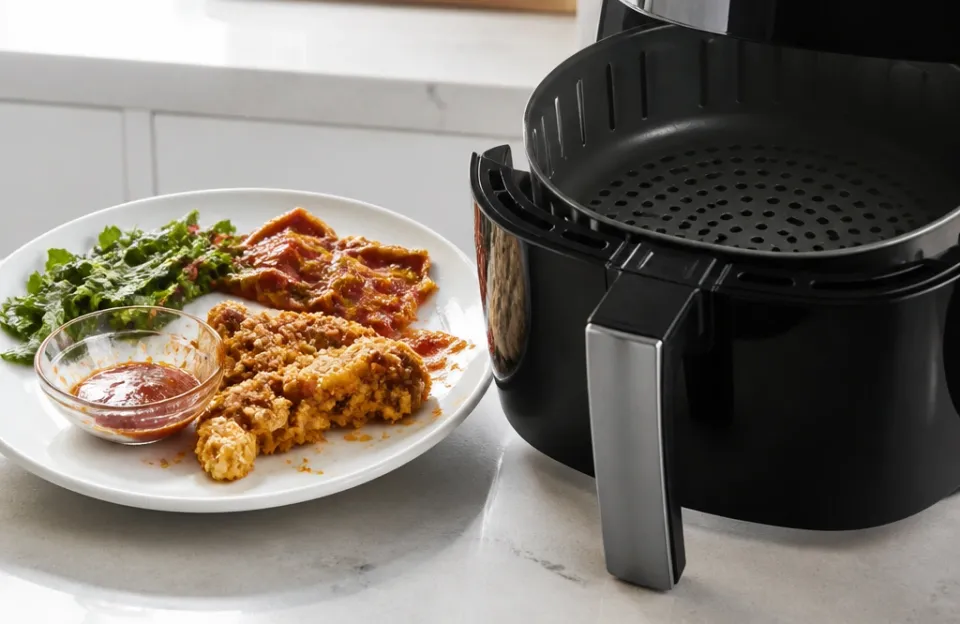
Air fryers excel at restoring texture, but they ruin certain foods. Knowing what to avoid saves you from scraping melted disasters off the nonstick coating.
Soups, stews, and anything liquid. The fan blows liquids around. Broth will splatter across the heating element, smoke, and create a mess you cannot easily clean. Use the stove or microwave for liquids.
Battered fish or onion rings. Wet batter drips through the basket holes before it sets. Since the food is already cooked, the batter won't firm up again. It just smears.
Only breaded items with a solid crust work well.
Leafy greens. Spinach and kale are too light. The fan will blow them directly into the heating coil, where they will burn instantly.
Large roasts or whole chickens. The outside will char long before the center hits 165°F. Convection ovens handle large volumes better due to their size and slower air circulation.
Cheese-heavy items without a base. A slice of plain cheese or an open-faced sandwich with loose shredded mozzarella will melt and drip straight through the perforations. Always place cheese-heavy foods inside an oven-safe ramekin or on a piece of parchment paper rated for high heat.
Cleaning Up After Warming Meals
Grease splatters happen. Every time you warm up a slice of pepperoni pizza or a leftover sausage link, fat renders out and coats the inside of the drawer. Leaving that grease to bake onto the walls during your next session creates smoke and bad odors.
Let the unit cool completely. Pull the basket out and wash it with warm water and dish soap. Avoid abrasive scrubbers.
Most baskets rely on a nonstick coating that scratches easily. A soft sponge handles the grease fine. Wipe down the interior cavity with a damp cloth.
Pay attention to the heating element at the top. If grease has spattered onto it, wipe it gently once the machine is unplugged and cold.
If you frequently reheat messy items, consider placing a perforated parchment liner in the bottom of the basket. It catches drips while still allowing air to circulate. Solid liners block the airflow and defeat the purpose of the appliance.
Troubleshooting Texture Issues
Sometimes the food comes out wrong. Identifying the cause fixes the problem for the next batch.
Burnt edges, cold center. The temperature was too high, or the item was too thick. Lower the heat by 25 degrees and extend the time. Cut thick items in half before warming them so the heat penetrates faster.
Soggy bottoms. The food sat in its own condensation. Elevate it on a wire rack insert if your model came with one. Shaking the basket also exposes the wet underside to the moving air.
Tough, chewy meat. Lean proteins like chicken breast or pork loin dried out. Next time, add a teaspoon of broth to the basket before starting, or wrap the meat tightly in foil to trap the existing moisture.
Uneven warming. The basket was overcrowded. Items touching each other insulate one another from the hot air. Spread them out.
Run two cycles if necessary. The second cycle goes faster since the machine is already hot.
Frequently asked questions
Can I put aluminum foil inside the machine when warming up dinner?
Yes, you can use small pieces of foil to cover delicate items or catch drips. Keep the foil weighed down by the food so the fan does not blow it into the heating element. Never line the entire bottom of the basket, as blocking the airflow prevents the food from heating properly and can damage the appliance.
Does reheating food in an air fryer take longer than a microwave?
It takes slightly longer than a microwave, usually by two to four minutes. A microwave might warm a plate of food in 90 seconds, while the air fryer needs four minutes. The tradeoff is texture.
The microwave leaves everything soft and wet, while the air fryer restores the original crispness and browning.
Is it safe to warm up food that has been in the fridge for several days?
The USDA recommends eating refrigerated leftovers within three to four days. As long as the food was stored promptly after the initial meal and kept below 40°F, it is safe to warm up. You must heat it until the internal temperature reaches 165°F throughout to eliminate bacterial growth that occurs during storage.
Why does my leftover chicken taste dry after going back in?
Lean meats lose moisture rapidly under convection heat. The moving air pulls water out of the protein fibers. To prevent this, sprinkle a few drops of water or broth over the chicken before heating, or wrap it loosely in foil.
Keeping the temperature at 325°F instead of 375°F also slows down the moisture loss.
Do I really need to preheat the unit for leftovers?
Preheating gives much better results for previously cooked food. Raw food gradually comes up to temperature as the machine heats, but leftovers need an immediate blast of hot air to crisp the exterior before the interior dries out. Running the empty unit for three minutes at your target temperature guarantees the air is fully heated when the food goes in.
Getting the Most From Your Leftovers
Mastering how to reheat food in an air fryer stops you from settling for soggy microwave meals. The key details are simple: stick to 350°F as your baseline, arrange food in a single layer with breathing room, and adjust the moisture based on what you are warming up. Add water for lean meats, leave it off for fried foods.
Keep a thermometer handy to verify the center hits 165°F. Once you build the habit, you will stop throwing away day-old fries and cold pizza, because they genuinely taste as good as the first time around.