You pull your meatloaf out of the oven, and it looks perfect on the outside. The glaze is bubbly, the edges are charred just right, and it smells like a Sunday dinner success. But as you grab the knife to slice it, a doubt creeps in.
Is it actually done in the middle? Nobody wants to serve a center that’s still pink and cold, but overcooking it turns a juicy comfort meal into a dry, crumbly brick.
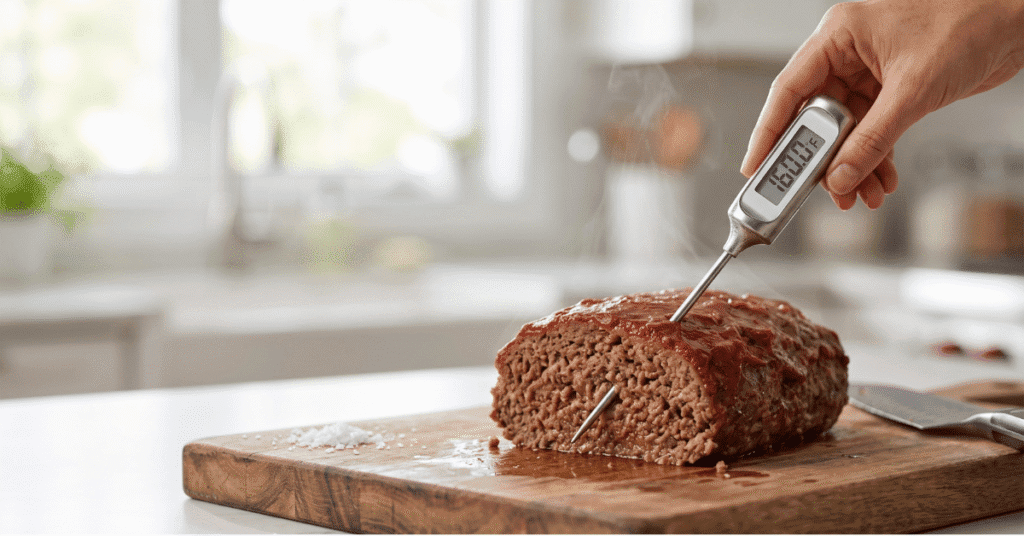
Quick Answer: For safety and the best texture, meatloaf should reach an internal temperature of 160°F (71°C) . This is the USDA-recommended threshold for ground meat mixtures to kill harmful bacteria like Salmonella and E. coli. If you use ground poultry, such as turkey or chicken, the target temperature increases to 165°F (74°C) .
Why the 160°F mark is the gold standard
Hitting 160°F isn’t just a random suggestion from a cookbook; it’s a specific safety benchmark. When meat is ground, any bacteria on the surface gets mixed throughout the entire batch. Unlike a steak, where the heat hits the outside and kills germs instantly, meatloaf needs the core to get hot enough to sanitize the whole loaf.
According to USDA food safety guidelines, ground beef, pork, and veal are only safe once they hit this 160-degree mark.
Aside from safety, this temperature is where the physical structure of the meatloaf stabilizes. At 160°F, the proteins have bonded enough to hold the loaf together, but the fats haven’t all rendered out. This balance gives you a slice that stays intact on the plate while remaining moist.
If you pull it too early, the loaf might fall apart because the eggs and binders haven’t fully set.
There is also the factor of carryover cooking. Once you take the pan out of the oven, the residual heat continues to cook the center for a few minutes. Because of this, many cooks pull their meatloaf at 155°F, knowing it will climb those last five degrees while resting on the counter.
The difference for turkey and chicken loaf
If you swap out beef for ground poultry, the rules change slightly. Turkey and chicken carry a higher risk of certain pathogens that require more heat to neutralize. You must hit 165°F for a poultry-based meatloaf.
While beef can occasionally be slightly pink and still be safe if it hit the temperature goal, poultry should never look underdone. However, turkey is much leaner than beef. To avoid a dry result at 165°F, you often need to add extra moisture-heavy ingredients like grated zucchini, sautéed mushrooms, or extra Worcestershire sauce.
Why 160°F feels different than 160°F for steak
People often wonder why they can eat a medium-rare steak at 135°F but need 160°F for meatloaf. It comes down to the grinding process. A solid muscle (like a roast or steak) is sterile on the inside.
Ground meat is handled and processed in a way that exposes every tiny piece to the air and equipment. This makes the “target temp” a non-negotiable part of the process.
How to measure meatloaf temperature correctly
You can’t judge doneness by looking at the color of the meat or the timing of the oven. Variations in oven calibration, the shape of your loaf pan, and the fat content of the meat all change how fast it cooks. Using a digital meat thermometer is the only way to be certain.
To get an accurately reading, insert the probe into the thickest part of the loaf. Aim for the very center. If you hit the bottom of the metal pan, the reading will be too high because the pan is hotter than the food.
If your meatloaf is stuffed with cheese or vegetables, try to angle the probe so it hits the meat section, as fillings can heat up at different rates than the protein.
Instant-read thermometers vs. leave-in probes
An instant-read thermometer is great for a quick check toward the end of the cooking time. However, a leave-in probe thermometer is even better for meatloaf. You can set an alarm for 155°F or 160°F, and the device will beep the second it’s ready.
This prevents you from opening the oven door repeatedly, which lets heat escape and slows down the cooking process.
The “rest” is part of the cooking
Never slice a meatloaf the second it leaves the oven. If you cut into it immediately, the juices will run out onto the cutting board, leaving the meat dry. let the loaf rest for 10 to 15 minutes.
During this time, the internal temperature will likely peak and then settle, and the fibers will relax and reabsorb some of the moisture. This results in a much better texture and a cleaner slice.
Factors that change your cooking time
Even if you know the target temperature, how long it takes to get there depends on several variables. Most standard two-pound meatloaves take about an hour at 350°F, but that isn’t a hard rule.
-
Pan Type: Glass and ceramic pans hold heat longer than thin metal pans. A loaf in a dark metal pan might brown faster on the outside than one in a glass dish.
-
Loaf Shape: A free-form loaf on a baking sheet has more surface area exposed to heat than a loaf tucked into a deep pan. Free-form loaves usually cook faster and develop a better crust.
-
Fat Content: Higher fat meat (like an 80/20 mix) stays moist longer but can take slightly longer to reach the target temp because fat acts as an insulator. Extremely lean meat (90/10) heats up quickly but can dry out in a heartbeat if you miss the 160°F mark.
-
Fillers and Binders: If your recipe uses a lot of wet ingredients, like heavy cream, milk-soaked breadcrumbs, or chopped onions, the internal temperature may rise more slowly because of the water content.
The pink center mystery
Sometimes, you might pull a meatloaf at 160°F, verify it with a thermometer, and still see a pink tint when you slice it. This doesn’t always mean it’s raw. Several things can cause “persistent pinkness” in cooked ground beef.
Nitrates in certain seasonings or even in the water used in the recipe can react with the meat to keep it pink. Additionally, if you cook your meatloaf at a lower temperature for a long time, the pigments in the meat might not change color the way they do during high-heat searing.
If the thermometer says 160°F, the meat is safe to eat regardless of the color. Trust the tech over your eyes. Conversely, don’t assume a brown center means it’s safe; some meat turns brown well before it hits the safety threshold.
Common mistakes and misconceptions
Checking the temperature seems simple, but a few common errors can lead to a ruined dinner.
-
Checking too late: If you wait until the timer goes off to check the temp, you might already be at 175°F. Start checking about 15 minutes before the recipe says it should be done.
-
Ignoring the glaze: If you put a sugar-heavy glaze (like ketchup and brown sugar) on too early, it can burn before the center of the meatloaf hits 160°F. Most experts suggest adding the glaze during the last 15 to 20 minutes of cooking.
-
Using cold meat: Taking the meat straight from the fridge and putting it in a hot oven can result undercooked centers and overcooked edges. Let the meat mixture sit on the counter for about 15-20 minutes to take the chill off before baking.
-
Over-mixing the meat: While this doesn’t change the temperature, it changes the density. A packed, dense loaf takes longer for heat to penetrate than a lightly mixed one.
Temperature Reference Guide
Meat Type Target Internal Temp Pull Temp (for resting)
Ground Beef 160°F (71°C) 155°F
Ground Pork / Veal 160°F (71°C) 155°F
Ground Turkey 165°F (74°C) 160°F
Ground Chicken 165°F (74°C) 160°F
Mixed Beef/Pork 160°F (71°C) 155°F
Frequently asked questions
Can I eat meatloaf that is 150 degrees?
It is not recommended. While some pathogens start to die off at lower temperatures, 160°F is the point where safety is nearly guaranteed for ground beef. Eating it at 150°F significantly increases the risk of foodborne illness, especially for children, the elderly, or those with weakened immune systems.
Does the temperature change if I use a slow cooker?
No, the final target temperature remains 160°F for beef and 165°F for poultry. Slow cookers use low, moist heat, which can take 4 to 6 hours to reach that goal, but the safety threshold doesn’t shift just because the method changed.
Why does my meatloaf fall apart even at 160 degrees?
This usually isn’t a temperature issue; it’s a structural one. You might have too many “add-ins” like onions or peppers and not enough binders like eggs or breadcrumbs. It could also be that you didn’t let it rest.
Slicing right away causes the loaf to crumble regardless of the internal temp.
What if I am reheating leftover meatloaf?
When reheating, you should still aim for an internal temperature of 165°F. This is a general safety rule for all leftovers to ensure any bacteria that might have grown during storage are destroyed.
Worth remembering
Getting the internal temperature of your meatloaf right is the difference between a mediocre meal and a family favorite. Stick to the 160°F rule for beef and 165°F for poultry. Use a reliable digital thermometer, pull the loaf just a few degrees shy of the goal to account for carryover cooking, and always give it at least ten minutes to rest before you grab the knife.
These small steps remove the guesswork and help you serve a safe, juicy, and perfectly set meatloaf every time.