A PTFE-free air fryer uses a cooking basket coated with ceramic, stainless steel, or enamel instead of polytetrafluoroethylene. Shoppers look for these models to avoid synthetic nonstick coatings that can degrade at very high temperatures. This buying guide covers the materials used in PTFE-free air fryers, what to check before you buy, and specific brands that make them.
Why Coating Material Matters for Your Countertop Cooker
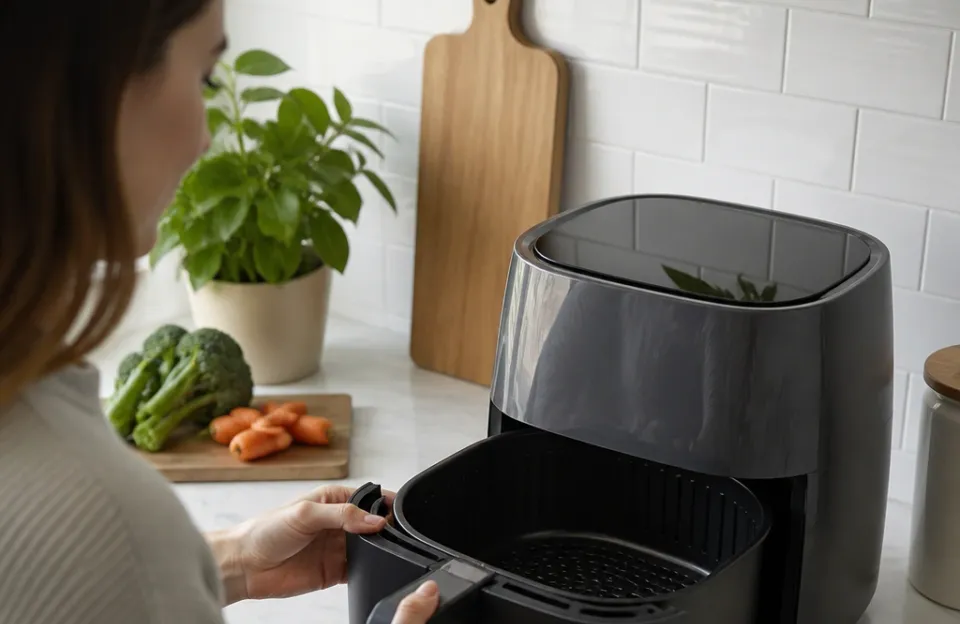
Most standard air fryers use a PTFE-based nonstick coating on the basket and crisper plate. PTFE is stable at normal cooking temperatures. The concern arises when an empty basket runs too hot or when the coating chips into food over time.
When heated past 500°F, PTFE can release fumes. While normal air frying rarely hits that mark, many people prefer to remove the risk entirely by choosing a different surface.
Switching to a PTFE-free model means trading the extreme slipperiness of traditional nonstick for a safer material profile. You will likely need to adjust how you prep food and clean the basket. A little extra oil goes a long way with these alternative surfaces.
If you are used to getting potatoes perfectly crisp without any spray, expect a slight learning curve.
The Environmental Protection Agency regulates PFAS chemicals, which include PTFE. Their ongoing reviews have pushed many appliance makers to develop alternative coatings. Reading the fine print on packaging is the only way to know exactly what you are buying.
Materials Used Instead of Traditional Nonstick Surfaces
Manufacturers use three main materials to build PTFE-free air fryers. Each one behaves differently under heat and requires specific care.
Ceramic-Coated Baskets
Ceramic coatings are derived from silica, basically sand. They provide a smooth cooking surface without using PTFE or related chemicals. Brands like Ninja and GreenPan use proprietary ceramic blends.
These coatings handle heat well and resist scratching better than cheap PTFE, though they can still wear down if you scrub them with metal pads.
Ceramic loses its slickness faster than traditional nonstick. After a year of heavy use, you might notice food sticking more often. Hand washing extends the life of a ceramic basket significantly compared to running it through the dishwasher.
Stainless Steel Interiors
Stainless steel contains no chemical coatings at all. It is just bare metal. Some premium toaster-oven-style air fryers use stainless steel baskets or wire racks.
Cleaning is straightforward because you don't have to worry about stripping a delicate layer off the bottom.
The tradeoff is sticking. Foods with low fat content or wet batters will bond to bare stainless steel. You need to grease the rack or use parchment paper liners designed for airflow.
Stainless steel models also tend to cost more and weigh quite a bit more than their plastic counterparts.
Enameled and Glass Options
Enamel is glass fused to metal at extremely high temperatures. It creates a hard, inert surface that doesn't react with acidic foods. Glass air fryers, like the Ninja Crispi model, use borosilicate bowls instead of metal baskets.
Both options completely eliminate the need for synthetic nonstick sprays.
Glass lets you watch your food cook, which helps prevent burning. However, glass bowls are fragile. Dropping one on a tile floor usually means buying a replacement part.
Enamel is tougher but can chip if struck hard enough, exposing the metal underneath.
| Material | Durability | Stick Resistance | Maintenance Level |
|---|---|---|---|
| Ceramic | Medium | High (initially) | Hand wash recommended |
| Stainless Steel | Very High | Low | Requires oil or liners |
| Glass | Low (fragile) | Medium | Easy to wipe clean |
| Enamel | High | Medium | Avoid abrasive sponges |
What to Check Before Buying a PTFE-Free Air Fryer
Finding a truly PTFE-free model takes more than reading the front of the box. Marketing terms can be misleading, so you need to verify the exact construction.
Verifying "PTFE-Free" Claims
Terms like "PFOA-free" do not mean a product is PTFE-free. PFOA was a processing chemical phased out years ago, but modern nonstick pans still use PTFE; they just manufacture it without PFOA. Look for explicit statements saying "PTFE-free," "ceramic nonstick," or "uncoated stainless steel." If the manual or spec sheet only says "nonstick" without naming the material, assume it contains PTFE.
Some brands use silicone-based coatings. Silicone is generally considered safe and does not contain PTFE, but it has lower heat tolerance. Always check the maximum temperature rating before roasting at high heat.
Capacity and Kitchen Footprint
Air fryers range from small 2-quart units to massive 10-quart dual-zone machines. Basket-style models take up less counter space than oven-style ones. If you cook for two people, a 4 to 6-quart capacity handles most meals.
Larger families or meal preppers need 8 quarts or more.
Keep in mind that stainless steel and glass models are heavier. A large stainless steel oven-style unit might weigh over 20 pounds. Make sure your counter can support it and that you have enough clearance above it for ventilation.
Heating Elements and Airflow Design
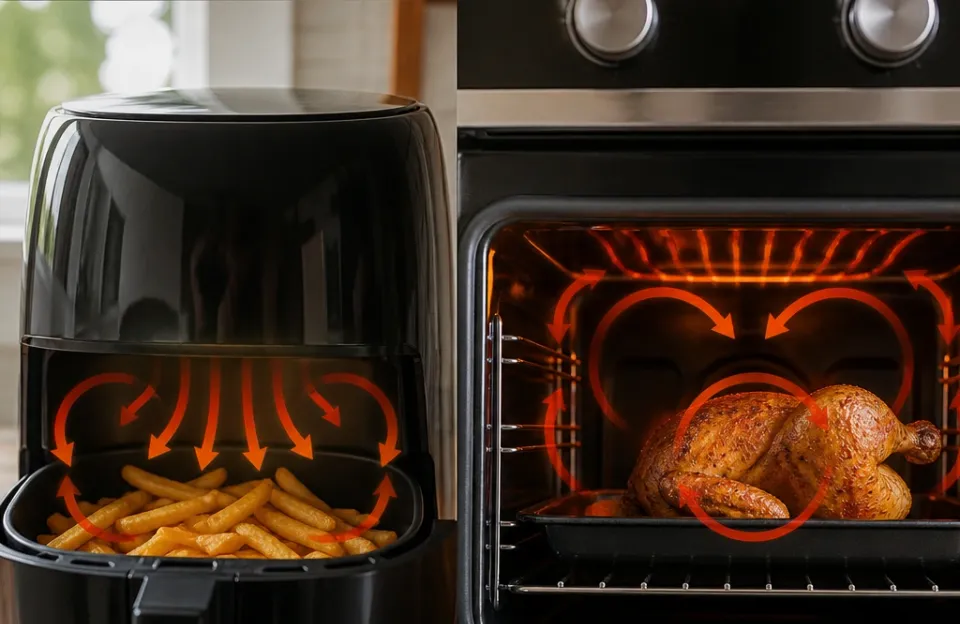
The fan speed and heating element placement determine how evenly food cooks. Top-mounted elements with powerful fans create the best crisping effect. Some cheaper models use weaker fans that leave cold spots in the basket.
When you switch away from slippery PTFE, good airflow becomes even more important. Strong circulation helps dry the surface of the food quickly, reducing the chance it will stick to a ceramic or steel basket. Models with adjustable fan speeds give you more control over delicate items.
Cooking Performance Without Synthetic Coatings
Expect to use slightly more oil. A light mist of avocado or olive oil helps food brown and release from ceramic or steel surfaces. Preheating the air fryer for three to five minutes before adding food also prevents sticking.
Temperature accuracy varies between brands. Using a standalone oven thermometer inside the basket during your first few cooks helps you learn how your specific machine runs. Once you dial in the timing, you can easily prep chicken wings for the week without worrying about the coating degrading under high heat.
PTFE-Free Air Fryer Models Worth Considering
These specific models use alternative materials instead of PTFE-based nonstick coatings. Availability and pricing shift often, so check current retailer listings for the latest numbers.
Ninja Crispi 4-in-1 Portable Glass Air Fryer
This model uses a borosilicate glass cooking vessel instead of a coated metal basket. The glass is completely free of PTFE and other synthetic nonstick chemicals. It functions as an air fryer, roaster, baker, and warmer.
The glass bowl lets you see exactly how brown your food is getting without pulling the drawer open. It is dishwasher safe and wipes clean easily. The main limitation is durability.
Glass breaks if dropped, and the bowl is relatively small, making it better suited for single servings or side dishes rather than full family dinners. Replacement bowls can be ordered directly from the manufacturer.
GreenPan Omni Oven Air Fryer
GreenPan built its reputation on ceramic nonstick cookware, and this countertop oven uses their Thermolon ceramic coating. It is explicitly marketed as free of PTFE, PFOA, lead, and cadmium. The oven style gives you multiple racks for batch cooking.
Thermolon handles high heat well and provides excellent food release when new. Over time, the ceramic coating can lose some of its slickness, especially if washed in a dishwasher frequently. Hand washing with a soft sponge keeps the surface working longer.
It takes up significant counter space due to the toaster-oven footprint.
Instant Vortex Plus ClearCook with OdorErase
While many Instant Pot brand air fryers use standard nonstick, certain models in their lineup offer ceramic-coated accessories or stainless steel mesh baskets. You must read the specific SKU details carefully, as Instant frequently updates their manufacturing specs.
Models equipped with stainless steel trays require a light coating of oil to prevent sticking, but they last indefinitely without wearing out. The clear window on the ClearCook series helps monitor browning. The primary drawback is confusion during purchase; you have to verify the exact material of the included basket before checkout.
Cuisinart TOA-60 Convection Toaster Oven Airfryer
Cuisinart makes several oven-style air fryers that use uncoated stainless steel interiors and wire racks. The Cuisinart air fryer line includes models where the baking pan and air fry basket are bare metal.
Bare stainless steel is virtually indestructible under normal kitchen use. You never have to worry about a coating flaking off into your dinner. The tradeoff is that baked-on grease requires soaking and scrubbing.
Lining the bottom pan with foil or parchment simplifies cleanup. These units are heavy and generate substantial external heat, requiring clearance on all sides.
HYSapientia Large Dual Zone Air Fryer
HYSapientia offers large-capacity oven-style air fryers that use stainless steel interiors and enamel-coated drip trays. Their larger 24-quart and 32-quart models appeal to big households wanting to avoid PTFE.
The stainless steel cavity wipes down easily and resists staining. Enamel trays handle drips without reacting to acidic marinades. Because these are essentially small convection ovens, they take longer to preheat than compact basket models.
They also consume more electricity per cycle. Finding replacement parts locally can be difficult depending on your region.
Bella Slim Fits-Anywhere 6Qt Air Fryer
Bella produces budget-friendly appliances, and some of their recent releases use ceramic-based coatings instead of traditional PTFE. The Bella slim design targets kitchens with limited storage space.
At a lower price point, this model gives shoppers access to PTFE-free cooking without buying a massive countertop oven. The ceramic coating performs well initially. Budget models sometimes use thinner base metals under the ceramic, which can lead to uneven heating or warping over extended use.
It works best for lighter daily tasks rather than heavy roasting.
Keeping Alternative Coatings in Good Shape
Maintaining a PTFE-free air fryer requires different habits than caring for a standard nonstick one. Ceramic, glass, and steel all respond poorly to harsh treatment.
Never use metal utensils inside a ceramic or enameled basket. Wooden tongs or silicone spatulas prevent scratches. Scratches in ceramic expose the underlying metal, which then rusts or causes food to fuse to the spot.
Let the basket cool completely before washing it. Thermal shock cracks glass and weakens ceramic bonds. Plunging a 400°F basket into cold water is the fastest way to ruin it.
Warm soapy water and a soft cloth handle most messes. For stuck-on grease, soak the basket in warm water for twenty minutes before wiping.
Avoid aerosol cooking sprays that contain propellants. Propellants leave a sticky residue on ceramic and enamel that builds up over time and becomes nearly impossible to remove. Buy a pump-action oil mister and fill it with your preferred cooking oil.
This applies whether you are roasting vegetables quickly or browning meat.
For stainless steel baskets, seasoning the metal occasionally helps. Wipe a thin layer of high-smoke-point oil onto the cold steel, run the air fryer at 350°F for ten minutes, and let it cool. This builds a natural patina that improves food release over time.
Situations Where PTFE-Free Might Not Fit Your Needs
Choosing a PTFE-free air fryer solves one problem while potentially creating others. Understanding the edge cases helps you decide if the switch is right for your kitchen.
If you cook highly delicate foods like battered fish or wet-dredged items regularly, bare stainless steel will frustrate you. Batters tear apart when they bond to uncoated metal. Ceramic handles batters better, but still requires generous oiling compared to PTFE.
For heavy batter work, a traditional nonstick surface remains the most practical option.
Budget constraints matter. True PTFE-free models, particularly those made of stainless steel or thick glass, usually cost more than entry-level plastic basket fryers. If you need a basic appliance under fifty dollars, your options for verified PTFE-free materials are severely limited.
Weight is another factor. A large stainless steel oven-style unit is heavy. If you store your air fryer in a cabinet and lift it out for each use, a 25-pound steel oven becomes a burden.
Compact ceramic basket models solve this, but offer less cooking capacity.
People with pet birds should note that PTFE fumes are highly toxic to avian respiratory systems. For bird owners, switching to a PTFE-free model is widely recommended by veterinarians regardless of other cooking preferences.
Finally, consider how you cook proteins. Getting salmon to flake properly requires a surface that won't grip the delicate flesh. Glass or well-oiled ceramic works fine, but bare steel demands careful attention and parchment liners to prevent tearing the fillet when flipping.
Frequently asked questions
Is ceramic nonstick actually safer than PTFE?
Ceramic coatings are made from inorganic minerals, primarily silicon dioxide. They do not release the same fumes associated with overheated PTFE. As long as the ceramic is free from lead and cadmium, it is widely considered a safer alternative for high-heat cooking.
Can I find a PTFE-free air fryer at a big box store?
Yes, but you have to read the packaging carefully. Many stores carry GreenPan or specific Ninja models with ceramic coatings. Do not rely on sales staff to know the difference between PFOA-free and PTFE-free.
Verify the material yourself on the box or the manufacturer's website.
Does PTFE-free mean the air fryer is completely non-toxic?
It removes the risk of PTFE degradation fumes. However, "non-toxic" depends on the entire construction. Cheap plastics used for the outer housing can still emit odors when heated.
Look for models that specify BPA-free plastic exteriors alongside their PTFE-free interior baskets.
How do I choose between glass, ceramic, and stainless steel?
Choose glass if you want to monitor cooking progress visually and mostly cook single portions. Pick ceramic if you want a familiar nonstick experience without PTFE, accepting that it may wear out faster. Go with stainless steel if you prioritize extreme durability and don't mind using oil or parchment liners to prevent sticking.
Will food taste different in a PTFE-free air fryer?
The coating material does not change the flavor of the food. However, because you often need to use slightly more oil to prevent sticking on ceramic or steel, your finished dish might have a marginally richer mouthfeel. The Maillard reaction that creates browning happens the same way regardless of the basket material.
Are PTFE-free models harder to clean?
They can be. PTFE is exceptionally slick, meaning grease wipes off almost instantly. Ceramic starts out easy to clean but gets stickier as it ages.
Stainless steel requires soaking for baked-on messes. Glass is generally very easy to wash but requires careful handling to avoid breakage.
Sorting Out Your Next Purchase
Picking the right PTFE-free air fryer comes down to balancing safety preferences with daily cooking habits. Ceramic gives you the closest feel to traditional nonstick, while stainless steel lasts the longest if you don't mind the extra maintenance. Glass offers visibility and peace of mind for smaller batches.
Read the specification sheets before clicking buy. Terms like "eco-friendly coating" mean nothing without confirmation of the actual material. Once you find a model that fits your counter space and cooking style, adjusting your oil usage and cleaning routine takes only a few tries.
Whether you are browning drumettes for dinner or reheating leftovers, knowing exactly what your food touches makes the whole process easier.