An espresso machine is worth buying if you already spend regularly on espresso or milk-based café drinks, you are willing to learn a routine, and you have room on the counter for the machine and a grinder. It is usually not worth it if you want fast coffee with minimal cleanup, if you drink espresso only occasionally, or if you have no space to spare.
The honest answer is conditional, because worth depends on four things: how often you drink the drinks a machine can make, your total budget rather than just the machine price, your patience for dialing in and cleaning, and your kitchen layout. This guide works through each before you spend, and it flags where you need to check current details yourself rather than rely on fixed figures.
Is an Espresso Machine Worth It? the Short Answer
Home espresso pays off when the machine replaces a habit you already have. If you buy a latte or flat white several times a week, the machine becomes a tool you use daily rather than an appliance you admire. If your coffee is usually a drip pot or an instant cup, a cheaper brewer will probably serve you better.
Three conditions should all be true before you buy:
- You drink espresso-based drinks often. Frequency is what turns a purchase into value.
- You accept the learning curve. Dialing in grind, dose and yield is part of ownership, not a one-time setup.
- You have the space and the patience for maintenance. Cleaning and descaling are recurring tasks, not optional extras.
If any of those fails, spend less on a different brewer and revisit the decision later.
The Real Cost of Home Espresso
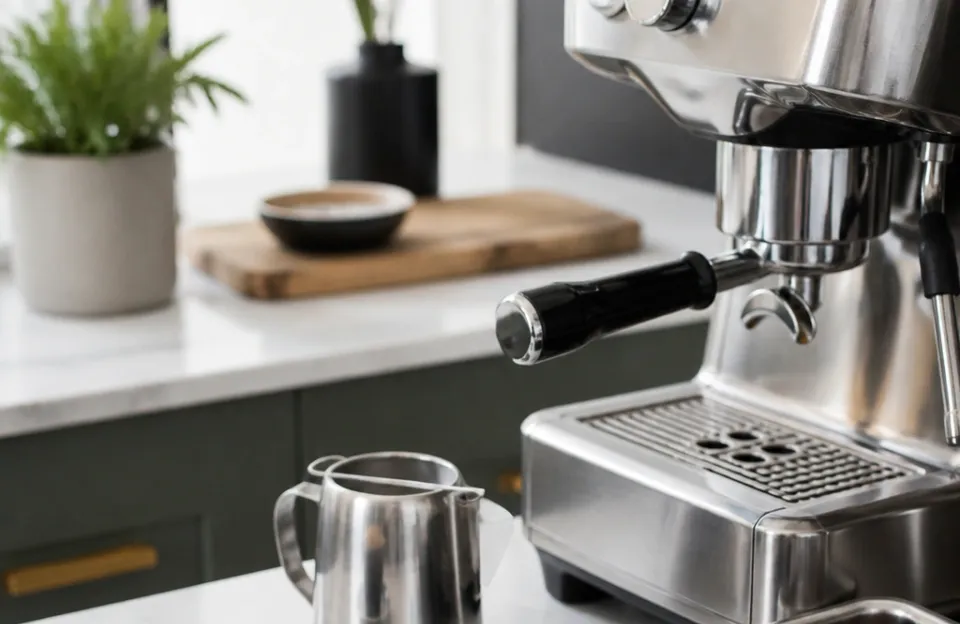
Cost is the first thing to get right, and it is also where most buying guides mislead. Treat the numbers below as a framework for your own math, not as quoted prices.
The machine is rarely the whole bill. Budget for the full setup, including a grinder capable of espresso-fine grinding, a scale, a tamper or leveler, a pitcher for milk, and a water strategy. The Specialty Coffee Association publishes standards for coffee equipment, including specifications and test methods for espresso machines and for home coffee grinders. Those standards describe how equipment is measured, but they do not tell you what any specific setup costs, so price the pieces you actually need at the retailer you would buy from.
Be wary of any article that quotes fixed price ranges, exact break-even months, or guaranteed savings. Current prices vary by country, retailer and model, and they change. Check live prices at the point of purchase, and treat your own café spending as the benchmark: multiply your typical weekly spend by 52 to get a realistic annual comparison. That figure is your own arithmetic, not a published statistic, and it is the only savings estimate you can trust without current local prices.
Ongoing costs are real but manageable, and they belong in the budget from the start:
- Beans. Fresh coffee is a recurring grocery cost rather than a one-off.
- Water treatment. Filters or bottled water are a recurring cost, and the right choice depends on your local water.
- Cleaning and descaling supplies. These are consumables that belong in the budget from day one.
- Repairs and parts. Factor in the possibility of service, not just the purchase.
Ask the retailer or check the manual for what consumables your chosen model needs, since requirements differ between machines.
A simple way to frame it: compare the total first-year cost of machine, grinder and accessories with what you would otherwise spend on café drinks in that year. If the setup costs more, the machine has to earn its keep over several years. That is a plausible outcome for heavy café buyers and a poor one for occasional drinkers, and only your own spending figures can settle which you are.
Who Actually Benefits from Owning One
The strongest candidates share a few traits. They drink espresso-based drinks most days, they enjoy the ritual, and they often have at least one other person in the household who will use the machine. Shared use spreads the cost and the effort.
The weakest candidates are also easy to identify. Someone who wants a single fast coffee before work, dislikes cleaning, or has a small kitchen with no free counter will find the machine more demanding than rewarding. A machine that sits unused is the most expensive option of all.
Ask yourself two questions honestly. First, will I use this at least four or five days a week? Second, will I still clean it in month six? If the answer to either is uncertain, a simpler brewer is the safer buy. If you are weighing a pod machine against a traditional setup, our comparison of espresso machines versus Nespresso covers the convenience trade-off directly.
Espresso Machine vs Cheaper Alternatives
Espresso is one brewing method among several, and each alternative has a genuine place. The table below compares the main options on the criteria that actually drive the decision: upfront cost, effort, control and the kind of drink you get. The ratings are relative comparisons, not measured test results.
| Option | Upfront cost | Daily effort | Control over the cup | Best for |
|---|---|---|---|---|
| Semi-automatic espresso machine | Highest, especially with a grinder | Moderate to high: grinding, dialing in, cleaning | High | Daily espresso drinkers who want to learn |
| Super-automatic espresso machine | High | Low: bean-to-cup with push-button brewing | Low to moderate | Convenience-focused households |
| Manual lever espresso machine | Moderate to high | High: full manual control | Very high | Hobbyists who enjoy the process |
| Moka pot | Low | Low | Moderate; stovetop strength, not espresso pressure | Budget buyers who want strong coffee |
| AeroPress | Low | Low | Moderate and flexible | Travel, small kitchens, experimentation |
| Capsule machine | Low to moderate | Very low | Low; limited to pod options | Speed and consistency above all |
These are general characterizations of each method, not rankings backed by testing. Check current prices and specifications for any specific model before you buy.
The Specialty Coffee Association also lists a standard in development for fully automatic espresso machines. Standards describe how machines are tested; they do not rank brands or guarantee that a machine suits your habits, so use them as background rather than as a buying verdict.
The practical takeaway is that a moka pot or AeroPress generally costs far less than an espresso setup and brews a strong, concentrated cup, but neither is designed to produce true espresso. A capsule machine is the simplest to operate, though it ties you to pod purchases and limits your choice of coffee. If you mainly want a large mug of coffee, our breakdown of espresso machines versus coffee makers looks at where the two paths diverge.
The Hidden Time and Skill Requirement
Espresso rewards attention. Grind fineness, dose, tamp pressure and brew time all interact, and changing beans usually means adjusting the grind again. This is often called dialing in, and it is a skill you build rather than a switch you flip. Expect some wasted coffee while you learn.
Milk steaming adds a second skill. Texturing milk for a latte or cappuccino takes practice, and the results are uneven at first. None of this is difficult, but it is daily work, and it is the part of ownership that buyers most often underestimate.
A realistic routine includes grinding and brewing, knocking out and rinsing the basket, wiping the steam wand after every use, and periodic deeper cleaning. Your machine’s manual is the authority on exactly what it needs. If that routine sounds like a chore, a super-automatic or a capsule machine will make you happier, even at a higher upfront price.
Types of Machines and What They Cost
Machine types differ mainly in how much control they give you, how much work they demand, and how easy they are to service. Compare them on those dimensions rather than on marketing claims.
- Semi-automatic machines. You control grinding, dosing and often the shot timing. They offer the most learning and the most control, and they generally need a capable grinder. Our guide to the types of espresso machines walks through the differences in more depth.
- Super-automatic machines. These grind, dose and brew at the press of a button. They suit households that value speed, but they cost more and offer less manual control.
- Manual lever machines. These give full control over pressure and are popular with enthusiasts who enjoy the craft.
- Capsule machines. These are the simplest route to a consistent shot, at the cost of pod purchases and limited flexibility.
These descriptions are general categories, not specifications for any particular model. Confirm the features of a specific machine against its own product page or manual.
Specific price tiers and brand recommendations change constantly and are not something this guide can responsibly fix. Check current prices from retailers you trust, and read the warranty and service terms before buying. Local repair and parts availability are worth weighing alongside price, since a machine you can service nearby is easier to keep running. Ask the retailer directly about both before you commit.
Maintenance, Water and Longevity
Espresso machines are water appliances, and water quality is one factor that affects both taste and how much upkeep the machine needs. Many manufacturers publish water hardness limits and filter recommendations in their manuals, so check yours rather than assuming a general rule. Our guide to espresso machine water filters looks at how to choose one.
Descaling is the routine most manufacturers specify to keep the boiler and internal water path in good condition. Follow the manufacturer’s instructions for the descaling product and concentration, since the wrong product or strength can damage internal components. Cleaning frequency depends on use and on your water, so check the machine’s manual rather than relying on a general rule.
Temperature stability is one factor in consistent shots, and manufacturers often publish a brew temperature range for their machines. Our espresso machine temperature guide looks at typical brew ranges and how roast level fits in.
Longevity varies widely by machine type, build quality and how well the machine is maintained. Rather than assuming a fixed number of years, check the warranty length, the availability of replacement parts such as gaskets and shower screens, and whether local service is available. Those three factors tell you more about long-term value than any claimed lifespan, and they are the details a retailer or manufacturer can confirm for a specific model.
The Counter Space Factor
Space is a real constraint, not an afterthought. A machine needs room for the unit itself, clearance above the cup area, and space for a grinder and accessories. Measure your counter before you buy, and leave room for the portafilter and pitcher to move. The manufacturer’s dimensions for your chosen model are the figures to plan around.
Clearance above and around the machine matters too, especially for machines that sit under cabinets. Check the manufacturer’s stated clearances for your chosen model rather than applying a general rule, since requirements differ by design and by how the water tank and hopper are accessed.
If your kitchen is tight, a smaller manual brewer or a capsule machine may be the better fit. Our guide to what an espresso machine is and how it works can help you judge how much hardware a given design actually requires.
Quick Decision Checklist
Use this checklist before you commit. If most answers are yes, an espresso machine is likely worth it for you.
- Do I drink espresso or milk-based drinks several times a week? If not, a cheaper brewer will serve you well.
- Is my total budget realistic, including a grinder and accessories? Price the full setup, not just the machine.
- Will I clean and descale on a routine? Maintenance is part of ownership, so check what your chosen model requires.
- Do I have counter space and clearance? Measure first, using the manufacturer’s dimensions.
- Can I get the machine serviced or find parts? Check the warranty and local support.
- Have I compared cheaper alternatives honestly? A moka pot, AeroPress or capsule machine may fit your habits better.
If you are still undecided, start with a cheaper alternative and see how often you actually make espresso-style drinks. If the habit sticks, you will buy the machine with a clear sense of what it is worth to you.
SCA standards set a shared framework for quality and consistency across the coffee industry, developed through a collaborative process with technical experts, industry stakeholders and a standards panel. Some certification standards are available only to members with login access, so the public standards page is a starting point rather than the full technical library.
1 thought on “Is an Espresso Machine Worth It? What to Know Before Buying”