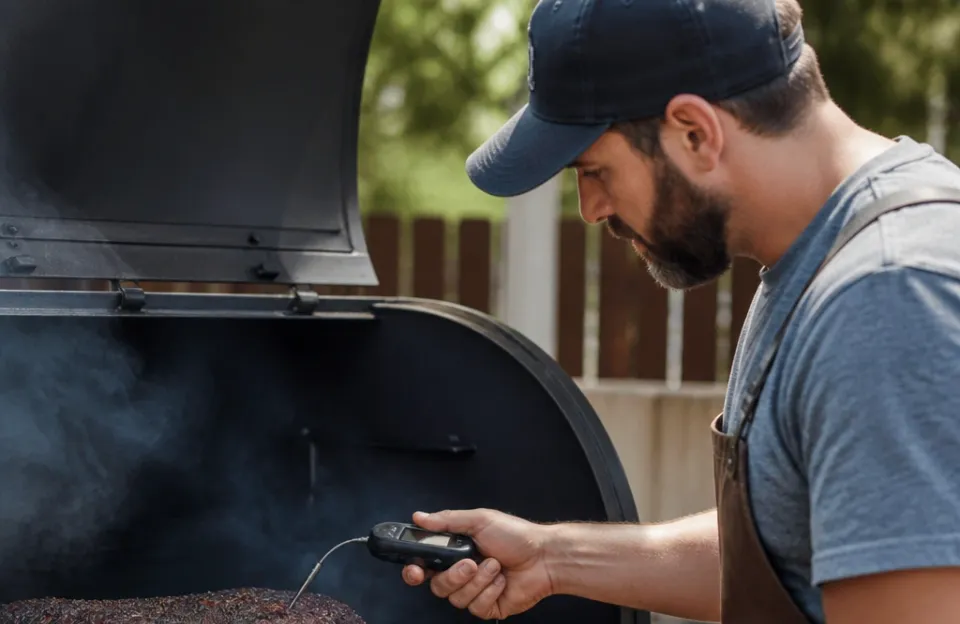
Using a meat thermometer in a smoker takes about ten seconds once you know where to put the probe. You insert the tip into the thickest part of the meat, keep it away from bone and fat, and wait for the reading to stabilize. That single action tells you exactly when your brisket, ribs, or chicken is safe to eat.
Learning how to use a meat thermometer in a smoker removes the guesswork from low and slow cooking. Smoker temperatures fluctuate. Meat thickness varies.
Relying on cook time alone leads to dry pork shoulders or undercooked poultry. A thermometer gives you the internal temperature in real time so you can pull the food off the grates at the exact right moment. This guide covers probe placement, target temperatures, wireless setups, and the mistakes that ruin a long smoke.
Placing the Probe Inside Your Smoked Meat
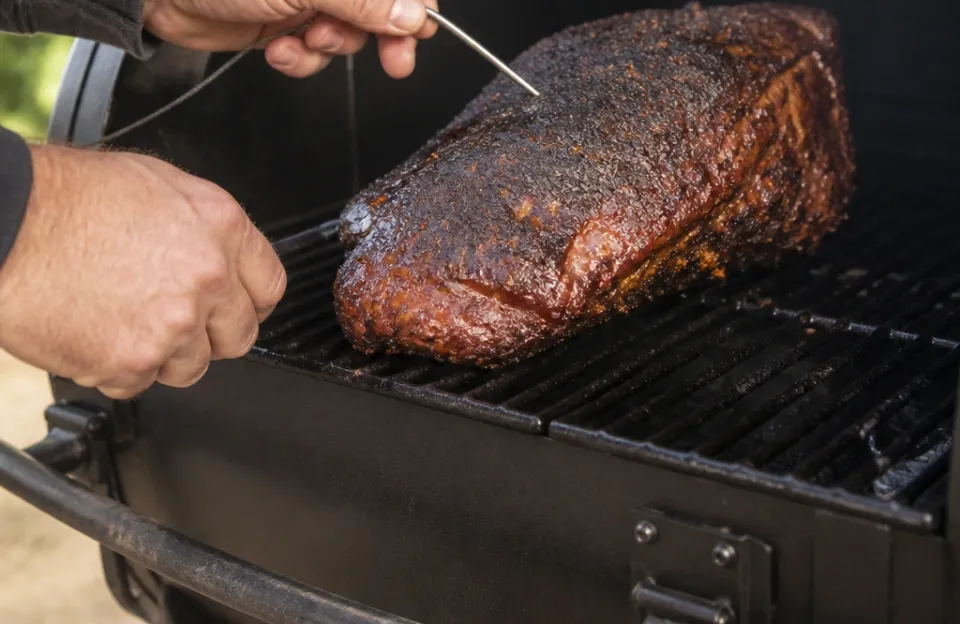
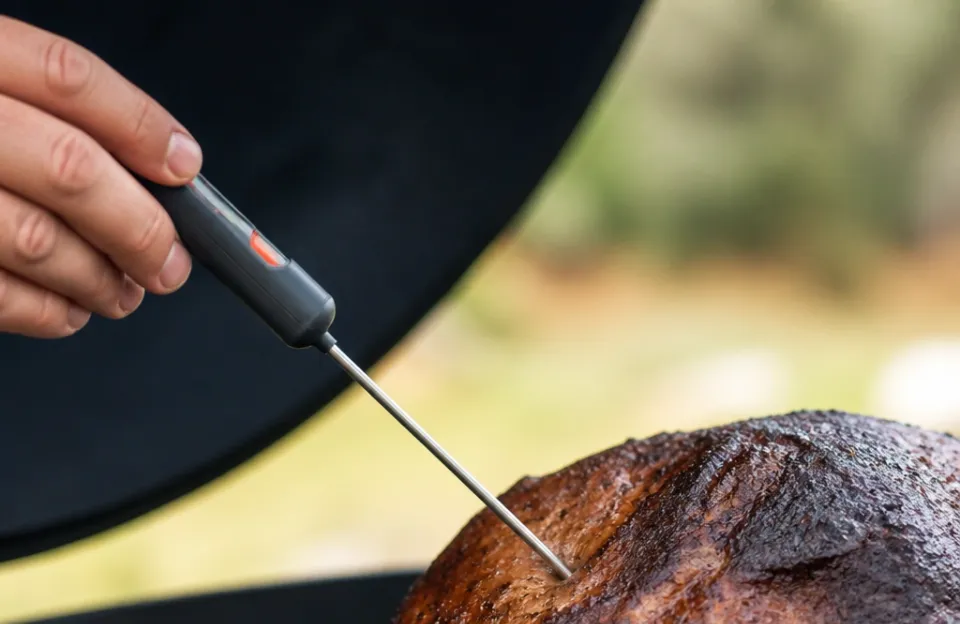
Probe placement determines whether your reading is accurate. The sensor sits near the tip of most probes, usually within the first half inch. If that tip rests against bone, fat, or the smoker grate, you will read the temperature of that surface instead of the muscle tissue.
Bone conducts heat faster than meat. Fat insulates. Both give false readings.
For large cuts like a whole packer brisket or a pork butt, push the probe into the geometric center of the thickest section. Insert it horizontally through the side rather than pushing down from the top. A horizontal entry keeps more of the probe shaft buried inside the meat, which prevents ambient smoke heat from traveling down the metal stem and skewing the number.
Poultry requires a different approach. Push the probe into the thickest part of the thigh, angling it toward the body without touching the hip joint. Chicken breasts cook much faster than thighs.
If you only check the breast, the dark meat might still be raw. Checking multiple spots with a fast-responding digital tool during the final hour prevents serving undercooked legs.
Thin cuts like ribs or sausages present a challenge because there is less room to bury the probe. Slide the tip in through the end of a sausage link so the sensor rests in the center of the cylinder. For ribs, angle the probe parallel to the bones, sliding it between two ribs into the meat layer.
If the cut is too thin for a leave-in probe, use an instant-read model to spot-check several areas.
Target Temperatures for Common Smoked Cuts
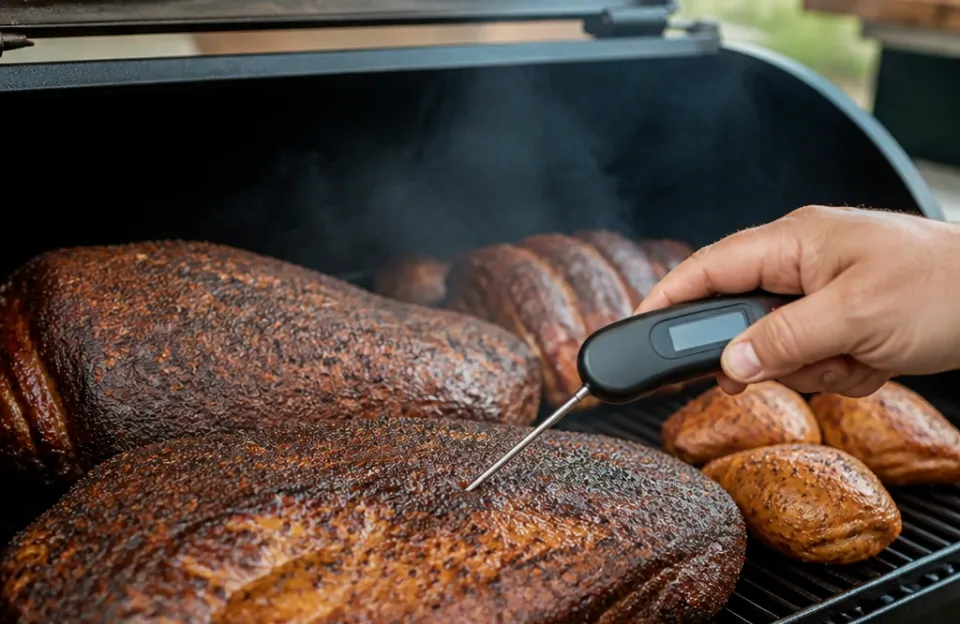
Knowing where to put the probe only gets you a number. You need to know what that number means. The USDA sets minimum safe temperatures to kill pathogens: 165°F for all poultry, 145°F for whole cuts of beef and pork followed by a three-minute rest, and 160°F for ground meats.
You can find these standards directly on the official USDA food safety page.
Smoking often pushes past those minimums. Tough cuts full of connective tissue, like brisket and pork shoulder, taste terrible at 145°F. Collagen needs sustained heat to break down into gelatin.
Most pitmasters pull pork shoulder around 195°F to 205°F. Brisket usually finishes between 200°F and 205°F, though tenderness matters more than the exact digit. A probe should slide into finished brisket with almost no resistance.
| Meat Cut | Minimum Safe Temp (USDA) | Typical Smoking Pull Temp |
|---|---|---|
| Whole Chicken | 165°F | 165°F to 170°F |
| Pork Ribs | 145°F | 195°F to 203°F |
| Pork Shoulder | 145°F | 195°F to 205°F |
| Beef Brisket | 145°F | 200°F to 205°F |
| Smoked Sausage | 160°F | 160°F to 165°F |
Ribs are notoriously tricky to read with a thermometer because the meat is thin and layered over bone. Many cooks rely on the bend test or checking if the meat has pulled back from the bone ends. When you do use a thermometer on ribs, aim for the thickest section between the bones and look for 195°F to 203°F.
Leave-In Probes Versus Spot Checking With Instant Reads
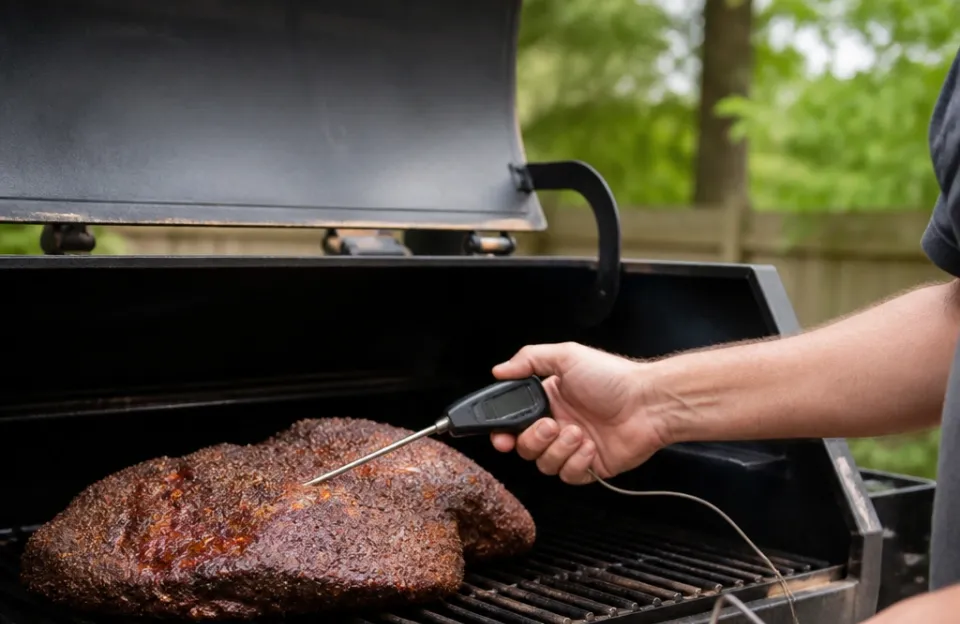
Smokers fall into two main categories for temperature tracking. Leave-in probes stay inside the meat for the entire cook. They connect via wires or wireless signals to a base unit outside the smoker.
Instant-read thermometers are handheld tools you stick into the meat for a few seconds to get a quick number, then remove.
Leave-in probes are standard for long smokes. You set them up before closing the lid, which keeps heat and smoke trapped inside. Opening a smoker drops the chamber temperature quickly, adding time to your cook.
A good dual-probe setup lets you monitor the internal meat temperature and the ambient air temperature at grate level simultaneously. Tracking both numbers shows you if your fire is dying out or running too hot.
Wireless technology has changed how people manage smokers. Older wired models required routing cables through the smoker door, which sometimes pinched the wires or let heat escape. Newer systems transmit data over Bluetooth or Wi-Fi to a smartphone.
If your wireless connection drops frequently, moving the receiver closer to the smoker or removing physical obstructions usually fixes the signal loss. Heavy steel smoker walls block radio frequencies easily.
Instant reads still belong in your toolkit. They are perfect for verifying the leave-in probe's accuracy or checking thin cuts that cannot hold a permanent probe. Spot-checking multiple locations on a large turkey guarantees the breast and the thigh both reached safe temperatures.
Keeping a reliable instant-read device nearby makes the end of any smoke session much less stressful.
Some cooks wonder if they can repurpose other kitchen tools for the smoker. A candy thermometer is built for clipping to a pot rim and measuring boiling sugar syrups. Trying to adapt one for smoking rarely works well because the probe shape and temperature ranges differ from what meat requires.
Stick to tools designed specifically for protein.
Routing Thermometer Wires Through the Smoker Lid
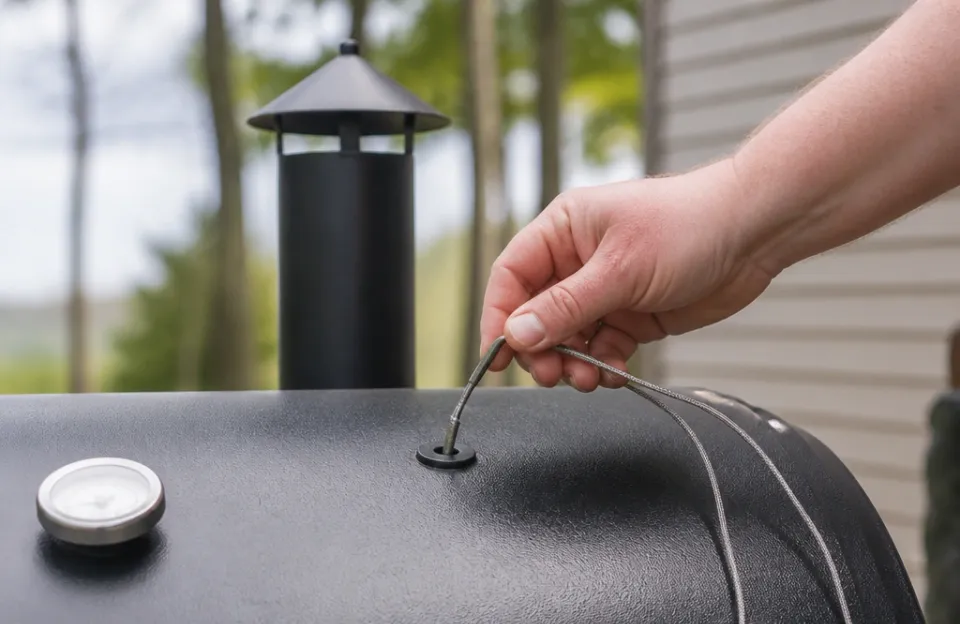
If you use a wired leave-in probe, you have to get the cable from inside the cooking chamber to the display unit outside. How you route that wire affects your temperature control.
Many offset smokers and vertical water smokers have small gaps around the door hinges or dedicated notches for probe wires. Run the cable through these existing gaps. Pinching a wire tightly under a heavy steel lid can sever the internal conductors over time, leading to erratic readings or total failure.
Keep the wire away from direct flames and hot metal surfaces. In an offset smoker, the area closest to the firebox runs significantly hotter than the exhaust end. If your probe wire drapes across the bottom grate near the heat deflector, the insulation can melt.
Route the wire along the upper edge of the door or through a higher vent hole whenever possible.
For kamado-style ceramic cookers, running wires through the top vent restricts airflow and changes your temperature. Some manufacturers sell specific grommets or drilled plugs for the lower body to accommodate probe wires without compromising the seal. If your cooker lacks this, run the wire gently through the hinge gap at the back, ensuring the heavy lid does not crush the cable when closed.
Calibrating Your Equipment Before a Long Smoke
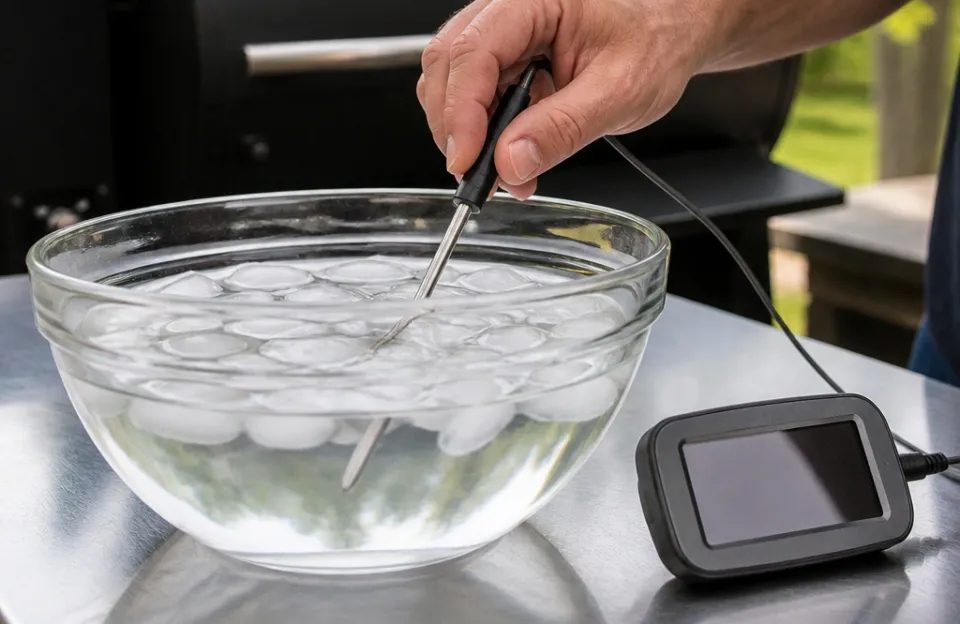
Thermometers drift. Dropping a probe on concrete, exposing it to extreme heat repeatedly, or simply aging components can shift the reading by several degrees. In baking, five degrees might not matter.
In smoking, a five-degree error could mean pulling a brisket before the collagen fully renders, leaving you with chewy meat.
Test your thermometer using the ice bath method before every major cook. Fill a glass with crushed ice and add just enough cold water to fill the gaps. Stir it and let it sit for a minute.
Submerge the probe tip into the slush without letting it touch the sides or bottom of the glass. It should read exactly 32°F. If it reads 35°F, you now know your thermometer runs three degrees high.
You can adjust accordingly or recalibrate the unit if it has a calibration nut or digital offset setting.
Boiling water provides another reference point, though it is slightly more complicated because the boiling point of water changes with altitude. At sea level, water boils at 212°F. At higher elevations, it boils at lower temperatures.
An ice bath remains constant regardless of where you live.
Choosing equipment built for harsh environments helps maintain accuracy. Smokers generate intense, prolonged heat combined with corrosive smoke and grease. Picking durable construction materials extends the life of your gear.
Cheap plastic housings warp near hot smoker lids, and thin wires fray after a few seasons.
If you prefer a rechargeable unit to avoid hunting for batteries during a twelve-hour pork shoulder smoke, verify its battery life rating against your typical cook times. Some rechargeable options last for dozens of hours on a single charge, which covers even the longest brisket sessions. Always start a long smoke with a fully charged base unit.
Managing the Stall Using Internal Readings
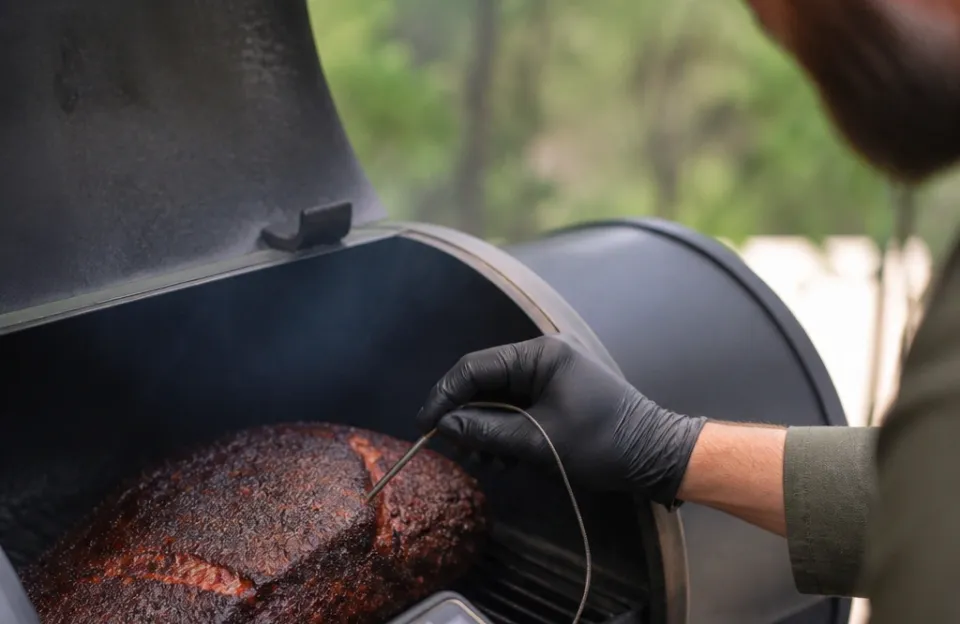
Anyone who has smoked a large piece of meat knows about the stall. You watch the internal temperature climb steadily for hours, and then it stops. It might sit at 160°F for three hours without moving.
Beginners panic, crank up the smoker heat, and ruin the bark.
The stall happens because evaporative cooling matches the heat input from the smoker. Moisture sweating out of the meat cools the surface at the exact same rate the smoker warms it. Your thermometer is doing its job perfectly by showing you this plateau.
This is where knowing how to use a meat thermometer in a smoker pays off. Because you trust the reading, you know the fire did not go out. You know the meat is not done yet.
You can make an informed decision. Many pitmasters wrap the meat in butcher paper or aluminum foil once the stall hits hard. Wrapping traps the moisture, stops the evaporative cooling, and forces the internal temperature to rise again.
Monitor the probe closely after wrapping. The temperature will start climbing faster. If you lose focus during this phase, you can overshoot your target by ten or fifteen degrees.
Keep checking the display until you reach your desired pull temperature.
Cleaning the Probe After High Heat Exposure
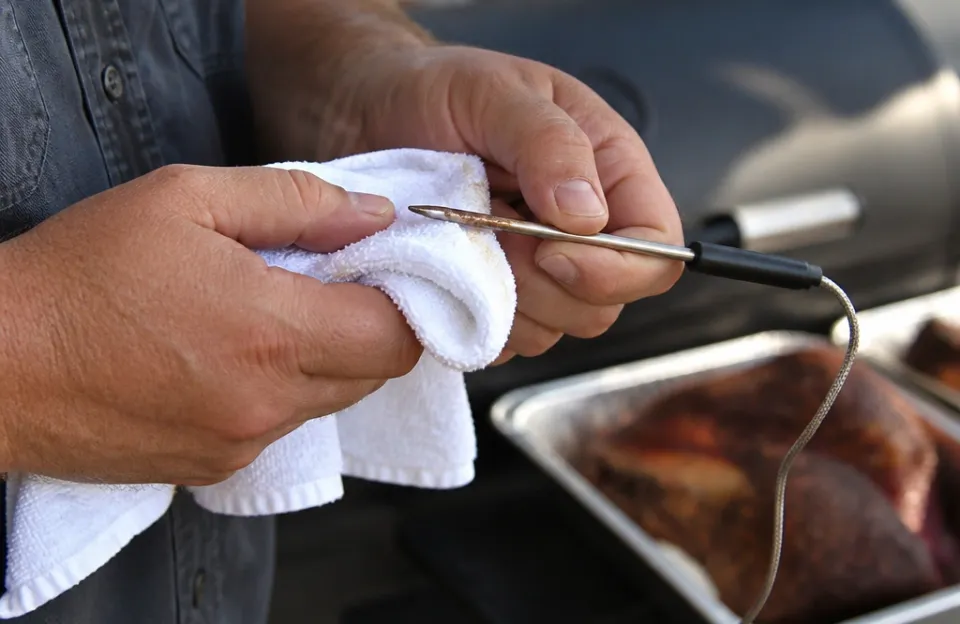
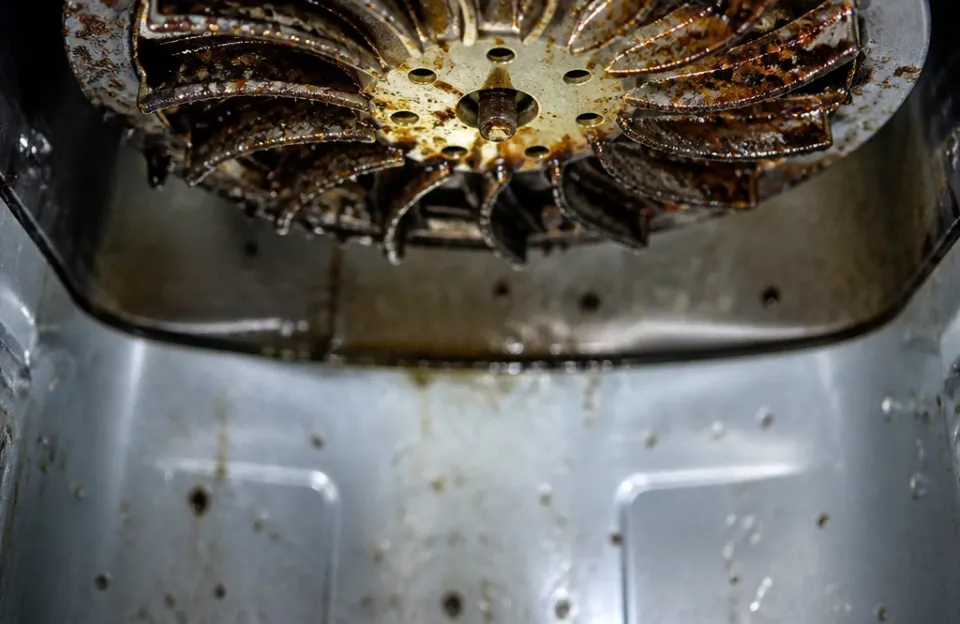
Smoker environments coat everything in a sticky mixture of rendered fat, vaporized wood sap, and carbon. Probe shafts accumulate this residue quickly. If left uncleaned, the buildup acts as an insulator, slowing down the sensor's response time.
A dirty probe takes longer to register temperature changes, which might cause you to leave meat on the heat longer than necessary.
Wipe the probe shaft with a damp cloth while it is still warm after a cook. Warm grease wipes away easily. Once it cools and hardens, you have to scrub it.
Avoid submerging the connection point where the wire meets the metal shaft unless the manufacturer explicitly rates it as waterproof. Water seeping into that joint ruins the internal wiring.
Never put a meat thermometer probe in a self-cleaning oven or run it through a dishwasher. The extreme heat cycles in a self-cleaning oven exceed the maximum tolerances of most probe sensors, permanently destroying their calibration. Hand washing with warm soapy water is the standard practice.
Store probes straight. Bending the metal shaft to fit into a drawer kinks the internal wires. Many cooks use a dedicated case or hang them on a pegboard.
If you travel to competitions or tailgates, protect the tips from getting crushed by heavy cooler lids.
Troubleshooting Erratic Temperature Swings
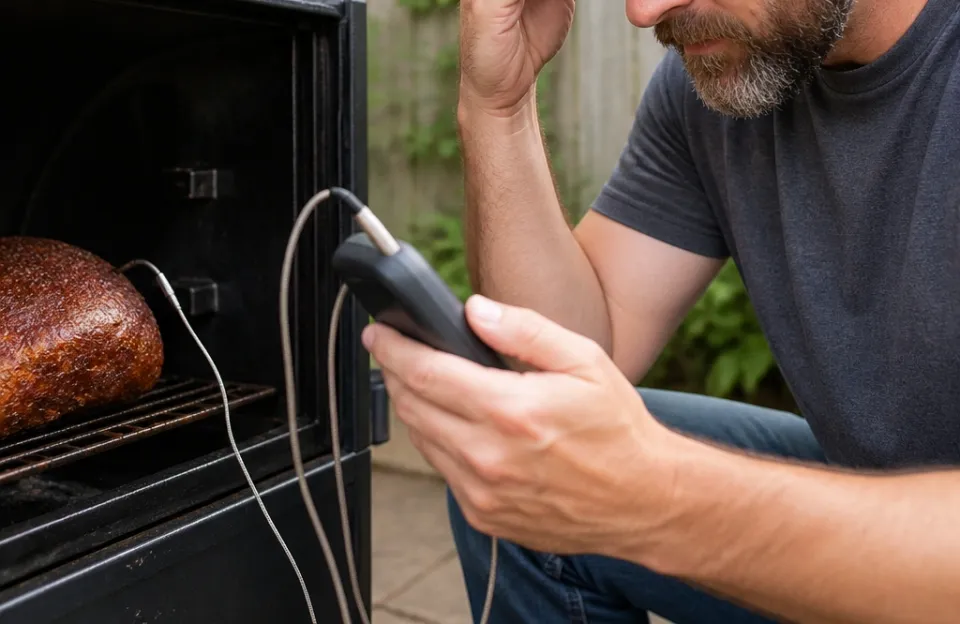
Sometimes the numbers on your display jump wildly. One second it says 180°F, the next it says 45°F, then back to 200°F. This is rarely the actual meat temperature changing.
It points to a hardware or connection issue.
Check the probe wire first. Look for sharp bends, frayed insulation, or spots where the wire rested against a hot grate. A partially broken wire connects and disconnects as the wind blows or the smoker vibrates, causing the erratic jumps.
Replacing the probe solves this.
Moisture inside the transmitter jack causes similar problems. Grease and condensation build up where the probe plugs into the base unit. Unplug it, wipe the contacts clean with a dry cotton swab, and reconnect firmly.
A loose plug delivers inconsistent data.
If you use a smart system that sends alerts to your phone, ensure your home network reaches the patio. Systems relying on Wi-Fi connectivity need a stable router signal to push notifications. If the app stops updating but the base unit screen still shows normal numbers, the problem is your network, not the meat.
Finally, rule out placement errors. If the probe tip slowly worked its way out of the meat during a long cook and is now resting in the airspace just below the lid, it will read the ambient dome temperature, which spikes every time you add wood. Push the probe back into the center of the cut and watch the reading stabilize.
Frequently asked questions
Can I leave an instant-read thermometer inside the smoker during the whole cook?
No. Instant-read thermometers are built for brief exposure. Leaving one inside a 250°F smoker for twelve hours exposes the plastic housing, display screen, and battery compartment to continuous heat they cannot handle.
The electronics will fail. Use a leave-in probe designed for continuous smoker use, and save the instant-read for quick checks.
How many probes do I actually need when smoking a large brisket?
Two probes work best for a whole packer brisket. Place one in the thickest part of the flat and the other in the center of the point. The point contains more fat and finishes differently than the lean flat.
Monitoring both sections tells you when the entire cut is tender, preventing you from pulling it while the flat is still tough.
Does opening the smoker lid to check the meat ruin the cook?
Opening the lid releases a massive amount of stored heat and smoke. The chamber temperature drops immediately, and the recovery time adds to your total cook duration. This is why leave-in probes exist.
They allow you to track progress without lifting the lid. If you must open it to spritz or wrap, do it quickly and have your plan ready before unlatching the door.
Why does my thermometer read higher than the actual doneness of the meat?
The most common cause is placing the probe too close to a bone or resting it in a pocket of fat. Bone conducts heat rapidly and registers a higher temperature than the surrounding muscle. Fat insulates and holds heat differently.
Move the probe deeper into the pure muscle tissue, away from joints and thick fat caps, to get a true reading.
Are infrared laser thermometers useful for smoking meat?
An infrared gun only measures the surface temperature of whatever you point it at. It tells you the temperature of the bark or the smoker grate, but it cannot see inside the meat. Internal doneness is the only metric that guarantees safety and tenderness in barbecue.
Infrared tools are fine for checking grate zones, but you still need a penetrating probe for the protein itself. Consider keeping a laser temperature reader handy for mapping hot spots on your grates before laying down the food.
Should I trust the dial thermometer built into my smoker lid?
Built-in dome dials are notoriously inaccurate. They measure the air temperature at the very top of the lid, which is far above the cooking grate and often thirty to fifty degrees hotter than where the meat actually sits. Rely on a digital leave-in probe clipped to the grate next to your food for the true cooking environment.
Knowing When Your Smoke Is Actually Finished
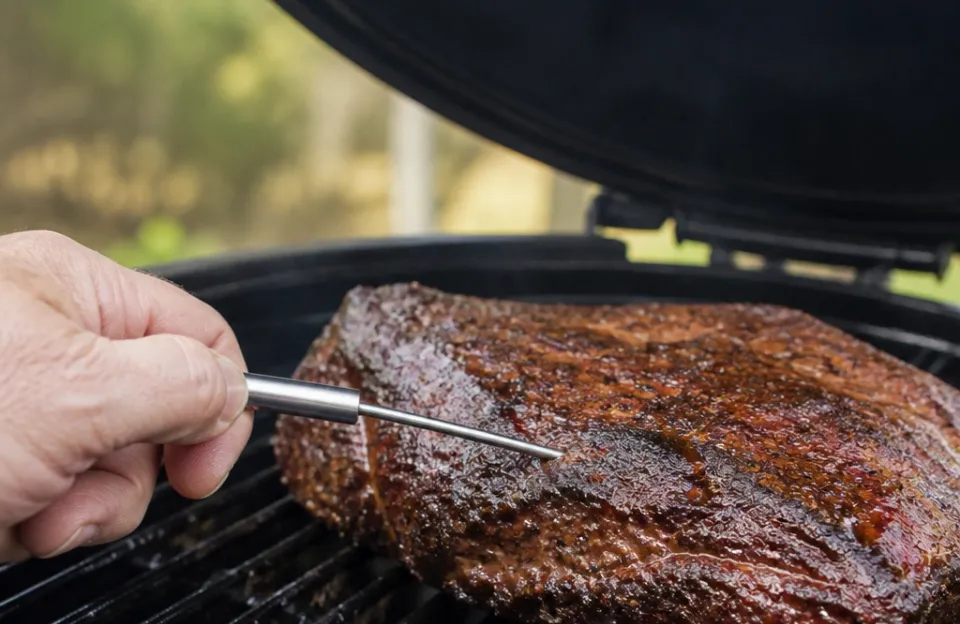
Understanding how to use a meat thermometer in a smoker turns barbecue from a guessing game into a repeatable process. The probe goes into the thickest muscle, stays clear of bone, and transmits data to a screen you can read without lifting the lid. You track the stall, verify your target temperatures against established safety guidelines, and pull the meat when the numbers align with tenderness.
Spend a few minutes calibrating your gear with an ice bath before your next cook. Route your wires carefully so they survive the heat. Clean the probes while the grease is still soft.
These small habits prevent ruined dinners and expensive replacements. A reliable temperature reading is the single most important factor between tough, dry meat and a perfectly smoked meal.


1 thought on “How to Use a Meat Thermometer in a Smoker Perfectly”