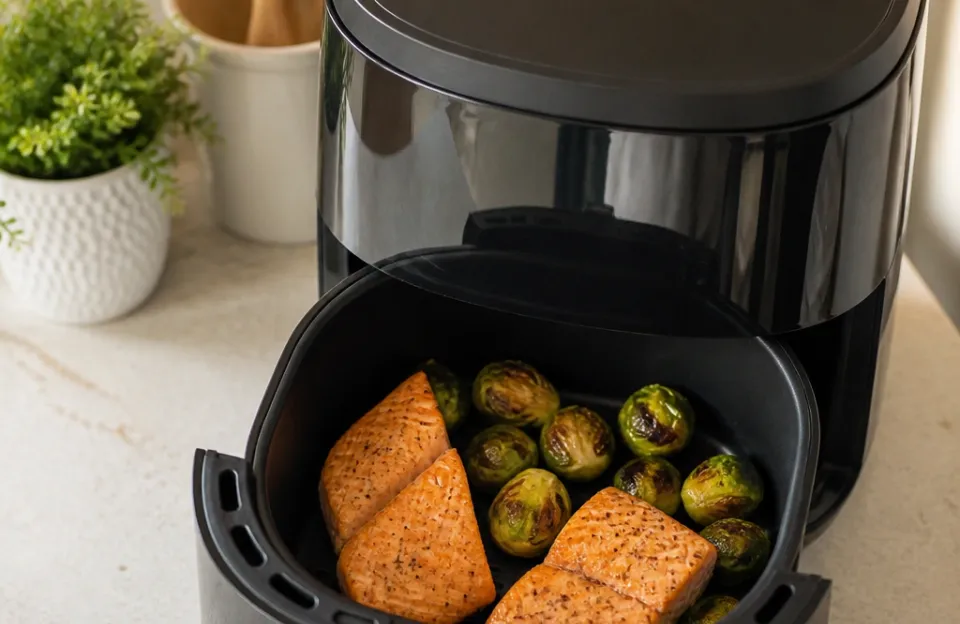
A glass air fryer buying guide helps you pick a model that fits your kitchen, cooks evenly, and stays easy to clean. These appliances swap the standard nonstick metal basket for a transparent borosilicate glass bowl or door. You can watch your food brown without pulling the drawer open and losing heat.
That visibility is the main reason people switch from traditional models.
Choosing the right one depends on capacity, wattage, how the heating element is positioned, and whether the glass components are dishwasher safe. This article covers what separates a good glass air fryer from a frustrating one. We will look at specific models worth considering, compare their strengths, and explain the tradeoffs you need to know before spending your money.
What Makes Glass Air Fryers Different From Metal Baskets
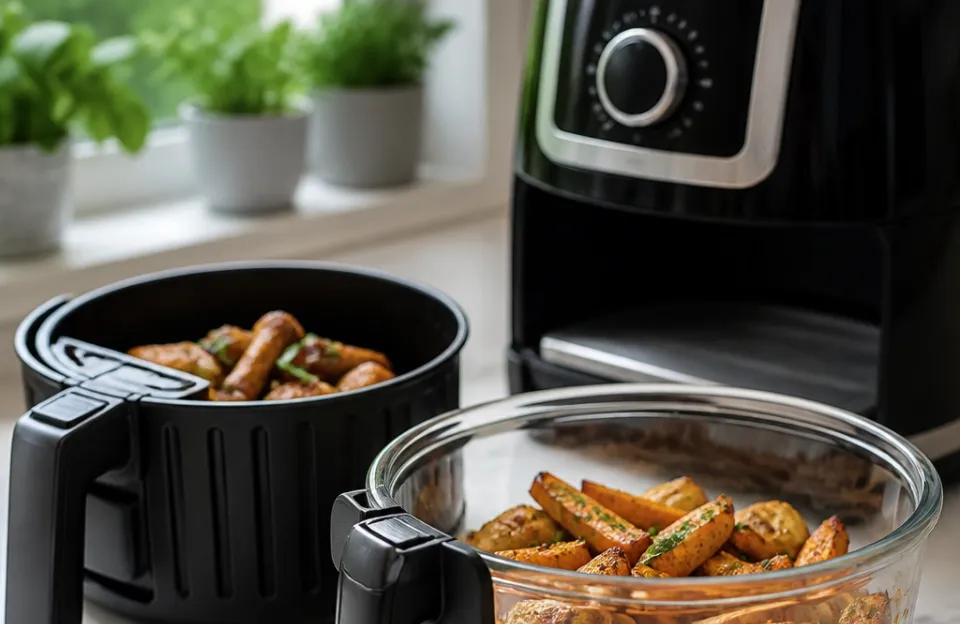
Standard air fryers hide your food inside a coated metal drawer. You guess when things are done based on smell or a timer. Glass air fryers use a clear cooking chamber.
The transparency means you see the Maillard reaction happening in real time. You catch burning edges before they turn black.
The material change also affects cleaning. Nonstick coatings eventually scratch or peel, especially if you use metal tongs. Borosilicate glass does not have a chemical coating to degrade.
It resists scratching from silicone or wooden utensils. Grease wipes off smooth glass much faster than it lifts out of a textured metal mesh basket.
There is a weight difference you should expect. Glass is heavier than stamped steel or aluminum. A 5-quart glass bowl weighs significantly more than a metal basket of the same size.
If you have limited wrist strength or plan to wash the bowl by hand in a deep sink, the extra heft matters.
Deciding Factors Before You Buy
Picking a glass air fryer requires looking past the novelty of the clear window. Several technical details determine whether the appliance will actually cook well or just look nice on your counter.
Bowl Capacity vs. Counter Footprint
Glass air fryers usually come in two shapes. Some use a large round bowl with a motorized lid. Others look like toaster ovens with a glass door and interior light.
Bowl styles typically range from 3 to 7 quarts. Toaster oven styles offer more square inches of rack space.
Measure your counter depth before ordering. Round glass bowls take up a circular footprint that might block outlets or overhang the edge of a narrow counter. If you cook for three or more people, aim for at least 5 quarts.
Smaller capacities mean you are cooking in batches, which defeats the speed advantage of air frying.
Heating Element Placement and Wattage
Most glass bowl air fryers place the heating element and fan inside the lid. Heat pushes down through the glass chamber. Models with 1500 to 1800 watts recover temperature quickly after you add cold food.
Anything below 1200 watts struggles to crisp dense items like potato wedges. Getting the timing right for potatoes takes practice, but adequate wattage makes the process predictable.
Toaster oven styles often have top and bottom elements. This dual setup gives you more control over browning. You can bake a sheet of cookies or roast vegetables with heat coming from both directions.
Check if the model allows you to turn off the bottom element independently when you only want top-down air frying.
Temperature Range and Preset Accuracy
Look for a maximum temperature of at least 400°F. Many cheaper glass models cap out at 390°F, which limits how well you can sear chicken skin. If you frequently cook poultry, knowing whether those wings stay healthy depends heavily on rendering the fat completely, which requires high sustained heat.
Presets are convenient, but they vary wildly between brands. A "fries" button on one machine might run 380°F for 15 minutes, while another runs 400°F for 20 minutes. Rely on manual time and temperature settings until you learn how a specific model behaves.
Lid Weight and Safety Latches
For bowl-style units, the lid houses the motor, fan, and heating coil. It gets heavy. You need a clear path to set it down safely after cooking.
Look for models with built-in resting stands or lids that hinge backward rather than requiring you to lift them completely off.
Safety latches prevent the unit from turning on if the glass bowl is not seated correctly. This prevents the fan from blowing hot air directly onto your countertop. Always verify the latch mechanism feels solid, not flimsy.
| Specification | Bowl Style (e.g., Big Boss) | Oven Style (e.g., Ninja Crispi) |
|---|---|---|
| Typical Capacity | 5 to 7 quarts | Varies by glass vessel used |
| Heating Location | Inside the top lid | Base or surround element |
| Visibility | 360 degrees | Front or side panel |
| Cleaning | Heavy glass bowl | Separate glass containers |
| Storage | Bulky, tall profile | Compact base, stackable glass |
Glass Air Fryer Models Worth Considering
These five options cover different budgets, kitchen sizes, and cooking habits. Each has a distinct design approach to using glass.
Big Boss Oil-Less Halogen Fryer
The Big Boss is one of the oldest and most recognizable glass air fryers. It uses a 16-quart borosilicate glass bowl with a halogen bulb, infrared heat, and a convection fan built into the lid. You stack food on two wire racks inside the bowl.
This model is ideal for someone cooking whole chickens or large batches of vegetables. The sheer volume means you rarely need to cook in batches. The halogen bulb provides intense direct radiant heat alongside the moving air.
The limitation is the lid. It is heavy and extremely hot immediately after cooking. You must have a heat-safe surface ready to receive it.
The 16-quart bowl also takes up significant cabinet space when stored. Washing it in a small apartment sink is awkward.
Ninja Crispi 4-in-1 Portable Glass Air Fryer
Ninja took a different approach with the Crispi. Instead of one massive glass bowl, it uses a compact heating base that accepts different sizes of tempered glass containers. You snap the glass vessel into the base, and the heating element warms it from below while circulating air.
This design works well for meal prep or small households. You can cook directly in the glass container, seal it with an included lid, and put it straight into the fridge. Our full breakdown of this portable Ninja system explains how the modular pieces fit together.
The tradeoff is capacity per cycle. Because you are limited to the size of the individual glass vessels, you cannot roast a large cut of meat in one go. It excels at single servings, reheating leftovers, or crisping up a portion of salmon.
Speaking of seafood, getting flaky results with fish is straightforward here because you can monitor the flesh turning opaque through the glass walls.
Instant Pot Vortex Plus with ClearCook Window
If you prefer the traditional pull-out drawer design, the Instant Vortex Plus ClearCook adds a glass window and an internal light to the basket. The cooking chamber itself remains metal, but the thick glass door lets you watch the entire process without breaking the seal.
This is the best option for people who want the speed and high wattage of a standard drawer air fryer without sacrificing visibility. It reaches 400°F easily and uses a rear-mounted fan for even circulation.
You still deal with a nonstick metal basket inside, so the cleaning benefits of a fully glass chamber do not apply here. The window can also accumulate grease splatter over time, requiring you to wipe the interior glass surface periodically to maintain visibility.
Oster Digital Air Fryer Oven with Glass Door
Oster makes a countertop toaster oven style air fryer with a large front glass door. It functions as a convection oven, broiler, and air fryer. Wire racks slide into multiple positions, and the glass door spans almost the entire front face.
This suits kitchens where a toaster oven is already needed. You replace two appliances with one. The wide interior fits a 12-inch pizza or six slices of bread.
Air frying happens on a mesh rack placed near the top heating elements.
The downside is preheat time. A larger cavity takes longer to reach target temperature compared to a small pod-style fryer. It also radiates more ambient heat into your kitchen, which matters during summer months.
Fritaire Self-Cleaning Glass Air Fryer
Fritaire focuses entirely on the glass bowl concept. Their model uses a borosilicate glass tub and includes a self-cleaning mode. You add water and a drop of dish soap, run the cycle, and the steam loosens baked-on grease.
This appeals to anyone who hates scrubbing. The glass construction avoids the PFAS concerns some consumers have regarding traditional nonstick coatings. The aesthetic is very modern, fitting well in minimalist kitchens.
Capacity sits around 5 quarts, making it suitable for two to three people. The heating element is in the hinged lid, which stays attached to the base rather than being lifted off completely. This solves the heavy-lid problem found on older designs.
However, replacement parts like the glass bowl can be expensive if dropped.
Where Glass Bowls Fall Short
Transparency comes with physical limitations. Glass does not conduct heat the way aluminum does. Metal baskets absorb heat rapidly and radiate it directly into the food touching the surface.
Glass relies almost entirely on the convective hot air moving around the food.
This means the bottom of your food might brown slower than the top. You will likely need to flip items halfway through cooking more often than you would in a metal basket. For example, achieving maximum crunch on wings requires flipping them precisely so the skin facing the glass bottom gets exposed to the direct airflow from the lid.
Thermal shock is another risk. Borosilicate glass handles temperature changes better than regular soda-lime glass, but dropping a hot glass bowl into cold water can still cause it to shatter. Always let the glass components cool on a trivet before washing.
Weight remains the most common complaint. If you currently use a lightweight plastic or thin metal air fryer, lifting a thick glass bowl filled with food will feel noticeably harder. Ensure your countertops can support the unit's total weight, especially for larger oven styles.
Maintaining the Glass Components
Cleaning a glass air fryer requires different habits than maintaining a nonstick metal one. Avoid abrasive scouring pads. Even though borosilicate is tough, repeated scratching dulls the surface and eventually creates micro-textures where grease sticks permanently.
Use warm water, mild dish soap, and a soft sponge or microfiber cloth. For stuck-on carbon buildup, soak the glass bowl in warm soapy water for twenty minutes before wiping. Do not use oven cleaner or harsh chemical degreasers on the glass, as residues can bake into the surface during the next use.
The heating element inside the lid needs attention too. Unplug the unit and let it cool completely. Wipe the metal shield covering the element with a damp cloth to remove oil mist.
Built-up grease on the heating element causes smoking and reduces the lifespan of the appliance.
Check the silicone seals or gaskets where the lid meets the glass bowl. Food particles get trapped there. Remove the seal periodically and wash it separately to prevent odors from transferring to your next meal.
Frequently asked questions
Are glass air fryers safer than nonstick metal ones?
Glass air fryers eliminate the risk of ingesting flaking nonstick coatings. Borosilicate glass does not contain PFAS or PTFE chemicals. However, they introduce the risk of breakage if dropped or subjected to extreme thermal shock.
Both types carry electrical safety standards, so neither is inherently safer overall; they just present different risks.
Can I put the glass bowl in the dishwasher?
Many manufacturers state their borosilicate bowls are dishwasher safe on the bottom rack. Hand washing is generally recommended to extend the life of the glass and prevent etching from harsh dishwasher detergents. Always check the specific manual for your model, as lids containing electrical components must never go in a dishwasher.
Do glass air fryers take longer to cook food?
They can take slightly longer than metal basket models because glass does not retain and radiate heat as efficiently as aluminum or steel. The difference is usually only a few minutes. Preheating the glass bowl for three to five minutes before adding food minimizes this delay.
How do I choose between a glass bowl and a glass door model?
Pick a glass bowl model if avoiding nonstick coatings is your primary goal and you cook smaller portions. Choose a glass door oven style if you need larger capacity, want to toast or bake in addition to air frying, and prefer sliding racks over lifting heavy bowls.
Why does my glass air fryer smoke during use?
Smoking usually happens when grease drips to the bottom of the glass bowl and burns, or when oil splatters onto the heating element in the lid. Adding a tablespoon of water to the bottom of the empty glass bowl before cooking catches drips and prevents them from reaching their smoke point.
Can I use metal utensils inside a glass air fryer?
You should avoid metal utensils. While borosilicate glass is durable, metal tongs or forks can leave gray scuff marks or cause chips if struck hard against the rim. Use silicone-tipped tongs or wooden spatulas to protect the interior surface and maintain clarity.
Picking the Right Glass Model for Your Kitchen
Buying a glass air fryer means prioritizing visibility and material safety over the absolute fastest cooking times. Measure your available space first. Decide if you want the modular convenience of separate glass containers, the large capacity of a classic halogen bowl, or the familiar drawer shape with an added window.
Read the warranty terms specifically regarding glass breakage, since that is the most vulnerable component. Once you know your capacity needs and counter limits, the right model becomes obvious.