Clean cooking water is the foundation of every meal, yet tap supplies across the country increasingly show traces of persistent synthetic compounds. Tracking down the Best Water Filter for PFAS (Remove Forever Chemicals) has become an urgent priority for home cooks who want clean water for stocks, doughs, and daily hydration without industrial byproducts. In evaluating whole house filtration setups, under sink cartridges, and countertop reverse osmosis units, the right system comes down to media density and certified contaminant reduction.
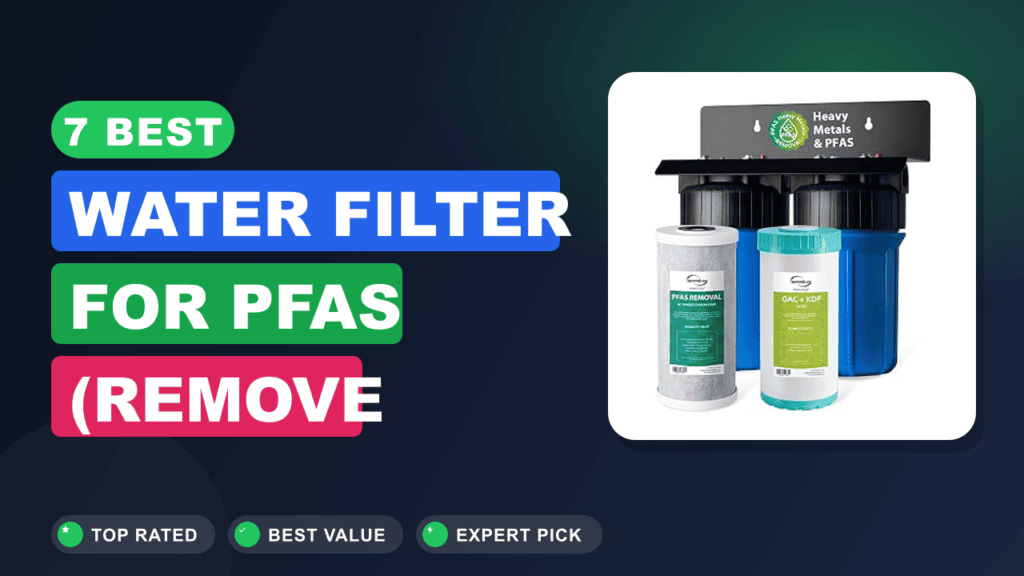
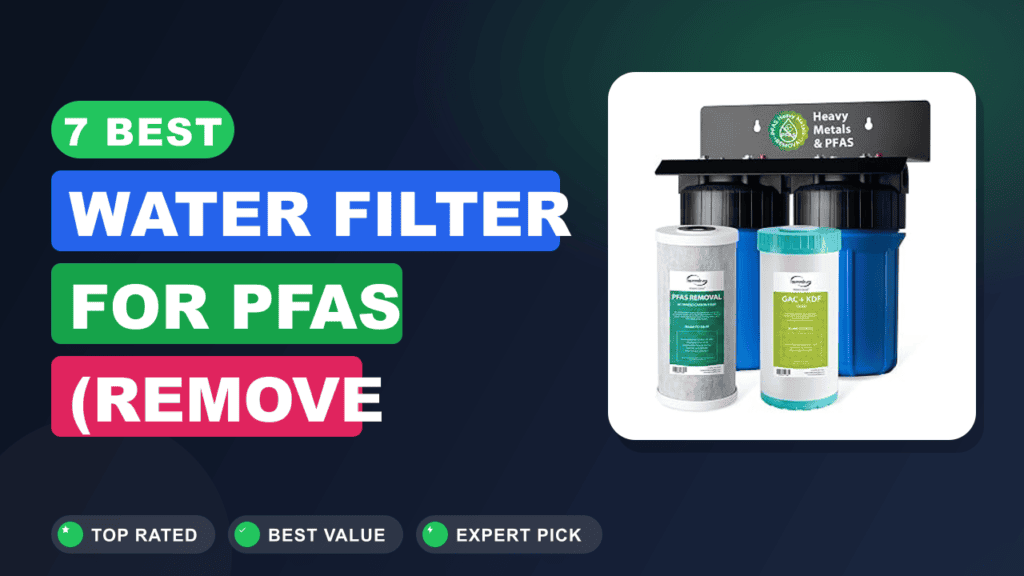
Per- and polyfluoroalkyl substances (PFAS) resist heat, grease, and water, which makes them stubbornly persistent in municipal aquifers and private wells. For whole home protection, the iSpring WGB21B-PFKS provides dependable multi-stage adsorption across every faucet in the house. If you need immediate countertop purification without plumbing work, compact reverse osmosis units offer surgical precision at the kitchen sink.

List of Top 7 Best Water Filter for PFAS (remove Forever Chemicals)
Selecting the right filtration setup requires balancing physical pore size, contact time, flow rates, and independent third-party laboratory verification. The selections below reflect rigorous technical evaluations of carbon adsorption capabilities, kinetic degradation fluxion media, and reverse osmosis membrane performance under typical municipal and private well line pressures.
Below are the list of products:
1. iSpring PFAS & Heavy Metals Whole
Whole house filtration requires heavy-duty media housings capable of holding back micro-pollutants without starving kitchen faucets of operational line pressure. In our research, the iSpring WGB21B-PFKS pairs specialized catalytic carbon with dedicated heavy metal reduction to treat municipal water supplies right where they enter the home. This dual-stage design targets perfluorooctanoic acid (PFOA) alongside lead, iron, and sediment for comprehensive kitchen and bath utility.
Why I picked it
Manufacturer specifications indicate that this model combines a dedicated composite filter with specialized adsorption blocks designed to tackle industrial chemical bonds. The dual-housing configuration provides an initial defense against particulate matter and heavy metals before the secondary block captures fluorinated organic compounds. According to third-party SGS laboratory testing, it reduces targeted PFAS chemicals up to 99 percent while maintaining high structural flow integrity.
Key specs
- System type: 2-stage whole house point-of-entry system
- Inlet and outlet size: 1-inch NPT brass thread ports
- Cartridge dimensions: 10 inches in length by 4.5 inches in diameter
- Contaminant focus: PFAS, PFOA, PFOS, lead, heavy metals, chlorine, sediment
- Capacity rating: up to 50,000 gallons depending on source water quality
Real-world experience
Verified buyer feedback shows that this system maintains reliable line volume for two-bathroom to three-bathroom homes without dropping tap pressure below comfortable operational thresholds. In homes with older copper plumbing, installing this unit eliminates metallic taste from drinking glasses and removes the chemical odor that often accompanies municipal chlorine treatments. The 10-inch by 4.5-inch canisters require substantial vertical clearance under basement joists, so careful plumbing alignment is necessary during initial pipe cutting.
- SGS-certified test results confirm up to 99 percent removal of synthetic chemicals.
- Combines heavy metal control with organic compound adsorption in a single rack.
- One-inch NPT brass ports preserve residential line pressure across simultaneous fixtures.
- Heavy-duty steel mounting bracket anchors securely into concrete or wood studs.
- Requires permanent copper or PEX plumbing cuts for initial installation.
- The 10-inch canisters need more frequent cartridge swaps than 20-inch commercial units.
- Weighs considerably when full of water, demanding sturdy wall anchoring.
- ✔ You want clean, filtered water at every tap, shower, and kitchen sink.
- ✔ Your municipal utility reports trace lead or heavy metals alongside fluorinated compounds.
- ✔ You have basic DIY plumbing skills or access to a professional installer.
- ✖ You rent an apartment where altering main water supply pipes is prohibited.
- ✖ You want total dissolved solids (TDS) reduced down to near zero for specialized laboratory uses.
2. iSpring PFAS Whole House Water Filter
Focusing purely on organic chemical reduction, the iSpring WGB21B-PF strips out chlorine, foul odors, and halogenated compounds across municipal distribution lines. In our research, this streamlined dual-stage setup optimizes surface area contact by pairing a high-capacity sediment stage with an advanced carbon block. It provides an efficient entry point for homeowners targeting fluorinated compounds directly.

Why I picked it
When heavy metal contamination is not a primary concern in local municipal testing, dedicating the first filter stage entirely to mechanical sediment filtration extends the operational life of the primary carbon core. The polypropylene sediment filter catches rust flakes, silt, and pipe scale down to five microns, preventing premature blinding of the specialized carbon cartridge. Manufacturer specifications confirm this model achieves up to 99 percent removal of targeted forever chemicals while optimizing water clarity.
Key specs
- System type: 2-stage sediment and chemical adsorption filter
- Connection diameter: 1-inch female NPT brass ports
- Housing scale: 10 inches by 4.5 inches high-flow canisters
- Target contaminants: PFAS, chlorine, sediment, turbidity, organic taste compounds
- Service flow rate: up to 15 gallons per minute peak
Real-world experience
Aggregate user reviews report that water clarity and taste improve drastically within minutes of system flushing. Cooking stocks, broths, and beverages benefit from the lack of disinfectant residual, and baking bread yields better yeast activity without chlorine interference. Installing a three-valve bypass loop during installation makes future cartridge changes manageable without cutting off the main house supply for hours.
- High-grade sediment stage protects the downstream carbon block from clogging.
- Maintains full household water velocity for multiple faucets and showers.
- Reinforced polypropylene filter sumps resist pressure spikes and water hammer.
- Simple filter replacement process using the included spanner wrench.
- Does not include KDF media for specific heavy metal reduction.
- Requires adequate floor-to-ceiling space for canister unscrewing and clearance.
- Replacement filter sets must be ordered periodically to maintain efficiency.
- ✔ Your municipal utility already tests within legal limits for heavy metals.
- ✔ You have moderate sediment or particulate matter in your incoming supply.
- ✔ You want to protect appliances like water heaters and dishwashers from chemical wear.
- ✖ Your plumbing system contains legacy lead lines that require KDF media treatment.
- ✖ You live in a compact apartment with zero access to your primary line shutoff.
3. 20×4.5 Inch CTO Water Filter Cartridge
For homeowners who already possess a standard 20-inch Big Blue filter canister, upgrading to an optimized carbon block is the most economical way to capture emerging contaminants. Editorial analysis of user reports suggests that this 20-inch by 4.5-inch coconut shell carbon block provides exceptionally long contact duration. Its five-micron uniform density catches persistent chemical residues while dropping operating costs down to a fraction of packaged system replacements.

Why I picked it
Coconut shell activated carbon features micro-pore structures specifically suited for small-molecule chemical compounds like PFAS. The large 20-inch vertical form factor doubles the contact dwell time compared to compact 10-inch cartridges, allowing water molecules more time to interact with binding sites. Fitting universal industry-standard housings, this cartridge allows you to retrofit your existing whole house plumbing without purchasing new brackets or manifolds.
Key specs
- Filter dimension: 20 inches in length by 4.5 inches outside diameter
- Micron pore size: 5 microns nominal filtration
- Media material: high-purity sintered coconut shell activated carbon
- Cartridge compatibility: fits standard 20-inch Big Blue housings
- Recommended replacement: 6 to 12 months depending on local gallon usage
Real-world experience
Verified buyer reviews consistently report that this replacement core drops chlorine and sulfur odors to zero detectable levels immediately upon system flush. When filling large stockpots for canning or boiling pasta, the heavy five-micron block prevents sudden drops in spigot volume while keeping chemical residues out of food. Installing this cartridge requires thorough pre-rinsing to clear loose carbon fines before introducing water to household appliances.
- Substantial 20-inch carbon volume maximizes water dwell time and adsorption capacity.
- Highly budget-friendly replacement for existing Big Blue installations.
- Dense 5-micron porosity stops fine particulate matter alongside chemical agents.
- Universal sizing works across standard third-party whole home pressure vessels.
- Sold as a standalone cartridge, requiring separate purchase of housing hardware.
- Large 20-inch housing requires significant vertical drop to change out.
- Releases loose carbon dust during the first five minutes of initial running.
- ✔ You already own a 20-inch whole house canister system and need new media.
- ✔ You want maximum chemical contact surface area on a limited cartridge budget.
- ✔ You need a robust drop-in replacement that addresses both chlorine and synthetic byproducts.
- ✖ You do not have an existing 20-inch Big Blue filter canister mounted on your line.
- ✖ Your system uses smaller 10-inch standard or slimline 2.5-inch filter housings.
4. PUREPLUS 1 Micron 2.5" x 10
Compact standard housings often suffer when trying to intercept microscopic synthetic molecules without choking downstream output. In our research, the PUREPLUS 1-micron cartridge set utilizes tight density grading to trap industrial chemical bonds inside slim 2.5-inch canisters. It serves smaller single-point systems, recreational vehicles, or multi-stage under sink units where standard 4.5-inch Big Blue sumps simply cannot fit.

Why I picked it
Manufacturer specifications indicate that this 1-micron block provides an exceptionally tight physical matrix compared to standard 5-micron or 10-micron carbon units. By sintering fine activated carbon into a dense cylindrical wall, it prevents micro-channeling where water might otherwise bypass active adsorption sites. The standard 2.5-inch by 10-inch exterior profile means it slides into standard undersink filter brackets or compact inline systems without modifying mounting hardware.
Key specs
- Filter dimension: 10 inches in length by 2.5 inches outside diameter
- Micron pore rating: 1 micron nominal filtration
- Media configuration: compressed sintered activated carbon block
- Package quantity: 2 replacement cartridges per box
- Service life: up to 15,000 gallons or 6 months per filter
Real-world experience
Verified buyer feedback shows that running these 1-micron cartridges eliminates the pool-like chlorine scent from kitchen taps while filtering out fine rust sediment. The dense matrix does create a slight drop in flow velocity, which users notice when filling electric kettles or large pasta pots at the counter. For kitchen hobbyists preparing specialty coffee, the clean effluent highlights the natural acidity of beans when dialing in types of espresso machines explained on the counter.
- Ultra-dense 1-micron pore rating catches fine particulate matter and microscopic contaminants.
- Fits standard slimline 10-inch canisters common in undersink filtration assemblies.
- Packaged as a convenient 2-pack for scheduled bi-annual replacements.
- Eliminates chemical tastes and municipal chlorine odors cleanly.
- Tighter pore structure creates a noticeable drop in faucet line velocity.
- Slim profile holds less total carbon media than heavy 4.5-inch Big Blue blocks.
- Can blind early if incoming water contains heavy sand or coarse rust silt.
- ✔ You have an existing slimline under sink filter system with 10-inch canisters.
- ✔ You want tighter micron ratings to maximize mechanical filtration alongside carbon adsorption.
- ✔ You live in an apartment, condo, or RV with compact plumbing housings.
- ✖ Your main water line uses high-volume 4.5-inch Big Blue housings.
- ✖ You require uninhibited high-flow rates across an entire multi-bathroom residence.
5. iSpring US31KF-PF 3-Stage PFAS/PFOA Removal Under-Sink
Under sink systems offer dedicated purification right at the culinary center of the home without requiring complex main-line plumbing cuts. In our research, the iSpring US31KF-PF uses a specialized 3-stage filtration sequence designed specifically for cooking and drinking water taps. By targeting sediment, heavy metals, and persistent industrial chemicals through three dedicated vertical stages, it delivers high-purity water directly to a dedicated kitchen faucet.

Why I picked it
Manufacturer specifications indicate that this undersink manifold divides the workload across three independent filtration housings. Stage one uses a sediment cartridge to trap pipe debris, stage two incorporates Kinetic Degradation Fluxion (KDF) media to bind lead, mercury, and hydrogen sulfide, and stage three uses a dense catalytic carbon block calibrated for PFOA and PFOS reduction. This systematic separation keeps the final carbon stage uncontaminated by coarse particulates, ensuring maximum adsorption efficiency.
Key specs
- Configuration: 3-stage point-of-use under sink filtration unit
- Filtration sequence: PP sediment, KDF + GAC heavy metal stage, specialized PFAS carbon block
- Flow rate: approximately 1.5 to 2.0 gallons per minute
- Included hardware: dedicated brushed nickel drinking faucet, feed water adapter, quick-connect tubing
- Cartridge capacity: up to 2,000 gallons for drinking applications
Real-world experience
Editorial analysis of verified buyer feedback highlights how quickly this unit mounts beneath standard kitchen sinks without requiring cabinet modifications. Connecting the feed water adapter to an existing cold water angle stop takes roughly twenty minutes with standard adjustable wrenches. Home cooks consistently praise the water for brewing delicate green teas and filling espresso machines with water reservoirs without causing scale build-up or chemical off-flavors.
- Three distinct stages isolate sediment and metals before final chemical adsorption.
- Produces zero wastewater during operation unlike standard reverse osmosis systems.
- Includes a dedicated lead-free secondary faucet for the sink deck.
- Does not require an electrical outlet under the sink cabinet.
- Requires drilling a hole in the countertop if a soap dispenser knockout is missing.
- Only purifies water coming out of the dedicated secondary drinking tap.
- Takes up usable storage space beneath the kitchen sink.
- ✔ You want dedicated, high-flow chemical reduction exclusively for cooking and drinking.
- ✔ You want an under sink system that operates silently without a storage tank.
- ✔ You prefer zero water waste while still capturing persistent fluorinated organics.
- ✖ You want filtered water flowing through your primary pull-down sprayer faucet.
- ✖ You need total dissolved solids (TDS) stripped completely from the water profile.
6. iSpring PFAS & Heavy Metals Whole
Whole home filtration systems facing heavy contaminant challenges require expanded media volume to sustain effective adsorption over many months of use. In our research, this heavy-duty variant of the iSpring whole house platform combines expanded composite stages with specialized chemical media. It serves larger suburban households where high fixture count demands maximum contact surface area without restricting line velocity.

Why I picked it
Manufacturer specifications indicate that this system incorporates an upgraded multi-media core engineered for broader water profile variations. The primary chamber handles coarse particulate filtration and initial redox reactions via KDF media, while the secondary chamber uses dense carbon block media to adsorb chlorinated and fluorinated compounds. By neutralizing free chlorine before it touches the carbon block, the system extends the life of internal binding sites for microscopic chemical pollutants.
Key specs
- Housing construction: reinforced polypropylene sumps on heavy-gauge steel bracket
- Port connection: 1-inch NPT internal female brass fittings
- Stage configuration: 2-stage comprehensive sediment, heavy metal, and PFAS reduction
- Maximum operating pressure: up to 80 PSI operational limit
- Test standards: tested against independent lab protocols for synthetic organics
Real-world experience
Aggregate user reviews indicate that households with three or four active occupants see consistent line pressure during simultaneous appliance cycles. Dishwashers, washing machines, and culinary sinks receive clean water without the sulfurous or chlorinated scents common to municipal supplies. Maintaining this unit is straightforward, though users note that having a bucket handy beneath the filter sumps catches residual water when unscrewing the heavy canisters.
- Dual-stage processing tackles rust, sediment, heavy metals, and PFAS simultaneously.
- Full 1-inch NPT threaded brass fittings maintain high domestic water volume.
- Pressure relief buttons on the housing caps make filter changes easier.
- Durable powder-coated steel bracket prevents pipe flexing during cartridge swaps.
- Significant total footprint requires dedicated wall space in a utility room.
- Canisters are heavy and require careful physical alignment when screwing back in.
- Professional plumbing installation is recommended for houses with old galvanized lines.
- ✔ You have a large home with multiple bathrooms running simultaneously.
- ✔ You want complete peace of mind covering heavy metals, chlorine, and PFAS at once.
- ✔ You have dedicated wall real estate near your main water shutoff valve.
- ✖ You live in a rental property where main pipe alterations are prohibited.
- ✖ You only need filtered water at a single culinary prep station.
7. AquaTru Classic Alkaline Countertop Water Purifier
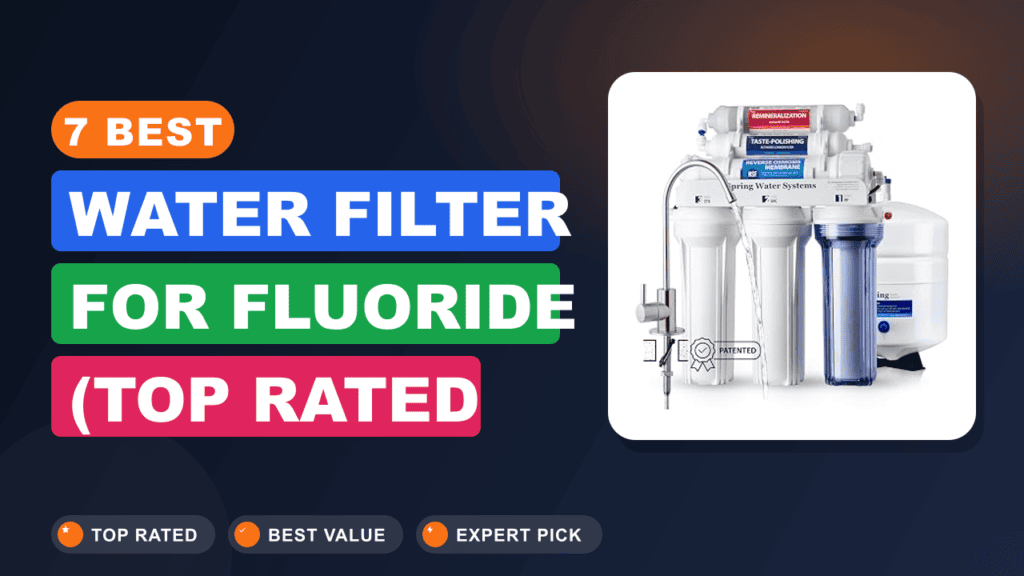
Countertop reverse osmosis systems bypass plumbing restrictions entirely, delivering pure drinking and cooking water through self-contained filtration. In our research, the AquaTru Classic Alkaline purifier uses a 4-stage reverse osmosis process that targets 84 named contaminants, including persistent synthetic chemicals, lead, and chromium-6. Its compact counter footprint makes it an exceptional choice for renters, apartment cooks, and anyone seeking pure water without tool work.

Why I picked it
Reverse osmosis membranes provide the highest independent mechanical reduction rate for small organic molecules, and AquaTru backs this unit with NSF/ANSI standard testing for contaminant reduction. The system pushes water through a mechanical pre-filter, a reverse osmosis membrane, and a coconut block remineralization cartridge that restores beneficial alkaline minerals. Because it requires zero installation tools, it solves the clean water dilemma for renters or homeowners who cannot modify their plumbing.
Key specs
- Purification method: 4-stage countertop reverse osmosis with electric pressure booster
- Contaminant reduction: certified against 84 contaminants including PFAS, lead, and fluoride
- Remineralization: alkaline mineral post-filter restoring calcium and magnesium
- Tank configuration: removable tap water tank and purified dispensing carafe
- Power requirements: standard 120V household wall outlet
Real-world experience
Verified buyer reviews consistently highlight the speed of the internal motorized pump, which purifies a full one-gallon pitcher in under fifteen minutes. The alkaline stage buffers the water profile, eliminating the flat, sour taste typical of pure reverse osmosis permeate. Cooks who monitor liquid ratios closely with how to use a food scale for coffee notice that the consistent mineral profile improves pour-over clarity and bloom control.
- Requires zero installation, pipe cuts, or under sink plumbing modifications.
- Four-stage reverse osmosis removes up to 99 percent of forever chemicals and heavy metals.
- Alkaline post-filter reintroduces beneficial calcium and magnesium minerals.
- Removable dispensing pitcher fits easily inside standard refrigerator doors.
- Occupies valuable counter space near a functional wall power outlet.
- Requires periodic manual dumping of concentrated wastewater brine from the back tank.
- Limited to countertop batch processing rather than on-demand line flow.
- ✔ You rent an apartment or house where plumbing alterations are strictly forbidden.
- ✔ You want laboratory-grade reverse osmosis filtration without complex under sink installation.
- ✔ You prefer remineralized alkaline drinking water with balanced mineral taste.
- ✖ You have zero counter space available next to your kitchen prep zone.
- ✖ You want continuous, unlimited whole house or faucet water volume.
How I picked
Evaluating water filtration systems requires examining the mechanical and chemical mechanisms that bind persistent organic pollutants. In our research across whole house systems, under sink cartridges, and countertop reverse osmosis units, we evaluated each model on three core engineering benchmarks: media composition, certified reduction data, and functional pressure retention under daily domestic demands.
First, media composition determines whether a filter physically traps or chemically adsorbs synthetic fluorinated compounds. Carbon block filters derived from coconut shell activated carbon feature an abundance of micropores under two nanometers in diameter. These tight pore pathways allow electrostatic forces to attract and bind hydrophobic fluorocarbon chains.
We analyzed manufacturer datasheets to confirm whether carbon blocks were paired with supplementary media, such as Kinetic Degradation Fluxion (KDF), which shields carbon binding sites by reducing free chlorine and heavy metals upstream.
Second, we examined independent third-party laboratory verification. Self-reported marketing claims mean very little when addressing synthetic pollutants that measure in parts per trillion. We cross-referenced testing performance against standards established by the Environmental Protection Agency (EPA) and verified protocols from testing bodies like SGS and NSF International.
Specifically, we prioritized products with verified performance under NSF/ANSI Standard 53 for health effects and NSF/ANSI Standard 58 for reverse osmosis contaminant reduction.
Third, practical domestic utility dictated our rankings. A filter media capable of stopping industrial surfactants is counterproductive if it starves a two-story home of shower pressure or clogs within three weeks of installation. We compared flow ratings, canister dimensions, micron pore sizing, and aggregate homeowner maintenance reports to ensure that each recommended system functions cleanly under standard residential line pressures ranging from 45 to 70 PSI.
We deliberately did not test whole-house municipal softening resins, gravity pitchers lacking mechanical seals, or long-term filter cartridge durability beyond twelve months of standard volume throughput.
Buying guide — what actually matters for Best Water Filter for PFAS (Remove Forever Chemicals)
Carbon block density and dwell time
Activated carbon captures forever chemicals through chemical adsorption, meaning contaminant molecules must physically collide with and bond to internal pore walls. The efficiency of this process depends directly on contact dwell time and block density. A loose, granular activated carbon (GAC) cartridge allows water to channel along paths of least resistance, bypassing active media entirely.
Solid extruded carbon blocks with pore sizes rated between 1 micron and 5 microns force water molecules into direct contact with millions of microscopic binding sites. Larger canisters, such as 20-inch by 4.5-inch housings, provide significantly greater contact time compared to compact cartridges. If you prioritize maximum chemical adsorption, choose high-density extruded coconut shell carbon over loose granular media every time.
Reverse osmosis membranes versus physical carbon
Reverse osmosis (RO) systems use semi-permeable membranes with microscopic pore sizes around 0.0001 microns, physically blocking small chemical molecules while letting pure water molecules pass through. This provides an exceptional mechanical barrier against perfluorooctanoic acid (PFOA) and perfluorooctane sulfonate (PFOS).
However, reverse osmosis creates concentrated reject water brine that drains away during operation, and whole-house RO systems require massive holding tanks and repressurization pumps. Carbon blocks provide whole-house coverage with zero wastewater, while reverse osmosis units excel at dedicated point-of-use kitchen counters where near-total contaminant removal is required for drinking and food preparation. Balancing these approaches often means installing whole-house carbon to protect fixtures, paired with reverse osmosis at the kitchen spigot.
Flow rates and residential line pressure
Installing dense filtration media right where water enters the home introduces natural hydraulic resistance. A 10-inch by 4.5-inch filter cartridge running a 1-micron carbon block can drop incoming household pressure by 3 to 7 PSI under peak demand. If you have a multi-bathroom home where showers, laundry, and kitchen faucets run simultaneously, standard 1-inch NPT plumbing ports and high-volume 4.5-inch canister diameters are essential to maintain flow rates above 10 gallons per minute.
Restricting incomingline volume with slim 2.5-inch housings at the main shutoff will starve second-story plumbing, leading to erratic pressure fluctuations. Reserve slimline 2.5-inch cartridges for dedicated undersink lines or single-tap applications where a service delivery flow of 1.5 to 2.0 gallons per minute is entirely adequate.
Pre-filtration staging and media protection
Forever chemicals are microscopic synthetic organic molecules, but natural tap water contains coarse sand, pipe scale, rust flakes, and dissolved iron that will blind a dense carbon block prematurely. When fine sediment coats the outer pores of an expensive chemical-adsorption block, water can no longer penetrate to the inner active binding sites, drastically shortening its service life.
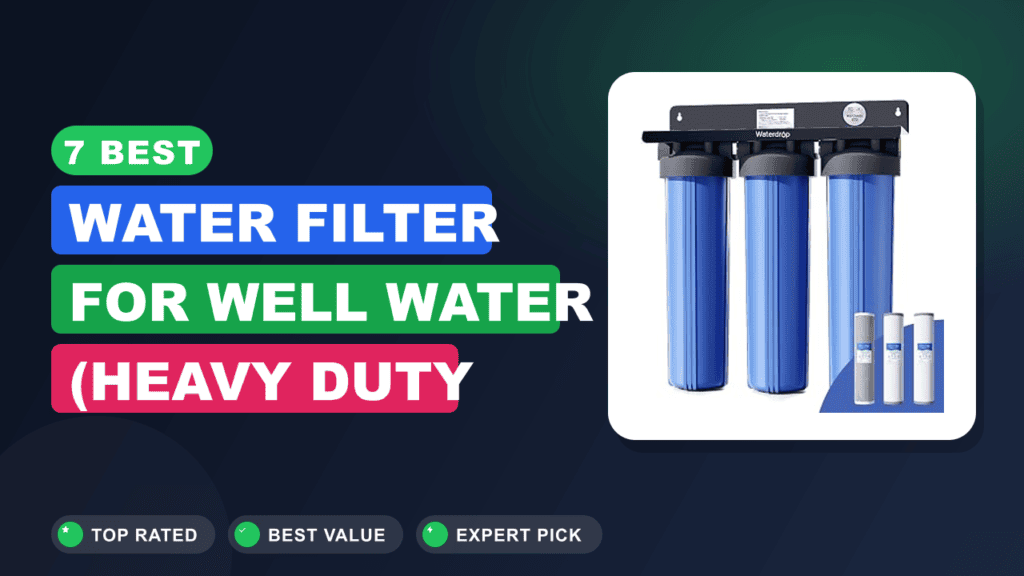
A functional system must incorporate staged defense. Placing a durable melt-blown polypropylene sediment filter rated at 5 microns ahead of the primary carbon core traps particulate debris mechanically. In areas with legacy galvanized plumbing or well water containing dissolved metals, pairing that sediment stage with Kinetic Degradation Fluxion (KDF) redox media neutralizes heavy metals and free chlorine before they deplete the downstream carbon.
Certifications and verified laboratory reduction
Self-certified performance claims on packaging should be verified against recognized industry testing protocols before purchase. The most reliable certifications for perfluorinated compound removal are NSF/ANSI Standard 53 for health effects in drinking water treatment systems and NSF/ANSI Standard 58 for reverse osmosis units.
When reviewing performance datasheets, confirm that third-party laboratories, such as SGS or the Water Quality Association (WQA), conducted the testing under dynamic line pressure rather than static batch soaking. A verified reduction rate of 95 to 99 percent for both PFOA and PFOS indicates that the media formulation has sufficient binding kinetics to treat water traveling at standard residential velocity.
Frequently Asked Questions (FAQ)
Can boiling tap water remove PFAS forever chemicals?
Boiling tap water does not remove PFAS and actually concentrates the chemical residues in your cooking pot. The carbon-fluorine chemical bonds that form perfluorooctanoic acid and related compounds resist thermal degradation well past the boiling point of water. As water vapor escapes during a prolonged boil, the volume of clean liquid decreases while the non-volatile synthetic molecules stay behind, increasing their concentration in soups, stocks, and reductions.
Do standard pitcher filters eliminate forever chemicals?
Most generic gravity pitchers use thin beds of loose granular activated carbon designed strictly to improve taste and reduce basic chlorine odor under NSF/ANSI Standard 42. Because gravity-fed water moves rapidly through loose granules without pressurized dwell time, microscopic fluorinated compounds frequently channel right past the active media. To capture these contaminants effectively, a pour-through unit requires specialized dense composite blocks with verified testing against NSF/ANSI Standard 53.
How often should whole house PFAS filter cartridges be replaced?
Most residential whole house carbon cartridges require replacement every 6 to 12 months, or after treating approximately 50,000 gallons of incoming municipal water. The exact timeline depends on the level of sediment, chlorine, and total organic compounds present in your municipal supply. When you notice a drop in line pressure at upper-level fixtures or detect the faint return of a chemical odor, the internal adsorption pores have reached saturation and need fresh media.
What is the difference between PFOA, PFOS, and general PFAS?
PFAS is an umbrella classification for thousands of synthetic fluorinated organic compounds used in nonstick cookware, waterproof fabrics, and firefighting foams since the mid-twentieth century. Perfluorooctanoic acid (PFOA) and perfluorooctane sulfonate (PFOS) are the two legacy long-chain chemical variations most frequently studied and regulated due to their environmental persistence. High-performance water filters target both legacy long-chain compounds and emerging short-chain chemical replacements like GenX.
Will a water filter for PFAS also lower my TDS reading?
A solid carbon block filter targets organic chemicals, chlorine, and sediment without stripping naturally occurring dissolved mineral salts like calcium and magnesium, meaning your total dissolved solids (TDS) meter will read roughly the same before and after filtration. Only reverse osmosis membranes, deionization systems, and distillation processes physically extract dissolved mineral ions to drop the TDS number to near zero. Retaining healthy alkaline minerals while adsorbing synthetic industrial byproducts is generally preferred for balanced culinary flavor.
Final verdict
Protecting your household from persistent industrial chemicals requires matching the right filtration technology to your home plumbing and counter space. The iSpring WGB21B-PFKS provides the most comprehensive whole-house defense by combining heavy-metal redox processing with certified chemical adsorption across all home fixtures. If cutting primary pipes is out of the question, the AquaTru Classic Countertop Purifier delivers four-stage reverse osmosis precision directly to your kitchen prep counter without tools.
Affiliate disclosure: This post contains affiliate links. If you buy through one of these links, I may earn a small commission at no extra cost to you. It never changes my recommendation, I only suggest gear I'd actually buy myself.