If you want crispy food without buying a dedicated countertop appliance, the best alternatives to an air fryer are your standard oven with a wire rack, a convection toaster oven, or a deep fryer for authentic crunch. Each method uses different heat mechanics to brown food and render fat. You don't need a specialized machine to get good results.
This guide covers seven specific cooking methods that replicate what an air fryer does. We'll look at how each one handles heat, which foods work best, and where they fall short compared to a dedicated unit. Whether you have a full kitchen or just a basic stove, you'll find a method that fits your setup.
How these cooking methods were chosen
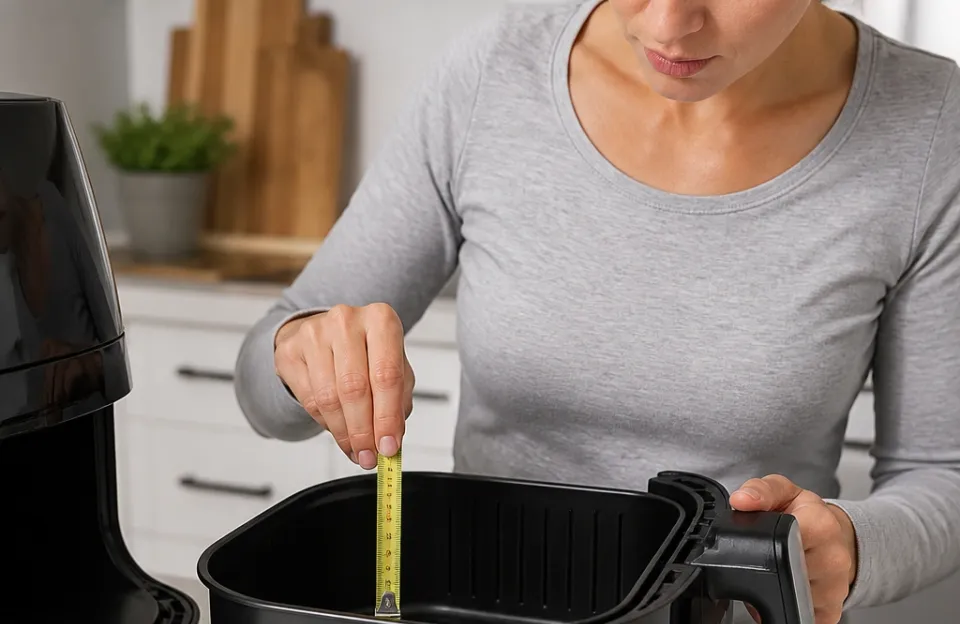
Air fryers are small convection ovens. They use a heating element and a high-speed fan to circulate hot air around food in a perforated basket. To find real substitutes, I looked for equipment that either moves hot air rapidly or transfers heat efficiently enough to create a Maillard reaction.
That browning process is what gives roasted meat and fried potatoes their flavor.
The options below were selected based on three things: their ability to crisp food, how much counter space they require, and whether most kitchens already have them. I skipped methods like slow cookers or microwaves because they can't produce a dry, browned exterior.
Your Standard Oven With a Wire Rack
A conventional oven paired with a raised wire baking sheet is the most accessible way to mimic rapid air circulation. The oven provides consistent ambient heat, while the wire rack lifts the food off the pan so hot air hits the bottom surface. This prevents steaming, which is the main reason baked food turns out soggy instead of crisp.
To get results close to a countertop unit, set your oven between 400°F and 450°F. Lower temperatures will cook the food through but won't brown the exterior fast enough before the inside dries out. Leave at least an inch of space between pieces of food on the rack.
Crowding traps steam.
This method works well for larger batches. If you're figuring out the right timing for roasting root vegetables, a standard oven gives you more room to spread them out in a single layer. The tradeoff is time.
A full-sized oven takes 10 to 15 minutes to preheat, and the large cavity means it takes longer for the air to reach peak temperature compared to a compact appliance. It also heats up your entire kitchen, which matters during summer months.
Getting maximum crunch from a conventional oven
For extra browning, pat your ingredients completely dry with paper towels before adding oil. Moisture on the surface creates steam, and steam prevents crisping. Toss vegetables or proteins in a light coating of high-smoke-point oil, like avocado or refined olive oil.
Spread them evenly on the rack. Flip everything halfway through the cooking time to expose all sides to the direct heat radiating from the top element.
Convection Toaster Ovens
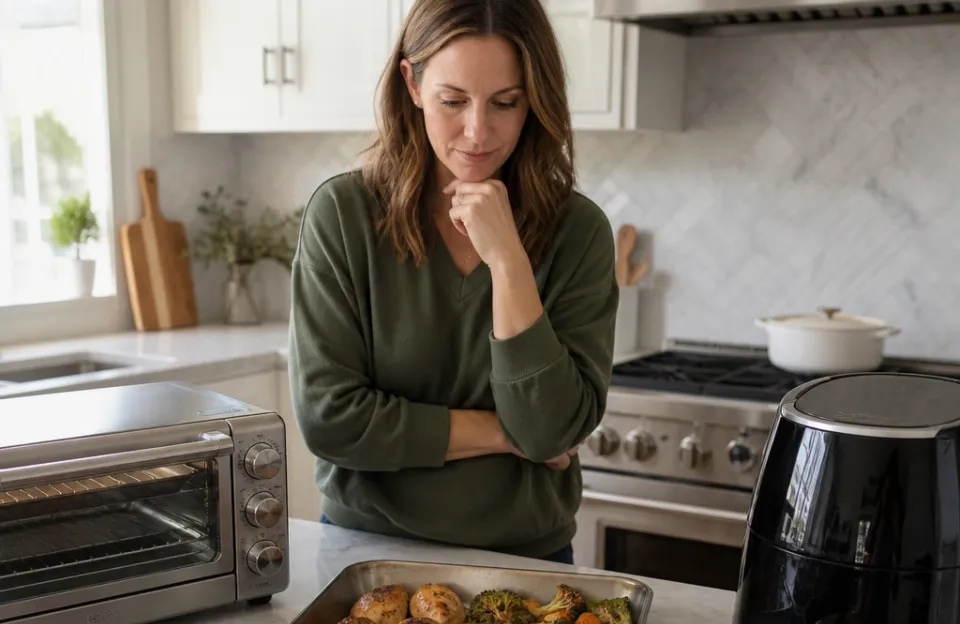
A convection toaster oven shrinks the cooking chamber and adds a fan, making it mechanically identical to a countertop air fryer. Because the interior space is smaller than a wall oven, the fan pushes hot air across the food faster. Many modern toaster ovens even include a dedicated "air fry" setting, which simply runs the fan at its highest speed alongside the top heating elements.
This is the closest direct substitute available. You get the same rapid cooking times and the same dry-heat browning. Models with multiple rack positions let you cook a protein and a side dish simultaneously.
If you are looking at compact countertop models for small spaces, a good convection toaster oven often replaces both a toaster and a standalone frying unit.
The limitation here is capacity. While larger than a basket-style machine, most toaster ovens max out at fitting four to six chicken thighs or a small sheet pan of fries. The glass door also radiates heat outward, so you need clearance on your counter.
And cheaper models without true convection fans will just bake slowly rather than crisp.
Why the fan speed matters
Standard toaster ovens rely on radiant heat from top and bottom quartz elements. Convection models add a rear or top-mounted fan. When comparing units, look for one that allows you to control the fan speed independently of the temperature dial.
High fan speed at high heat replicates the exact environment needed to quickly render fat under chicken skin or blister the outside of roasted vegetables.
Deep Frying on the Stovetop
Deep frying submerges food entirely in hot oil, usually heated between 350°F and 375°F. Oil transfers heat roughly four times faster than air. This rapid transfer instantly vaporizes surface moisture, creating a hard, crunchy crust while sealing the interior.
Countertop air machines try to simulate this using moving air and a fraction of the oil, but physics favors the vat of hot fat for sheer texture.
You only need a heavy-bottomed pot, like a Dutch oven or cast iron skillet, and a neutral oil with a high smoke point. Peanut, canola, and vegetable oils work perfectly. Use a clip-on thermometer to monitor the oil temperature.
Dropping cold food into the oil causes the temperature to plummet, resulting in greasy, soggy exteriors. Fry in small batches to keep the heat stable.
If you want to know whether skipping the oil bath changes the nutritional profile of your meals, the answer is yes. Deep frying adds significant calories and fat. It also requires careful disposal of leftover oil and presents a burn hazard if the pot is knocked over.
But for pure textural quality, nothing circulating hot air can match submersion.
Managing oil temperature for a clean crust
When food hits hot oil, the moisture on its surface boils immediately. If the oil isn't hot enough, the food absorbs the oil before the crust forms. Keep your burner on medium-high and wait for the thermometer to read a steady 365°F before adding anything.
Adjust the flame as you go. The oil should bubble vigorously but never smoke.
Cast Iron Skillet Searing
A heavy cast iron skillet retains massive amounts of thermal energy. When you place food in a preheated cast iron pan, the metal doesn't lose its heat the way thin aluminum pans do. This intense, sustained contact browns surfaces rapidly through direct conduction rather than relying on ambient air.
Preheat the skillet on the stove over medium-high heat for five full minutes before adding oil or food. You want the iron uniformly hot. This method excels for steaks, pork chops, burgers, and thick cuts of fish.
It produces a crust that moving air struggles to replicate because the food is pressed directly against a 400°F solid surface.
The drawback is that it's a stovetop-only method, and it only crisps the sides touching the pan. You have to manually flip the food. It also generates smoke indoors if you push the heat too far, especially when searing fatty meats.
For thinner items like getting a proper crust on breaded poultry, a shallow layer of oil in the skillet bridges the gap between pan-searing and deep frying.
Preheating the iron properly
Cast iron heats unevenly at first. The area directly over the burner gets hot while the edges stay cool. Letting it sit on the burner for several minutes allows the heat to spread across the entire cooking surface.
Sprinkle a few drops of water onto the pan. If they skitter and evaporate instantly, the skillet is ready for oil.
Halogen Ovens
Halogen ovens use a glass bowl, a metal lid containing a halogen bulb, and a fan. The bulb emits intense infrared radiation that heats the air and the food directly, while the fan circulates it. They cook faster than conventional ovens and use no oil, making them a functional sibling to the countertop convection style.
Because the bowl is transparent, you can watch the browning process without opening the lid and losing heat. They handle whole chickens, large batches of roasted vegetables, and reheating leftovers effectively. The infrared heat penetrates slightly deeper than standard electric coils, which speeds up cooking times for dense items.
They are bulky to store, though. The glass bowl is heavy and fragile compared to a plastic appliance housing. Cleaning requires washing a large piece of glass after every use.
They've also fallen out of mainstream popularity, making replacement parts like bulbs or fan motors harder to source if something breaks.
Broiling in Your Main Oven
The broiler element sits at the very top of your oven and blasts intense, direct downward heat. Broiling operates at temperatures around 500°F to 550°F. It functions essentially as an upside-down grill.
This extreme radiant heat chars and crisps the top layer of food very quickly.
It's ideal for melting cheese, blistering the skins of peppers, or finishing a piece of fish with a crust. Move your oven rack to the highest position, about two to three inches away from the heating element. Keep the oven door slightly ajar if your manufacturer recommends it, which prevents the thermostat from cycling the broiler off prematurely.
Broiling demands constant attention. The difference between a nicely browned top and a burnt disaster is often less than sixty seconds. It also only works on the top surface of the food.
You still need to flip items to crisp both sides, unlike a fan-driven system that surrounds the food with heat from all angles.
Outdoor Grilling Over Direct Heat
A gas or charcoal grill provides high, direct heat combined with airflow. Leaving the lid open mimics a broiler. Closing the lid turns the grill into a large outdoor convection oven, trapping smoke and circulating hot air around the grates.
Grilling imparts flavor that indoor electrical appliances cannot replicate. Fat dripping onto hot coals or flavorizer bars creates smoke that coats the food. The grates leave char marks, providing texture and caramelization.
It's excellent for thicker cuts of meat, corn, and sturdy vegetables.
Weather and setup time are the obvious barriers. You can't quickly grill a handful of frozen french fries on a Tuesday night. Temperature control is also less precise than turning a digital dial.
Charcoal grills require time to ash over, and gas grills need preheating to ensure the grates are hot enough to prevent sticking.
Comparing the cooking methods
Choosing the right alternative depends on what you prioritize: speed, texture, health, or convenience. Here is how the primary methods stack up against each other.
| Method | Primary Heat Source | Best Used For | Main Limitation |
|---|---|---|---|
| Oven + Wire Rack | Ambient convection | Large batches, sheet pan meals | Slow preheat, heats kitchen |
| Convection Toaster Oven | Fan-assisted radiant | Small batches, quick reheating | Limited interior capacity |
| Deep Frying | Hot oil submersion | Maximum crunch, traditional texture | High calorie count, messy cleanup |
| Cast Iron Skillet | Direct conduction | Steaks, chops, pan-frying | Only crisps one side at a time |
| Halogen Oven | Infrared + fan | Whole birds, visible cooking | Heavy glass bowl, fragile |
| Broiler | Top-down radiant | Melting cheese, charring tops | Burns food rapidly, requires watching |
| Outdoor Grill | Radiant + smoke | Thick meats, smoky flavor | Weather dependent, long prep |
If you want the closest experience without buying new equipment, start with your oven and a wire rack. If you care strictly about texture and don't mind the oil, deep frying remains the gold standard. According to the FDA food safety guidelines, always verify that poultry cooked by any method reaches an internal temperature of 165°F to prevent foodborne illness.
A simple probe thermometer solves this regardless of the cooking vessel.
Matching the method to your food
Different foods react differently to various heat sources. Knowing what you plan to cook dictates which tool you should grab.
For battered foods like tempura or wet-dredged onion rings, you must use deep frying. Moving hot air will blow the wet batter off the food before it sets, or it will drip through the wire basket and pool at the bottom. Dry rubs and light oil sprays work fine in convection setups, but wet batters require instant oil-submersion to solidify.
Dense root vegetables benefit from the prolonged, even heat of a standard oven on a wire rack. Cutting them into uniform sizes ensures they finish at the same time. Thin items like bacon strips or zucchini slices cook so fast that a broiler or a screaming hot cast iron pan is better suited to crisp them before they turn to leather.
You can review typical durations for tender summer squash to adjust your stovetop timing accordingly.
Proteins with thick layers of fat, such as duck breast or bone-in chicken thighs, need time for that fat to render out. A convection toaster oven or a moderate oven with a rack allows the fat to melt and drip away while the skin dries out and eventually crisps. Throwing thick, fatty cuts into a blazing hot skillet will burn the outside while leaving the underlying fat rubbery and unrendered.
Edge cases where substitutes fall short
There are specific scenarios where none of these alternatives perfectly replace a dedicated countertop unit. Reheating previously fried food is one of them. Pizza, leftover fried chicken, or day-old french fries revive beautifully under a concentrated fan of hot air.
An oven takes too long and dries them out. A microwave makes them soggy. A skillet works for pizza but is awkward for breaded chicken.
Small portions are another weak point. Turning on a large gas oven to roast a single serving of broccoli wastes energy. A toaster oven helps, but a dedicated basket unit heats up almost instantly due to its tiny volume.
If you frequently cook single servings of snacks, a skillet or a toaster oven is your best bet, though neither matches the zero-preheat speed of a compact fryer.
Finally, shaking the basket is a technique unique to those machines. Tossing fries or wings mid-cook ensures even browning without flipping each piece individually. Replicating this in an oven requires pulling out a hot pan, tossing the food with a spatula, and sliding it back in.
It's doable, but it interrupts the heat cycle and takes more effort.
Frequently asked questions
Can I use my microwave to get crispy food?
Microwaves heat water molecules inside the food, generating steam. Steam is the enemy of a crispy exterior. While some microwaves have a built-in convection mode that uses a heating element and a fan, a standard microwave alone will leave food soft, chewy, or rubbery.
You need dry, ambient heat to brown surfaces.
Is a convection oven exactly the same thing?
Mechanically, yes. Both use a heating element and a fan to circulate hot air. The difference is scale.
A countertop fryer has a tiny cooking chamber, meaning the fan moves the air over the food much faster and more intensely. A full-sized convection oven achieves similar results but generally takes slightly longer to preheat and cook due to the larger volume of air.
Do I really need to buy a wire rack for my oven?
If you want crispness, yes. Placing food directly on a flat baking sheet traps the moisture escaping from the bottom of the food. That moisture turns to steam, keeping the underside soggy.
A wire rack elevates the food, allowing hot air to circulate underneath it. If you don't own a rack, crumpling aluminum foil into small logs and resting the food on top of them creates a makeshift elevated surface.
Which method uses the least electricity?
A cast iron skillet on a gas stove uses no electricity at all. Among electric options, a small convection toaster oven draws significantly less power than heating a full-sized 30-inch wall oven. Halogen ovens are also relatively efficient because the infrared bulb heats the food directly rather than wasting energy heating a large volume of empty air first.
How do I choose between deep frying and oven roasting?
Base the decision on texture versus convenience. Deep frying yields a superior, shatteringly crisp crust and cooks food in minutes, but it leaves you with a pot of hot oil to filter or discard. Oven roasting is hands-off, requires minimal oil, and is easier to clean up, but the exterior will be firmer and less crunchy than submerged frying.
Does broiling work for thick cuts of meat?
No. Broiling applies extreme heat only to the top surface. A thick steak or pork chop will char on the outside while remaining raw in the center.
Broiling is meant for thin cuts, melting toppings, or finishing a piece of meat that was mostly cooked through via another method, like sous vide or low-temperature roasting.
Picking the right tool for your kitchen
Finding the best alternatives to an air fryer comes down to evaluating what you already own and what you actually cook. A standard oven with a wire rack handles large family dinners. A convection toaster oven covers quick weeknight meals for two.
A cast iron skillet delivers unmatched crust on steaks, while deep frying remains the king of texture for breaded foods.
You don't need specialized gear to achieve browning and crunch. Understanding how heat moves, whether through oil, iron, or circulated air, lets you adapt any recipe to your current setup. Pick the method that fits your portion size, your tolerance for cleanup, and the specific texture you want on your plate tonight.