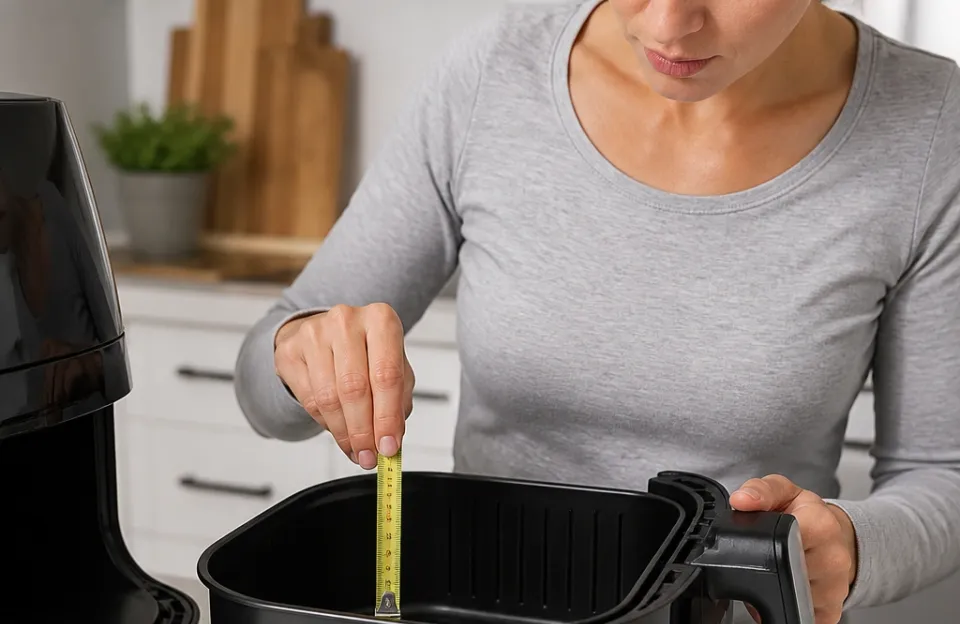
Air fryers without plastic are countertop convection ovens built entirely from stainless steel, glass, or ceramic. They cook food by circulating hot air around a basket or tray, and no polymer touches your ingredients during the process. If you want to avoid heating synthetic materials near your dinner, these machines give you that option.
This article explains what makes an air fryer without plastic different from standard models. We will look at the specific materials used in the cooking chamber, how heat affects those materials, and what tradeoffs come with buying one. You will also find out which parts of a typical machine usually contain polymers and how manufacturers eliminate them.
Why people search for air fryers without plastic

Standard countertop fryers almost always rely on polymers. The outer shell is usually molded polypropylene. The inner basket gets a nonstick coating made from PTFE, commonly known as Teflon.
Even models marketed as healthy often hide synthetic gaskets or coated trays inside. People searching for air fryers without plastic generally want to remove those materials from their kitchens.
The concern centers on heat. When polymers get hot, they can release volatile organic compounds or microscopic particles. The FDA regulates food contact substances to keep these exposures within safe limits.
Still, many home cooks prefer to skip the risk completely. They want a machine where only inert materials touch their meals.
Another reason involves durability. Polymer coatings scratch easily. Once the coating chips, the bare metal underneath rusts or sticks.
A cooking chamber made from bare stainless steel or borosilicate glass does not have that problem. It lasts longer under daily use.
Materials that replace synthetic components
Manufacturers use three main materials to build air fryers without plastic: stainless steel, glass, and ceramic. Each has distinct properties that change how the machine cooks and how heavy it feels on your counter.
Stainless steel construction
Stainless steel is the most common alternative. Brands use 304 grade steel for the interior walls and the crisper tray. This alloy resists rust and handles temperatures well above 500 degrees Fahrenheit without degrading.
Some models use uncoated steel baskets. Others use a wire rack system similar to a toaster oven.
Steel conducts heat fast. The preheat time drops compared to thicker materials. Cleaning requires more effort because food bonds to bare steel faster than it bonds to a slick polymer coating.
Soaking the tray in warm water usually loosens stuck bits.
Glass chambers and doors
Borosilicate glass is the second option. You might recognize this material from laboratory beakers or bakeware. It withstands rapid temperature changes without cracking.
In an air fryer without plastic, the entire cooking bowl or the front door is made from thick glass.
Glass gives you a clear view of your food browning. You do not need to pull the drawer open to check progress. Opening the drawer drops the internal temperature by 20 to 50 degrees, so keeping it closed speeds up cooking.
For example, if you are figuring out timing for roasted potatoes, watching through glass lets you pull them out exactly when the edges crisp up.
Glass is heavier than steel. A full glass bowl unit weighs significantly more than a standard polymer model. Dropping it means replacing the whole chamber.
Ceramic coatings and inserts
Ceramic offers a middle ground. Some brands apply a sol-gel ceramic layer over a steel base. This layer provides a slick surface for easy cleanup without using PTFE.
Other brands sell solid ceramic baking inserts that sit inside a steel cavity.
True ceramic coatings contain no synthetic polymers. They derive from silica. They tolerate high heat safely.
However, cheap ceramic coatings wear down after a year of heavy scrubbing. Solid ceramic inserts last longer but take up space inside the cooking chamber, reducing the total capacity.
How heat behaves in a polymer-free cooking chamber
Air fryers without plastic manage airflow differently than coated models. A fan sits at the top or back of the unit. It pushes heated air down and around the food.
The material of the chamber walls dictates how that heat reflects.
Polymers absorb some radiant heat. Steel reflects it. Because steel bounces thermal energy back toward the center, the cooking environment stays slightly more aggressive.
Food browns faster on the outside. You may need to lower the recipe temperature by 10 or 15 degrees compared to what a manual suggests for a coated model.
Glass retains heat longer once it reaches temperature. If you cook in batches, a glass chamber stays hot between rounds. This retention helps when you are preparing meal prep chicken wings for the week.
The steady heat keeps the skin blistering evenly across multiple trays.
Ceramic falls between the two. It heats slower than steel. It cools faster than glass.
The thermal mass of the insert matters here. A thick ceramic plate holds warmth well. A thin ceramic-coated tray acts mostly like the steel underneath it.
| Material | Heat Reflection | Preheat Speed | Weight | Durability Against Scratches |
|---|---|---|---|---|
| Stainless Steel | High | Fast | Medium | High |
| Borosilicate Glass | Low | Slow | Heavy | Medium (shatter risk) |
| Ceramic Coating | Medium | Medium | Light | Low to Medium |
| Solid Ceramic | Low | Slow | Heavy | High |
Hidden polymers in supposedly safe appliances
Finding true air fryers without plastic requires reading spec sheets carefully. Marketing language often misleads buyers. A box might say "stainless steel interior." That phrase only describes the walls.
The drawer handle, the fan shroud, or the gasket sealing the door might still be nylon or polypropylene.
Pay attention to the power cord entry point. Many units use a polymer strain relief where the cord meets the body. Look at the feet on the bottom.
Rubberized synthetic pads are standard. While these parts do not touch your food, strict avoidance means checking every component.
The heating element itself rarely contains polymers. It is usually a nichrome wire wrapped around a mica or ceramic core. The danger zone is the area immediately surrounding the element.
Some cheaper units use a polymer fan blade to push air past the heater. At high temperatures, that blade off-gasses directly into the airstream hitting your dinner. A truly clean design uses a metal fan blade.
If you buy a model with a metal mesh basket instead of a solid pan, verify the mesh is welded steel. Some woven meshes use synthetic threads to hold the shape during manufacturing, though this is rare in modern appliances. Checking reviews from owners who have disassembled their units often reveals these hidden parts.
Maintenance differences for uncoated surfaces
Cooking with air fryers without plastic changes your cleanup routine. Nonstick coatings let grease slide off into the sink. Bare steel and glass demand more attention.
Grease baked onto stainless steel turns into a sticky resin. You cannot scrape it with a metal spatula without scratching the finish. Nylon scrubbers are out of the question if you want zero polymer contact.
Your best tools are chainmail scrubbers, stiff natural bristle brushes, or coarse salt mixed with oil to act as an abrasive paste.
Glass bowls show every smudge. Baked-on oil creates a cloudy film over time. Boiling water with a tablespoon of baking soda inside the glass chamber loosens this film.
Let it soak for twenty minutes before wiping it out. Avoid sudden temperature shocks. Do not run cold water over a hot glass bowl.
Thermal shock will crack it instantly.
Ceramic coatings require gentle handling. Metal utensils gouge the surface. Use wooden tongs or silicone tools if you accept food-grade silicone as a safe material.
Silicone is technically a synthetic polymer, though it lacks the carbon chains found in plastics. Purists avoid it. Everyone else uses wooden spoons.
Keeping these surfaces clean matters for flavor too. Old grease burns during the next session and coats fresh food in bitter smoke. When you are cooking delicate fish fillets, residual burnt oil ruins the taste.
Wipe the chamber after every single use.
Capacity and size limitations
Removing polymers shrinks the usable space inside many units. Standard models use thin injection-molded walls. Those walls stay cool enough to touch while maximizing the interior volume.
Steel and glass need to be thicker to maintain structural integrity and safe exterior temperatures.
A 6-quart polymer unit might measure 12 inches wide. A 6-quart steel unit often measures 14 or 15 inches wide because of double-wall insulation. Glass bowl models tend to be round and bulky.
They eat up counter space fast.
Capacity numbers on the box refer to the total volume of the chamber. They do not account for the thick racks or heavy ceramic plates sitting inside. A machine advertised as holding 5 quarts might only fit 3 quarts of actual food once you add the uncoated steel tray.
Always subtract about 20 percent from the stated capacity to figure out what actually fits.
This size issue matters most for families. Single people or couples find compact steel models perfectly adequate. Households cooking for four or more struggle with the limited batch sizes.
You end up running three cycles to feed everyone.
Cost comparison against standard models
Air fryers without plastic cost more to manufacture. Machining stainless steel takes longer than injecting melted polymers into a mold. Borosilicate glass requires specialized annealing kilns.
These production costs pass directly to the buyer.
Expect to pay a premium. Entry-level polymer models start around fifty dollars. Comparable steel or glass units start closer to one hundred and fifty dollars.
High-end multi-function ovens built entirely from metal reach three hundred dollars or more.
The price gap narrows when you calculate lifespan. A cheap coated basket peels after eighteen months of daily use. Replacing the whole unit costs another fifty dollars every year or two.
A bare steel basket never peels. It might discolor from heat, but it functions indefinitely. Over five years, the expensive metal unit often costs less than repeatedly buying cheap ones.
Warranties differ too. Manufacturers trust their metal builds more. They frequently offer longer coverage periods on steel and glass units because the failure rate for the cooking chamber itself is nearly zero.
Electronics and fans still break, but the vessel holding your food survives.
Health considerations and chemical exposure
The primary driver for choosing air fryers without plastic is reducing chemical exposure. Polymers heated above 400 degrees Fahrenheit can degrade. PTFE coatings begin breaking down around 500 degrees, releasing fumes that cause respiratory irritation.
Polypropylene shells do not reach those temperatures internally, but the proximity to the heating element raises concerns for cautious consumers.
Uncoated stainless steel releases trace amounts of nickel and chromium during cooking. For most people, these levels fall far below dietary intake from normal food sources. Individuals with severe nickel allergies sometimes react to food cooked extensively in bare steel.
Glass and ceramic present no metallic leaching risks.
The EPA monitors industrial emissions related to polymer manufacturing and disposal. Buying fewer disposable coated appliances reduces that broader environmental footprint. A steel machine stays out of the landfill much longer.
Some buyers worry about "forever chemicals" or PFAS used in older nonstick formulas. Modern regulations have phased out PFOA, but replacement chemicals still exist. Eliminating the coating eliminates the question entirely.
You know exactly what touches your meal: iron, chromium, nickel, silicon, and oxygen.
What to look for when shopping
Reading product descriptions requires skepticism. Terms like "BPA-free" mean nothing if the unit still uses other polymers. BPA is just one specific chemical found in polycarbonate.
An appliance can lack BPA while being made entirely of polypropylene or nylon.
Look for explicit material lists. The manufacturer should state "304 stainless steel interior" or "borosilicate glass bowl." Vague phrases like "premium materials" hide synthetic components. Check photos of the heating element housing.
If it looks glossy and molded, it is likely polymer. Brushed metal textures indicate steel.
Examine the accessories. A steel machine that ships with a polymer-coated baking pan defeats the purpose. Verify that every included rack, tray, and skewer is bare metal or glass.
Some brands sell optional polymer accessories separately. Stick to the base metal kit.
Read user manuals before buying if they are available online. The care instructions reveal the truth. If the manual says "do not use abrasive cleaners on the nonstick surface," you know a coating exists.
Manuals for air fryers without plastic will instruct you to season the steel or wash the glass with mild soap.
Consider the form factor. Basket-style units are harder to build without polymers because the sliding mechanism needs low-friction rails. Oven-style units with hinged doors are easier to construct entirely from metal.
The door hinges can be steel. The seal can be fiberglass rather than synthetic rubber.
Cooking adjustments for bare metal and glass
Switching to uncoated equipment changes how food behaves. Fat renders differently. Sticking happens more often.
You need to adapt your technique.
Always preheat the chamber. Putting cold food into a cold steel basket guarantees sticking. Let the metal expand and reach temperature first.
Five minutes is usually enough. Glass takes longer. Give it eight to ten minutes to saturate with heat.
Use fat deliberately. Polymer coatings repel water and oil equally. Bare steel grabs proteins aggressively until a crust forms.
Tossing vegetables in a tablespoon of avocado oil prevents them from welding to the tray. If you are trying to get extra crispy skin on poultry, patting the meat completely dry before adding oil stops steam from interfering with the browning process.
Avoid overcrowding. Airflow is the entire cooking method. Thick steel walls reflect heat inward, but they also block external air circulation if stacked too tightly against the cabinet.
Leave space around the machine. Inside the basket, arrange food in a single layer. Stacking items traps moisture and steams the bottom pieces instead of crisping them.
Adjust your timing expectations. Because steel reflects heat efficiently, the exterior of your food cooks faster. You might need to drop the temperature slightly to allow the center to finish before the outside burns.
Start checking doneness two or three minutes earlier than your usual recipes suggest.
Common misconceptions about polymer-free fryers
Several myths circulate regarding air fryers without plastic. Clearing them up prevents disappointment after purchase.
Myth: They never stick. Bare steel sticks terribly if mishandled. Seasoning the basket with oil and heat builds up a natural patina over months. Until then, expect some resistance when flipping delicate items.
Myth: All glass models are fragile. Borosilicate glass handles thermal stress beautifully. It breaks from impact, not from heat. Treat it like a heavy casserole dish, and it survives daily use for years.
Myth: They cook identically to coated models. The thermal dynamics differ. Reflected heat versus absorbed heat changes browning patterns. Recipes written specifically for coated baskets need tweaking for steel or glass chambers.
Myth: Silicone is the same as plastic. Chemically, they belong to different families. Silicone is a siloxane polymer. It tolerates higher heat without off-gassing carbon-based toxins.
Strict zero-polymer seekers avoid it anyway, but it behaves differently than polypropylene under heat.
Myth: Stainless steel means zero maintenance. Uncoated steel requires seasoning and careful washing to prevent rust spots, especially if you live in a humid climate or use harsh detergents.
Frequently asked questions
Can I put aluminum foil in a steel air fryer?
Yes. Aluminum foil works fine inside stainless steel or glass chambers. Keep it away from the heating element at the top.
Do not line the entire bottom, or you block the airflow needed for convection cooking. Poke holes in the foil if covering a rack.
Do stainless steel baskets rust over time?
Food-grade 304 stainless steel resists rust effectively. Leaving wet food sitting in the basket overnight causes pitting. Wash and dry the chamber thoroughly after each use.
If you spot minor surface rust, scrub it with baking soda and a stiff brush to remove it.
Are there any completely polymer-free models available?
Yes, several brands make oven-style units using only steel, glass, and fiberglass insulation. Basket styles almost always use some synthetic material in the sliding tracks or handle grips. Check the exact specifications for every component before purchasing.
Does food taste different cooked in glass versus steel?
Glass is entirely inert. It adds no flavor to food. Bare steel can impart a faint metallic note if acidic foods sit in it too long.
Most users notice no difference in taste between the two materials compared to standard coated models.
How do I stop fish from sticking to an uncoated tray?
Pat the fish completely dry with paper towels. Brush the steel tray lightly with a high-smoke-point oil like avocado or refined coconut oil. Preheat the tray before placing the fish on it.
Do not try to flip the fillet until a crust naturally releases from the metal.
Is a heavier machine worth the extra counter space?
For daily users concerned about material safety, yes. The weight comes from thicker insulating walls and denser materials. Those same materials last longer and distribute heat more evenly than thin polymer shells.
Measure your counter depth before ordering to confirm it fits.
Before you buy your next countertop cooker
Choosing air fryers without plastic means accepting tradeoffs. You gain peace of mind regarding material safety and chemical exposure. You accept a heavier machine, a higher upfront price, and a steeper learning curve for preventing food from sticking.
The cooking results match or exceed standard models once you adjust your technique.
Read the specification sheet closely. Verify every component touching your food or sitting near the heating element. If you want to explore specific models that fit these criteria, looking into oven-style glass designs shows how manufacturers are adapting traditional shapes to meet this demand.
Clean the chamber after every use, respect the thermal properties of bare metal and glass, and the appliance will outlast anything with a synthetic coating.