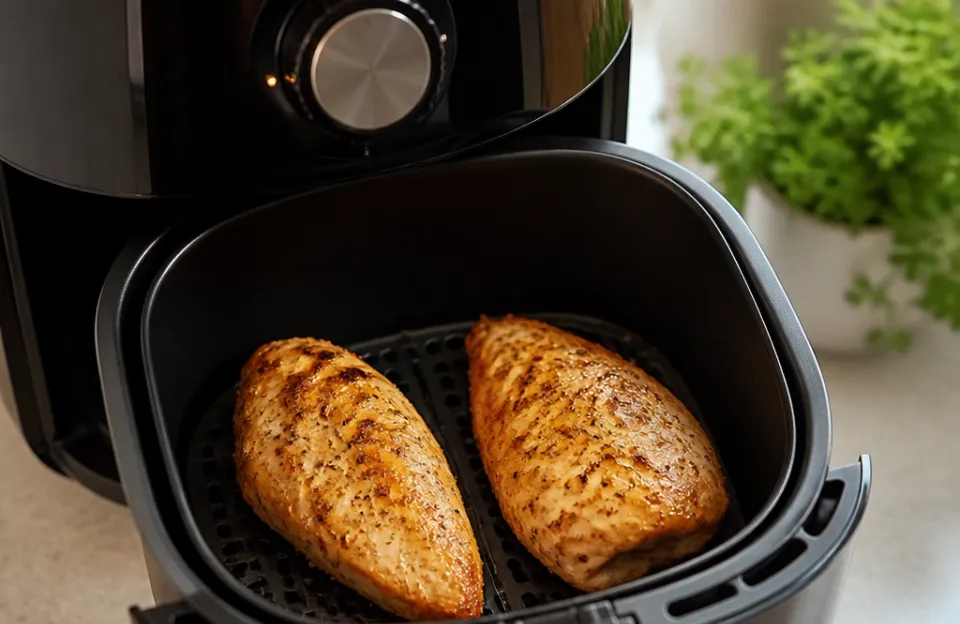
Air fryer pork chops cook in 12 to 15 minutes at 375°F and come out with a browned exterior and juicy interior when you use an instant-read thermometer. The circulating hot air mimics convection roasting, which renders fat quickly without drying out the lean meat. This method works for both boneless and bone-in cuts, though timing shifts slightly depending on thickness and whether the chop has a bone.
You don't need heavy breading or excessive oil to get good texture. A light coating of oil and seasoning is enough to promote browning in the high-speed air environment. The key variable is internal temperature, not the clock.
Pulling chops at 145°F followed by a brief rest gives you safe, tender meat that stays moist. If you've had dry results before, it likely came from overcooking or using chops that were too thin for this cooking method.
Why Rapid Air Circulation Changes Pork Cookery
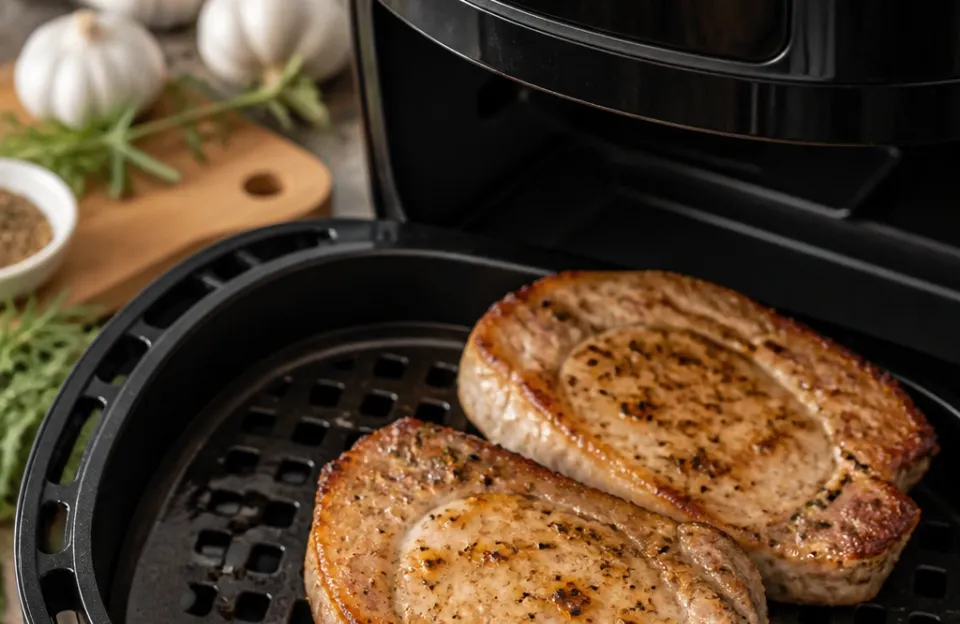
Pork loin is naturally lean and lacks the intramuscular fat that protects chicken thighs or beef steaks from drying out. Traditional pan-searing creates a hard crust but often leaves the center underdone or forces you to overcook the outer layers while waiting for the middle to reach safe temperature. An air fryer solves this by surrounding the meat with consistent heat from all sides simultaneously.
The fan-forced air transfers heat faster than still oven air, which means the surface browns before the interior moisture evaporates.
This rapid cooking also limits the time proteins spend in the danger zone where they squeeze out water. Muscle fibers begin contracting around 120°F and expel significant moisture above 150°F. Because air frying reaches target temperature quickly, the window for moisture loss stays narrow.
You get a seared look without the prolonged exposure that makes stovetop methods risky for thinner cuts.
Managing Thickness Variations
Chop thickness determines your success more than any other factor. Cuts under ¾ inch cook so fast that the outside burns before the inside hits 145°F. Aim for chops between 1 and 1½ inches thick.
These give you enough buffer to develop color while keeping the center pink and juicy. If your store only sells thin chops, reduce the temperature to 350°F and check them at the 8-minute mark to prevent toughness.
Bone-in chops behave differently than boneless ones. The bone acts as an insulator, so the meat near it cooks slower. You may need to add 2 to 3 minutes compared to a boneless chop of the same weight.
Position bone-in chops with the bone facing the center of the basket rather than the heating element to promote even cooking. Always verify temperature in the thickest part away from the bone.
Seasoning Strategies That Stick
Dry rubs adhere better than wet marinades in an air fryer because excess liquid can steam the surface instead of browning it. Pat chops completely dry before applying oil and seasoning. A simple mix of salt, pepper, garlic powder, and paprika provides flavor and aids browning through the Maillard reaction.
Sugar-based rubs caramelize quickly and can burn at 375°F, so either skip sugar or lower the heat to 350°F if your rub contains brown sugar or honey.
If you prefer marinated chops, limit soaking to 30 minutes and wipe off excess liquid before cooking. Acidic marinades with vinegar or citrus can break down surface proteins and create a mushy texture if left too long. For deeper flavor without the moisture issue, try a dry brine.
Salt the chops 45 minutes ahead and leave them uncovered in the fridge. This seasons the meat throughout and dries the surface for better browning. Check out our garlic parmesan wing technique for another example of how dry seasoning blends perform in high-airflow cooking.
Step-by-Step Cooking Method for Consistent Results
Getting reliable air fryer pork chops comes down to prep, temperature control, and verification. Follow this sequence to avoid common pitfalls like uneven cooking or dried-out edges. Each step addresses a specific failure point that leads to disappointing results.
- Preheat the appliance. Run the air fryer empty at 375°F for 3 to 5 minutes. Cold baskets drop the temperature when you add meat, which delays browning and extends cook time unpredictably. Preheating ensures immediate searing contact.
- Prepare the chops. Pat meat dry with paper towels. Rub lightly with neutral oil (about ½ teaspoon per chop). Apply seasoning evenly on both sides. Let sit at room temperature for 10 to 15 minutes to take the chill off. Cold centers cook unevenly.
- Arrange in a single layer. Place chops in the basket without overlapping or touching the sides. Crowding blocks airflow and creates cold spots. Cook in batches if necessary. Leave at least ½ inch between each piece.
- Cook and flip. Set timer for 12 minutes at 375°F for 1-inch boneless chops. Flip halfway through using tongs. Flipping ensures even browning since most heating elements sit on top. Bone-in or thicker chops may need 14 to 16 minutes total.
- Verify internal temperature. Insert a reliable probe into the thickest part. According to the USDA safe minimum cooking temperatures, whole muscle pork should reach 145°F with a 3-minute rest. Remove at 140°F to account for carryover rise. Never rely solely on cook time.
- Rest before serving. Transfer chops to a plate and tent loosely with foil for 3 to 5 minutes. Resting allows juices to redistribute through the muscle fibers. Cutting immediately releases those juices onto the plate instead of keeping them in the meat.
Adjusting for Different Cuts and Sizes
Not every pork chop fits the standard 1-inch boneless profile. Rib chops tend to be fattier and can handle slightly higher temps without drying. Sirloin chops are leaner and benefit from checking temp early.
Center-cut loin chops are the most uniform and predictable. When buying, look for consistent thickness within the package so everything finishes together.
For chops thicker than 1½ inches, consider a reverse-sear approach. Start at 325°F for 10 minutes to gently bring up internal temp, then increase to 400°F for 3 to 4 minutes to finish the crust. This prevents the gray band of overcooked meat just beneath the surface.
Thinner chops under ¾ inch do better at 350°F for 8 to 10 minutes with a flip at the halfway point. Always prioritize thermometer readings over preset times.
Troubleshooting Texture and Doneness Issues
Even with proper technique, variables like appliance calibration and meat quality can cause problems. Most issues trace back to temperature management or preparation missteps. Here's how to diagnose and fix the most frequent complaints.
| Problem | Likely Cause | Fix for Next Time |
|---|---|---|
| Dry, tough interior | Overcooking past 145°F or chop too thin | Use thermometer, remove at 140°F, choose 1"+ thickness |
| Pale, steamed exterior | Wet surface, overcrowded basket, low temp | Pat dry thoroughly, cook in batches, preheat fully |
| Burnt seasoning, raw center | Sugar rub at high heat, chop too thick | Lower temp to 350°F, use savory rub, try reverse sear |
| Uneven doneness | Inconsistent thickness, no flip, cold meat | Buy uniform chops, flip halfway, temper 15 min first |
| Stuck to basket | Insufficient oil, moved too early | Light oil coat, let release naturally before flipping |
Avoiding the Dreaded Gray Band
That unappetizing ring of overcooked meat just below the crust happens when surface heat penetrates too fast relative to the center. It's common with thin chops or excessively high temperatures. Keeping chops at least 1 inch thick gives you thermal mass to absorb heat gradually.
Tempering the meat before cooking also reduces the thermal gradient between surface and center.
Another tactic is avoiding maximum temperature settings. Many air fryers run hotter than displayed. If your chops consistently show a gray band despite hitting 145°F correctly, your unit may run hot.
Test with an independent oven thermometer or simply reduce your set temperature by 10 to 15 degrees. Accuracy matters more than speed here. A good digital meat thermometer removes guesswork and helps you correlate visual cues with actual internal state.
Salvaging Overcooked Chops
If you've already gone past 145°F, slicing against the grain shortens muscle fibers and makes chewing easier. Serve with a sauce or gravy to add perceived moisture. Acidic components like vinegar or citrus in a pan sauce can also help mask dryness by stimulating saliva production.
For future reference, note what went wrong. Was the chop thinner than expected? Did you forget to preheat?
Small adjustments compound over multiple cooks.
Pairing Sides and Building Complete Meals
Pork chops pair well with sides that balance their mild richness. Since the air fryer is occupied during cooking, plan accompaniments that use different equipment or can hold well. Roasted vegetables, rice pilaf, mashed potatoes, and quick slaws all complement the savory, slightly sweet profile of well-seasoned pork.
Consider timing so nothing sits too long while chops rest.
Vegetables that roast at similar temperatures can sometimes share basket space after the chops come out. The residual heat is perfect for warming green beans or finishing asparagus. Just avoid putting raw veggies in with raw pork due to cross-contamination risk and differing cook times.
Batch planning keeps everything hot and properly textured.
Complementary Flavor Profiles
Apples and pork are classic for good reason. The fruit's acidity and sweetness cut through the meat's richness. A quick apple cider reduction or caramelized onion jam adds complexity without competing.
Mustard-based sauces work equally well, especially with herb-rubbed chops. Fresh herbs like sage, thyme, or rosemary bridge the gap between savory meat and bright sides.
If you're meal prepping, air fryer pork chops reheat reasonably well when stored properly. Slice after cooling and store in airtight containers. Reheat gently at 300°F for 3 to 4 minutes to avoid further drying.
They're excellent in grain bowls, salads, or sandwiches later in the week. Our guide on wing meal prep strategies covers storage principles that apply equally to pork.
Health Considerations and Nutritional Context
Air frying reduces added fat compared to pan-frying or deep-frying. You typically use 1 to 2 teaspoons of oil versus tablespoons needed for stovetop searing. This cuts calories significantly while still achieving satisfying texture.
A 4-ounce boneless pork chop prepared this way contains roughly 200 to 220 calories depending on trim and seasoning.
Pork loin is a complete protein source with all essential amino acids. It also provides B vitamins, particularly thiamin and B6, along with selenium and phosphorus. Choosing lean center-cut chops keeps saturated fat moderate.
The cooking method itself doesn't create harmful compounds like charring on open flames can, though you should still avoid burning seasonings or letting drippings smoke excessively.
Sodium and Seasoning Awareness
Store-bought rubs and marinades often contain high sodium levels. Making your own blend gives you full control. A basic homemade rub might include salt, black pepper, smoked paprika, garlic powder, and dried herbs.
You can adjust salt to taste or use potassium chloride substitutes if watching intake. Remember that kosher salt measures differently by volume than table salt, so weigh when possible for consistency.
For those monitoring cholesterol or heart health, trimming visible fat before cooking reduces saturated fat content further. The air fryer's draining action also lets some natural fat render away during cooking. Pairing with fiber-rich sides like beans, whole grains, or vegetables creates a balanced plate that supports cardiovascular health without sacrificing satisfaction.
Frequently Asked Questions
Can I cook frozen pork chops in the air fryer?
Yes, but expect longer cook times and less even results. Add 5 to 7 minutes to the standard time and check temperature frequently after the 15-minute mark. Frozen chops won't brown as well because surface moisture must evaporate first.
For best quality, thaw overnight in the refrigerator. If cooking from frozen is unavoidable, season after the first 5 minutes once some surface ice has melted.
What temperature should air fryer pork chops reach internally?
The USDA recommends 145°F for whole muscle pork followed by a 3-minute rest. This yields slightly pink, juicy meat that is safe to eat. Ground pork products require 160°F.
Always measure in the thickest part away from bone or fat pockets. Color alone is not a reliable indicator of doneness. Invest in a calibrated instant-read thermometer for accuracy.
Why are my air fryer pork chops always dry?
Dryness usually stems from overcooking, insufficient thickness, or skipping the rest period. Chops under 1 inch cook too fast to develop proper texture. Removing meat at 140°F accounts for carryover cooking that brings it to 145°F safely.
Resting 3 to 5 minutes allows juices to reabsorb. Also verify your air fryer isn't running hotter than indicated with an independent thermometer.
Do I need to spray the basket with oil?
Lightly oiling the chops themselves is usually sufficient and promotes better browning than spraying the basket. Nonstick baskets rarely need additional lubrication. If you experience sticking, ensure the surface is dry before adding oil and avoid moving chops until they naturally release.
Excess oil spray can pool and smoke at high temperatures. A brush-applied coating on the meat gives you more control.
How do I reheat leftover air fryer pork chops?
Reheat at 300°F for 3 to 4 minutes until warmed through. Lower temperature prevents further moisture loss. Sliced chops reheat faster and more evenly than whole ones.
Add a splash of broth or water to the basket if pieces seem dry. Microwaving tends to make pork rubbery, so the air fryer is preferable for maintaining texture. Store leftovers within two hours of cooking and consume within three to four days.
Before You Plate
Mastering air fryer pork chops comes down to respecting the meat's leanness and trusting your thermometer over arbitrary timers. Once you dial in thickness selection, preheating discipline, and proper resting, you'll get consistent results that rival restaurant quality. The method rewards attention to detail but forgives minor variations once you understand the underlying principles.
Keep notes on your specific appliance's quirks and adjust accordingly. Good technique transfers across proteins, so skills learned here will serve you well with other lean cuts. If you enjoy experimenting with different seasoning approaches, our honey garlic wing recipe demonstrates how sweet-savory glazes behave under similar high-heat conditions.