Air fryer chicken wings lemon pepper is one of the fastest ways to get crispy, heavily seasoned wings without heating a large oven or dealing with a pot of hot oil. The whole process takes about 25 to 30 minutes from fridge to plate. You coat raw wings in a dry rub built around black pepper and dried lemon zest, then cook them in a basket where circulating hot air renders the fat and crisps the skin.
This article covers exactly how that method works. It breaks down why lemon pepper pairs so well with poultry, how to prep the wings for maximum crunch, the specific temperatures and times needed, and what happens when things go slightly off track. Whether you are making a quick weeknight dinner or prepping for game day, the details below will get you there.
Why lemon pepper and hot air work so well together
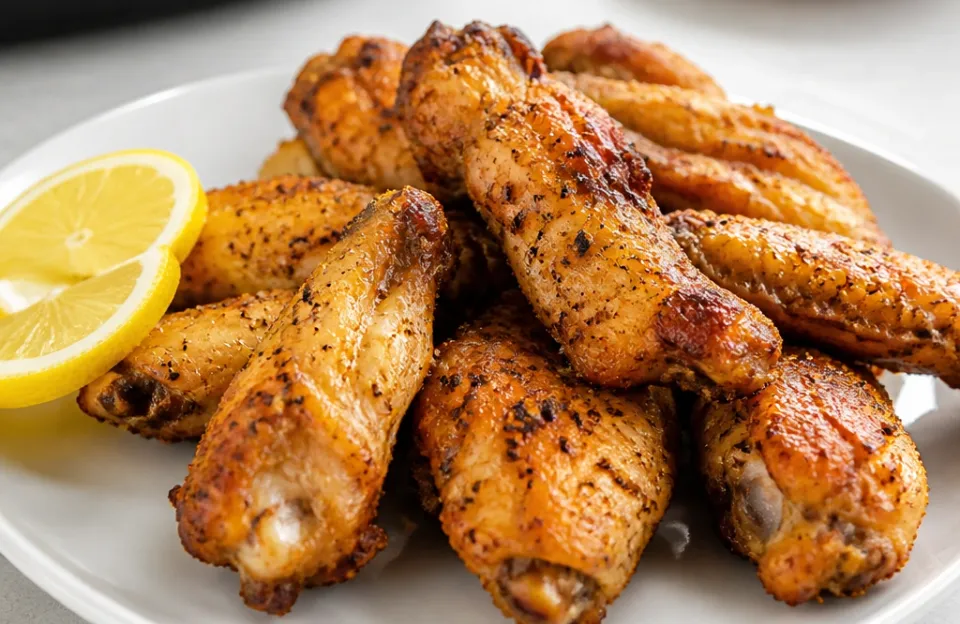
Lemon pepper seasoning relies on two dominant flavors: sharp citrus oil from dried lemon zest and the pungent heat of cracked black peppercorns. When you apply this blend to chicken skin and expose it to high heat, the oils in the zest bloom. The pepper gets slightly toasted.
This creates a fragrant crust that tastes brighter than heavy barbecue sauces or thick glazes.
An air fryer cooks by pushing superheated air rapidly around the food. Chicken wings have a high ratio of skin to meat, and that skin contains a lot of subcutaneous fat. As the air circulates at temperatures near 400°F, the fat melts out of the skin.
The skin dehydrates and blisters. Because you aren't submerging the wings in oil, the lemon pepper rub stays on the surface instead of washing away into a fryer vat.
The result is a wing that shatters when you bite through the skin, while the meat underneath stays moist. The USDA requires all poultry to reach an internal temperature of 165°F to be safe to eat. Hitting that number in an air fryer is straightforward because the intense ambient heat penetrates smaller cuts like wings very quickly.
You can verify this safely using a fast digital reader inserted into the thickest part of the drumette, avoiding the bone.
What makes up a standard lemon pepper rub
Store-bought lemon pepper blends vary wildly. Some are mostly salt with artificial lemon flavoring. A solid blend for air fryer chicken wings lemon pepper should list black pepper and dried lemon peel as the first two ingredients.
Salt usually comes third. Many brands also add garlic powder, onion powder, or a touch of sugar.
If you mix your own, combine two tablespoons of coarsely ground black pepper with one tablespoon of dried lemon zest. Add one teaspoon of kosher salt, half a teaspoon of garlic powder, and half a teaspoon of onion powder. The coarse grind matters here.
Fine powders burn faster under intense circulating heat, while cracked peppercorns hold up and provide texture.
Sugar is optional. A small pinch helps with browning through the Maillard reaction, but too much sugar in a dry rub will scorch and turn bitter before the chicken skin fully crisps. If your store-bought blend lists sugar in the top three ingredients, lower your cooking temperature by 10 to 15 degrees to prevent burning.
How fat rendering changes the final texture
Chicken wings consist of two main pieces: the flat and the drumette. Both have thick skin packed with fat. In a traditional oven, rendering that fat takes 45 minutes or more because the ambient air moves slowly.
An air fryer forces the air past the skin constantly.
As the fat liquefies, it drips through the perforated basket into the drawer below. This removes the grease from direct contact with the meat. The skin essentially fries in its own residual fat while simultaneously drying out.
That dual action is what gives air fryer chicken wings lemon pepper its signature snap. If the fat doesn't render completely, the skin ends up chewy and rubbery rather than crisp.
Prepping the wings before they hit the basket
Moisture is the enemy of crispy skin. If you take chicken wings straight from their packaging and toss them in seasoning, the water clinging to the surface will steam during cooking. Steam prevents browning.
You end up with pale, soft wings covered in damp spices.
Pat every single wing completely dry with paper towels before adding anything else. Press firmly against the skin. You want to remove as much surface moisture as possible.
Some cooks leave the patted wings uncovered on a wire rack in the refrigerator overnight to dry the skin further. This extra step guarantees a better crunch, though it requires planning ahead.
Once the wings are dry, place them in a large bowl. Drizzle a very small amount of neutral oil over them. Avocado oil or refined coconut oil works best because they have high smoke points.
You only need about one teaspoon per pound of wings. Toss them until each piece has a faint sheen. This thin layer of oil acts as a binder for the dry rub and helps conduct heat evenly across the skin.
Sprinkle your lemon pepper seasoning generously over the oiled wings. Use your hands to massage the rub into the skin, getting into the folds between the joints. For two pounds of wings, expect to use about two to three tablespoons of seasoning.
Let them sit for ten minutes while the appliance preheats. This resting period allows the salt to begin drawing out any remaining deep moisture and lets the pepper adhere.
Cooking air fryer chicken wings lemon pepper
Preheat your machine to 380°F. Preheating takes about three to five minutes depending on the model. Putting cold wings into a cold basket delays the initial sear and extends the total time, often leading to uneven cooking.
Arrange the seasoned wings in a single layer inside the basket. Leave a small gap between each piece. Air needs to flow freely around every side of the wing to render the fat uniformly.
If you stack them or crowd the basket, the trapped steam will soften the skin. Cook in batches if your appliance is small. Two pounds of wings usually require two batches in a standard four-quart basket.
Cook the first batch at 380°F for 12 minutes. Open the basket and flip each wing using tongs. Flipping exposes the bottom side to the direct airflow from the top heating element.
Increase the temperature to 400°F after flipping. Cook for another 10 to 12 minutes. This two-stage temperature approach gently renders the fat first, then aggressively crisps the skin at the end.
Check the internal temperature at the 22-minute mark. Insert the probe into the thickest meat of a drumette. It must read at least 165°F.
If you are tracking multiple pieces or prefer leaving a probe in throughout the cook, a Bluetooth-enabled monitor lets you watch the temperature climb from your phone without constantly opening the basket and losing heat.
| Cooking Stage | Temperature | Duration | Purpose |
|---|---|---|---|
| First side | 380°F | 12 minutes | Renders subcutaneous fat gently |
| Second side | 400°F | 10 to 12 minutes | Crisps the skin and finishes cooking |
| Resting | Off | 3 to 5 minutes | Allows juices to redistribute |
Once the wings hit 165°F, transfer them to a wire cooling rack set over a baking sheet. Don't pile them onto a flat plate immediately. The residual heat will continue to release steam, and sitting in a puddle of that steam will soften the crust you just built.
Let them rest for three to five minutes.
Finishing touches and butter variations
Dry lemon pepper wings are excellent on their own. The crust is crunchy, salty, and bright. However, many people prefer a wet finish to mimic restaurant-style wings.
The most common addition is melted butter.
Melt two tablespoons of unsalted butter in a small saucepan or microwave. Whisk in an extra half-teaspoon of your lemon pepper seasoning. Pour this mixture over the rested wings in a large clean bowl.
Toss gently. The butter coats the crust, adding richness and amplifying the citrus notes without making the skin soggy, provided you serve them right away.
If you want a heavier sauce, combine the melted butter with fresh lemon juice and a splash of hot sauce. The acid from the fresh juice hits differently than the dried zest in the rub. It adds a sharp, wet tang that contrasts with the rich rendered fat.
Toss the wings in this mixture just before plating.
For a dairy-free version, skip the butter entirely. Squeeze fresh lemon wedges over the hot wings right as they come out of the basket. The heat will vaporize some of the juice, carrying the citrus aroma upward.
Sprinkle a final pinch of flaky sea salt and extra cracked black pepper over the top for visual contrast and a final textural pop.
What goes wrong and how to fix it
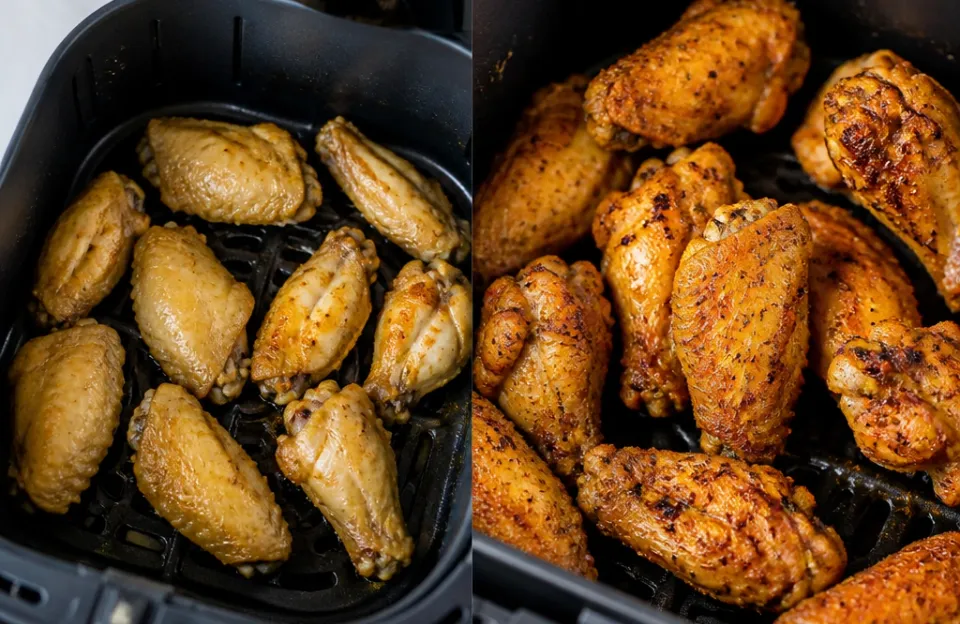
Even a simple recipe has failure points. The most frequent complaint with air fryer chicken wings lemon pepper is soggy skin. This almost always traces back to overcrowding the basket or skipping the paper towel drying step.
If your wings come out soft, put them back in at 400°F for three to five minutes in a single layer. The extra blast of heat will usually force the remaining moisture out.
Burnt seasoning is another common issue. Lemon pepper contains delicate citrus oils and fine pepper particles. If your specific appliance runs hotter than its dial suggests, the rub will char before the meat cooks through.
To prevent this, drop your starting temperature to 370°F and extend the first phase by three minutes. You can check the actual internal air temperature using an infrared laser tool pointed at the basket walls before adding the food.
Sometimes the wings stick to the basket grate. Non-stick coatings wear down over time, especially in appliances that see daily use. Always start with a clean basket.
Wipe the grate lightly with an oiled paper towel before arranging the wings. Never use aerosol non-stick sprays directly inside the basket, as the propellants can degrade the coating.
Uneven cooking happens when you mix very large drumettes with tiny wing tips. The tips will burn while the thick joints remain pink near the bone. Sort your wings by size before cooking.
Put the larger pieces in the center of the basket where the heat is most consistent, and push the smaller flats and tips toward the edges. Alternatively, save the wing tips for making stock and only cook uniform pieces.
If you notice the wireless connection dropping on your smart thermometer mid-cook, it might be due to the metal housing of the appliance blocking the signal. Repositioning the receiver closer to the unit or checking for common signal fixes solves this quickly so you don't lose track of your temperatures.
Scaling up for parties and keeping batches warm
Making air fryer chicken wings lemon pepper for two people is easy. Making them for fifteen guests requires logistics. Because you have to cook in batches to maintain crispness, timing becomes the main challenge.
You cannot hold cooked wings in a sealed container, or they will sweat and turn limp.
Set your conventional oven to its lowest setting, usually around 170°F to 200°F. Place a wire rack inside a rimmed baking sheet. As each batch finishes in the air fryer and rests for three minutes, move them to the warm oven rack.
The low heat keeps the internal temperature above the 165°F safety threshold recommended by the USDA Food Safety and Inspection Service without continuing to cook the meat aggressively. The wire rack allows air to circulate beneath the wings, preserving the crust.
You can hold wings this way for about 30 to 45 minutes. Beyond that, the meat will begin to dry out even at low temperatures. Plan your batches backward from your serving time.
If you need six batches taking 25 minutes each, start roughly two and a half hours before you plan to eat.
When tossing the wings in butter or sauce, wait until every batch is cooked and warmed. Tossing them individually means early batches will cool down while you finish the last ones. Combine everything in your largest mixing bowl at the very end, pour the sauce over the entire batch, and toss once.
Serve immediately on a wide platter lined with parchment paper to catch the drips.
Cleaning up the appliance afterward
Lemon pepper rub combined with rendered chicken fat leaves a sticky, spiced residue on the basket and the heating element above it. If you let this cool and harden, scrubbing it off becomes difficult and risks scratching the non-stick surface.
While the basket is still warm, fill it with hot water and a few drops of dish soap. Let it soak for ten minutes. The warm water loosens the baked-on pepper and fat.
Wash it gently with a soft sponge. Avoid abrasive scouring pads.
The interior ceiling of the appliance, where the heating coil lives, also collects splattered grease mixed with spice dust. If left alone, this buildup will smoke heavily the next time you turn the machine on. Wipe the interior roof with a damp cloth once the unit is completely unplugged and cooled.
Regular upkeep saves time later, much like cleaning a toaster oven combo after greasy tasks prevents long-term carbon buildup.
Frequently asked questions
Can I use frozen wings for this recipe?
Yes, but the texture will suffer slightly. Frozen wings release significantly more water as they thaw during the cooking process. This excess moisture steams the skin, making it harder to achieve a deep crunch.
If you must use frozen, add five to seven minutes to the first cooking phase at 380°F to drive off the ice crystals before increasing the heat. Patting them dry halfway through the cook helps, though opening the basket frequently loses heat.
Does lemon pepper seasoning burn easily at 400°F?
It can. Black pepper holds up well to high heat, but dried lemon zest and any added garlic powder in commercial blends will scorch if exposed to 400°F for too long. The two-stage cooking method described above mitigates this.
Starting at 380°F sets the crust gently. The final blast at 400°F is short enough to crisp the skin before the spices turn bitter. If your rub has visible sugar in it, stay at 380°F for the entire duration and add a few extra minutes.
Should I bake powder the wings for extra crispiness?
Tossing wings in a light dusting of aluminum-free baking powder before applying the lemon pepper rub is a proven technique. Baking powder raises the pH level of the chicken skin, which accelerates the breakdown of proteins and promotes faster browning. Use about one teaspoon per pound.
Mix it thoroughly with the dry rub so it distributes evenly. Do not use baking soda, as it will leave a metallic, soapy taste.
How do I know when the wings are actually done?
Visual cues are unreliable with dark seasonings like black pepper. The exterior will look deeply browned and potentially burnt even when the inside is raw. You must use a thermometer.
Insert the probe into the thickest part of the largest drumette. It needs to read 165°F. Having a reliable instant-read device nearby eliminates the guesswork and prevents both undercooked meat and dried-out, overcooked wings.
Can I make these in a standard oven instead?
You can, but the mechanics change. An oven lacks the concentrated, rapid air circulation of a countertop fryer. To get close to the same result, place a wire rack over a baking sheet, arrange the wings in a single layer, and roast at 425°F for 40 to 45 minutes, flipping halfway.
The longer time frame means the meat may dry out slightly more before the skin achieves the same level of blistering.
Worth remembering
Air fryer chicken wings lemon pepper succeeds because of a few basic rules working together. Dry the skin thoroughly. Use a rub heavy on cracked pepper and real citrus zest.
Give the fat time to render at a moderate temperature before cranking the heat to finish the crust. Check the internal temperature with a proper thermometer rather than guessing by color. Keep the basket uncrowded so the air can actually do its job.
Follow those steps, and you get shatteringly crisp, brightly flavored wings in under half an hour without turning on the stove.