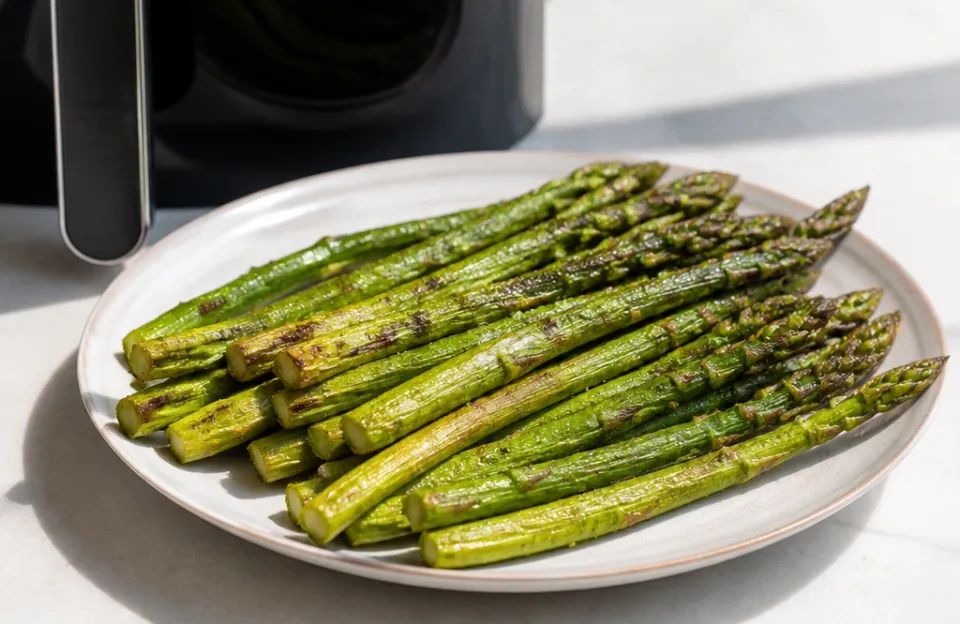
Air fry asparagus at about 400°F for roughly 6 to 10 minutes, using the shorter end for thin spears and the longer end for thick ones. Treat those numbers as starting points: appliance size and power change cooking times, so check the first batch early and adjust.
The goal is crisp tips and stalks that bend without going limp. That result depends far more on how you prep the spears and load the basket than on any single minute count.
Why High Heat Changes Asparagus Texture
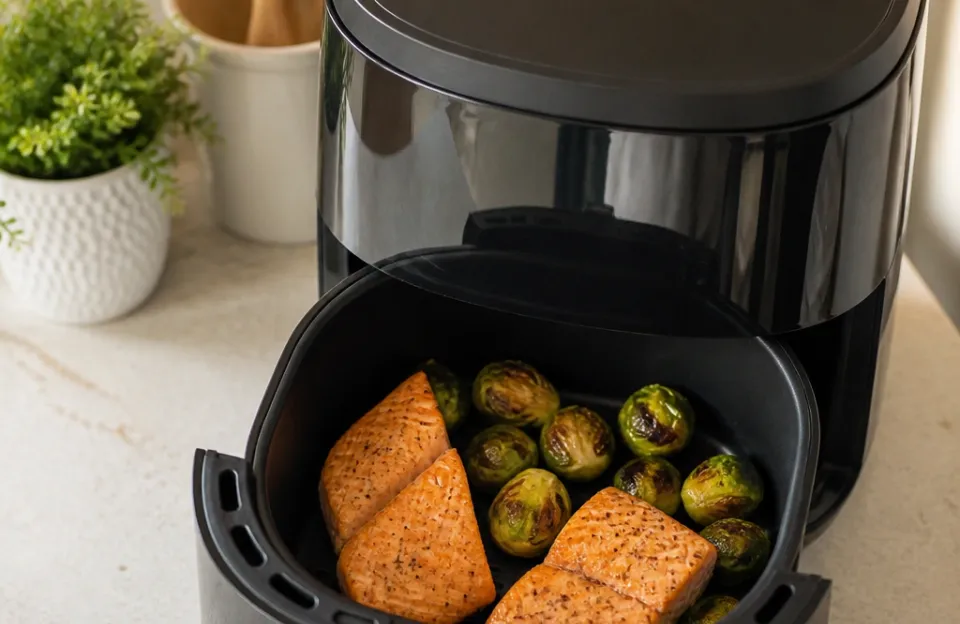
An air fryer is essentially a countertop convection oven, and it cooks food faster while using less energy than a full-size oven. Moving hot air strips moisture from the surface of the food, which is what allows browning instead of steaming.
Asparagus is a thin vegetable with a tender tip and a firmer base. When the surface is dry and the air can circulate, the tips firm up and darken slightly while the stalks soften through. When the surface is wet or the basket is packed, the trapped moisture turns the cooking environment steamy and you get limp, olive-green spears.
Crisp-tender is the target texture: the tip should hold a little snap, and a knife should slide into the thickest part of the stalk with light resistance rather than a hard push.
Managing Moisture Before Cooking
Surface moisture is the single most common cause of soggy asparagus. Rinse the spears, then dry them thoroughly with a clean kitchen towel or paper towels. If water beads on the skin, the air has to evaporate it before browning can begin.
Oil the spears in a bowl rather than drizzling oil over them on the rack. A bowl lets you toss everything evenly with a light coating, so no spear is soaked and none is bare. A thin, uniform film is all you need.
For the same reason, keep the basket from being overcrowded. Too much food in the basket blocks air circulation and prevents proper cooking, and overfilling leads to uneven cooking and undercooking. Cook large batches in two rounds rather than one crowded one.
Preparing Spears for Even Results
Rinse and dry the spears, then remove the woody ends. Whether you snap each spear by hand or line them up and cut the whole bunch at once, keep the pieces roughly the same length so they cook at a similar rate.
Thick spears benefit from a little extra attention because their centers take longer to soften than the tips. If you have very thick stalks, spread them in a single layer with a little space between each one and consider giving them a minute or two head start before adding thinner spears to the same batch.
Keep the seasoning simple and dry. Salt, pepper, garlic powder, or a pinch of smoked paprika all work well without adding moisture. Save wet ingredients such as lemon juice or balsamic glaze for after cooking, since liquids on the surface encourage steaming.
Air Fryer Asparagus Cook Times by Size
These times are starting points, not fixed rules. Every appliance differs in size and power, which changes how quickly food cooks. Use the first batch to calibrate your own machine.
| Spear Thickness | Starting Time at 400°F | Doneness Cues |
|---|---|---|
| Thin (pencil-width) | 6 to 7 minutes | Tips lightly browned, stalks just tender |
| Medium | 7 to 9 minutes | Tips crisp, stalks bend easily with slight resistance at the base |
| Thick | 9 to 10 minutes | Tips browned, base pierces easily with a knife |
Shake the basket or turn the spears about halfway through so they brown evenly. Begin checking one to two minutes before the low end of the range, especially on your first attempt.
Testing Doneness Without Guesswork
You do not need special equipment to judge asparagus. Pick up the thickest spear with tongs: if the base bends with a little spring and the tip is dry and slightly crisp, it is done. If the stalk droops like a noodle, it has gone too far.
If you already own a digital probe thermometer, you can use it for other dishes, but vegetable doneness is best judged by feel and sight rather than a fixed internal number.
Fixing Soggy or Burnt Results
Soggy asparagus usually traces to one of four causes: wet spears, too much oil, a crowded basket, or a mix of thick and thin pieces cooking together. Dry the spears more thoroughly next time, toss with less oil, cook in smaller batches, and sort by size.
Burnt or uneven results point to hot spots, tips that sit too close to the heating element, or a load that is too deep for the air to reach. Shake the basket midway, keep the spears in a single layer, and trim any tips that stick up above the rest.
Use this stop condition: if the tips are browning before the bases soften, pull the batch. Lower the temperature by about 25°F for the next round and extend the time, or rearrange the spears so the tips sit farther from the top element. Do not cover the tips with foil unless your appliance manual explicitly permits it, since foil use is restricted in some models.
Frozen Asparagus: A Different Starting Point
Frozen spears carry far more surface ice than fresh ones, so expect longer cooking and less browning. Do not thaw them first. Spread them in a single layer, pat off visible ice crystals, and add several minutes to the times above, checking every two minutes after the halfway mark. The texture will be softer than fresh asparagus, which is normal for frozen produce.
Adjusting for Different Appliance Models
Appliance size and power vary enough that one machine’s 7 minutes can be another’s 10. Preheat only if your manual recommends it, and when available, follow the manufacturer’s instructions on the package or in the manual. Basket-style and oven-style air fryers also circulate air differently, so expect to recalibrate when you change machines.
Storing and Reheating Leftovers
Cool leftovers promptly and refrigerate them within 2 hours of cooking, or within 1 hour if the room temperature is above 90°F. Keep the refrigerator at 40°F or below, since bacteria multiply rapidly between 40°F and 140°F.
Cooked asparagus keeps in the refrigerator for 3 to 4 days or in the freezer for 3 to 4 months. Reheat leftovers to 165°F. Reheated asparagus softens further, so it works better folded into pasta, grain bowls, or an omelet than served as a standalone side.
Flavor Pairings and Complete Meals
Asparagus pairs well with lemon zest, grated parmesan, toasted almonds, or a drizzle of balsamic added after cooking. For a full plate, serve it alongside garlic parmesan chicken wings, or fold it into weekly wing prep so the vegetable is ready for lunches through the week. If you want another fast vegetable side, air fryer zucchini follows similar moisture-control rules.
Worth Remembering
Dry the spears, oil them lightly in a bowl, keep them in a single layer, and start at 400°F for 6 to 10 minutes depending on thickness. Treat every time as a starting point rather than a guarantee, since appliance size and power shift results. When tips brown before bases soften, pull the batch, lower the heat slightly, and adjust placement for the next round. That simple feedback loop is how you get consistent crisp-tender asparagus from your own machine.