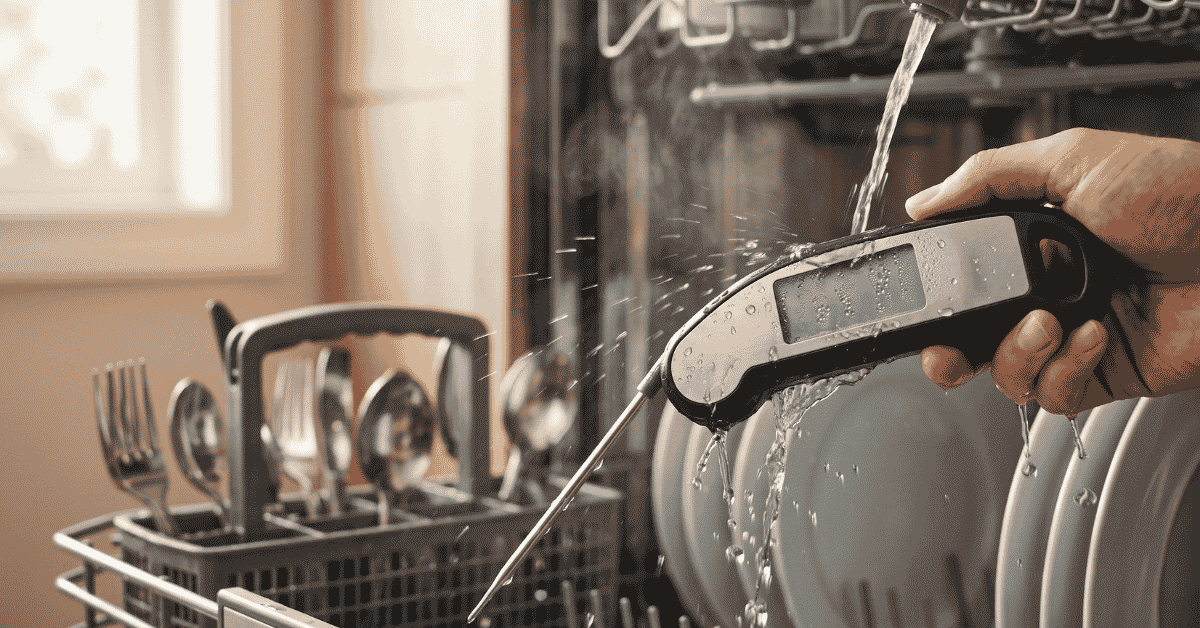
You’ve just finished a perfectly grilled steak or a roasted chicken. The meat thermometer is covered in grease and stuck-on juices. It’s tempting to just toss it in the dishwasher along with the forks and plates.
After all, the high heat should sanitize the probe, right? But before you slide that rack in and press “start,” you might want to pause. Doing so could be the quickest way to ruin your most helpful kitchen tool.
Quick Answer: Most meat thermometers are not dishwasher safe. While the stainless steel probe can handle high heat, the plastic housing, internal electronics, and digital displays usually cannot withstand the moisture and pressure of a dishwasher cycle. Always check for an “IP rating” or a “Dishwasher Safe” label on the packaging, but when in doubt, hand washing is the only way to prevent permanent damage.
Why the Dishwasher is Dangerous for Thermometers
The environment inside a dishwasher is incredibly harsh. It isn’t just about hot water; it involves high-pressure jets, caustic detergents, and a long drying cycle that reaches high temperatures. Most thermometers are built with delicate components that aren’t sealed against these specific conditions.
Think about how a digital thermometer works. It has a sensor in the tip of the probe that sends an electrical signal to a small computer chip behind the screen. This chip interprets the signal and shows you a temperature.
If water gets inside the casing, it shorts out the circuit. Even if it doesn’t break immediately, moisture trapped inside can lead to corrosion over time, making your readings inaccurate and eventually killing the device.
The Problem with Heat and Steam
Many people assume that if a thermometer can measure a 450°F oven, it can handle a 150°F dishwasher. This is a misunderstanding of how the tool is built. The metal probe is designed for high heat, but the “head” of the thermometer, where the electronics live, is usually only rated for ambient room temperature.
The steam in a dishwasher can also expand the air inside the thermometer housing. As the air cools and contracts later, it can suck soapy water through the tiny gaps around buttons or the battery compartment.
Detergents and Seals
Dishwasher detergents are much more abrasive than standard liquid dish soap. They are designed to strip away proteins and fats, but they can also degrade the rubber O-rings or silicone seals that make a thermometer “water-resistant.” Once those seals fail, the device has no protection. If your thermometer has a plastic lens over the display, the heat and chemicals can cloud the plastic, making it impossible to read your temperatures.
Understanding the Difference Between Waterproof and Dishwasher Safe
You will often see thermometers marketed as “waterproof” or “water-resistant.” It is a common mistake to think these terms mean you can put them in the dishwasher. In the world of kitchen gadgets, these labels have very specific meanings based on the Ingress Protection (IP) rating system.
Water-Resistant (Splash Proof)
This usually means the device can handle a few drops of rain or a quick wipe with a damp cloth. If you see a rating like IP65, it can withstand low-pressure water jets. However, the high-pressure spray of a dishwasher is much more intense than a kitchen faucet.
These devices will almost certainly fail if submerged in a sink or run through a wash cycle.
Waterproof (Submersible)
An IP67 rating means the thermometer can be dropped in a meter of water for about 30 minutes without dying. While this sounds like it should be dishwasher-safe, it still isn’t. The IP67 test is done in still, cool water.
It does not account for the high-temperature steam or the chemical cleaners used in a dishwasher. A “waterproof” thermometer is great because you can wash it under a running tap without worry, but the dishwasher is still a “no-go” zone.
How to Properly Clean and Sanitize Your Meat Thermometer
Since the dishwasher is off-limits for most models, you need a reliable way to get the probe clean. Bacteria like Salmonella or E. coli can live on the probe if it isn’t cleaned after every use. This is especially true if you are checking the temperature multiple times during the cooking process.
- Use Hot Soapy Water: Use a sponge or dishcloth with warm water and mild liquid soap. Wipe down the probe thoroughly, starting from the tip and moving toward the handle.
- Avoid the Electronics: Treat the screen and buttons carefully. Use a damp (not dripping) cloth to wipe away any grease splatters on the housing. Never dunk the whole unit under water unless you are 100% sure it is fully submersible.
- Sanitize the Probe: If you want extra peace of mind, especially after temping raw or undercooked poultry, use a food-safe sanitizing wipe or a cotton ball dipped in rubbing alcohol. You can also dip the probe into a cup of boiling water for a few seconds.
- Dry Immediately: Use a clean towel to dry the thermometer. Don’t let it air dry in a rack where water might pool around the buttons or the battery door.
Exceptions to the Rule
There are a few types of thermometers that might survive the dishwasher, though they are becoming less common in home kitchens.
Leave-in Analog Thermometers
Older, heavy-duty analog thermometers (the ones with a large glass face and a thick metal needle) are sometimes labeled as dishwasher safe. These don’t have batteries or wiring. They work using a bimetallic coil that expands when heated.
However, even these can suffer. The high heat can sometimes knock the needle out of calibration, or the glass can crack. If you have one of these, check the back of the dial for a “Dishwasher Safe” stamp.
Commercial-Grade Probes
Some high-end commercial systems used in restaurants have detachable probes. The wire and the metal spike are separate from the digital base unit. In some cases, the probe piece itself is dishwasher safe, but you must unplug it from the digital unit first.
Even then, most professional chefs prefer hand washing to extend the life of the probe’s internal sensors.
What to Do if You Accidentally Put It in the Dishwasher
If you or a well-meaning family member accidentally ran the thermometer through a cycle, don’t panic yet. Do not turn it on immediately.
First, remove the batteries if possible. This prevents a short circuit while the internals are wet. If you see any moisture behind the screen, place the thermometer in a warm, dry area, not a bowl of rice, which is mostly a myth and can introduce dust into the device.
A sunny windowsill or near a gentle fan is better. Let it dry for at least 48 hours before putting the batteries back in.
Once it’s dry, you must check the calibration. Even if it turns on, the heat may have damaged the sensor. Test it in a “slush bath” of ice and a little water.
It should read exactly 32°F (0°C). If it’s off by more than a degree or two and doesn’t have a “cal” button to reset it, you should probably replace it. Accuracy is the only reason to own a thermometer; if you can’t trust the number, the tool is useless.
Common Misconceptions
There are several myths about cleaning meat thermometers that can lead to broken gear or, worse, foodborne illness.
- “The oven heat cleans it”: Just because the probe was inside a hot turkey doesn’t mean it’s sterile. The “cool” part of the meat where you are checking the temperature is exactly where the bacteria are most likely to survive. You must clean it after it comes out of the meat.
- “Alcohol wipes damage the sensor”: Some worry that chemicals will ruin the probe. Stainless steel is very resistant to alcohol. In fact, many professional kitchens use alcohol swabs as the standard way to prevent cross-contamination between different pieces of meat.
- “Waterproof means dishwasher safe”: This is the most dangerous myth for your wallet. As discussed, the pressure and heat of a dishwasher are different from the pressure of sitting in a still sink.
Quick Cleaning Reference
| Feature | Hand Wash (Soap/Water) | Alcohol/Sanitize Wipe | Dishwasher |
|---|---|---|---|
| Digital Probe | Yes (Recommended) | Yes | No |
| Digital Housing | Damp cloth only | Wipe only | No |
| Analog Dial | Yes | Yes | Check Brand |
| Wired Probes | Yes (Wipe only) | Yes | No |
Frequently Asked Questions
Can I put a Thermapen in the dishwasher?
No. Even though high-end models like the Thermapen ONE have an IP67 rating, the manufacturer, ThermoWorks, specifically states they should not be put in the dishwasher. The heat can damage the seals over time and the detergent can mar the casing.
Is it safe to submerge a digital thermometer in the sink?
Only if it is specifically labeled as “Waterproof” or has an IP67 rating. If it doesn’t say so on the device, assume it is only splash-proof. Submerging a non-waterproof digital thermometer will usually result in water entering the battery compartment and killing the device.
How do I clean the cord on a leave-in probe?
Wipe the cord with a soapy sponge and then a clean, damp cloth. Avoid getting water into the transition point where the wire meets the metal probe. Many “waterproof” probes are only waterproof at the tip; getting water into the “crimped” end near the wire can cause the probe to give “High Temp” errors or fail completely.
Can I use a bleach solution to clean my thermometer?
You can use a very weak bleach solution (about one tablespoon of unscented bleach per gallon of water), but it isn’t usually necessary for a household kitchen. Hot soapy water or an alcohol wipe is usually more than enough and is less likely to cause skin irritation or damage your clothes if you splash it.
Worth Remembering
A meat thermometer is a precision instrument. While it feels like a simple kitchen utensil, it is more like a small computer. Treating it with the same care you’d give your phone or a digital watch will help it last for years.
If you want to keep your food safe and your gear in top shape, stick to a 30-second hand wash. It’s faster than a dishwasher cycle anyway, and it ensures your next meal is cooked to the exact temperature you’re aiming for.