Deciding between a digital and a traditional thermometer can feel surprisingly complex, especially when accuracy and ease of use are on the line. Many people wonder which of these common tools truly offers the best performance for their needs, whether for keeping an eye on a sick child or ensuring a roast is cooked to perfection. Our research dives into what sets these two types apart.
In our research, we found that while traditional mercury or alcohol-based thermometers have been around for decades, modern digital thermometers offer a significant leap in speed and convenience. For instance, many medical-grade digital thermometers provide readings within 10 to 60 seconds, a stark contrast to the several minutes a traditional thermometer might take. Understanding these differences is key to making the right choice.
Quick Answer
Digital thermometers are generally better due to faster, easier-to-read results and enhanced safety. Traditional thermometers, while sometimes simpler, can be slower, less durable, and pose risks like mercury spills. For most home and medical uses, digital is the preferred choice as of 2026 for its improved user-friendliness.
Quick Look: The Main Differences
The fundamental difference lies in how they measure and display temperature. Traditional thermometers often use a liquid (like mercury or alcohol) that expands and contracts within a calibrated glass tube. You then read the temperature visually by observing the liquid’s level against etched markings.
Digital thermometers, on the other hand, use electronic sensors, often thermistors or thermocouples, to detect temperature. This electronic signal is then processed and displayed as a numerical value on a small screen.
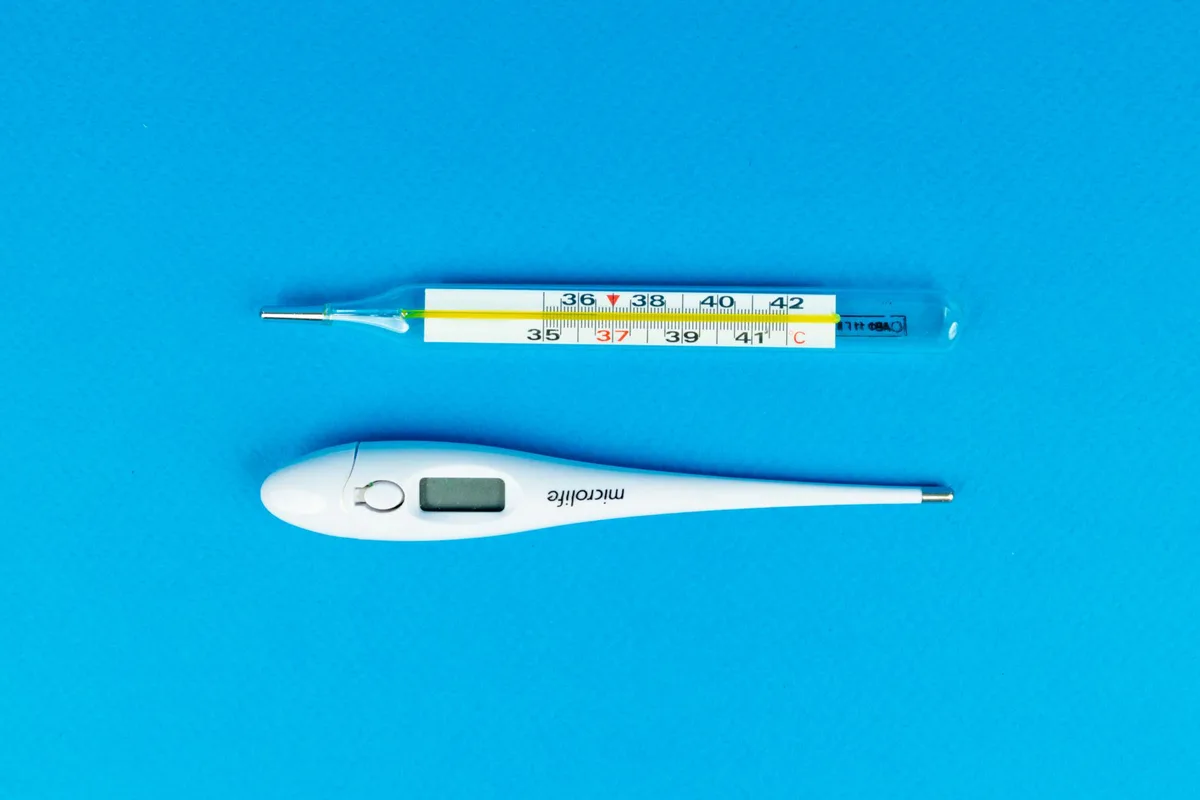
Image source: Pexels / Maksim Goncharenok (Pexels License)
This core distinction leads to differences in speed, accuracy, durability, and ease of reading, which we’ll break down further.
Digital Thermometers: What You Get
Digital thermometers have become the go-to choice for many applications, from home health to professional kitchens, due to their technological advantages. They typically consist of a probe connected to a digital display unit powered by a battery. These devices are engineered for quick, clear readings and offer features that traditional thermometers can’t match.
Features That Matter
Many digital thermometers come packed with user-friendly features. You’ll often find a memory function to recall the last temperature taken, an auto shut-off to conserve battery life, and sometimes even alarms that sound when a fever is detected. The display itself is usually an LCD screen, which is easy to read in various lighting conditions, showing the temperature in either Celsius or Fahrenheit at the touch of a button.
How They Make Life Easier (Benefits)
The primary benefit of a digital thermometer is speed. Instead of waiting several minutes to get a reading, many digital models provide an accurate temperature in seconds. This is invaluable when dealing with fussy children or when you need to quickly check multiple items in a busy kitchen.
They’re also generally more durable than glass thermometers and don’t contain hazardous materials like mercury, making them safer for households with kids and pets. The clear digital readout eliminates guesswork.
Where They Fall Short (Drawbacks)
Despite their advantages, digital thermometers aren’t perfect. They rely on batteries, so a dead battery means a useless thermometer. You’ll need to keep spares on hand.
While generally accurate, some cheaper models might not offer the same precision as a high-quality traditional thermometer. They can sometimes be susceptible to electronic failure. Cleaning them also requires care to avoid damaging electronic components, though many are waterproof or water-resistant.
Traditional Thermometers: The Old School Way
Traditional thermometers have been used for generations. These typically include mercury thermometers and alcohol-based thermometers, encased in glass. They operate on a simple principle of thermal expansion and contraction, requiring no batteries or complex electronics.
What They’re Made Of
The vast majority of traditional thermometers utilize a sealed glass tube containing a liquid designed to expand and contract predictably with temperature changes. Mercury, once common, is now less favored due to safety concerns. Alcohol-based liquids, often dyed red or blue for visibility, are a safer alternative.
The glass tube is calibrated with precise markings, usually in degrees Celsius (°C) and Fahrenheit (°F), allowing for visual temperature readings.
The Upsides (Pros)
Traditional thermometers boast a few key advantages. They are often very accurate when used correctly and don’t require batteries, meaning they’ll work as long as the glass remains intact. They are also generally less expensive upfront than their digital counterparts.
For those who prefer a straightforward, analog approach without electronic concerns, they offer dependable simplicity.
The Downsides (Cons)
The most significant drawback is their fragility; glass thermometers are prone to breaking, which can be a hazard if they contain mercury. Mercury spills require specialized cleanup. They are also considerably slower, often taking several minutes to register a stable temperature reading.
Reading the fine markings on the glass can be challenging, especially in poor lighting, and parallax error can lead to inaccuracies.
Taking the Plunge: Key Differences Side-by-Side
When you line up digital and traditional thermometers, the distinctions become clear, highlighting why one might be better suited for certain tasks. It’s not just about technology; it’s about practicality in real-world scenarios.
| Feature | Digital Thermometer | Traditional Thermometer (Glass) |
|---|---|---|
| Reading Speed | Seconds (e.g., 10-60 seconds) | Minutes (e.g., 2-5 minutes) |
| Readability | Clear digital display (LCD/LED) | Visual liquid level against etched markings |
| Durability | Generally robust, higher impact resistance | Fragile glass construction |
| Power Source | Battery-powered | None required |
| Safety | Safe, no hazardous materials | Potential mercury spill hazard (if mercury-filled) |
| Extra Features | Memory, alarms, auto shut-off | Basic temperature measurement |
| Ease of Use | High – easy to read and operate | Moderate – can be difficult to read markings |
| Typical Cost | Moderate to High | Low to Moderate |
| Maintenance | Battery replacement, careful cleaning | Careful handling to avoid breakage |
Which Type Works Best For You?
Your specific needs will dictate whether a digital or a traditional thermometer is the best fit. Each has a niche where it excels, making the “better” choice highly dependent on the situation.
For Feverish Fevers (Medical Use)
When it comes to taking a person’s temperature, especially for medical purposes like detecting a fever, digital thermometers are almost always the preferred choice. Their speed is a major advantage, allowing for quick checks without undue stress on the patient, particularly children.
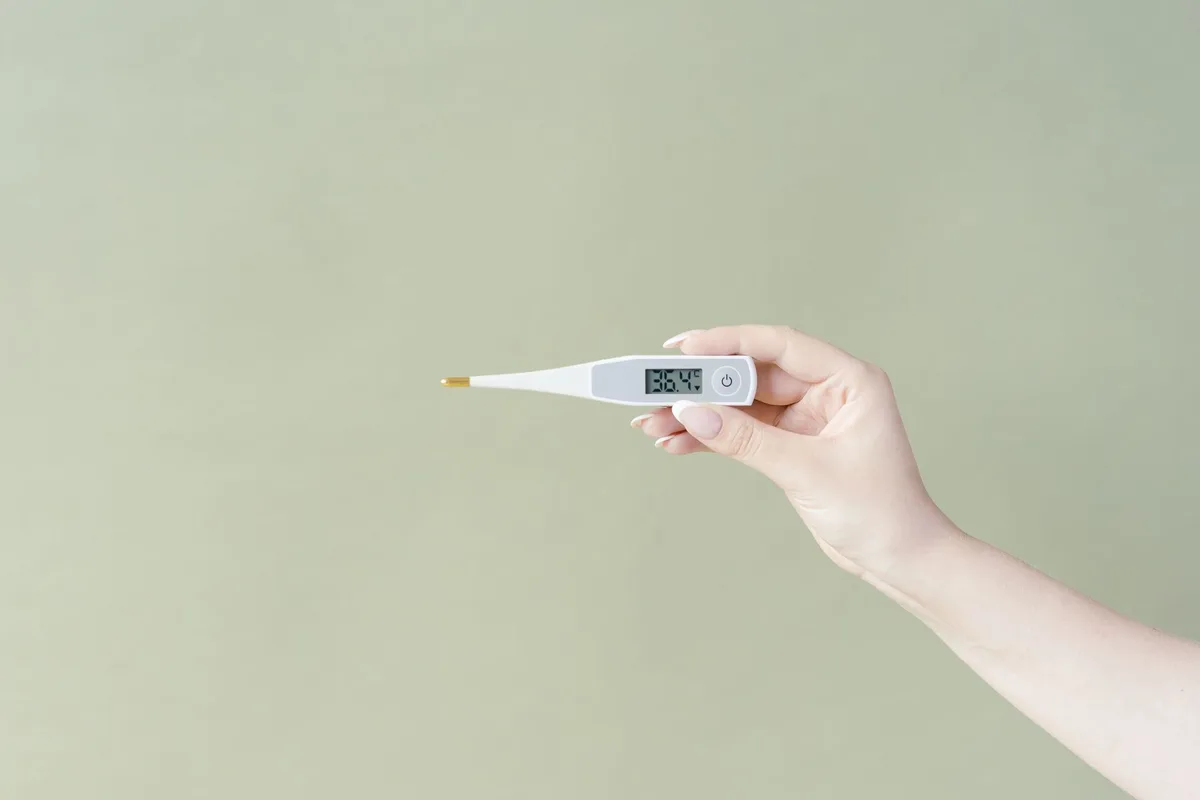
Image source: Pexels / Mikhail Nilov (Pexels License)
Many digital medical thermometers are designed for specific areas like oral, rectal, or underarm use and offer audible alerts for when the reading is complete. Regulatory bodies like the Food and Drug Administration (FDA) have specific guidelines for medical thermometers, and digital models often meet these requirements for accuracy and safety.
For Kitchen Calibrations (Cooking & Baking)
In the kitchen, temperature is a critical ingredient for success. Whether you’re ensuring chicken is cooked safely or checking the exact temperature of candy syrup, the thermometer type matters. Digital thermometers, particularly instant-read or probe varieties, are invaluable here for their speed and precision.
For instance, a good digital meat thermometer can give you an exact internal temperature of meat within seconds, helping you avoid undercooking or overcooking. Traditional thermometers can work for tasks like checking oven airflow, but for precise internal food temperatures, digital is typically more efficient and easier to read quickly.
For Quick Checks Around the House
For general household tasks, like measuring ambient room temperature or checking the temperature of liquids for craft projects, either type could technically work. However, the convenience of digital often wins out. A simple digital thermometer is easier to read at a glance than squinting at a glass tube.
The durability factor is also a plus in a busy household where a glass thermometer might easily be knocked over.
Avoiding Common Thermometer Pitfalls
Making a mistake with your thermometer can lead to inaccurate readings, which can be frustrating or dangerous. For traditional thermometers, the biggest pitfall is reading the mercury or alcohol level incorrectly. This often happens if you don’t hold the thermometer at eye level or if the markings are smudged.
With digital thermometers, common issues revolve around battery life and proper cleaning. Some users forget to replace batteries, leading to a unit that won’t turn on. Aggressive cleaning with harsh chemicals can also damage electronic components or the display.
Always follow manufacturer instructions for cleaning, typically involving mild soap and water or an alcohol wipe.
What They’ll Cost You
The price difference between digital and traditional thermometers can vary significantly. Basic alcohol-based thermometers are generally the most affordable, often costing just a few dollars. Mercury thermometers were similarly priced but are less common now.
Digital thermometers have a wider price range. You can find basic digital models for under $10, comparable to reusable glass thermometers. However, specialized digital thermometers, like high-accuracy instant-read kitchen thermometers or advanced medical ones, can range from $25 up to $100 or more.
These premium models often boast faster readings, higher precision, and more robust construction.
Making Your Choice: A Final Word
Ultimately, the decision between a digital and a normal thermometer hinges on your priorities. If speed, ease of reading, and safety are paramount, a digital thermometer is typically the superior choice. They are better suited for taking quick temperature readings on children or for culinary tasks where precision and immediacy are key.
Traditional thermometers still have their place if you prefer a battery-free, simple tool and are careful with handling. However, the risks associated with breakage and slower read times often make them less practical for everyday use compared to their digital counterparts.