Let’s talk about meat thermometers in the professional kitchen. It’s a question many home cooks wonder about: do chefs rely on these gadgets, or is it all instinct? The truth is, professional kitchens often use technology to ensure consistency and safety.
In our research, we found that while many chefs develop an incredible “feel” for doneness, that same chef might still reach for a thermometer, especially in a high-pressure environment. Per U.S. Department of Agriculture (USDA) guidelines, poultry should reach an internal temperature of 165°F (74°C) for safety.
A thermometer guarantees this minimum is met.
Quick Answer
Yes, most professional chefs use meat thermometers. While experience builds intuition, thermometers offer crucial accuracy and consistency, especially for food safety. In busy restaurants, they prevent guesswork and ensure every dish meets precise temperature standards.
Chefs use them for critical food safety, to guarantee perfect results for specific cuts, and to train newer staff.
The “Gut Feeling” vs. The Tool: Why It’s Not Black and White
You’ve seen it on TV: a chef pokes a steak, nods, and declares it perfect. That’s honed instinct, built from countless hours spent cooking and observing. Many chefs can tell doneness by touch, by the firmness of the meat, or how the juices look.
This skill is undeniably valuable, a mark of true culinary expertise.
However, instinct isn’t always enough, especially in a commercial setting. Running a restaurant means consistency is key. A chef’s “good day” intuition might falter under pressure, or a new cook might not yet have that finely tuned sense.
That’s where a reliable tool like a meat thermometer steps in to provide that objective confirmation.
Why Precision Matters: Beyond Just a “Nice to Have”
In professional kitchens, precision isn’t just about making food taste good ; it’s about making it safe and consistently good. A meat thermometer provides that objective measurement, removing the guesswork. This is especially critical when dealing with various cuts of meat, different cooking methods, and the inherent variability of heat sources.
It’s the difference between “likely correct” and “definitely correct.”
For instance, achieving a perfect medium-rare steak means hitting a specific internal temperature range. Too low, and it’s undercooked. Too high, and it’s overdone.
A thermometer, whether an instant-read probe or a wireless model, gives chefs the confidence that they’ve hit that sweet spot every single time since 2026. This consistency builds customer trust and brand reputation.
When Temperature is Non-Negotiable: Safety and Consistency
Ensuring Food Safety in Commercial Kitchens
Food safety is paramount in any professional kitchen. Undercooked meat, particularly poultry and ground meats, can harbor harmful bacteria like Salmonella and E. coli. Government health agencies, such as the Food Standards Agency (FSA) in the UK or the U.S.
Department of Agriculture (USDA), set minimum safe internal cooking temperatures to prevent foodborne illnesses. For example, the USDA recommends 165°F (74°C) for poultry, 160°F (71°C) for ground meats, and 145°F (63°C) for whole cuts of beef, pork, veal, and lamb, followed by a three-minute rest time.
A thermometer is the most reliable way to verify these temperatures. Relying solely on visual cues can be deceptive; meat coloration can vary, and juices might appear clear even if the internal temperature isn’t safe. A quick check with a thermometer ensures compliance with these critical safety standards.
Achieving Perfect Doneness Every Time
Beyond safety, chefs use thermometers for the simple, yet crucial, goal of perfect doneness. Think about the subtle difference between a medium-rare and a medium steak, or a perfectly roasted chicken that’s moist but cooked through. These distinctions often lie within a few degrees of internal temperature.
For delicate items like fish or certain roasts, precise temperature control prevents overcooking, which can lead to dry, tough results. In a restaurant preparing dozens, or even hundreds, of meals a night, the ability to guarantee each entreé is cooked exactly as ordered is a cornerstone of quality control. It eliminates the variability that can arise from different ovens or cooking times.
The Thermometer’s Role in a Professional Kitchen Workflow
Training New Cooks and Developing Skills
For chefs training new kitchen staff, a meat thermometer is an invaluable teaching aid. It helps trainees understand the physical sensations and visual cues of doneness by correlating them with exact temperature readings. This bridges the gap between theoretical knowledge and practical application.
When a new cook probes a piece of chicken, the thermometer might read 155°F (68°C). The chef can then explain that this is close, but needs to reach 165°F (74°C) for safety. This hands-on comparison accelerates the learning curve, helping them build their own internal “thermometer” faster and more reliably than without a thermometer.
Handling Large-Scale Catering and Banquets
Catering for large events or banquets presents unique challenges. Cooking for hundreds means managing multiple pans, ovens, and large cuts of meat simultaneously. In such scenarios, relying solely on visual checks can be impractical and risky.
Thermometers become essential for batch cooking and ensuring food held for service remains at safe temperatures. For instance, a large roast might be cooked to a slightly lower temperature and then held in a warming oven. A thermometer can confirm it stays above the safe holding temperature of 140°F (60°C) for extended periods, preventing bacterial growth.
When a Chef Might Rely Less on a Thermometer
Judging Quick-Cooking Items
While thermometers are crucial, their use isn’t universal in every pro kitchen situation. For very thin cuts of meat or fish that cook in just minutes, the time it takes to insert, read, and remove a thermometer might actually lead to overcooking. A seasoned chef can often judge the doneness of a thin fish fillet or a small steak by its firmness and the color of its surface.
These are items where “feel” and quick visual cues become more reliable. For example, a thin piece of salmon is typically done when it flakes easily and turns opaque. Over-inserting a probe into such delicate items could also create unwanted holes, affecting presentation.
The Ultra-Experienced Intuitive Chef
There are chefs who have dedicated their careers to understanding meat, heat, and texture. They’ve cooked so much, so often, that their senses are incredibly attuned. These chefs might use a thermometer less frequently for common dishes that they masterfully execute by feel alone.
However, even these highly experienced individuals often acknowledge the thermometer’s value. It’s not about a lack of skill, but about having a backup for certainty, especially when they’re trying a new cut, using unfamiliar equipment, or preparing something for a VIP where imperfections are unacceptable.
Choosing the Right Tool: Types of Thermometers Chefs Use
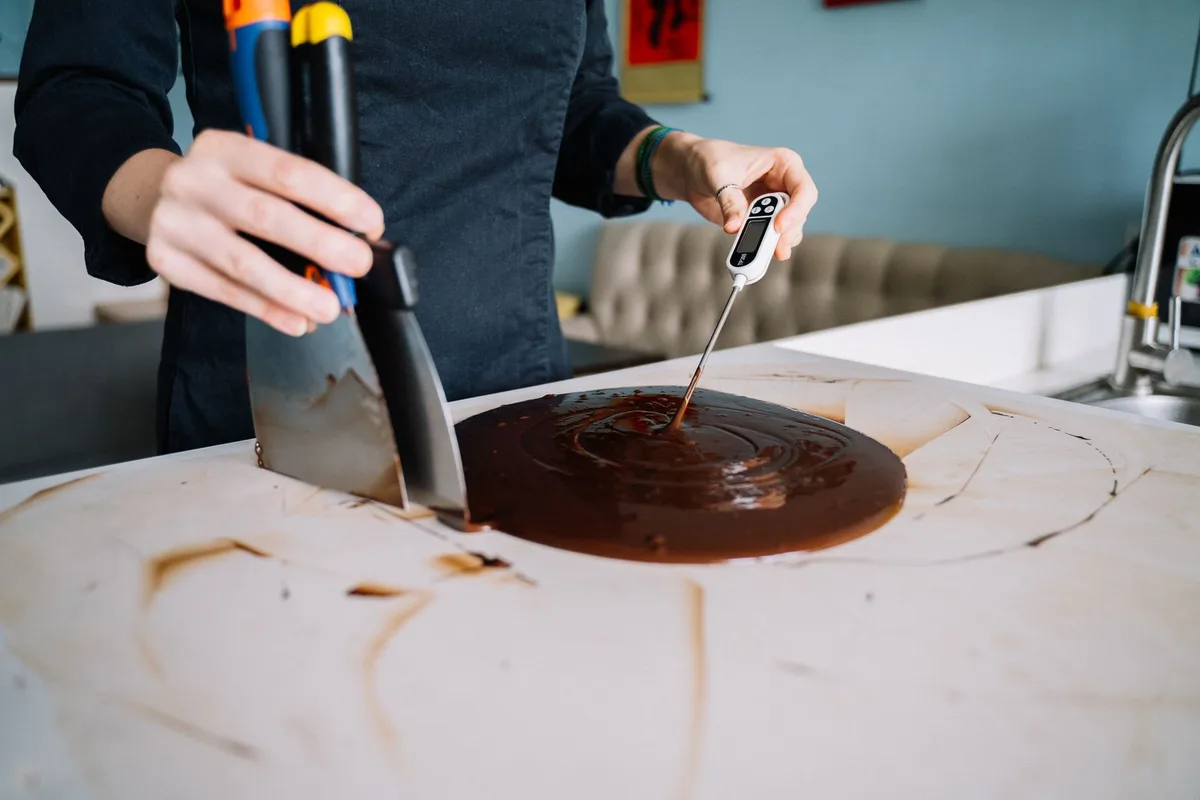
Professional kitchens utilize a variety of thermometers, depending on their specific needs and the dishes being prepared. The most common types you’ll find are instant-read digital thermometers. These are great for quick checks as probes are inserted into meat for a reading in seconds, often with an accuracy of ±1°F to ±2°F.
For larger roasts or items that cook for extended periods, leave-in probe thermometers are used. These have a probe that stays in the food, with the display unit resting outside the oven or grill. Increasingly, wireless or Bluetooth-enabled thermometers are becoming popular.
These allow chefs to monitor internal temperatures remotely via a smartphone app, offering flexibility and convenience, especially during busy service periods. Manufacturer specifications for accuracy are often detailed on their product pages.
Common Mistakes Chefs (And Home Cooks) Make with Thermometers
One common mistake is not to calibrate the thermometer regularly. Most digital thermometers can be calibrated by placing the probe in ice water; it should read 32°F (0°C). If it doesn’t, it needs adjustment or replacement.
Aggregate reviews often highlight inaccurate readings as a major frustration with cheaper models.
Another error is not inserting the probe into the thickest part of the meat, avoiding bone or fat pockets. A reading taken next to a bone might be inaccurately low or high because bones conduct heat differently. Also, failing to let meat rest after cooking can lead to juices running out, creating a false impression of doneness from the thermometer.
Resting allows the internal temperature to equalize and juices to redistribute.
Expert Tips for Using a Meat Thermometer Like a Pro
Always clean your thermometer probe before and after each use. Use a sanitizing solution or hot, soapy water, followed by a rinse. For instant-read models, wipe the probe dry before inserting it into the meat to prevent steam from affecting the reading.
When checking, insert the probe into the center of the thickest part of the meat. If you’re cooking a whole bird, check the deepest part of the thigh, making sure not to touch the bone. For roasts, aim for the center.
Remember that carryover cooking will continue to raise the temperature by a few degrees after you remove the meat from the heat source. Pull your food 5-10°F (3-5°C) below your target temperature and let it rest.
Frequently Asked Questions
How often should a chef calibrate their meat thermometer?
Calibration frequency depends on the thermometer’s usage and manufacturer recommendations, but checking it monthly or before critical cooking tasks is a good practice. This ensures consistent accuracy for food safety and quality.
Can a chef rely solely on visual cues for doneness?
While experienced chefs develop strong intuition, relying solely on visuals alone can be risky for food safety and consistency in a professional setting. Thermometers provide objective confirmation of temperature.
What is the best type of meat thermometer for a professional kitchen?
Instant-read digital thermometers are highly favored for their speed and accuracy in checking various dishes during busy service. Leave-in and wireless models are also used for longer cooks or remote monitoring.
Does meat continue to cook after being removed from heat?
Yes, a phenomenon called “carryover cooking” occurs. The internal temperature of the meat can rise an additional 5-10°F (3-5°C) after it’s removed from the heat source, so chefs pull food slightly before it reaches the final target temperature.