Waking up to a broken coffee grinder ruins your morning fast. You can still make a great cup using items already in your kitchen. A blender, mortar and pestle, or rolling pin will break down whole beans just fine.
Quick Picks For Grinding Beans At Home
The best choice depends on the brew method you use every day. If you need a fine powder for espresso, grab a mortar and pestle. It takes real arm work, but it gives you the most control over the final size.
If you want something fast for drip coffee, use a standard kitchen blender. Just pulse it in short bursts so the beans don't get too hot. Heat ruins the flavor before the water even hits the grounds.
For French press fans, a rolling pin does a great job. You get those chunky pieces that steep slowly without turning bitter. Each tool has limits, so pick the one that fits your daily mug.
Why Grind Size Changes Your Morning Cup
Water pulls flavor from coffee at different speeds based on piece size. Small pieces give up their flavor very fast. Large chunks take much longer to release their taste.
If your pieces are too small for a French press, your drink tastes harsh and bitter. If they are too big for espresso, the water runs right through them. You end up with weak, sour water instead of rich coffee.
The Specialty Coffee Association notes that uniform particle size is key for balanced extraction. When all the pieces are the same size, the water pulls flavor evenly. That means no bitter bites mixed with sour sips.
Manual tools actually help here. Electric grinders often chop beans randomly. Hand tools let you stop exactly when the pieces look right.
You have to pay attention, but the result is worth it.
Blenders As Fast Bean Crushers
A standard countertop blender works well for medium grinds. Think drip machines or pour-over cones. The blades spin fast enough to shatter roasted beans in seconds.
Don't just hold the button down. The friction creates heat fast. Hot beans lose their sweet oils and turn stale before you brew them.
Use short pulses instead. Hit the button for two seconds, then stop. Shake the pitcher gently to move the big pieces to the bottom.
Repeat this until the pile looks like coarse sand.
Most blenders leave some big chunks mixed with fine dust. This uneven mix can make your cup taste slightly off. The fine dust brews too fast, while the big chunks brew too slow.
Still, for a quick fix, a blender beats buying pre-ground bags that sat on a shelf for weeks.
You'll also need to clean the pitcher right away. Coffee oils stick to plastic fast. If you wait, your next fruit smoothie will taste like dark roast.
Wash it with warm water and a drop of dish soap immediately after pulsing.
Blenders work best when you process at least half a cup of beans. Smaller amounts just bounce around the glass without hitting the blades. If you only need one small scoop for a single mug, this method gets frustrating quickly.
Mortar And Pestle For Fine Powders
This heavy bowl and club combo crushes beans better than anything else in your cabinet. You get total control over how fine the pile becomes. It is the top pick for Turkish coffee or stovetop espresso makers.
Put a small handful of beans in the bowl. Don't fill it past the halfway mark. Press the heavy club down and twist it hard.
You are crushing the beans against the rough stone, not just hitting them.
Keep twisting in circles. The rough inside surface grabs the beans and breaks them apart slowly. It takes about two minutes of steady work for one strong cup.
Your wrist will feel the burn, but the powder comes out very even.
Stone or ceramic models work best here. Wooden bowls absorb the dark coffee oils over time. That oil goes rancid and taints future batches.
A granite set stays clean and doesn't hold onto smells.
The main drawback is the batch size. You can only do about two tablespoons of beans at once. Making coffee for four people means standing there grinding for ten straight minutes.
It builds character, but it isn't fast.
Rolling Pins For Chunky French Press Pieces
Grab a sturdy wooden rolling pin and a thick plastic freezer bag. Put your beans inside the bag and push all the air out. Seal it tight so nothing escapes during the smash.
Lay the bag flat on your counter. Roll the pin over the beans with firm pressure. Don't tap them lightly.
Lean your body weight into the wood to crack the hard shells.
Roll back and forth until the pile looks like coarse sea salt. This chunky size is perfect for French press pots or cold brew jars. The water needs big pieces to avoid pulling out bitter compounds during long soaks.
Avoid thin sandwich bags. Roasted beans have sharp edges that poke right through flimsy plastic. Use a heavy-duty freezer bag rated for thick cuts of meat.
Double-bagging adds extra safety if you press hard.
You won't get fine powder this way. The round shape of the pin just flattens things out. It cracks them into bits, but it can't pulverize them into dust.
Stick to brew methods that need large, rough chunks.
Food Processors For Medium Batch Work
A food processor acts a lot like a blender but with a wider bowl. The blade sits lower, which helps catch the beans faster. You don't need as many shakes to move the pile around.
Use the exact same pulsing trick mentioned earlier. Two seconds on, two seconds off. Check the size through the clear lid after five pulses.
Stop as soon as the pile looks like wet beach sand.
Food processors handle larger batches easily. You can grind enough beans for a full 12-cup pot in under a minute. That makes this tool great for busy mornings when guests are over.
The wide bowl does create more mess. Fine dust flies up and coats the inside of the lid. Wipe it down with a damp cloth right away.
Dried coffee dust cakes onto plastic and takes serious scrubbing later.
Just like blenders, the cut is never perfectly even. You will find tiny powder mixed with pea-sized rocks. Sifting the grounds through a metal mesh strainer helps fix this.
Dump the big pieces back in for another quick pulse.
Heavy Skillets For Emergency Crushing
No blender, no rolling pin? Grab your heaviest cast iron pan. Place the beans on a thick cutting board.
Bring the flat bottom of the skillet down hard on the pile.
Press down and drag the heavy iron forward. This smashes and tears the beans apart. It is loud and messy, but it works in a pinch.
Keep the beans grouped tightly so they don't fly across the room.
Cast iron weighs enough to crack roasted beans without swinging wildly. A light aluminum pan just bounces off the hard shells. You need real weight pressing down to split them open.
This method makes a huge mess. Bits will scatter no matter how careful you are. Lay a damp paper towel around the pile to catch the flying shards.
Sweep the counter twice before you start brewing.
It only works for very coarse grinds. You cannot drag a skillet fast enough to make fine powder. Save this trick for cowboy coffee or cold brew pitchers where big chunks are totally fine.
Spice Mills For Single Serve Portions
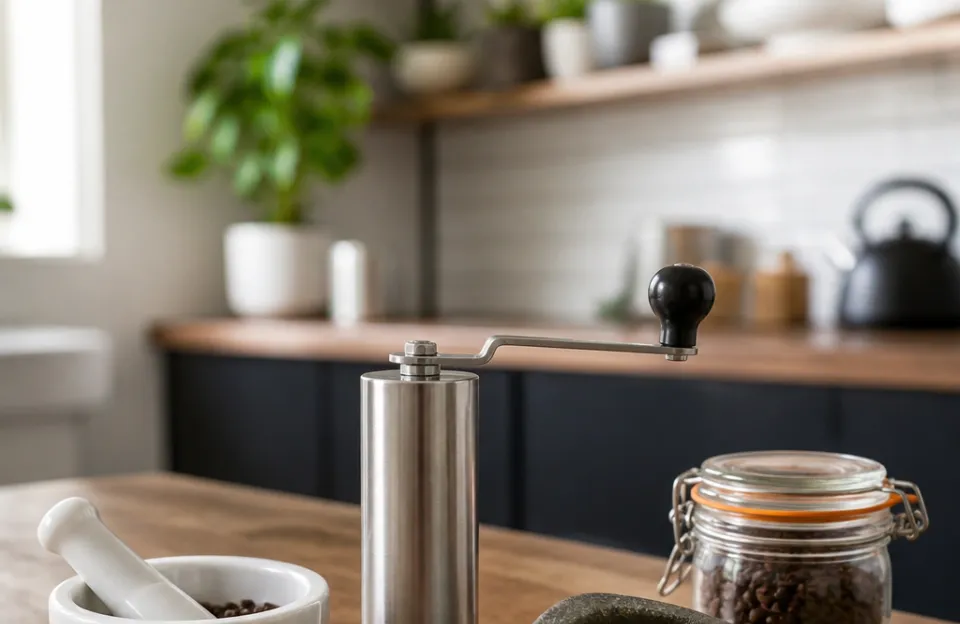
A manual spice mill looks like a tall pepper grinder. You drop beans in the top and twist the handle. The metal teeth inside chew the beans into smaller bits as they fall through.
These small tools only hold about two tablespoons of whole beans. That is exactly enough for one standard mug of drip coffee. Twist the handle twenty times and your dose is ready.
The grind size changes based on how tight you screw the bottom nut. Turn it clockwise for finer dust. Loosen it for bigger chunks.
It takes a few tries to find your sweet spot.
Spice mills struggle with very light roasts. Light beans are dense and hard. They jam the small metal teeth and stop the handle from turning.
Stick to medium or dark roasts that snap apart easily.
Cleaning requires taking the whole thing apart. Coffee oils build up on the tiny teeth fast. Brush them out with a dry toothbrush every few days.
Never wash the steel burrs with water, or they will rust shut.
Matching The Crush To Your Brew Method
Every coffee maker needs a specific piece size to taste good. Getting this wrong wastes good beans. Here is how to match your kitchen tool to your favorite pot.
Espresso machines need powder as fine as flour. Only a mortar and pestle can achieve this by hand. Blenders and rolling pins leave the pieces way too big.
Water shoots through large chunks in seconds, giving you sour brown water.
Drip coffee makers prefer a texture like regular sand. Blenders and food processors hit this mark nicely with short pulses. Spice mills work too if you adjust the bottom nut correctly.
French press pots demand coarse chunks resembling sea salt. Rolling pins and heavy skillets are perfect here. If you use a blender, pulse it only three or four times.
Any more and the pieces get too small, slipping through the metal mesh filter into your mug.
Cold brew pitchers also need large, rough chunks. The beans sit in cold water for up to 24 hours. Small pieces turn the batch incredibly bitter over that long soak.
Smash them with a rolling pin and toss them straight into the jar.
Pour-over cones sit right in the middle. They need pieces slightly smaller than drip machines. A food processor pulsed carefully gives you that fine sand texture.
Take your time checking the size between each short burst.
If you enjoy pulling shots at home, understanding different espresso setups helps explain why fine powder matters so much. High pressure forces water through the puck fast, so the surface area must be massive.
Keeping Oils Fresh After Breaking The Shell
Whole beans protect their flavor inside a hard shell. Once you crack that shell, oxygen attacks the oils immediately. Ground coffee goes stale ten times faster than whole beans.
Only break down exactly what you need for right now. Don't crush a whole bag on Sunday for the entire week. By Wednesday, those oils will smell flat and taste like cardboard.
Measure your water first, then weigh out the matching bean amount.
Store any leftover whole beans in an airtight jar away from sunlight. Heat and light cook the oils inside the bag before you even start. A dark cabinet keeps them safe.
Never put coffee beans in the fridge. The moist air inside refrigerators ruins them fast. Beans act like little sponges, soaking up smells from onions and leftover soup.
Keep them in a dry pantry instead.
If you accidentally grind too much, put the extra powder in a tiny sealed jar. Push all the air out before closing the lid. Use those leftovers within 12 hours for the best taste.
After a full day, dump them and start fresh.
Cleaning Up Sticky Coffee Dust
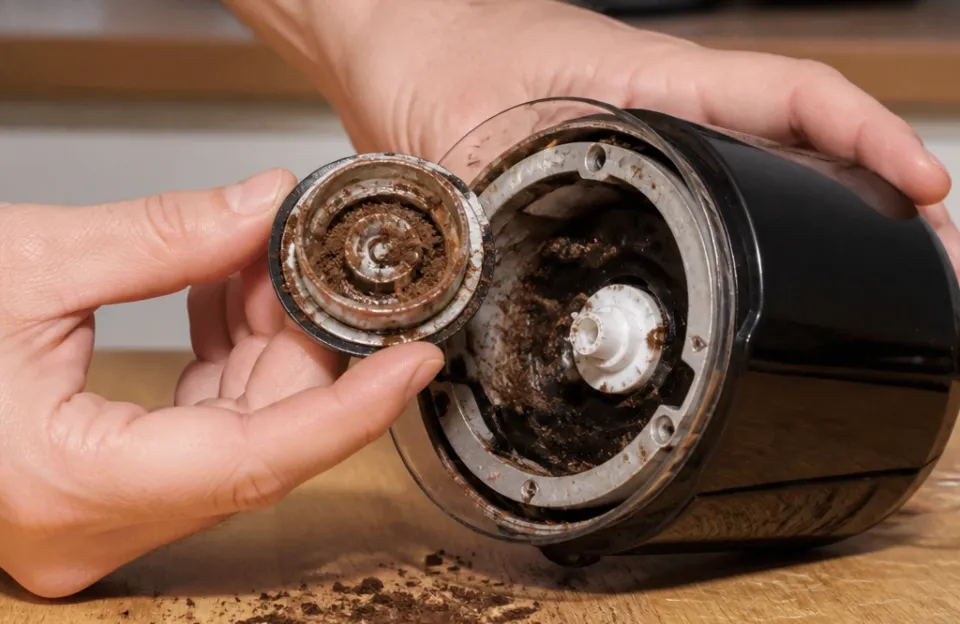
Coffee leaves behind dark oils that stain plastic and clog metal. Cleaning your tools right after use saves you a headache later. Dried grounds turn into cement inside blender blades.
For blenders and food processors, add warm water and one drop of dish soap. Pulse it five times to knock the oils off the blades. Rinse it out completely and leave the lid off to air dry.
Trapped moisture breeds mold in dark corners.
Mortar and pestle sets need a stiff dry brush. Don't use soap on unsealed stone. The porous rock drinks the soapy water, and your next batch of crushed beans will taste like dish detergent.
Just brush the dust out and wipe the rim with a dry cloth.
Rolling pins usually stay clean since the beans were inside a bag. But check the wood for any oily spots where the bag might have torn. Wipe those marks with a slightly damp rag and dry the wood instantly.
Spice mills require the most care. Unscrew the bottom and pull the center rod out. Tap the pieces against the edge of the sink to knock loose trapped dust.
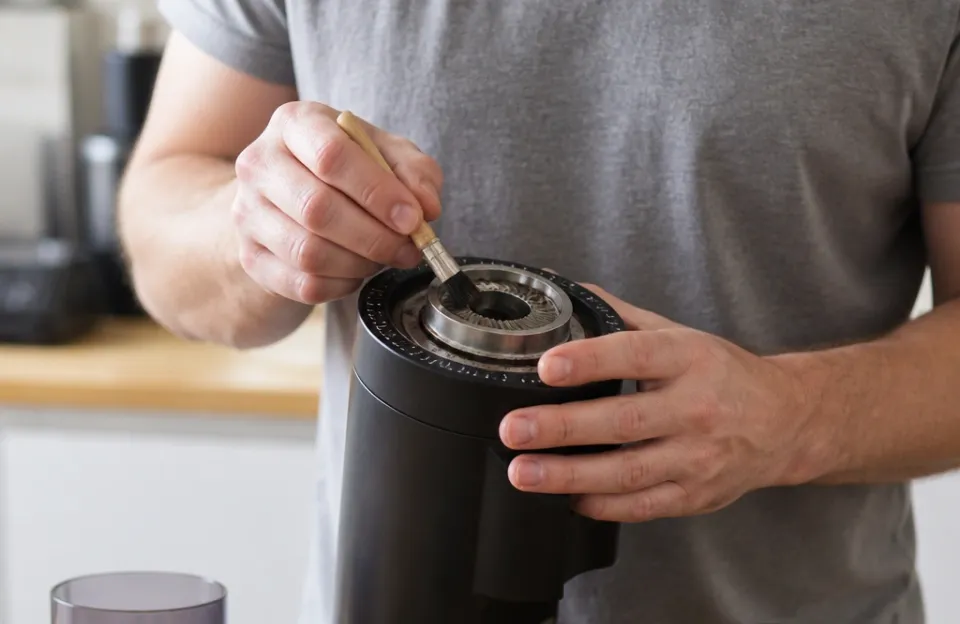
Use a dry paintbrush to sweep the tiny metal teeth. Putting it back together wet causes the steel parts to seize up entirely.
Keeping your counters clear of stray grounds prevents pests. Ants love the sweet smell of roasted beans. Wipe the area with a damp sponge to remove invisible oil slicks left behind by the plastic bags or bowls.
Common Mistakes That Ruin The Taste
Rushing the process is the biggest error people make. Holding a blender button down for thirty seconds cooks the beans. You end up with a burnt, ashy flavor no matter how expensive the bag was.
Patience with short pulses keeps the temperature low.
Using dirty tools is the second worst mistake. Old garlic smells hiding in a mortar will transfer directly into your morning cup. Always sniff your tools before dropping beans inside.
If it smells like last night's dinner, wash it thoroughly first.
Grinding too far ahead of time kills the aroma. People try to save morning minutes by doing it the night before. By sunrise, the bright fruity notes have evaporated into the air.
Break the beans right before the kettle boils.
Ignoring the brew method leads to bad coffee. Using rolling pin chunks in an espresso machine yields nothing but sour water. The pieces must fit the machine.
Match your tool to your pot every single time.
Overfilling bags when using a rolling pin causes blowouts. Too many beans stacked on top of each other push outward when pressed. The plastic splits, sending sharp shards everywhere.
Work in small, flat layers to keep the bag intact.
Finally, forgetting to measure throws off the strength. Eyeballing a pile of crushed beans rarely works because the volume changes after cracking. Whole beans pack tightly; broken pieces puff up.
Weigh your portions on a small kitchen scale for consistent results.
Picking The Right Kitchen Tool Today
Your choice comes down to three simple questions. How much coffee do you drink? What kind of pot do you own?
How much arm work do you mind doing?
If you drink one cup a day and love espresso, buy a heavy stone mortar. It sits quietly on the counter and makes perfect powder. It takes effort, but the flavor payoff is huge.
Families drinking a full pot every morning should lean on the food processor. It handles large batches fast. Just remember to pulse carefully and wash the bowl immediately.
French press lovers only need a rolling pin. It costs nothing, uses zero electricity, and makes the exact chunky size you need. Toss the beans in a freezer bag and roll away.
Travelers or campers benefit most from a small spice mill. It fits in a backpack and weighs almost nothing. Twist out a fresh portion anywhere you have access to hot water.
None of these methods replace a dedicated burr grinder forever. But they absolutely save your morning routine when the power goes out or the motor dies. Knowing how to break down beans by hand keeps your coffee habit alive no matter what happens in the kitchen.
As an Amazon Associate, we earn from qualifying purchases.