Air fryer frozen chicken nuggets cook in 10 to 12 minutes at 400°F and come out significantly crispier than oven-baked or microwaved versions. You do not need to thaw them first, add oil, or preheat the basket for most standard brands. The rapid air circulation mimics deep frying by rendering the fat already present in the breading while keeping the interior juicy.
This method works because air fryers are essentially compact convection ovens with faster airflow. That intense heat transfer creates a Maillard reaction on the surface of the nugget much quicker than a standard oven can achieve. We will cover exact timing for different sizes, safe internal temperatures, seasoning adjustments, and how to avoid the most common texture failures.
If you have ever ended up with soggy centers or burnt edges, the fix usually lies in basket loading and temperature management rather than the nuggets themselves.
Why Convection Heat Changes Frozen Nugget Texture
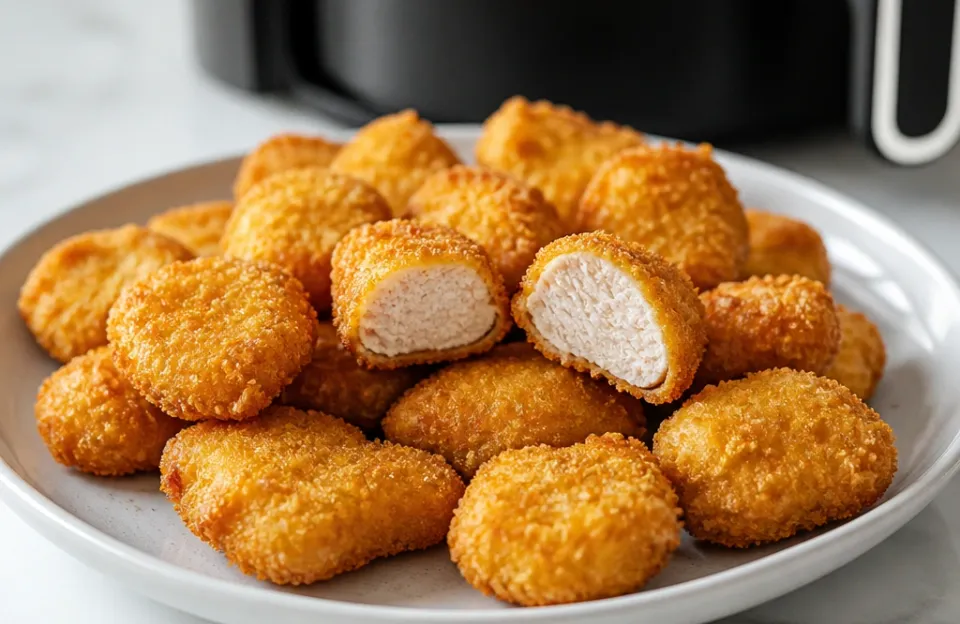
Frozen chicken nuggets are par-fried during manufacturing before they reach your freezer. This means they already contain oil within the breading layer. An air fryer activates this existing fat through high-velocity hot air.
A standard oven relies on radiant heat that takes longer to penetrate the frozen core, often resulting in a dried-out exterior before the center is fully heated. The air fryer’s fan forces heat into every crevice of the breading simultaneously.
The result is a texture closer to deep frying without submerging the food in additional grease. Steam escapes rapidly from the surface due to the constant airflow, preventing the sogginess that plagues microwave reheating. This rapid moisture removal is what creates the audible crunch when you bite into a properly cooked nugget.
Understanding this mechanism helps explain why overcrowding the basket ruins the outcome. Blocked airflow creates steam pockets that soften the breading instead of crisping it.
Managing Basket Capacity for Even Cooking
You must leave space between each nugget for the air to circulate. A single layer is mandatory for proper results. Stacking or piling them creates insulating layers where cold spots develop.
Most standard air fryer baskets handle 12 to 16 regular-sized nuggets comfortably in one batch. Cooking in two separate batches yields better results than forcing all of them in at once.
Shaking the basket halfway through the cook time promotes even browning. This physical movement exposes different surfaces to the direct heating element. It also prevents sticking if your basket lacks a non-stick coating.
Use tongs or shake gently to avoid breaking the breading. This step takes five seconds but makes a measurable difference in final color consistency.
Temperature Accuracy Matters More Than Time
Factory-set air fryer temperatures can vary by 20 degrees or more from the displayed reading. Relying solely on the timer risks undercooking or burning. Using an accurate instant-read thermometer removes the guesswork entirely.
Insert the probe into the thickest nugget to verify doneness rather than cutting one open and losing juices.
According to the USDA Food Safety and Inspection Service, all poultry products must reach an internal temperature of 165°F to be considered safe. Visual cues like golden brown coloring are helpful indicators but not reliable safety metrics. Some breadings brown faster than the meat heats through.
Others stay pale even when fully cooked. Temperature verification is the only way to guarantee both safety and quality.
Adjusting Cook Times for Different Nugget Varieties
Not all frozen nuggets share identical dimensions or breading thickness. Standard dino-shaped nuggets typically finish in 10 minutes at 400°F. Larger pub-style or steakhouse nuggets often require 12 to 14 minutes due to greater mass.
Mini nuggets designed for kids may be done in 8 or 9 minutes. Always check the package instructions as a baseline, then adjust based on your specific appliance's performance.
Vegetarian or plant-based nuggets have different thermal properties than chicken. They often contain less fat and more starch, which changes how they respond to convection heat. These usually cook faster and can become tough if overdone.
Reduce the temperature to 375°F for plant-based options and check at the 8-minute mark. The goal is heating through without desiccating the protein alternative.
| Nugget Type | Temperature | Base Time | Shake Interval | Target Internal Temp |
|---|---|---|---|---|
| Standard Chicken | 400°F | 10-12 min | 5-6 min | 165°F |
| Large / Pub Style | 400°F | 12-14 min | 6-7 min | 165°F |
| Mini / Kids Size | 400°F | 8-9 min | 4 min | 165°F |
| Plant-Based | 375°F | 8-10 min | 4-5 min | Per Package |
| Gluten-Free | 390°F | 10-12 min | 5-6 min | 165°F |
Gluten-free browning presents unique challenges. Alternative flours like rice or tapioca starch behave differently than wheat flour under high heat. They sometimes require slightly lower temperatures to prevent burning before the interior thaws completely.
If your gluten-free nuggets consistently darken too fast, drop the temperature by 10 degrees and extend the time by two minutes. Monitoring with a fast digital thermometer helps dial in the perfect setting for your specific brand.
Seasoning and Serving Beyond Plain Breading
Frozen nuggets arrive pre-seasoned, but that seasoning is designed to survive industrial processing and freezing. Fresh aromatics added after cooking elevate the flavor profile significantly. Toss hot nuggets immediately with grated parmesan, garlic powder, or smoked paprika while residual surface oil helps the spices adhere.
Adding seasonings before cooking risks burning delicate herbs against the heating element.
For wet sauces, apply them after the nuggets exit the air fryer. Coating them beforehand introduces excess moisture that defeats the purpose of convection cooking. If you want glazed nuggets, toss them in sauce right before serving or return them to the basket for just 60 seconds at 350°F to set the coating.
This brief second blast caramelizes sugars without making the breading soggy. Those who enjoy bold flavors might appreciate techniques similar to those used for garlic parmesan wings, adapted here for smaller pieces.
Dipping sauces should complement rather than overwhelm. Classic choices include honey mustard, barbecue, and ranch. For something different, try mixing sriracha with mayo or combining soy sauce with rice vinegar.
Temperature contrast matters too. Cold dipping sauce against hot nuggets creates a more interesting sensory experience than room-temperature condiments. Keep sauces chilled until the moment of service.
Meal Prep and Batch Cooking Logistics
Air fryer frozen chicken nuggets work well for batch preparation despite being best eaten fresh. Cook double portions and store leftovers in shallow containers within two hours of cooking. Refrigerated nuggets maintain acceptable quality for three to four days.
Reheating requires returning them to the air fryer at 350°F for 3 to 4 minutes to restore crispness. Microwaving previously air-fried nuggets will always produce disappointing texture.
Planning ahead saves time during busy weeks. Portion raw frozen nuggets into freezer bags labeled with date and quantity. This prevents digging through large boxes and speeds up weeknight dinners.
Pair with vegetables that cook at similar temperatures for complete meals. Broccoli florets, green beans, or zucchini slices can share the basket if arranged carefully around the nuggets during the last few minutes of cooking. This approach mirrors strategies used in chicken wing meal prep but scales down for individual portions.
Freezer burn degrades nugget quality over time. Ensure packaging is sealed tightly after each use. Ice crystals forming on the breading indicate temperature fluctuations or prolonged storage.
These crystals melt during cooking and create wet spots that refuse to crisp. Discard any packages showing significant frost buildup. Quality peaks within three months of purchase for most commercial brands.
Troubleshooting Common Texture Failures
Soggy nuggets almost always stem from overcrowding or insufficient temperature. Verify your air fryer reaches the stated temperature using an oven-safe thermometer placed inside the basket. Many units run cooler than advertised, especially older models.
Preheating for three minutes compensates for weaker heating elements and ensures immediate searing upon contact.
Burnt exteriors with frozen centers indicate excessive heat or inadequate shaking. Lower the temperature by 25 degrees and extend cooking time proportionally. Shake more frequently to distribute heat evenly across all surfaces.
Dark-colored baskets absorb more radiant heat than light ones, potentially accelerating browning. Adjust accordingly based on your equipment's characteristics.
Uneven cooking suggests inconsistent sizing within the same batch. Sort nuggets by size before cooking when possible. Place larger pieces toward the center where airflow concentrates and smaller ones near the edges.
Remove finished pieces early if necessary rather than waiting for stragglers. This selective harvesting prevents overcooking smaller specimens while ensuring larger ones reach safe temperatures.
Rubber-like texture signals overcooking beyond safe internal temperature. Poultry proteins tighten and expel moisture when exposed to prolonged heat. Once 165°F is reached, remove nuggets immediately.
Carryover cooking continues raising internal temperature by several degrees during resting. Account for this thermal momentum by pulling nuggets at 160°F and letting them rest for two minutes. Precision tools like a wireless Bluetooth thermometer allow monitoring without opening the basket repeatedly.
Health Considerations and Nutritional Context
Air frying reduces total fat content compared to traditional deep frying because no additional oil enters the equation. However, frozen nuggets remain processed foods with sodium levels worth monitoring. Check nutrition labels carefully when selecting brands.
Some "healthy" marketing claims mask comparable sodium or saturated fat profiles to conventional options. Whole muscle chicken generally offers superior nutrition to mechanically separated alternatives.
Caloric density varies significantly between brands and formulations. A typical serving of six nuggets ranges from 250 to 350 calories depending on breading thickness and chicken quality. Pairing with vegetable sides rather than french fries improves overall meal balance.
Those tracking intake for fitness goals should weigh portions rather than relying on piece counts, as weights fluctuate between manufacturers. Detailed nutritional breakdowns for similar poultry preparations can inform broader dietary planning alongside items like calorie-conscious wings.
Sodium reduction strategies exist for health-conscious eaters. Rinse cooked nuggets briefly under warm water to remove surface salt, though this sacrifices some crispness. Alternatively, choose low-sodium brands and add flavor through acid, herbs, or spice blends instead of salt.
Lemon juice, fresh cilantro, and cumin provide complexity without sodium load. Balance remains key rather than elimination.
Frequently Asked Questions
Can I cook frozen chicken nuggets without adding oil?
Yes, frozen nuggets already contain sufficient oil from the par-frying process. Adding extra oil creates greasiness rather than improved crispness. The air fryer's function is activating existing fats through convection, not introducing new ones.
Only consider a light spray if using homemade unbreaded pieces or if your specific brand explicitly recommends it.
How do I know when frozen nuggets are safely cooked?
Internal temperature must reach 165°F measured with a calibrated meat thermometer. Color and texture alone cannot confirm safety. Insert the probe into the thickest part of the largest nugget in the batch.
Digital thermometers provide instant readings that eliminate uncertainty. Never assume doneness based solely on elapsed time or external appearance.
Why are my air fried nuggets still soggy after full cook time?
Overcrowding prevents proper air circulation and traps steam. Cook in single layers with visible space between pieces. Also verify actual basket temperature matches the display setting, as many units run cool.
Preheating helps establish immediate surface drying. Finally, ensure nuggets were stored properly without ice crystal formation that adds unwanted moisture during cooking.
Is it safe to reheat leftover air fryer nuggets?
Refrigerated leftovers remain safe for three to four days when stored promptly. Reheat exclusively in the air fryer at 350°F for 3 to 4 minutes to restore texture. Avoid microwaving, which makes breading irreversibly soft.
Bring leftovers to 165°F internal temperature before consuming. Discard any nuggets left at room temperature beyond two hours.
Do plant-based nuggets cook the same as chicken nuggets?
No, plant-based varieties typically require lower temperatures and shorter times due to different composition. Start at 375°F and check at eight minutes. Overcooking causes toughness since there is no animal fat to render.
Follow package directions specifically formulated for that product rather than assuming equivalence with chicken. Texture goals differ fundamentally between these categories.
Getting Consistent Results Every Time
Mastering air fryer frozen chicken nuggets comes down to respecting airflow dynamics and verifying temperature. Treat the appliance as a precision tool rather than a set-and-forget convenience. Single-layer loading, mid-cook shaking, and thermometer verification form the foundation of reliable outcomes.
Brand variations demand minor adjustments, but the underlying principles remain constant across all frozen poultry products.
Experimentation within these parameters leads to personal preferences. Some cooks prefer darker crunch achieved through extended time at moderate heat. Others favor lighter color with maximum juiciness from higher heat and shorter duration.
Both approaches work when executed with attention to detail. Record successful settings for future reference to build institutional knowledge in your own kitchen.
Remember that equipment differences matter. What works perfectly in one air fryer model may fail in another. Use the guidelines here as starting points rather than absolute rules.
Your specific combination of appliance, nugget brand, and taste preference determines the ideal protocol. Trust measurement over assumption and adjust incrementally based on observed results.