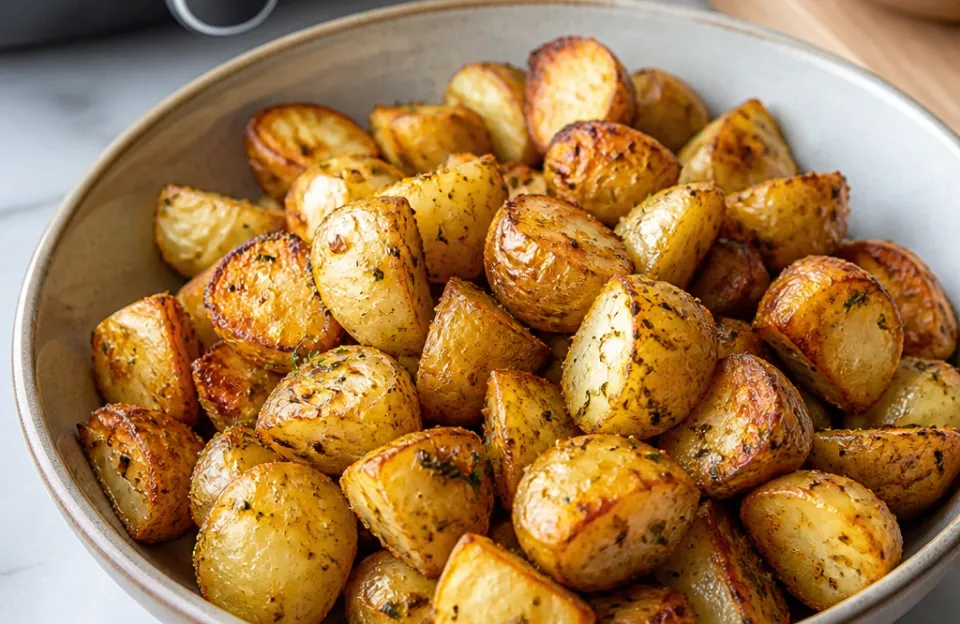
Air fryer potatoes cook in about 20 minutes at 400°F and come out with a crisp exterior and fluffy interior. The key is cutting them into even pieces, coating them lightly in oil, and avoiding overcrowding the basket. This method uses significantly less fat than deep frying while delivering a similar texture.
This guide covers the specific techniques that prevent sogginess or burning. We will look at which potato varieties work best, how to adjust timing for different cuts, and how to season them properly. You will also find troubleshooting steps for when results fall short and answers to common questions about storage and reheating.
Why Air Fryer Potatoes Turn Out Better Than Oven Roasting
The cooking mechanism in an air fryer creates superior texture through rapid air circulation. A heating element sits directly above the food while a powerful fan forces hot air down and around it. This convection effect removes surface moisture much faster than a standard oven can.
Moisture is the enemy of crispness, so eliminating it quickly allows the Maillard reaction to occur before the inside turns mushy.
Traditional roasting relies on radiant heat that takes longer to penetrate dense starch. By the time oven-roasted potatoes brown, they have often spent 45 minutes or more drying out internally. The air fryer’s compact chamber concentrates thermal energy.
This means you get browning in half the time with less internal moisture loss. The result is a distinct contrast between a crunchy shell and a creamy center that is hard to replicate in a conventional oven.
Surface Area and Cut Size Matter Most
Uniformity determines whether your batch finishes evenly. If you mix large chunks with small dice, the small pieces will burn before the large ones are cooked through. Aim for consistent dimensions regardless of the shape you choose.
A 1-inch cube is the standard benchmark for most recipes because it balances cook time and texture development.
Smaller cuts increase surface area, which leads to more crunch but also raises the risk of drying out. Larger cuts retain more interior creaminess but require longer cook times that can over-brown the exterior. Finding the right size depends on your preference for crunch versus fluffiness.
Sticking to one size per batch eliminates the guesswork and prevents wasted food.
Oil Coating Thickness Controls Browning
Oil acts as a heat transfer medium and a barrier against dehydration. Too little oil leaves dry, pale spots that never crisp up. Too much oil pools in the basket and makes the potatoes greasy rather than crunchy.
One to two tablespoons of oil per pound of potatoes is usually sufficient for even coverage.
High-smoke-point oils perform best at the temperatures required for crisping. Avocado oil, light olive oil, and refined coconut oil all handle 400°F without breaking down or smoking. Extra virgin olive oil has a lower smoke point and can impart bitter flavors when pushed to its limit.
Tossing the potatoes in a bowl with oil ensures every surface gets coated before they hit the basket.
Choosing the Right Potato Variety for Texture
Starch content dictates the final texture of air fryer potatoes. High-starch varieties like Russets produce the fluffiest interiors and crispest edges because their low moisture content allows for better browning. They are the top choice for classic wedges or fries where crunch is the priority.
Their mealy texture absorbs seasoning well and creates that desirable steakhouse-style baked potato result.
Waxy potatoes such as Red Bliss or Fingerlings hold their shape better during high-heat cooking. They have higher moisture and sugar content, which leads to caramelization rather than pure crispness. These are ideal for herb-roasted styles where a firm, creamy bite is preferred over shattering crunch.
They also resist falling apart when tossed with acidic dressings or vinaigrettes after cooking.
Yukon Golds sit in the middle of the spectrum with medium starch and moisture levels. They offer a versatile balance that works for almost any preparation style. Their thin skin doesn’t need peeling, and their buttery flavor reduces the need for heavy seasoning.
For most home cooks keeping only one variety on hand, Yukon Golds provide the safest bet for consistent results across different recipes.
| Potato Type | Starch Level | Best Texture Result | Ideal Cut Style |
|---|---|---|---|
| Russet | High | Fluffy interior, very crispy skin | Wedges, thick fries |
| Yukon Gold | Medium | Creamy center, golden crust | Cubes, halves |
| Red / Waxy | Low | Firm, waxy bite, caramelized | Whole baby, slices |
| Sweet Potato | Medium-High | Soft interior, crisp edges | Fries, coins |
Preparing and Seasoning Before Cooking
Proper prep work happens before the machine ever turns on. Washing removes dirt, but failing to dry thoroughly introduces steam that ruins crispness. Use a clean kitchen towel or paper towels to pat each piece completely dry after rinsing.
Even ten seconds of extra drying time makes a measurable difference in final texture.
Seasoning adherence depends on that oil layer mentioned earlier. Salt draws out moisture, so adding it too early can make potatoes wet again. Many cooks prefer salting immediately after cooking to preserve surface dryness.
However, if you want salt to penetrate, toss with oil first, then add salt just before placing them in the basket. Dried herbs and spices stick better to oiled surfaces than to bare starch.
Garlic powder, paprika, onion granules, and black pepper form a reliable base blend. Fresh garlic burns at air frying temperatures and turns bitter, so always use powdered forms for high-heat applications. Acidic ingredients like lemon juice or vinegar should be added after cooking to avoid interfering with browning.
If you enjoy rich, savory flavors similar to what you might use when preparing garlic parmesan chicken wings, those same umami-rich seasonings translate beautifully to starchy vegetables.
Soaking Starchy Varieties for Extra Crunch
Soaking cut Russet or sweet potato pieces in cold water removes excess surface starch. This step prevents sticking and promotes even browning by washing away free amylose molecules. Thirty minutes is sufficient for noticeable improvement, though some cooks soak for up to an hour.
Always drain and dry thoroughly afterward, or the water negates the benefit.
Skipping this step isn't fatal, but it does change the outcome. Unsoaked high-starch potatoes may develop a slightly gummy exterior layer before crisping fully. Soaked pieces tend to achieve a lighter, glass-like crunch reminiscent of double-fried chips.
This technique matters most when making thin fries or shoestrings where texture precision is critical.
Cooking Times and Temperature Adjustments
Temperature and time must match the cut size precisely. Most air fryer potatoes cook best at 400°F, but thickness changes the equation. Thin fries (¼ inch) may finish in 12 to 15 minutes, while 2-inch wedges can take 25 to 30 minutes.
Starting at the recommended time and checking early prevents burning. Shake the basket halfway through to expose all sides to direct airflow.
Batch size affects performance dramatically. Overfilling blocks air circulation and steams the food instead of roasting it. Cook in single layers with space between pieces whenever possible.
If you must cook a larger quantity, do it in multiple batches and keep finished portions warm in a low oven. Crowded baskets guarantee soggy results no matter how long you extend the cook time.
Monitoring doneness requires visual cues rather than fixed timers. Look for deep golden-brown color and audible sizzling that slows as moisture evaporates. A fork should slide into the center with zero resistance.
If using a probe thermometer to verify internal temperature for food safety or precision, a reliable digital meat thermometer reads instantly without releasing excessive heat from the basket. Potatoes are done when they reach an internal temperature of at least 205°F for maximum fluffiness.
Adjusting for Different Air Fryer Models
Basket-style and oven-style air fryers behave differently. Basket models concentrate heat more intensely due to smaller volume and closer proximity to the element. Oven-style units may require slightly higher temperatures or longer times because of greater air volume.
Always treat manufacturer guidelines as starting points rather than absolute rules.
Rack position matters in oven-style units. Top racks brown faster but risk burning tops before bottoms cook. Middle racks provide more even exposure.
Rotating trays halfway through mimics the shaking action used in basket models. Knowing your specific appliance’s hot spots comes from experience, but documenting adjustments builds a personal reference that improves future batches.
Troubleshooting Soggy, Burnt, or Uneven Results
Sogginess almost always traces back to moisture or overcrowding. If your potatoes emerge limp, check whether they were dried adequately after washing or soaking. Verify that you didn’t stack pieces more than two layers deep.
Extending cook time won’t fix sogginess caused by crowding; only reducing batch size will. Next time, spread pieces out or cook sequentially.
Burnt exteriors with raw centers indicate temperature mismatch. Lower the heat by 25°F and extend the time to allow heat penetration without scorching. Cutting pieces smaller also helps heat reach the core faster.
Conversely, if outsides are pale but insides are mushy, raise the temperature or preheat the unit. Cold starts delay browning and prolong overall cook time unnecessarily.
Uneven cooking stems from inconsistent sizing or poor basket management. Sort pieces by size before cooking and group similar dimensions together. Shake vigorously at the midpoint to redistribute.
Some models have natural hot zones; rotating the basket 180 degrees halfway addresses this. Pay attention to which areas brown fastest and place denser pieces there intentionally.
Preventing Sticking Without Excessive Oil
Sticking occurs when starch gelatinizes against metal without adequate lubrication. Preheating the basket creates a temporary non-stick effect through thermal expansion. Lightly spraying or brushing the basket adds insurance without drenching the food.
Parchment liners designed for air fryers work well but can restrict airflow if not perforated properly.
Cleaning residue between batches prevents carbon buildup that causes future sticking. Burnt-on starch acts as glue for subsequent loads. Wash the basket promptly after each use while residues are still soft.
Avoid abrasive scrubbers on non-stick coatings; soak instead. Maintaining equipment condition directly impacts food release and long-term performance.
Serving Suggestions and Pairing Ideas
Air fryer potatoes function as both side dish and snack foundation. Their neutral canvas accepts bold dips and sauces readily. Spicy aioli, chimichurri, or sriracha mayo complement the crispy texture without overwhelming it.
For heartier meals, pair with proteins that benefit from contrasting textures. The same principles that make honey garlic chicken wings irresistible apply here: salty, fatty, crisp elements balanced against something tender or saucy.
Loaded potato variations transform simple spuds into complete dishes. Top with cheese, bacon bits, sour cream, and chives immediately after cooking so residual heat melts toppings. Taco-seasoned versions work with ground beef, salsa, and avocado.
Mediterranean styles feature feta, olives, tomatoes, and tzatziki. Building these assemblies in the last minute preserves textural contrasts that define great potato dishes.
Breakfast applications deserve special mention. Par-cook diced potatoes the night before, then finish in the air fryer alongside eggs or sausage in the morning. This meal prep strategy mirrors approaches used for batch-cooking chicken wings where partial cooking saves weekday effort.
Reheating restores crispness better than microwaving ever could.
Frequently Asked Questions
Can I cook frozen potatoes in the air fryer?
Yes, frozen potatoes cook well without thawing. Increase cook time by 5 to 10 minutes compared to fresh, and shake frequently to prevent clumping. Do not add extra oil since frozen products are typically pre-oiled.
Check package instructions as baseline guidance, then adjust based on your unit’s performance.
Why do my potatoes taste bitter after air frying?
Bitterness usually comes from burnt garlic, excessive spice, or solanine in green potato skins. Never use fresh minced garlic at high heat; switch to powder. Trim any green tinges from skins before cooking, as solanine is toxic and bitter.
Reduce paprika or cayenne if charring occurs, since capsaicin compounds turn acrid when scorched.
Is it safe to eat undercooked air fryer potatoes?
Undercooked potatoes contain resistant starch that causes digestive discomfort and tastes unpleasant. They should be fully tender throughout with no hard or crunchy centers. Unlike meat, potatoes don’t carry pathogen risks at lower temps, but texture and digestibility suffer.
Always test with a fork or thermometer to confirm doneness before serving.
How do I reheat leftover air fryer potatoes?
Reheat at 375°F for 3 to 5 minutes to restore crispness without drying out. Avoid microwaves, which make exteriors rubbery. Spread leftovers in a single layer to ensure even heating.
Add a light spritz of oil if they look dry before reheating. Consume within three days for best quality and safety.
Do I need to preheat my air fryer for potatoes?
Preheating helps achieve immediate searing and reduces total cook time by 2 to 3 minutes. It’s especially useful for achieving crispness on starchy varieties. Skip preheating only if your model runs exceptionally hot or if cooking very small cuts that brown quickly.
Consistency matters more than speed, so pick one approach and stick with it.
Getting Consistent Results Every Time
Mastering air fryer potatoes comes down to controlling moisture, maintaining uniform size, and respecting your appliance’s airflow needs. Treat each variable deliberately rather than assuming the machine compensates for shortcuts. Document what works for your specific model and preferred potato type, since minor adjustments compound over repeated use.
Experimentation within these parameters yields personalized perfection. Try new seasonings, test different oils, or explore alternative cuts once fundamentals are solid. The technique scales from weeknight sides to crowd-pleasing appetizers with minimal additional effort.
Reliable crispness isn’t luck; it’s the predictable outcome of applied physics and attentive preparation.