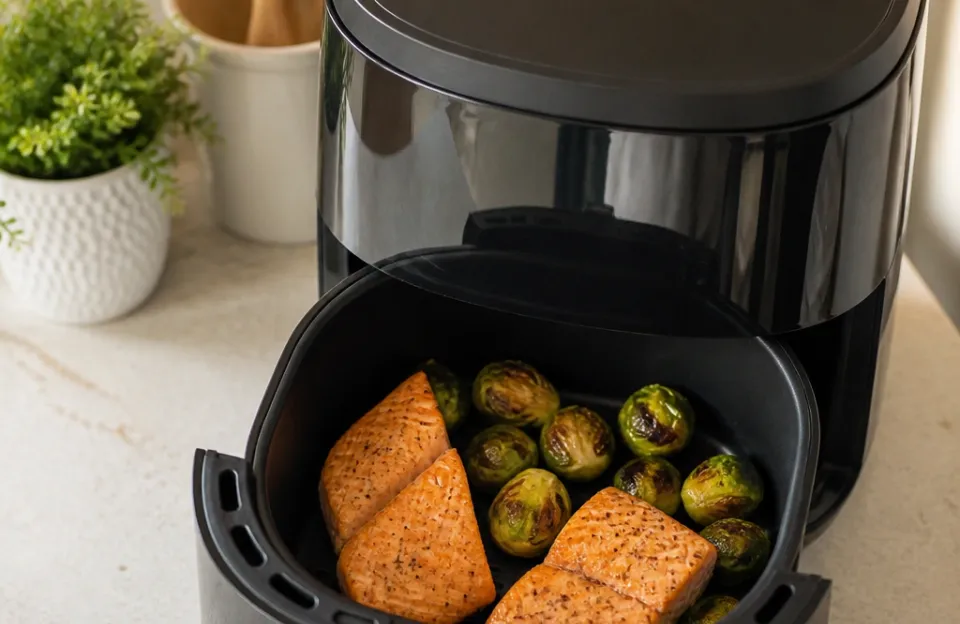
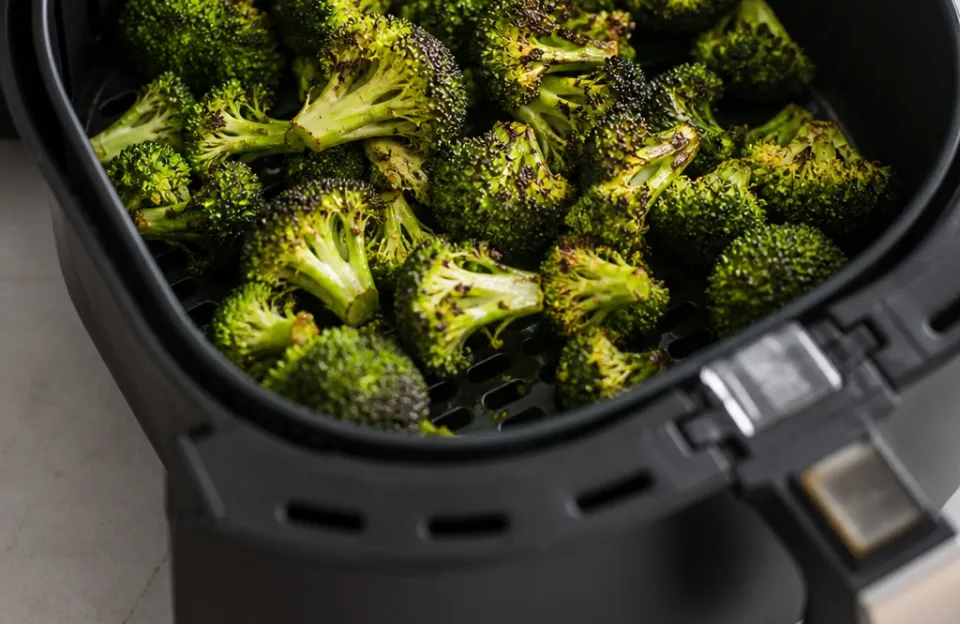
Air fryer broccoli cooks in 8 to 10 minutes at 375°F. The hot circulating air gives the florets crispy, browned edges while keeping the stems tender inside. You only need a small amount of oil, salt, and pepper to get started.
This method works because an air fryer moves heat around food much faster than a standard oven. Broccoli has a lot of surface area on its florets, which means it browns quickly when exposed to direct, moving heat. We will cover how to cut the pieces, what temperature works best, how to season them, and what happens if you overcrowd the basket.
Why High Heat Changes the Texture of Broccoli
Broccoli contains a lot of water. When you cook it slowly, that water leaks out before the outside can brown. The result is limp, grayish green vegetable matter.
An air fryer solves this by blasting the surface with concentrated heat, usually between 375°F and 400°F. This rapid heating evaporates surface moisture almost immediately. Once the water is gone, the natural sugars in the broccoli start to caramelize.
That caramelization creates the slightly charred, nutty flavor people look for.
The Maillard reaction needs temperatures above 280°F to happen effectively. Air fryers hit that mark within seconds of starting. A conventional oven takes 10 to 15 minutes just to preheat.
By the time your oven reaches the right temperature, the air fryer has already finished cooking the batch.
How Floret Size Dictates Cooking Time
Cutting broccoli into uniform pieces matters more than most recipes suggest. If you leave large stalks attached to tiny florets, the small pieces will burn before the thick stems soften. Aim for pieces about 1.5 inches across.
Cut larger crowns in half lengthwise so they lay flat. Flat surfaces make direct contact with the basket mesh, which improves browning.
Stems take longer to cook than the flowery tops. Peeling the tough outer layer off thick stems helps them cook evenly with the rest of the batch. You can also slice thick stems into coins and cook them alongside the florets.
They have a great crunch when roasted properly.
Oil Amounts and Smoke Point Limits
You need oil to conduct heat from the air to the vegetable surface. Without it, the broccoli dries out and tastes chalky. One tablespoon of oil per medium head of broccoli is enough.
Toss the florets in a bowl with the oil rather than spraying them directly in the basket. Aerosol sprays often contain propellants that can damage nonstick coatings over time.
Choose an oil with a smoke point above 400°F. Avocado oil, refined olive oil, or peanut oil work well. Extra virgin olive oil smokes around 350°F to 375°F.
If you use it at 400°F, your kitchen will fill with smoke and the broccoli will taste bitter. For more ideas on pairing vegetables with proteins, check out our guide on crispy poultry sides.
| Oil Type | Approximate Smoke Point | Best For |
|---|---|---|
| Avocado Oil | 520°F | High-heat roasting |
| Refined Olive Oil | 465°F | Everyday air frying |
| Peanut Oil | 450°F | Nutty flavor profiles |
| Extra Virgin Olive Oil | 350°F | Low-temp finishing |
Prepping the Broccoli Before It Hits the Basket
Washing broccoli is mandatory, but putting wet broccoli into an air fryer ruins the texture. Water left on the florets turns to steam. Steam prevents browning.
After washing, dry the broccoli thoroughly. Use a salad spinner first, then pat the pieces down with a clean kitchen towel or paper towels. Let them sit on the counter for five minutes if they still feel damp.
Seasoning sticks better to dry surfaces. Put the dried florets in a large mixing bowl. Drizzle the oil over them and toss with your hands.
Make sure every piece gets a light coating. Add kosher salt and black pepper next. Kosher salt dissolves slower than table salt, giving you better distribution without making one bite overwhelmingly salty.
Dry Spices That Survive the Heat
Garlic powder, onion powder, and smoked paprika hold up well at high temperatures. Fresh minced garlic burns easily in an air fryer. It turns black and bitter within four minutes at 400°F.
If you want fresh garlic flavor, add it after cooking. Toss the hot broccoli with finely grated raw garlic and a squeeze of lemon juice right before serving.
Red pepper flakes add heat without burning as fast as fresh chili. Cumin and coriander give the dish a warm, earthy profile. Avoid adding sugar-based rubs or sweet sauces before cooking.
Sugar burns rapidly under the intense fan-forced heat of an air fryer. Save teriyaki glazes or honey drizzles for the last minute of cooking, or apply them after the basket comes out.
Temperature Settings and Timing for Air Fryer Broccoli
Set your machine to 375°F for standard results. This temperature cooks the stems through while browning the tops. Cook for 8 to 10 minutes total.
Open the basket halfway through, around the 4 or 5-minute mark, and shake it vigorously. Shaking moves the pieces around so they don't stick together or block airflow.
If you prefer a softer texture with less char, drop the temperature to 350°F and extend the time to 12 minutes. For maximum crispiness, push the heat to 400°F and pull the basket out at 7 minutes. Every machine runs slightly differently.
Basket-style models circulate air faster than oven-style models with racks. Check the food early the first time you try a new temperature.
Checking Doneness Without Guessing
Look at the edges of the florets. They should be dark brown, bordering on black in spots. Pierce a thick stem with a fork.
It should slide in with slight resistance. If the fork meets hard, woody pushback, the broccoli needs two more minutes. Overcooked broccoli turns mushy and loses its bright green color, fading to an olive drab.
You can verify the internal heat if you are particular about texture. A fast digital probe reads vegetable temperatures instantly. Roasted vegetables generally reach an internal temperature of 190°F to 200°F when fully tender.
While thermometers are built for proteins, checking your veggies prevents undercooking thick stems.
Flavor Variations and Finishing Touches
Plain salt and pepper is a good baseline, but broccoli handles bold flavors well. Acid cuts through the slight bitterness inherent in cruciferous vegetables. A squeeze of fresh lemon juice right after cooking wakes up the whole dish.
Balsamic vinegar reduction adds sweetness and tang.
Cheese is another common addition. Grated Parmesan melts into the crevices of the florets if added during the last two minutes of cooking. Nutritional yeast provides a similar savory, cheesy flavor for those avoiding dairy.
Toasted sesame seeds and a drizzle of toasted sesame oil lean into Asian flavor profiles.
Pairing It With Heavier Proteins
Air fryer broccoli works best as a side dish to balance richer main courses. Because it requires zero active stove space, you can run your protein in the oven or on the grill while the vegetables finish in the countertop appliance. It pairs naturally with things like garlic parmesan chicken bites since both share a similar savory, roasted flavor profile.
If you are planning meals ahead of time, cooked broccoli holds up reasonably well in the fridge for three days. Reheating it in the microwave makes it soggy. Put leftovers back in the air fryer at 350°F for three minutes to restore the crisp edges.
Batch cooking vegetables saves time during busy weeks, especially if you follow a structured weekly prep routine.
Crowding the Basket and Other Mistakes
Air fryers rely on convection. The fan pushes hot air around the food. If you stack broccoli three layers deep in the basket, the air cannot reach the pieces in the middle.
Those trapped pieces will steam instead of roast. You will end up with a mix of burnt edges on top and raw, wet chunks underneath.
Cook in batches if you have a small appliance. A single layer with slight gaps between pieces yields the best browning. Most 4-quart baskets comfortably fit one medium head of broccoli.
If you are feeding four people, plan to run two batches. Keep the first batch warm on a sheet pan in a low oven while the second finishes.
Burnt Tips and Raw Stems
Uneven cutting causes this problem more than anything else. Tiny florets detach from the crown during tossing. These small bits fly to the edges of the basket and burn quickly.
Sift through your pieces before cooking and group the tiny bits together. You can add them to the basket during the last three minutes instead of the beginning.
Leaving the air fryer unattended for the full 10 minutes is risky. Broccoli goes from perfectly charred to completely burnt in about 60 seconds at 400°F. Stay nearby.
Pull the basket out to check progress at the 6-minute mark.
Skipping the Preheat Step
Some manuals say preheating is optional. For broccoli, it changes the outcome. Dropping vegetables into a cold basket means they spend the first three minutes slowly warming up.
That slow start encourages moisture release. Preheating the empty basket for three minutes shocks the broccoli immediately upon contact, sealing the surface faster.
Frozen Broccoli in the Air Fryer
You can cook frozen broccoli directly in the air fryer without thawing it first. Thawing frozen broccoli on the counter turns it into a watery mess. The ice crystals melt, rupturing the cell walls and leaving the vegetable limp before heat ever touches it.
Increase the cooking time by 3 to 5 minutes. Start at 375°F for 12 to 14 minutes. The first few minutes simply boil off the frost.
Once the visible ice is gone, the actual roasting begins. Shake the basket every 4 minutes to break up clumps. Frozen broccoli rarely achieves the same level of crispiness as fresh.
The freezing process alters the cellular structure, making it inherently softer. It still browns and tastes good, especially heavily seasoned with garlic powder and Parmesan.
According to FDA food safety guidelines, commercially frozen vegetables are blanched before freezing, meaning they are partially cooked already. This is why they require less total heat exposure than raw, dense root vegetables, though the ice barrier extends the overall time in the basket.
Cleaning Up Residue Left Behind
Broccoli leaves behind small burnt crumbs and sometimes sticky residue if oil drips through the basket. Let the appliance cool completely before washing. Plunging a hot nonstick basket into cold water warps the metal and degrades the coating.
Soak the basket in warm, soapy water for ten minutes if food is stuck. Use a soft sponge or nylon brush. Metal scouring pads strip the nonstick surface.
Wipe down the interior heating element area with a damp cloth once a week. Grease splatters accumulate there and cause smoking during future uses. Keeping your equipment clean matters just as much as maintaining any other kitchen temperature tools you rely on for daily cooking.
Frequently asked questions
Can I use butter instead of oil for air fryer broccoli?
Butter burns at 302°F, which is well below standard air frying temperatures. It will smoke heavily and leave a bitter, scorched taste on the broccoli. Clarified butter (ghee) has a higher smoke point of around 480°F and works fine.
If you want regular butter flavor, toss the cooked broccoli with melted butter immediately after removing it from the basket.
Is air fryer broccoli considered healthy?
Yes. Roasting broccoli in an air fryer requires significantly less fat than pan-frying or deep-frying. According to the USDA dietary data, a cup of raw broccoli contains roughly 30 calories and high amounts of vitamin C and K.
Adding one tablespoon of oil to an entire head increases the calorie count moderately while helping your body absorb the fat-soluble vitamins present in the vegetable.
Why did my broccoli turn out soggy instead of crispy?
Sogginess comes from excess moisture or overcrowding. If you washed the broccoli and didn't dry it thoroughly, the trapped water steams the florets. Packing too many pieces into the basket blocks the fan's airflow, preventing evaporation.
Wash, dry completely, and cook in a single layer to fix this.
Do I need to peel the broccoli stems before cooking?
Peeling is optional, but recommended for thick stalks. The outer layer of a mature broccoli stem is fibrous and tough. It doesn't soften at the same rate as the florets.
Using a vegetable peeler to remove the bottom layer exposes the tender core, allowing the whole piece to cook evenly in the short air frying window.
Can I add soy sauce or liquid marinades before air frying?
Adding thin liquids like soy sauce before cooking causes problems. The liquid pools at the bottom of the basket, steaming the lower layer of broccoli and preventing browning. It can also drip through the mesh and burn on the base plate.
Toss the broccoli in oil and dry spices first, then drizzle liquid sauces over the finished product right before eating.
What is the white film sometimes seen on cooked broccoli?
That white, powdery residue is usually dried minerals from tap water or crystallized starch released during cooking. If you used hard water to wash the florets, the calcium deposits become visible once the water evaporates under high heat. It is harmless.
Using filtered water for the final rinse minimizes it.
Getting the Most Out of Your Machine
Air fryer broccoli succeeds or fails based on moisture control and spacing. Dry the florets completely, coat them lightly in a high-smoke-point oil, and arrange them in a single layer. Set the temperature to 375°F and check the basket at the halfway point.
Thick stems need uniform cutting to match the quick-cooking florets. Save wet sauces, fresh garlic, and delicate cheeses for the final moments to prevent burning. Once you dial in the timing for your specific model, this becomes one of the fastest vegetable sides you can put on the table.