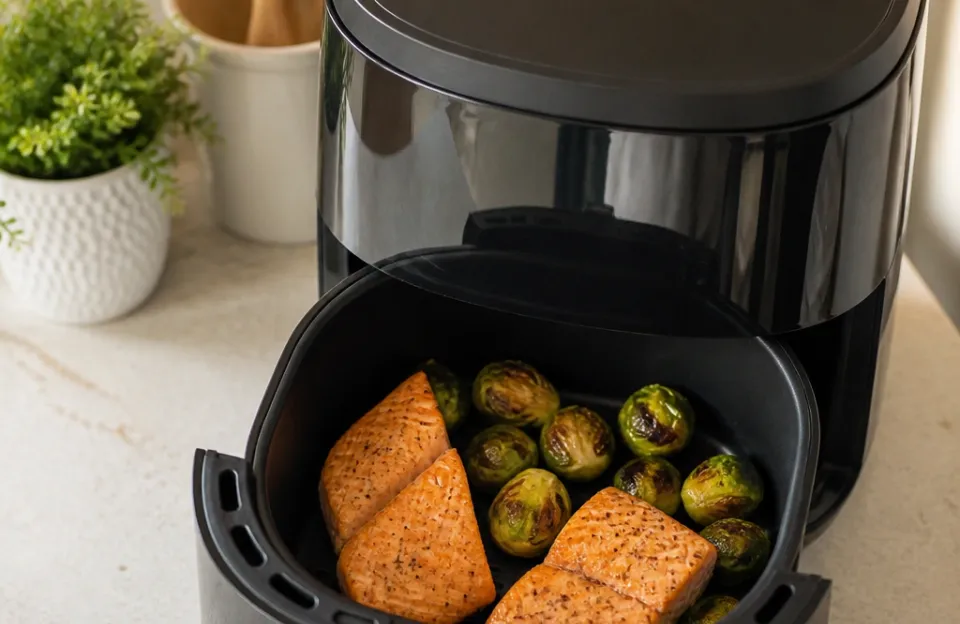
Air fryer fish cooks fast, stays flaky inside, and gets a crisp outside without deep frying. Most fillets take 8 to 12 minutes at 400°F. Breaded pieces need about the same time.
The hot air does the heavy lifting, so you use far less oil than pan frying or baking in a standard oven.
This guide covers which cuts work best, how long they take, what temperatures keep them safe, and why breading sticks or falls off. You'll also find prep steps that stop soggy bottoms and fix common texture problems before they happen.
Why Hot Air Changes How Fish Cooks
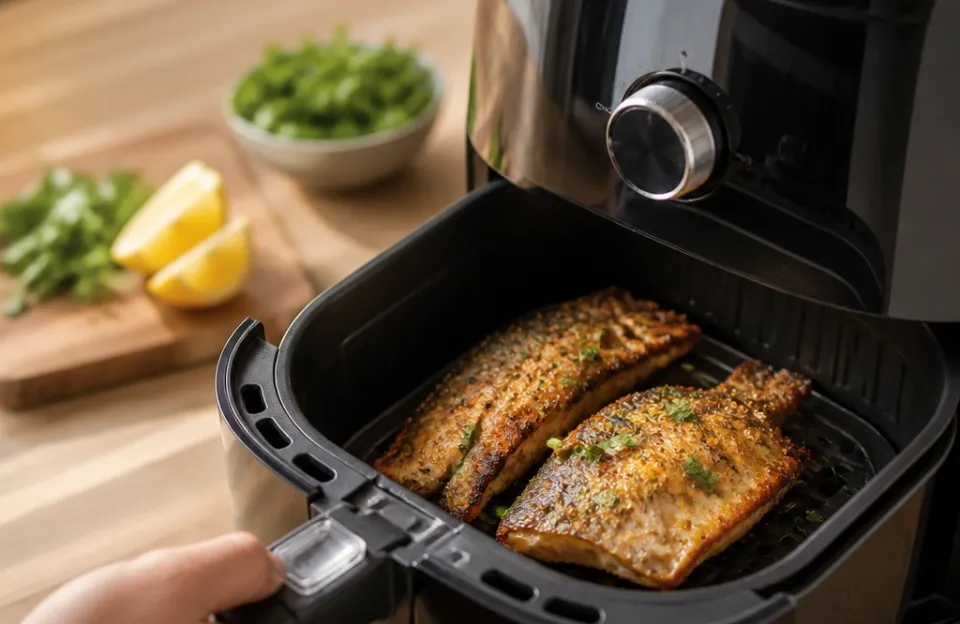
An air fryer is a small convection oven with a very strong fan. That fan pushes heated air around the food constantly. When you cook air fryer fish, this moving air pulls moisture off the surface much faster than a regular oven.
That rapid drying is what creates a browned, crisp exterior.
Fish muscle is delicate. It has short protein fibers and very little connective tissue compared to beef or pork. Those proteins tighten up quickly when heated.
If the heat is too slow, the fish dries out before the outside browns. The intense, direct airflow of an air fryer solves this. It sears the outside while the center reaches temperature in minutes.
Oil plays a different role here. In deep frying, oil transfers heat directly into the food. In an air fryer, oil coats the surface to help it brown and conduct the hot air's energy.
You only need a light spray or a thin brush of oil. Too much pools at the bottom of the basket and steams the fish instead of crisping it.
Picking the Right Cuts for Your Basket
The thickness and fat content of your cut dictate how well it handles high-speed air. Thin, lean fillets dry out fast. Thick, fatty steaks hold their moisture better.
Knowing what goes in the basket saves you from rubbery dinners.
Lean White Fillets
Cod, tilapia, haddock, and halibut are mild and flaky. They are also very lean. Because they lack internal fat, they go from perfectly cooked to dry in about two minutes.
These fillets do best with a protective coating. A light breading or batter shields the meat from the direct blast of the fan.
If you prefer them bare, lower the temperature to 375°F. Check them early. A half-inch thick tilapia fillet might only need 6 to 8 minutes total.
Always pat these completely dry before seasoning. Surface water turns to steam and prevents browning.
Fatty Steaks and Rich Cuts
Salmon, trout, and arctic char have built-in fat layers. This fat bastes the meat from the inside as it cooks. You can air fry these bare with just salt, pepper, and a little oil.
They tolerate higher heat, usually 400°F, without turning tough.
Skin-on salmon works exceptionally well. Place it skin-side down. The skin renders its fat, crisps up, and protects the flesh underneath.
Thicker cuts like swordfish or tuna steaks also work. Treat them like a quick sear. Pull them out while the center is still slightly translucent if you prefer medium-rare tuna.
Frozen Breaded Portions
Store-bought frozen fish sticks, breaded fillets, or beer-battered portions are designed for this exact appliance. They already have the right ratio of coating to fish. You don't need to thaw them first.
Cooking them frozen keeps the breading intact. Thawing makes the crust soggy before it even hits the heat.
| Cut Type | Examples | Ideal Temp | Approximate Time | Best Prep Method |
|---|---|---|---|---|
| Lean Fillets | Cod, Tilapia, Haddock | 375°F | 6-10 mins | Lightly breaded or oiled |
| Fatty Steaks | Salmon, Trout | 400°F | 8-12 mins | Bare, skin-on preferred |
| Frozen Breaded | Sticks, Patties | 400°F | 10-14 mins | Straight from freezer |
| Whole Small Fish | Smelt, Sardines | 400°F | 7-9 mins | Tossed in seasoned flour |
Getting the Coating to Stay Put
Breading falling off is the most common complaint with air fryer fish. The fan blows loose crumbs away, or the coating sticks to the basket grate. Fixing this comes down to moisture control and binding.
Start with bone-dry fish. Use paper towels to press out every drop of surface water. Moisture creates steam under the breading, pushing it away from the meat.
Once dry, set up a standard three-step dredge: flour, beaten egg, then breadcrumbs.
Panko breadcrumbs give the best crunch because of their large, airy flakes. Press the panko firmly into the egg wash. Don't just sprinkle it on.
Give the coated fillet a gentle squeeze so the crumbs embed into the wet layer.
Here is where people miss a step. Let the breaded fish sit on a wire rack for 5 to 10 minutes before cooking. This resting period lets the egg proteins start to set and glue the crumbs to the flour.
Skipping this means the fan will blow your breading into the heating element.
Lightly mist the top of the breaded fish with cooking spray right before it goes in. Dry flour or dry panko won't brown. It will just taste chalky.
The oil spray gives the hot air something to react with. If you want a flavor boost, try mixing savory spices into your dredge before coating the fillets.
Exact Temperatures and Timing
The USDA recommends cooking all finfish to an internal temperature of 145°F. At this point, the flesh is opaque and separates easily with a fork. Relying on visual cues alone often leads to overcooked fish.
A fast-read probe thermometer takes the guesswork out. I've written about checking internal temps accurately in other guides, and the same rules apply here. Insert the probe into the thickest part of the fillet.
For fresh, unbreaded salmon fillets about one inch thick, set the machine to 400°F. Cook for 8 to 10 minutes. You don't need to flip them.
Flipping soft fish usually breaks it apart. The circulating air cooks the bottom adequately if you don't overcrowd the basket.
For fresh, breaded cod fillets, drop the heat to 375°F. Breading burns faster than bare fish. Cook for 10 to 12 minutes.
Flip these halfway through. Breaded items need both sides exposed to the direct airflow to get evenly crisp. Use a thin spatula and slide it completely under the fillet before lifting.
Frozen breaded fish sticks usually take 10 to 12 minutes at 400°F. Shake the basket halfway through to rotate them. Frozen raw fillets that you bread yourself are trickier.
The ice melts, wets the breading, and creates a mess. It is always better to thaw raw fish, pat it dry, bread it, and then cook.
If you plan to prep seafood ahead of time for the week, cook it slightly underdone. Reheating fully cooked fish in an air fryer almost always dries it out. Stop at 135°F during your initial cook, chill it fast, then reheat to 145°F when you're ready to eat.
Avoiding Soggy Bottoms and Crowded Baskets
Air fryers only work if the air can actually move. If you stack fillets on top of each other, the touching surfaces steam instead of roast. You end up with a mushy, pale patch right in the middle of your dinner.
Cook in a single layer. Leave at least half an inch between each piece. If you have a smaller appliance, cook in batches.
Keeping the finished batch warm in a 200°F oven while you cook the second round is better than ruining everything by cramming it in at once.
The basket grate itself can be a problem. Wet batter drips straight through the holes and burns on the bottom of the drawer. Never use a wet tempura-style batter in an air fryer.
Stick to dry dredges or firm breadcrumb coatings.
If you are worried about sticking, don't use aerosol non-stick sprays directly on the basket. The propellants in those cans degrade the non-stick coating over time. Use a pump-action oil mister filled with avocado or canola oil.
Alternatively, place a perforated parchment paper liner in the basket. The holes allow airflow while catching any rogue crumbs. Just make sure the paper doesn't fly up into the heating element before the food weighs it down.
When serving, pairing the fish with a bright dipping sauce cuts through the richness of the oil and adds moisture back to lean white fish. Tartar sauce, remoulade, or a simple lemon-caper aioli all work well.
What Happens When Things Go Wrong
Even with good technique, things occasionally slip. Knowing why a batch failed helps you adjust the next time.
The breading blew off. The fish was too wet before dredging, or you skipped the 10-minute resting period. The fan caught the loose edge and peeled it back. Next time, press the crumbs harder and let them set.
The outside burned but the inside is raw. The temperature was too high for the thickness of the cut. A thick piece of halibut needs moderate heat (360°F) for a longer time so the heat penetrates before the crust chars. Lower the dial by 25 degrees and add a few minutes.
The fish stuck to the grate. You didn't use enough oil on the basket, or you tried to flip it too early. Proteins bond to metal when they first hit the heat. As they cook and brown, they naturally release.
If you tug and it resists, give it another minute. Using a reliable tool to monitor the heat closely prevents you from pulling it out prematurely out of fear it's burning.
It tastes overly fishy or metallic. The fish wasn't fresh, or you cooked it at too low a temperature for too long, essentially slow-roasting the oils until they oxidized. High heat seals the surface fast. Buy fresher cuts and trust the 400°F setting.
The texture is rubbery. It's overcooked. Fish proteins squeeze out their water rapidly past 150°F. Pull it exactly at 145°F, or even 140°F if you plan to let it rest on the plate for a minute.
Carryover cooking will push it those last few degrees.
Adjustments for Different Machine Sizes
Not all air fryers behave identically. A 2-quart basket model concentrates heat differently than a 6-quart oven-style unit with racks.
Basket-style models with the drawer design tend to run hotter and faster. The heating element is very close to the food. If a recipe calls for 10 minutes at 400°F, check your basket model at 8 minutes.
Oven-style models with multiple racks distribute the heat over a larger area. The fan has to push air further. You often need to add 2 to 3 minutes to your cook time, and you must rotate the racks halfway through.
The top rack will brown significantly faster than the bottom rack.
If you are using a smart model, some newer appliances come with built-in probes that track doneness automatically. These remove the need to open the drawer and check manually, which drops the internal temperature every time you peek. If your machine lacks this, invest in a separate leave-in thermometer rated for high convection heat.
Standard plastic-handled probes will melt near the element.
Frequently asked questions
Can you put raw fish directly in an air fryer?
Yes. Raw fish cooks perfectly well in an air fryer. Pat the fillets completely dry with paper towels first.
Brush them lightly with oil and season them. The hot air will cook the raw fish through in 8 to 12 minutes depending on thickness. There is no need to pre-cook or parboil the fish beforehand.
Do you need to flip fish when air frying?
You only need to flip breaded fish. Bare fillets, especially delicate ones like flounder or skin-on salmon, will break apart if you try to turn them. The circulating air is strong enough to cook the bottom of a bare fillet if it sits on a wire rack or perforated basket.
Only flip firm, heavily crusted pieces halfway through the cook time.
Is air fried fish healthier than deep fried?
It uses significantly less oil. Deep frying submerges the food, and the breading absorbs a large amount of that fat. Air frying requires only a light spray to achieve browning.
The calorie count of the fish itself remains the same, but the added fat calories drop drastically. The protein and omega-3 content of the fish stay intact regardless of the cooking method.
Why did my air fryer smoke when cooking fish?
Fish releases oils and juices as it cooks. If those drippings hit the bare bottom of the drawer below the heating element, they burn and create smoke. To prevent this, put a tablespoon of water in the bottom of the drawer beneath the basket.
The water catches the drips and stops them from reaching their smoke point. Cleaning the drawer thoroughly after every use also stops old grease from smoking.
Can you cook frozen battered fish in an air fryer?
Yes. Frozen battered or breaded fish is one of the easiest things to cook in this appliance. Do not thaw it first.
Place the frozen pieces in a single layer at 400°F. Cook for 10 to 14 minutes, shaking the basket halfway through. Thawing frozen battered fish makes the coating soggy and causes it to slide off the meat during cooking.
What temperature should air fryer fish reach to be safe?
The FDA recommends cooking all seafood to an internal temperature of 145°F. At this temperature, harmful bacteria are destroyed, and the flesh becomes opaque and flakes easily. Use a digital instant-read thermometer inserted into the thickest part of the fillet to verify this.
Visual cues alone are unreliable, especially with dense cuts like swordfish or thick salmon portions.
Before You Start Cooking
Getting a good result with air fryer fish comes down to managing moisture. Water is the enemy of crispness. Dry the fillets thoroughly before adding oil or breading.
Give coated pieces time to rest so the crust adheres. Respect the short cooking times. Fish forgives nothing once it passes 145°F.
Keep a thermometer handy, avoid crowding the basket, and adjust your heat based on whether the cut is lean or fatty. Once you dial in the timing for your specific machine, it becomes the fastest way to get dinner on the table.