An air fryer replacement rack is an aftermarket or manufacturer-specific wire grid, mesh tray, or crisper plate that swaps out the cooking surface inside your appliance. To choose the right one, measure the inside of your basket (width, depth, diameter at the top and, if tapered, near the bottom, plus usable height below the heating element), then match those numbers to the rack’s actual dimensions rather than the air fryer’s advertised litre capacity. Confirm the material is suited to food contact and high heat, and check with the manufacturer whether a third-party part affects your warranty.
That approach matters because factory racks do fail, and the wrong replacement creates its own problems. This guide explains why original racks give out, how materials compare, how to measure a tapered basket properly, and the trade-offs between wire grids, mesh screens, and stacking systems.
Why Factory Air Fryer Racks Stop Working
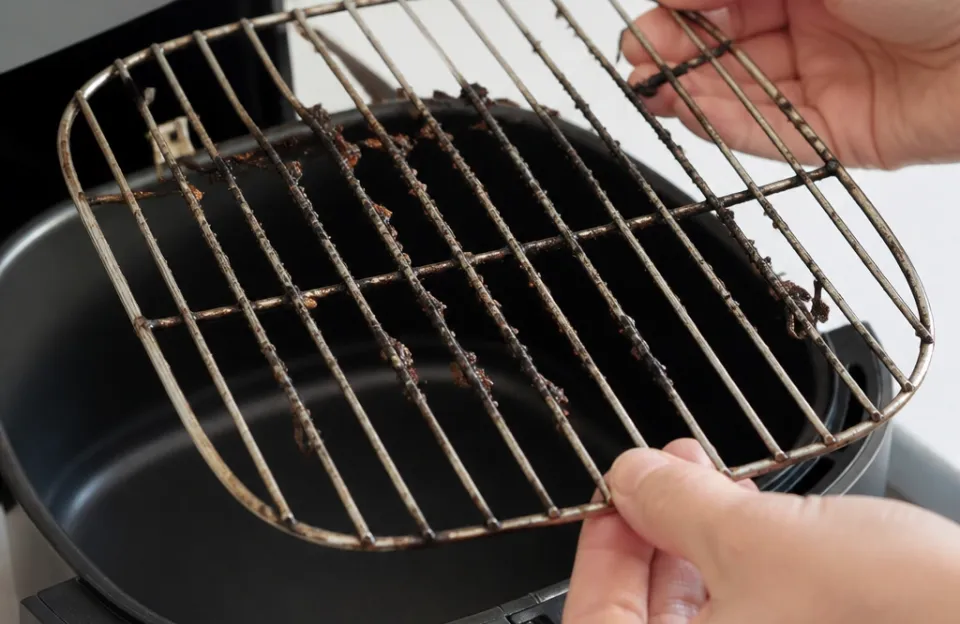
Most stock air fryer racks use thin carbon steel stamped into a grid pattern and coated with a nonstick layer. That coating takes a beating: high heat cycles, metal spatulas, and abrasive sponges all wear it down.
Once the coating chips, the bare steel underneath meets moisture from food and condensation, and rust follows. A rusty rack leaves flakes on your dinner and creates rough spots where food sticks.
Warping is the second common failure. Thin metal expands when heated, and a rack that sits too close to the top heating element, or gets hit with cold water while hot, can bend out of shape. A warped rack wobbles in the basket and can interfere with even airflow, which matters if you are after getting that perfect crunch.
Some people replace racks simply because the original design doesn’t suit their cooking. A wide-spaced wire grid lets small vegetables fall through into the bottom pan, and a fine mesh screen solves that without changing the appliance.
Materials Used for Air Fryer Replacement Racks
The material affects how the rack holds up, how much it weighs, and whether it reacts with acidic foods. Stainless steel, carbon steel, and aluminum are the common choices, and each has honest trade-offs. If you are comparing replacement parts more broadly, the guidance on air fryer replacement pans covers the same fit and material questions.
Stainless Steel Wire and Mesh
Stainless steel is the most durable option in everyday kitchen use. Grades such as 304 and 18/8 resist rust under normal conditions, and because there is no nonstick coating to chip, there is no coating layer to degrade.
Food-contact compliance is more nuanced than marketing suggests. Food-equipment stainless steel generally falls within the SAE 200, 300, or 400 series, and the metal itself is not certified: manufacturers supply documentation to support compliance with FDA and NSF requirements. The main practical trade-offs are weight and sticking, since food bonds more readily to bare stainless unless you oil it lightly before cooking.
Carbon Steel with Nonstick Coating
Carbon steel racks are lighter and cheaper to produce, and they almost always carry a PTFE-based nonstick coating. When new, food slides right off.
The weak point is the coating. It can blister and flake over repeated thermal cycles, and once it fails the rack is effectively finished as a nonstick surface. Treat a coated rack as a wear item rather than a long-term purchase.
Aluminum Crisper Plates
Aluminum heats quickly and distributes temperature evenly. Many basket-style air fryers use a solid aluminum plate with punched holes rather than a wire grid.
Aluminum is soft, though. It dents easily under metal utensils, and uncoated aluminum can react with acidic ingredients such as tomatoes or lemon juice, leaving a metallic taste. Anodized aluminum hardens the surface and reduces that reactivity, at a higher cost.
| Material | Rust Resistance | Weight | Nonstick Behavior | Notes |
|---|---|---|---|---|
| 304 Stainless Steel | Good under normal kitchen use | Heavy | Food sticks without oil | No coating to chip; documentation supports food-contact compliance |
| Coated Carbon Steel | Poor once coating chips | Light | Strong release until coating peels | Coating is the limiting factor |
| Bare Aluminum | No rust, but oxidizes | Very light | Moderate sticking | Can react with acidic foods |
| Anodized Aluminum | Good | Light | Low sticking | Hardened surface, higher cost |
Lifespan figures vary widely by use and care, so treat any specific year count with caution. Replace any rack showing exposed rust, sharp broken wires, or flaking coating.
Measuring Your Basket for a Proper Fit
Buying a rack and hoping it fits rarely works. Baskets come round, square with rounded corners, and rectangular with tapered sides. A rack even slightly too wide wedges against the walls, and one too small drops into the drip tray and can block airflow.
Start with the rack or crisper plate removed. Measure the internal width across the widest point, then the depth from front to back. For a round basket, measure the diameter straight across the centre. Record everything in both inches and millimetres.
Next, check clearance height. Stacking racks need vertical room, so measure from the bottom of the basket to the top rim, then subtract the thickness of the food you plan to cook. If you only have a couple of inches, a second tier will press food into the heating element.
Finally, cross-reference your numbers with the exact model number. Basket dimensions differ between brands and even between models in the same range, so an advertised “universal” size is a rough fit at best. Match the rack’s stated dimensions to your measurements rather than to the litre capacity on the box.
Wire Grids Versus Fine Mesh Screens
The geometry of the rack changes how food cooks. Wire grids use thick bars spaced a quarter-inch to half an inch apart. Mesh screens weave very thin wire tightly, leaving holes barely large enough for a pinhead.
Wire grids allow maximum airflow, so hot air reaches the underside of food directly. They suit thick cuts of meat, breaded items, and anything that benefits from browning on all sides. The downside is that wet batters drip straight through and pool in the drawer, and small items such as diced onions or peas fall through entirely.
Mesh screens restrict airflow somewhat but support delicate foods. Fish fillets hold together when lifted, and shredded hash browns stay in one piece. If you cook battered items often, mesh catches drips while still letting convection currents pass. The trade-off is cleaning: grease and melted cheese bake into the weave and need soaking and a stiff brush.
Multi-Tier Stacking Racks for Extra Capacity
A standard air fryer cooks food in a single layer, and crowding the basket steams rather than crisps. Multi-tier racks add a second or third level inside the same basket. A wider air fryer racks buying guide covers the capacity question in more depth.
Stacking works well for foods that don’t release much grease. Roasting broccoli on three levels at once saves time, and reheating pizza slices on two tiers keeps the crust crisp.
Heavy, greasy items create problems. Fat from chicken thighs on the top tier lands on the vegetables below, changing flavour and texture. Weight distribution matters too: thin wire legs can buckle under a heavy load, so look for thick, welded support legs rather than bent wire loops. Check the rack before each use for bent legs or loose welds.
Cleaning and Maintenance of Replacement Racks
How you wash a rack affects how long it lasts. Coated carbon steel degrades faster in dishwashers, where high-pressure water and harsh detergents strip the coating sooner than hand washing. Even when packaging says dishwasher safe, hand washing coated racks extends their life.
Your appliance manual is the authority on which parts are dishwasher safe and how to clean the heating element safely. For stainless steel and bare aluminum, dishwashers are generally fine, though hard water can leave mineral spots. Hand washing with warm soapy water and a nylon sponge removes grease without scratching.
Avoid steel wool on any rack: it scratches stainless, gouges aluminum, and destroys nonstick coatings. For baked-on grease, soak the rack in hot soapy water for twenty minutes, then wipe. A baking soda paste applied with a soft toothbrush reaches into the tight weave of a stainless mesh screen.
Inspect the rack before every use. Loose welds, wires bending upward, or fresh rust spots are signs to replace it, and a broken wire can scratch the nonstick lining of the basket itself.
Edge Cases and Compatibility Warnings
Not every air fryer accepts a third-party rack. Drawer-style models with a removable crisper plate usually allow easy swaps: lift out the old plate and drop in the new one.
Oven-style air fryers with slide-in shelves are different. Their tracks sit at fixed intervals in the side walls, so a generic wire shelf often slides around or falls out when the door opens. Measure the shelf span and the track spacing, not just the cavity.
Airflow restriction is another edge case. A dense mesh screen restricts airflow compared with a wide grid, and in a low-powered unit that can slow browning. If cooking times climb noticeably after switching to mesh, the screen is the likely cause.
Handles deserve attention too. Fold-down handles and silicone grips make lifting easier but reduce usable cooking surface. Measure the flat cooking area specifically, ignoring outer rims and handles.
Common Mistakes When Swapping Racks
The same problems come up repeatedly when people replace their cooking grates.
- Ignoring the basket taper. Many air fryer baskets are wider at the top than the bottom, so a rack measured at the rim can jam halfway down and never reach the proper cooking position.
- Using metal utensils on coated racks. One scrape with a metal spatula ruins a nonstick coating. Use silicone or wooden tools on coated surfaces.
- Overloading stackable tiers. A second rack doesn’t double capacity if food touches the tier above. Leave at least half an inch of vertical clearance so air can circulate.
- Assuming universal sizing exists. There is no industry standard for basket dimensions. Verify measurements against your model rather than trusting a “universal” label.
- Buying without checking warranty terms. Many air fryer warranties cover only defects in original materials and workmanship, and problems from normal wear and tear or improper use often are not covered. Third-party parts and modifications can affect coverage, so confirm the terms for your model before ordering.
Frequently Asked Questions
Can I Use a Regular Oven Cooling Rack Inside My Air Fryer?
Standard oven cooling racks are usually too large and may not be rated for an enclosed high-speed convection environment. They can block airflow, scratch the basket walls, or have plastic feet that aren’t suited to the heat. Use a rack sized and rated for your specific air fryer model.
Do Stainless Steel Replacement Racks Make Food Stick More?
Bare stainless lacks a nonstick coating, so proteins and starches bond to it more readily than to PTFE-coated carbon steel. A light brush of high-smoke-point oil before cooking prevents most sticking.
How Often Should I Replace My Air Fryer Rack?
There is no reliable universal interval because it depends on the coating, your cooking frequency, and how you clean it. Replace any rack immediately if you see exposed rust, flaking coating, or sharp broken wires, and treat coated carbon steel as the shortest-lived option.
Will a Mesh Screen Change My Cooking Times?
Fine mesh restricts airflow compared with a wide wire grid, so some foods may take longer to brown. Watch the food rather than relying on a fixed adjustment, and check doneness with a thermometer for proteins.
Are Silicone Racks a Viable Alternative to Metal?
Silicone mats insulate the base of the food from direct heat. They can work for reheating pastries or stopping delicate items from sliding, but they don’t deliver the bottom browning that metal racks provide.
Is It Safe to Put a Replacement Rack in the Dishwasher?
It depends on the material. Stainless steel and bare aluminum generally handle dishwashers well, while coated carbon steel degrades faster under dishwasher detergents. Follow the care instructions for your specific rack.
Getting the Right Fit the First Time
Replacing a worn-out rack keeps your air fryer working safely and keeps rust flakes off your food. Measure the basket accurately, including any taper and the clearance below the heating element, then choose a material and grid style that match how you cook. Stainless steel offers the longest service life, while coated carbon steel gives the easiest release until the finish wears.
Check food-contact documentation for the material and confirm the warranty position before ordering a third-party part. Five minutes with a tape measure before you buy saves the hassle of returning a rack that doesn’t fit.