Air fryer skewers turn a countertop appliance into a small indoor grill. You thread meat, vegetables, or fruit onto a stick, lay it flat in the basket, and get browned edges without heating up an outdoor grill. This air fryer skewers buying guide covers the materials, shapes, and sizes that work inside a standard basket, plus specific sets worth looking at before you buy.
The main problem people run into is length. A skewer that fits a 14-inch grill grate will jam against the walls of a 5-quart air fryer drawer. The wrong material also causes issues.
Thin wooden sticks char under the concentrated top-down heat, while heavy solid steel rods take too long to warm up and throw off cooking times. Picking the right set means matching the physical dimensions of your specific machine.
What makes air fryer skewers different from regular ones
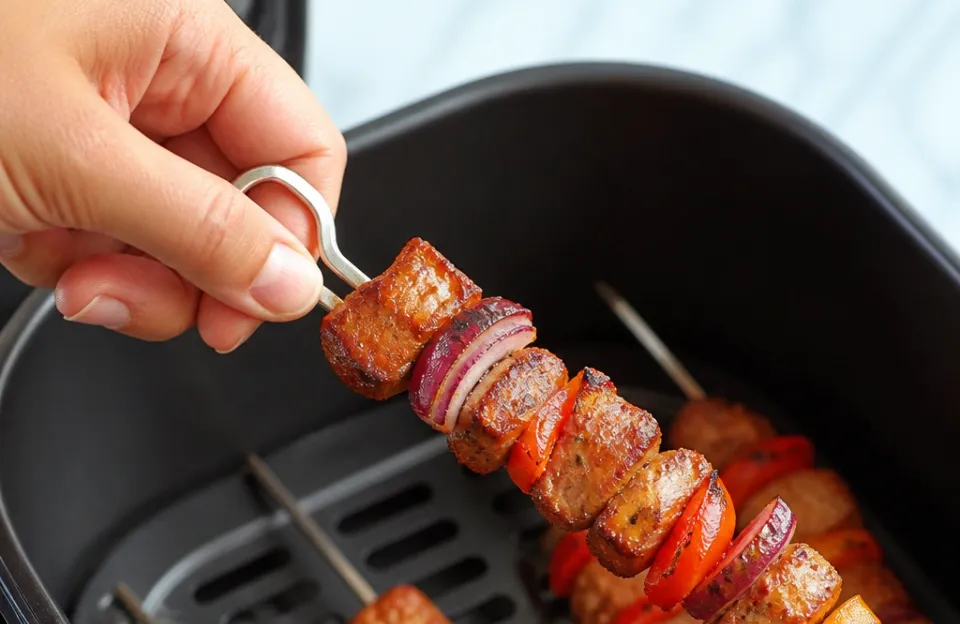
Standard barbecue skewers are built for open grates. They are often 12 to 15 inches long. Air fryer baskets are usually square or round, measuring between 7 and 10 inches across.
Skewers made for these machines need to be shorter, typically 6 to 9 inches. Some sets come with a dedicated metal rack that holds them upright or suspended, which changes how you measure for fit.
Heat distribution is the other major difference. An air fryer blows hot air rapidly around a small chamber. Thin bamboo skewers dry out fast and can scorch under that direct fan force.
Metal options conduct heat straight into the center of the food, cooking it from the inside out. That conduction speeds up the process, which matters when you want extra crispy skin on chicken pieces threaded tightly together.
You also have to think about clearance. The heating element sits very close to the food in most models. Tall skewers standing straight up will touch the element, burn the food, and potentially damage the machine.
Flat designs or low-profile racks solve this problem. Always check the interior height of your basket, not just the width.
Materials that hold up under rapid circulating heat
Stainless steel options
Stainless steel is the safest bet for repeated use. It doesn't rust easily, handles high temperatures without warping, and cleans up fast. Look for food-grade 304 stainless steel.
Cheaper metals might pit or discolor after a few cycles in the intense air flow. The downside is weight. Solid steel rods add mass to the basket, which slightly increases preheating time.
Bamboo and wood choices
Wooden skewers work in an air fryer if you prep them correctly. Soaking them in water for at least 30 minutes before cooking stops them from catching fire. Even soaked, they are single-use items.
The rapid air dries them out quickly, and they splinter over time. They are cheap and easy to find, making them fine for occasional use. Just don't expect them to last through multiple batches.
Silicone-coated sticks
Some newer sets wrap a metal core in food-safe silicone. The coating prevents scratching nonstick basket interiors. It also stays cool enough to grab bare-handed shortly after cooking.
The tradeoff is temperature limits. Most silicone coatings max out around 400 to 450 degrees Fahrenheit. If you cook hotter than that, the coating degrades.
For safety standards on cookware materials, the FDA regulates food-contact surfaces and provides guidelines on what is safe for heated applications. Checking that a metal or coating meets basic food-safety standards gives you peace of mind before putting it under a heating element.
Shapes and how they affect turning the food
Flat blades prevent food from spinning when you try to turn it. Round dowels let chunks of meat rotate freely, meaning one side stays pressed against the hot metal while the other faces away. Flat skewers solve this mechanical issue entirely.
They grip the food firmly.
Curved or angled ends hook onto the lip of the basket or a specific rack. This keeps the food elevated so hot air circulates underneath. Straight sticks rest directly on the bottom mesh, blocking airflow to the underside of the meat.
Elevation leads to more even browning.
Telescoping or folding designs exist for very small travel air fryers. These collapse down to 4 or 5 inches for storage. They are convenient but often flimsy.
The hinge point bends if you push a tough piece of root vegetable onto them.
Measuring your basket before buying anything
Grab a tape measure. Check the interior width, depth, and height of your air fryer basket. Subtract half an inch from each measurement.
That is your maximum skewer size. If your basket is 8 inches wide, buy skewers no longer than 7.5 inches. This leaves room for the handle and prevents the tips from scraping the nonstick walls.
If you buy a set that includes a rack, measure the rack's footprint too. Some racks are designed for 6-quart models and won't sit flat in a 4-quart drawer. A warped rack tilts the food, causing grease to pool on one side and smoke.
When loading the basket, leave space between each stick. Crowding blocks the air circulation that cooks the food. Two skewers with a gap between them will brown better than four packed tight together.
Top picks for air fryer skewers
These sets cover different needs based on basket size, material preference, and cooking style.
Hiware 8-Inch Stainless Steel Flat Skewers
These flat stainless steel sticks measure 8 inches long. They fit most standard 5 to 6-quart air fryers without touching the walls. The blade is wide enough to keep cubed meat and vegetables locked in place.
You won't fight spinning food when you flip them halfway through the cycle.
They come in packs of six or twelve. The metal is thick enough to resist bending when you push it through raw potatoes or dense squash. The loop handle at the end stays relatively cool, though you should still use tongs or a glove when pulling them out.
The main limitation is length. If you own a compact 3-quart model, 8 inches is too long. They will hit the back wall before the basket closes fully.
They are also heavier than thin round skewers, adding noticeable weight to the drawer.
Norpro Stainless Steel Kebab Rack Set
This setup uses a metal frame that sits inside the basket, holding shorter skewers vertically at an angle. The rack elevates the food, allowing air to hit every side. It works well for cooking multiple portions at once without stacking meat directly on top of other meat.
The included skewers are short, usually around 5 to 6 inches, making them compatible with smaller machines where long sticks fail. The vertical arrangement saves horizontal floor space inside the drawer.
The drawback is the height. Because the rack angles the sticks upward, you need an air fryer with a tall interior clearance. In shallow basket-style models, the top pieces of food might sit too close to the heating coil.
It also takes up more cleanup effort than loose sticks, as grease drips down into the base tray.
Bamboo Craft 6-Inch Pre-Soaked Knots
These are short, disposable wooden skewers sold specifically for small appliances. At 6 inches, they clear the walls of almost any consumer air fryer. They arrive pre-treated to resist charring faster than standard grocery store bamboo.
They are ideal for quick appetizers or fruit kebabs where you don't need heavy metal to conduct heat into a thick cut of beef. Cleanup means throwing them away. There is no scrubbing baked-on marinade off metal blades.
Since they are wood, they lack the heat conduction of steel. Food cooks only from the outside air, taking slightly longer to reach the center. You still need to soak them if you plan to cook above 375 degrees Fahrenheit for more than ten minutes.
Cuisinart Silicone-Tipped Metal Sticks
These feature a stainless steel core wrapped in silicone near the handle and tip. The coating protects delicate nonstick basket finishes from scratches. If you slide the rack in and out frequently, the soft ends prevent gouging the surface.
They generally measure around 7.5 inches, fitting mid-size appliances comfortably. The silicone grips stay cooler longer than bare metal loops, reducing the chance of burning your fingers during a quick flip.
The temperature ceiling is the catch. You cannot run these at 450 degrees or higher without risking damage to the silicone layer. They are strictly for moderate-temperature roasting and reheating tasks.
Generic Adjustable Folding Skewers
Several brands sell hinged metal skewers that fold in half for storage and extend to 7 or 8 inches for cooking. They solve the storage problem in tiny kitchens. The joint locks into place when straightened.
They accommodate various basket sizes by folding down if needed. The metal is usually lightweight stainless steel, keeping the overall load in the basket low.
The hinge is the weak point. Over time, forcing hard foods onto the stick puts stress on the folding mechanism. It can loosen, causing the skewer to bend under the weight of heavy meats.
They work best for lighter items like shrimp, peppers, or pineapple chunks.
| Skewer Type | Material | Length | Best For | Main Limitation |
|---|---|---|---|---|
| Hiware Flat | Stainless Steel | 8 inches | Standard baskets, heavy meats | Too long for compact models |
| Norpro Rack Set | Steel Frame + Sticks | 5-6 inches | Vertical cooking, airflow | Needs tall interior clearance |
| Bamboo Craft | Wood | 6 inches | Small fryers, quick disposal | Poor internal heat conduction |
| Cuisinart Coated | Steel + Silicone | 7.5 inches | Protecting nonstick baskets | Max temp around 400-450F |
| Folding Sticks | Stainless Steel | 7-8 inches | Storage, light ingredients | Hinge weakens over time |
Pairing skewers with the right proteins
Threading food correctly determines how evenly it cooks. Leave a quarter-inch gap between pieces. If meat touches meat all the way down the line, the spots where they press together steam instead of roast.
Those gaps let the forced air penetrate the whole row.
Cut everything to the same thickness. A one-inch cube of chicken next to a two-inch chunk of potato means one burns before the other finishes. Uniform sizing guarantees uniform results.
When threading poultry, pairing it with a proper flavorful wet rub helps the exterior caramelize against the hot metal blade.
Denser vegetables go on their own stick or alternate carefully with fatty cuts. Fat dripping from meat onto zucchini tastes good, but fat dripping onto dry carrots can cause localized smoking if it hits the bottom heating area. Planning the layout prevents burnt drippings.
If you batch cook for the week, laying out loaded skewers flat in a container saves time later. Organizing your prepped ingredients ahead of time means you just drop the cold sticks straight into the preheated basket without fumbling with raw meat on a Tuesday night.
Cleaning methods that protect the finish
Metal skewers collect baked-on protein and sugar from glazes. Let them soak in hot soapy water for twenty minutes before scrubbing. Using a harsh scouring pad on stainless steel creates micro-scratches where food sticks permanently next time.
A nylon brush or sponge removes residue without ruining the surface.
Silicone-coated versions need gentle handling. Dishwashers are usually fine for them, but the high heat drying cycle in some machines can degrade the rubber over months. Hand washing extends their lifespan significantly.
Wooden skewers belong in the trash after use. Washing and reusing bamboo introduces bacteria into the porous grain, especially after it has been subjected to high heat and meat juices. Don't try to save a few cents by reusing charred wood.
For thick steel sets, drying them immediately after washing prevents water spots and potential rust on lower-grade alloys. Wipe them down with a towel rather than letting them air dry in a damp sink rack.
Situations where standard skewers fail
Round-bottomed air fryers present a geometry problem. Straight skewers roll toward the center, piling food on top of each other. You either need a rack to hold them in place or flat-bladed skewers wide enough to bridge the curve without rolling.
Dual-basket models have narrow, rectangular drawers. A 7-inch skewer might fit diagonally but block the drawer from sliding shut. Measure the shortest distance between the walls, corner to corner, if you plan to angle them.
Rotisserie air fryers use a completely different system. They require a central spit rod, not individual kebab sticks. Buying standard flat skewers for a rotisserie oven leaves you with tools that don't fit the mechanism.
Verify your machine's cooking method before purchasing accessories.
Very high-fat items like untrimmed pork belly drip excessively. On a skewer suspended over the bottom of the basket, that grease falls directly onto the hot base plate and smokes heavily. In those cases, lining the bottom with parchment paper (cut to allow airflow around the edges) catches the drips.
Frequently asked questions
Can I use regular wooden skewers in my air fryer?
Yes, provided they fit inside the basket without touching the walls. You must soak them in water for at least 30 minutes beforehand to prevent burning. Keep the cooking temperature below 400 degrees Fahrenheit to minimize charring.
Do metal skewers scratch the nonstick coating?
Bare stainless steel can scratch nonstick surfaces if dragged forcefully across the bottom. To prevent this, lift the skewers out rather than sliding them. Alternatively, use silicone-tipped skewers or place a perforated parchment liner underneath them.
How do I choose between flat and round metal skewers?
Pick flat skewers if you cook heavy items like beef cubes or whole mushrooms that spin on round dowels. Flat blades lock the food in place, making flipping easier. Round skewers are fine for lighter items like shrimp or cherry tomatoes.
Are silicone skewers safe at high temperatures?
Silicone-coated skewers are safe up to the manufacturer's stated limit, usually between 400 and 450 degrees Fahrenheit. Exceeding that temperature causes the silicone to melt or release fumes. Stick to moderate heat settings when using coated varieties.
Should I verify the internal temp of skewered meat?
Always check the internal temperature of poultry and pork, regardless of the cooking method. Since pieces vary in size, insert a reliable probe into the thickest chunk on the stick. Having a quick reading thermometer nearby makes checking multiple skewers fast without letting the basket cool down.
If you cook mixed proteins, a dual sensor tool lets you monitor two different sticks simultaneously.
Before you load the basket
Choosing the right air fryer skewers comes down to measuring your specific machine and picking a material that matches your cooking habits. Stainless steel flat sticks handle heavy daily use, while short bamboo works for quick, disposable tasks. Avoid buying a set based solely on price; a cheap skewer that doesn't fit your drawer is useless.
Check your basket dimensions, match the shape to your typical ingredients, and keep the cleaning requirements in mind before deciding. Getting the hardware right means the food cooks evenly, the machine stays clean, and you spend less time fighting spinning vegetables.