Most air fryers last between two and five years with regular use. If you cook with yours every single day, expect it to reach the lower end of that range. If you only pull it out a few times a week, three to five years is a realistic lifespan.
How long do air fryers last? That depends heavily on the build quality, how often you run it, and whether you clean the heating element properly. A cheap basket model used daily might quit after 18 months.
A higher-end oven-style unit that gets wiped down after every use can easily push past the five-year mark. This article breaks down what wears out first, how different types hold up over time, and what you can do to keep yours running longer.
Why Air Fryer Lifespans Vary So Much

An air fryer is essentially a compact convection oven. It uses a heating element and a high-speed fan to circulate hot air around your food. Because all those parts are crammed into a small plastic or metal housing, heat management is the biggest factor in longevity.
Every time you run the machine, the internal components expand from the heat and contract when they cool down. Over hundreds of cycles, this constant expansion and contraction causes wear.
The motor driving the fan has a finite number of hours before its bearings degrade. The heating coil slowly oxidizes. The nonstick coating inside the basket chips away.
None of these parts last forever, and the rate at which they fail dictates exactly how many meals you get out of the appliance. Understanding how these appliances work explains why certain components give out faster than others.
Manufacturers design most countertop models for intermittent home use rather than continuous operation. Running an air fryer for multiple hours straight pushes the thermal limits of the wiring and the fan motor. Units built with thicker gauge wiring and better ventilation slots handle this stress more effectively, which is why price often correlates directly with lifespan.
Heating Elements and Thermal Fatigue
The heating element is usually a coiled metal wire located near the top of the cooking chamber. Each time you turn the machine on, that coil heats up rapidly to temperatures around 400°F. When the cycle ends, it cools back down to room temperature.
This repeated thermal cycling causes metal fatigue. Eventually, the coil develops a weak spot and burns out.
Higher-quality models use thicker coils or stainless steel elements that resist oxidation better. Budget models often use thinner wires that degrade faster under high heat. You cannot replace the heating element in most consumer units, so when it fails, the entire appliance is done.
Fan Motors and Bearing Wear
The fan is what separates an air fryer from a standard toaster oven. It needs to spin fast enough to move a large volume of air through a tight space. That requires a small but powerful motor.
Over time, the lubricant inside the motor bearings dries out or gets contaminated with grease vapor. When that happens, the fan starts making a grinding noise, spins slower, or stops entirely.
A failing fan means uneven cooking and longer preheat times. Once the motor seizes completely, the heating element will likely overheat because there is no airflow to distribute the temperature, triggering the thermal fuse and shutting the unit down permanently.
Nonstick Coating Degradation
Almost every air fryer basket relies on a nonstick coating, typically PTFE (commonly known as Teflon) or a ceramic alternative. This coating doesn't affect the electrical function of the machine, but its failure often prompts people to throw the whole unit away. Metal utensils, abrasive sponges, and aerosol cooking sprays break down the coating quickly.
Once the coating flakes off, food sticks aggressively to the basket. Cleaning becomes difficult, and exposed base metals can start to rust. While some brands sell replacement baskets, the cost of a new basket sometimes approaches the price of a brand-new entry-level air fryer.
Typical Durability by Air Fryer Type
Not all air fryers share the same construction. The physical design changes where the heat goes, how hard the fan works, and how much stress the electronics endure. Here is how the main categories compare regarding expected lifespan.
| Air Fryer Style | Average Lifespan | Primary Failure Point | Best For |
|---|---|---|---|
| Basket-Style | 2 to 3 years | Nonstick coating peeling | Quick daily meals, small kitchens |
| Oven-Style / Toaster Combo | 3 to 5+ years | Door hinge wear, element burnout | Larger families, versatile cooking |
| Multi-Cooker Combo (e.g., pressure cooker lids) | 2 to 4 years | Electronic control board failure | People saving counter space |
| Halogen / Glass Bowl | 1 to 3 years | Bulb burnout, glass cracking | Visual monitoring of food |
Basket-style models are the most common and generally have the shortest lifespans. Their compact size traps heat close to the electronic display and control board. They also rely heavily on the nonstick basket, which takes a beating every time you shake fries or flip chicken.
If you frequently cook chicken legs, the dripping fat accelerates wear on the basket's finish.
Oven-style air fryers look like miniature toaster ovens. They have more interior volume, which allows heat to dissipate more evenly. The components are spaced further apart, reducing thermal stress on the circuit boards.
These models often use stainless steel racks instead of coated baskets, eliminating the nonstick degradation problem entirely.
Multi-cooker combos add an air frying lid to a pressure cooker or slow cooker base. The convenience is obvious, but packing air frying technology into a lid adds complexity. The fans and heating elements in these lids are smaller to fit the form factor, meaning they often work harder to achieve the same crisping results as a dedicated unit.
Halogen air fryers use a bright halogen bulb instead of a traditional metal heating coil. The bulb provides both heat and light, letting you see the food cook through a glass bowl. The downside is that halogen bulbs have a fixed operational hour limit.
When the bulb blows, finding a replacement part can be difficult depending on the brand.
Warning Signs Your Appliance Is Failing
Air fryers rarely die without warning. Paying attention to changes in performance can tell you if your machine is nearing the end of its life or just needs maintenance. Catching these signs early sometimes saves the unit, or at least prevents a ruined dinner.
Unusual noises. A healthy air fryer produces a steady hum from the fan. If you hear rattling, grinding, or high-pitched squealing, the fan motor bearings are likely failing. Sometimes a loose screw causes a rattle, but persistent grinding means the motor is wearing out.
Uneven cooking or longer cook times. If your usual recipes suddenly come out soggy or take twice as long, the heating element is losing efficiency or the fan isn't moving air properly. If you notice your salmon fillets aren't getting that crispy exterior anymore, reduced airflow is usually the culprit.
Burning smells or smoke. A faint smell during the first few uses is normal. Smoke or burning odors after months of use indicate trapped grease hitting the heating element or melting internal wiring insulation. Unplug the machine immediately if you smell burning plastic.
Error codes or flickering displays. Digital air fryers have control boards that regulate temperature and time. Moisture and heat eventually damage these boards. Flickering screens, unresponsive buttons, or random error codes point to electronic failure.
Repairing a control board costs more than replacing the appliance in most cases.
Peeling interior coating. Flakes of black coating in your food mean the basket is done. Beyond being annoying, ingesting chipped nonstick material is something most users prefer to avoid. According to the FDA guidelines on food contact surfaces, intact coatings are safe, but degraded ones warrant replacing the cookware component.
Habits That Shorten an Air Fryer's Life
You can ruin a perfectly good air fryer in under a year with the wrong habits. Most premature failures trace back to user error rather than manufacturing defects. Avoiding these mistakes keeps the internal components running smoothly.
Overfilling the basket is the most common issue. Blocking the airflow forces the fan motor to work harder and prevents heat from circulating. The element stays on longer trying to reach the target temperature, accelerating thermal fatigue.
Leave space between items so the air can move freely.
Using aerosol cooking sprays directly on the basket destroys nonstick coatings. Commercial sprays contain propellants and emulsifiers that bake onto the surface at high temperatures, creating a sticky residue that ruins the finish. Use a pump oil mister or brush a light layer of oil onto the food itself instead.
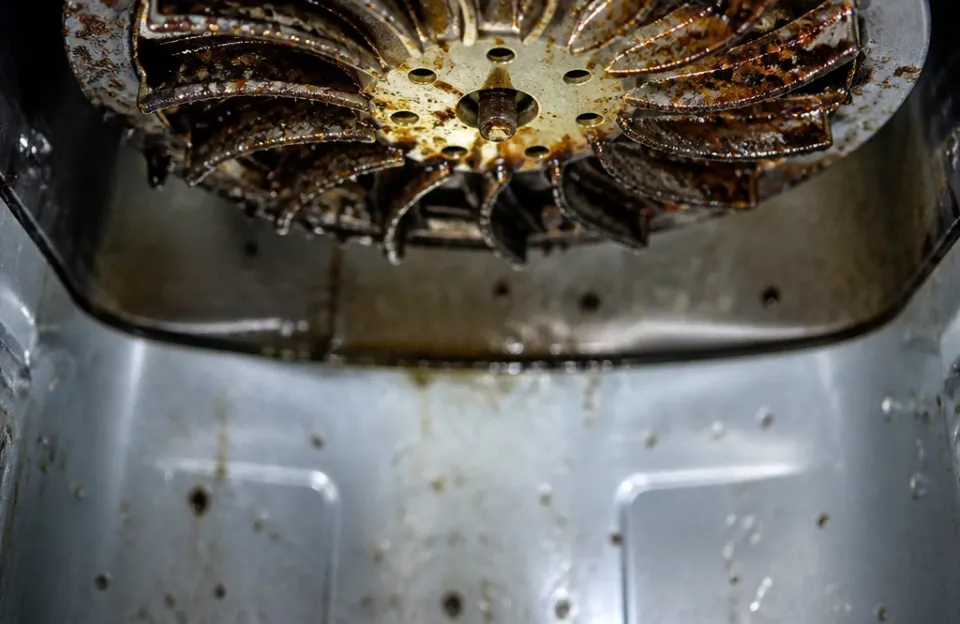
Skipping the cleaning routine allows grease to accumulate on the heating element and fan blades. Baked-on grease acts as an insulator, trapping heat where it shouldn't be. It also creates smoke every time you preheat.
Wipe down the interior after it cools, and wash the basket after every use.
Placing the unit against a wall or inside a closed cabinet blocks the exhaust vents. Air fryers need clearance to expel hot air. If that air gets trapped, the internal ambient temperature rises beyond what the electronics were designed to handle.
Give the machine at least five inches of clearance on all sides, especially the back where the exhaust usually sits.
Running back-to-back batches without letting the unit rest keeps the internal temperature constantly elevated. If you are doing heavy meal prep, let the machine cool down for ten minutes between cycles. This brief pause reduces the thermal stress on the wiring and motor.
Maintenance Routines That Add Years
Proper care extends the lifespan significantly. An air fryer that gets basic maintenance can easily outlast one that is ignored, even if they are the exact same model. These routines take very little time and prevent the majority of common failures.
Deep clean the heating element once a month. Unplug the machine and let it cool completely. Turn it upside down so you can see the coil.
Use a damp cloth or soft brush to gently remove any baked-on grease splatters. Never use metal scouring pads or submerge the top half of the unit in water. Keeping the element clean maintains its heating efficiency and prevents smoke.
Wash the basket and tray by hand. Dishwashers expose the nonstick coating to harsh detergents and prolonged high heat, which degrades the finish much faster than warm soapy water. Use a soft sponge.
If food is stuck, soak the basket in warm water for ten minutes rather than scrubbing aggressively. Taking care of your accessories protects your investment, especially when you are prepping weekly batches of food.
Check the power cord regularly. Look for fraying, kinks, or discoloration near the plug. Heat and movement can wear down the outer insulation over time.
A damaged cord is a fire hazard and should prompt immediate replacement of the unit.
Store the appliance properly when not in use for extended periods. Don't leave it sitting on the counter collecting dust, which can get sucked into the motor vents the next time you turn it on. Keep it in a dry place, and ensure the basket is fully dry before storing it to prevent mold or rust.
Descaling applies if you live in an area with hard water and occasionally wash the removable parts in the sink. Mineral buildup won't affect the heating element directly, but it can make the basket surface rough, causing food to stick and prompting you to scrub harder, which damages the coating.
Repair vs. Replacement: When to Let Go
Deciding whether to fix a broken air fryer or buy a new one comes down to the cost of the repair relative to the original purchase price. Because these appliances are relatively inexpensive compared to full-sized ovens, repairs are rarely economical.
If the issue is a worn-out basket or tray, check if the manufacturer sells replacements. Swapping a basket costs a fraction of a new machine and instantly restores the nonstick cooking surface. Some brands also offer replacement power cords if the original becomes damaged.
Electronic failures, like a dead control board or a fried thermal fuse, usually signal the end of the road. Sourcing the specific circuit board for your model is difficult, and paying someone to solder a new one costs more than buying a new unit. Motor replacements fall into the same category.
The labor involved in disassembling the housing, removing the old motor, and wiring in a new one exceeds the value of the appliance.
If your machine is still under warranty, contact the manufacturer before attempting any DIY fixes. Opening the casing voids most warranties. Manufacturers typically offer a one-year warranty on budget models and up to three years on premium ones.
Keep your proof of purchase in a designated folder so you can claim a replacement if the unit dies prematurely.
When shopping for a replacement, consider upgrading to a model with better build quality if your previous one failed quickly. Spending slightly more upfront for a unit with a heavier-duty fan motor or a stainless steel interior often pays off in added years of service. Reading up on specific reliable models helps you identify which brands prioritize durable internal components over flashy digital displays.
Frequently asked questions
Can an air fryer last 10 years?
It is highly unlikely for a standard consumer air fryer to last 10 years with regular use. The fan motors and heating elements are rated for a specific number of operational hours. A unit used only a few times a month might approach a decade, but daily use will wear out the mechanical parts within three to five years.
Do expensive air fryers really last longer?
Generally, yes. Higher-priced models tend to use thicker heating coils, better-insulated wiring, and stronger fan motors. They also often feature better ventilation designs that keep the internal electronics cooler.
However, even premium models require regular cleaning to reach their maximum potential lifespan.
Is it safe to use an air fryer with peeling coating?
While ingesting tiny flakes of modern PTFE coating passes through the body without reacting, cooking on a severely peeled surface leads to sticking, burning, and difficult cleanup. Once the base metal is exposed and begins to pit or rust, you should replace the basket or the entire unit.
Why did my air fryer stop working suddenly?
Sudden failure is usually caused by a blown thermal fuse. This safety device trips if the internal temperature exceeds safe limits, cutting power to prevent a fire. It can blow due to blocked exhaust vents, a seized fan motor, or a failing heating element drawing too much current.
Should I unplug my air fryer when not in use?
Yes. Leaving it plugged in keeps standby power flowing to the digital display and control board. Over time, constant exposure to voltage and ambient kitchen heat stresses these electronic components.
Unplugging it also eliminates any risk of accidental activation or electrical shorts.
How often should I clean the heating element?
Wipe down the heating element once a month if you use the air fryer several times a week. Grease splatters bake onto the coil during every session. Removing this buildup prevents smoking, maintains heating efficiency, and reduces the thermal strain on the surrounding components.
Knowing When It's Time for a New Machine
Air fryers are workhorses in the kitchen, but they don't last forever. Expect two to five years of reliable service depending on the model you buy and how well you treat it. Keeping the fan vents clear, washing the basket by hand, and wiping down the heating element are the simplest ways to maximize that timeframe.
Listen for strange noises, watch for uneven cooking, and don't ignore burning smells. When the motor grinds to a halt or the electronics go dark, it's usually more practical to replace the unit than attempt a complex repair. Treat the appliance well, and it will handle everything from reheating leftover slices to roasting vegetables reliably until its components naturally reach the end of their operational life.


1 thought on “How Long Do Air Fryers Last? What to Really Expect”