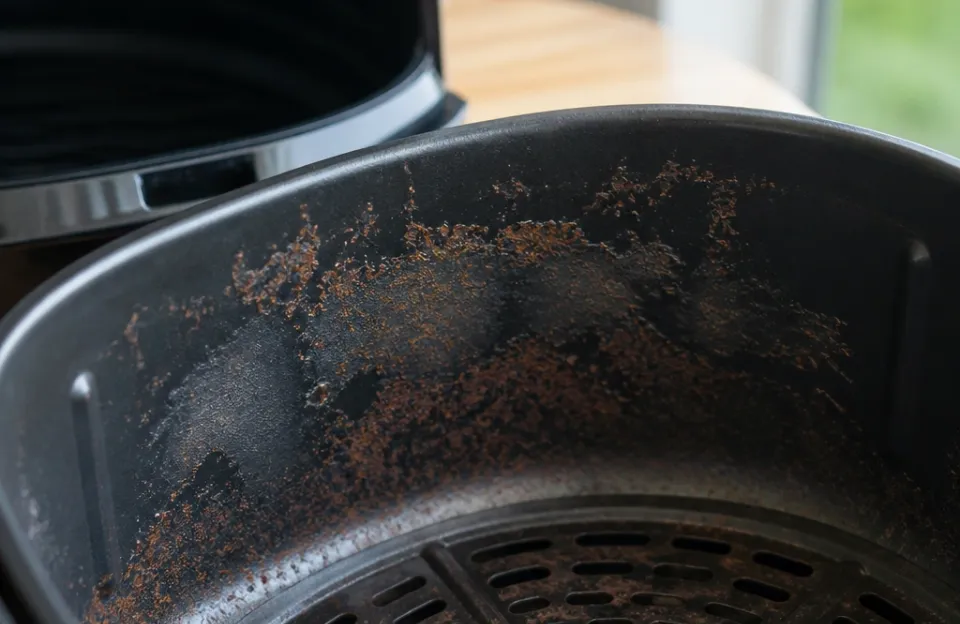
Air fryer basket rusting happens when the protective nonstick coating wears away and exposes the bare metal underneath to water and oxygen. It is a common issue, especially with daily use or aggressive cleaning habits. Once that top layer chips off, moisture gets trapped against the steel or iron base, and oxidation starts quickly.
If you are dealing with air fryer basket rusting, the damage usually starts in small spots along the mesh wires or the corners where food sticks most. The good news is that early rust can often be removed, and future damage can be prevented by changing how you wash and store the appliance. This guide covers why the coating fails, how to safely remove surface rust, and what steps keep your basket clean without scratching it.
We will also look at when a rusty basket needs to go straight into the trash.
Why the Protective Coating Fails on Air Fryer Baskets
Most air fryer baskets are made from carbon steel or aluminum and coated with a nonstick material, typically PTFE (polytetrafluoroethylene) or a ceramic-based layer. That coating is the only thing standing between the metal and the humid environment inside your kitchen. When the coating stays intact, rust cannot form.
When it degrades, the metal reacts with water almost immediately.
The high heat required for cooking plays a role here. Repeatedly heating a basket to 400°F and letting it cool down causes the metal to expand and contract. Over hundreds of cycles, this thermal stress creates micro-cracks in the nonstick layer.
Those cracks let moisture seep through during washing.
Cheap manufacturing compounds the problem. Budget models often have thinner coatings applied unevenly. A thin spot over a weld joint or a sharp wire intersection wears through much faster than a flat surface.
If you cook things like crispy batched wings every week, the constant friction from tongs and flipping accelerates that wear.
Scrubbing With Abrasive Sponges
Using steel wool, scouring pads, or stiff bristle brushes is the fastest way to ruin an air fryer basket. These tools strip the nonstick coating directly off the metal. Even if you do not see the coating peeling off in sheets, you are creating thousands of tiny scratches.
Water pools in those scratches after washing, giving rust a perfect place to start.
Many people switch to harsh scrubbers because baked-on grease builds up over time. Cooking items like breaded chicken pieces leaves behind starchy residue that hardens under high heat. Instead of scraping it off, soaking the basket in warm soapy water loosens the debris without damaging the surface.
Leaving the Basket Wet After Washing
Water left sitting on exposed metal causes flash rusting. If you wash your basket and leave it in the sink to air dry, or stack it while damp, moisture sits against the metal for hours. Carbon steel begins to oxidize within minutes of contact with standing water.
Drying the basket completely after every wash stops this process. Wiping it down with a towel removes the bulk of the water, but putting the empty basket back into the air fryer and running it at a low temperature for two or three minutes evaporates any remaining moisture hidden in the mesh intersections.
Acidic Foods Eating Through the Surface
Tomatoes, citrus marinades, vinegar-based sauces, and salty brines are highly corrosive. When these liquids drip through the food and sit on the bottom of the basket during cooking, they attack the nonstick coating chemically. Over time, acidic residues break down the polymer bonds holding the coating to the metal.
If you frequently cook vegetables tossed in lemon juice or meats marinated in soy sauce, inspect the bottom of your basket regularly. You might notice the finish looking dull or chalky before visible rust appears. That dullness means the coating is breaking down.
Rinsing the basket immediately after cooking acidic foods limits the contact time.
Metal Utensils Chipping the Edges
Tongs, forks, and metal spatulas scrape against the sides and bottom of the basket every time you flip food. The edges of the basket and the points where the handle attaches are particularly vulnerable because the coating is often thinnest there. One deep scratch from a pair of stainless steel tongs exposes the bare steel beneath.
Silicone-tipped tongs or wooden utensils prevent this type of mechanical damage. They are soft enough to move food around without gouging the surface. Even when tossing something simple like golden fried potatoes, switching to silicone tools extends the lifespan of the coating significantly.
How to Remove Rust From Your Air Fryer Basket Safely
If you catch rust early, you can remove it without throwing the basket away. Surface rust, which looks like light orange or brown dusting, responds well to gentle household methods. Deep pitting, where the metal has physically corroded into holes, usually means the basket is beyond repair.
Always unplug the appliance and let it cool completely before attempting any cleaning. Work in a well-ventilated area, and rinse the basket thoroughly after using any cleaning agent to ensure no residue transfers to your next meal.
The Baking Soda Paste Method
Baking soda is mildly abrasive and alkaline, which helps lift rust without aggressively scratching the surrounding intact coating. Mix three parts baking soda with one part water to form a thick paste. Apply the paste directly over the rusted spots using a soft cloth or a silicone spatula.
Let the paste sit on the rust for 15 to 20 minutes. The alkalinity works to break down the iron oxide. After waiting, gently rub the area in small circles with a soft sponge or an old toothbrush dedicated to cleaning.
Do not press hard. The goal is to lift the rust particles, not grind them deeper into the metal. Rinse the basket thoroughly with warm water and dry it immediately.
White Vinegar Soak for Stubborn Spots
White vinegar contains acetic acid, which dissolves rust effectively. For stubborn spots that baking soda did not clear, soak a paper towel in white vinegar and lay it directly over the rusted area. Leave it there for 30 to 60 minutes.
The localized soak keeps the acid concentrated on the rust without unnecessarily exposing the rest of the basket's coating to prolonged acidity.
After removing the paper towel, wipe the area with a soft damp cloth. The rust should transfer onto the cloth as a dark orange residue. If some remains, repeat the process once more.
Rinse the basket very well afterward. Acid left on the metal will cause new rust to form faster than before. According to general maintenance guidelines supported by sources like the Environmental Protection Agency, proper rinsing after using household acids prevents secondary corrosion and keeps surfaces safe for food contact.
Drying and Resealing the Exposed Metal
Removing the rust is only half the job. The area where the rust formed now has no protective coating. Bare metal is exposed.
If you put the basket away like this, it will rust again the next time it gets wet.
Dry the basket completely using the low-heat method mentioned earlier. Once bone dry, apply a very thin layer of high-smoke-point cooking oil, such as avocado oil or refined coconut oil, to the exposed spot using a paper towel. Heat the basket in the air fryer at 350°F for five minutes.
This bakes the oil into the pores of the metal, creating a temporary barrier similar to seasoning a cast iron skillet. You will need to reapply this oil layer periodically, especially after washing.
Preventing Future Damage During Daily Use
Stopping air fryer basket rusting requires building a few specific habits into your cooking and cleaning routine. The goal is to protect the nonstick coating from physical abrasion, chemical breakdown, and prolonged moisture exposure.
Consistency matters more than any single expensive product. Treating the basket gently every day yields better results than deep cleaning it aggressively once a month.
Proper Washing Techniques
Wash the basket by hand. Dishwashers expose the basket to extremely hot water, harsh detergents, and prolonged soaking cycles that degrade nonstick coatings rapidly. The high-pressure water jets in a dishwasher can also force moisture under chipped edges, causing hidden rust to spread beneath the coating where you cannot see it until it bubbles up.
Use warm water, a few drops of mild dish soap, and a soft microfiber cloth or non-scratch sponge. Wash the basket soon after it cools down from cooking. Letting grease and food particles bake onto the surface for days makes them harder to remove, tempting you to scrub harder later.
If you are reheating leftovers like warm pizza slices, wipe out the crumbs immediately rather than leaving them to carbonize during the next preheat cycle.
Storing the Basket Completely Dry
Never put a damp basket back into the air fryer housing or into a closed cabinet. Trapped humidity is the primary driver of overnight rusting. After washing and towel-drying, always run the empty basket in the machine at a low temperature for a few minutes to evaporate residual water.
Store the basket in a dry location with airflow. If your kitchen is naturally humid, consider leaving the air fryer drawer slightly open when not in use so ambient moisture does not collect inside the cavity. Avoid stacking heavy pots or pans on top of the basket, as the weight can warp the mesh and crack the coating along the bend lines.
Using Liners Without Blocking Airflow
Parchment paper liners or perforated silicone mats create a physical barrier between food and the basket. They catch dripping marinades, sticky glazes, and loose breading, keeping them off the metal surface. This drastically reduces the amount of scrubbing needed after cooking messy foods.
However, solid liners block the circulating hot air that makes air frying work. Always use liners specifically designed with holes for air fryers. And never preheat the air fryer with a parchment liner inside and no food weighing it down.
The heating element can ignite loose paper. When cooking fatty items like crispy pork strips, a perforated liner catches the rendering grease, protecting the bottom mesh from prolonged fat exposure and making cleanup take seconds instead of minutes.
When a Rusted Basket Needs to Be Replaced
Surface rust is manageable. Structural rust is a safety hazard. Knowing the difference prevents you from cooking over compromised metal.
If the rust has eaten through the wire mesh, creating thin spots or actual holes, the basket must be replaced. Food can fall through weakened areas onto the heating element below, creating smoke or fire risks. Additionally, heavily corroded metal flakes off into food.
While consuming trace amounts of iron oxide is generally considered low risk by bodies like the Food and Drug Administration, eating loose metal fragments or degraded nonstick coating mixed with deep rust is unsafe.
Flaking black coating combined with widespread orange rust indicates total failure of the nonstick layer. At this point, no amount of baking soda or vinegar will restore the basket to a food-safe condition. Check with your appliance manufacturer for replacement baskets.
Many brands sell them separately for a fraction of the cost of a whole new unit.
| Type of Rust | Visual Signs | Action Required |
|---|---|---|
| Surface Oxidation | Light orange dust, small isolated spots, coating still mostly smooth | Clean with baking soda or vinegar, dry thoroughly, oil the spot |
| Moderate Corrosion | Dark brown patches, rough texture, coating visibly peeling nearby | Aggressive cleaning, evaluate if metal thickness is reduced |
| Deep Pitting | Holes in the mesh, structural weakness, large flaking areas | Discard the basket immediately, purchase a replacement |
| Coating Failure Only | Black flakes peeling off, no orange rust yet | Monitor closely, avoid abrasive cleaning, plan for replacement |
If you own a specific model, checking its build quality helps predict rust timelines. Units built with heavier gauge steel and multiple coating layers last longer. For instance, understanding the build of a popular Ninja countertop model shows how thicker materials resist warping and coating loss better than ultra-budget alternatives.
Similarly, evaluating a multi-function glass option reveals that glass components bypass the metal rusting issue entirely, though they come with their own fragility tradeoffs.
Common Cleaning Mistakes That Accelerate Wear
People often damage their baskets trying to keep them clean. Good intentions paired with the wrong technique destroy nonstick finishes faster than normal cooking wear.
- Soaking the basket overnight in soapy water. Extended submersion allows water to penetrate microscopic flaws in the coating. Limit soaking to 15 or 20 minutes to loosen stuck food, then wash and dry immediately.
- Spraying aerosol nonstick cooking spray directly onto the basket. Commercial aerosol sprays contain propellants and emulsifiers that build up a sticky residue on nonstick coatings. This residue bakes on under high heat and becomes nearly impossible to remove without scrubbing. Use a pump oil mister filled with pure oil, or brush oil directly onto the food instead.
- Plunging a hot basket into cold water. Thermal shock warps the metal and causes the rigid nonstick coating to crack and separate from the expanding base. Always let the basket cool to room temperature before washing it.
- Using oven cleaner or bleach to remove tough grease. These harsh chemicals dissolve nonstick polymers. Stick to dish soap, baking soda, or diluted vinegar for all cleaning tasks.
- Ignoring the underside of the basket. Grease drips through the mesh and collects on the outer bottom of the basket tray. If left unwashed, this carbonized grease traps moisture against the exterior metal, causing rust to form underneath where you rarely look. Flip the basket over during every wash.
Frequently asked questions
Is it safe to cook in an air fryer if the basket is slightly rusted?
Cooking over minor surface rust is generally considered low risk if the rust is cleaned off before use and the structural integrity of the basket is intact. However, you should remove the rust, season the exposed spot with oil, and monitor it closely. If the rust is flaking into your food or the mesh is thinning, stop using the basket immediately.
Can I use a wire brush to get tough burnt food off the basket?
No. Wire brushes will instantly strip the nonstick coating and scratch the underlying metal, guaranteeing rapid rust formation. Use a nylon brush, a silicone scraper, or soak the basket in warm soapy water to soften burnt food before wiping it away gently.
Does putting the air fryer basket in the dishwasher cause rust?
Dishwashers are one of the leading causes of premature air fryer basket rusting. The combination of extended hot water exposure, harsh dishwasher detergents, and slow drying cycles breaks down the nonstick coating and promotes oxidation. Hand washing is always recommended.
Will spraying oil on the basket before cooking prevent rust?
Applying a thin layer of high-smoke-point oil to the basket can provide a temporary moisture barrier, especially over areas where the coating has worn thin. However, avoid aerosol cooking sprays, which leave a gummy residue. Use pure oil applied with a paper towel or a pump mister.
How long should an air fryer basket last before it starts rusting?
With daily use and proper hand-washing care, a quality air fryer basket typically lasts two to five years before significant coating wear occurs. Budget models used heavily may show rust within six months. Avoiding metal utensils and dishwashers extends this lifespan considerably.
Are stainless steel air fryer baskets rust-proof?
Stainless steel is highly resistant to rust compared to carbon steel, but it is not entirely rust-proof. Lower grades of stainless steel can still develop surface oxidation if exposed to salt, acidic foods, and standing water repeatedly. Stainless steel baskets lack traditional nonstick coatings, meaning food sticks more easily, requiring careful cleaning techniques.
Keeping Your Basket in Good Shape Long Term
Rust on an air fryer basket is almost always a result of coating damage followed by moisture exposure. Once you understand that the nonstick layer is your only defense, your cleaning and cooking habits naturally shift toward protecting it.
Stick to soft sponges, hand washing, and thorough drying after every single use. Catch orange spots early, treat them with baking soda, and seal the bare metal with a quick bake of cooking oil. If the mesh is compromised or the coating is flaking everywhere, replace the basket rather than risking metal fragments in your meals.
Taking these small steps preserves the appliance and keeps your food safe, whether you are roasting vegetables or crisping up proteins for dinner.